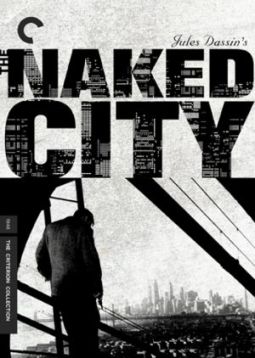
The Naked City (1948): “There are 8 million stories… “

The Naked City 1948

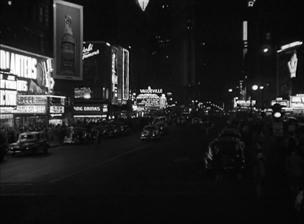
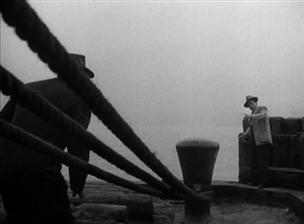
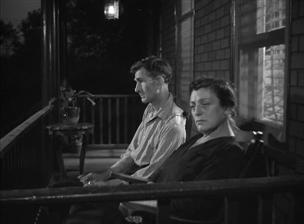
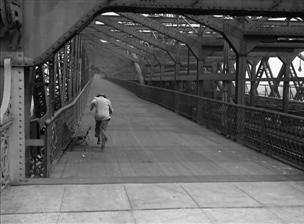
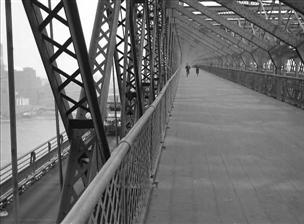
Jules Dassin’s third major feature, The Naked City, is legendary for its cine-verite portrayal of the city of New York: on the streets and in deep focus, with a stunning climax on the Williamsburg bridge.  Deservedly, in 1949 William H. Daniels received an Academy Award for Best Black-and-White Cinematography and Paul Weatherwax  an Oscar for Best Film Editing.  Miklós Rózsa and Frank Skinner contribute a solid musical score.   A voice-over narration by producer, Mark Hellinger, who died before the movie’s release, follows the story of a murder investigation by NY homicide cops.

The Naked City 1948

The Naked City 1948

The story is well-paced with the who-dun-it and why tension elegantly elaborated. While the cast is solid and the dialog has a sardonic edge, the picture is essentially a police procedural of little irony or depth, and with a ‘magazine expose’ feel . Once we are into the story, Hellinger’s voice-over becomes tedious, and by the climax downright annoying, as he starts addressing a hood on the run. Thematically, there is little to distinguish The Naked City as a film noir. We have to wait for Thieves Highway the following year to begin to appreciate Dassin’s greatness as a noir director.

The Naked City 1948

thenakedcity76-_sm

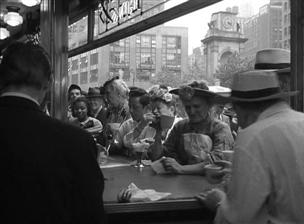
It is the city of New York and its people that hold our attention, and the several bit-portrayals of people going about their lives are truly engaging. The final scene where a street-sweeper in profile scoops up yesterday’s papers from the gutter and moves on into the New York night gives an arresting hard-bitten closure to the story behind the murder and to the film itself.

The Naked City 1948

The Naked City 1948

The B Connection: Lewton, Renoir and Truffaut

Desperate

In a book I am currently reading, The Early Film Criticism of François Truffaut by Wheeler Dixon (Indiana University 1993), there is an interesting section that deals with the obvious influence on Truffaut of Hollywood b-movies, particularly film noir.

According to Dixon, Truffaut and even his mentor, Jean Renoir, preferred b-features over a-productions. In a 1954 interview, Renoir was quite emphatic:

I’ll say a few words about Val Lewton, because he was an extremely interesting person; unfortunately he died, it’s already been a few years. He was one of the first, maybe the first, who had the idea to make films that weren’t expensive, with ‘B’ picture budgets, but with certain ambitions, with quality screenplays, telling more refined stories than usual. Don’t go thinking that I despise “B” pictures; in general I like them better than big, pretentious psychological films they’re much more fun. When I happen to go to the movies in America, I go see “B” pictures. First of all, they are an expression of the great technical quality of Hollywood. Because, to make a good western in a week, the way they do at Monogram, starting Monday and finishing Saturday, believe me, that requires extraordinary technical ability; and detective stories are done with the same speed. I also think that “B” pictures are often better than important films because they are made so fast that the filmmaker obviously has total freedom; they don’t have time to watch over him.

So all you b-movie fans you are in hallowed company!

[Cross-posted at Another Cinema Blog]

Nora Prentiss (1947): Turbo-charged Noir Melodrama

Nora Prentiss (1947)

“You had something on him
What was it?

Doctor Talbot was a respected member of the community
He lived in the same house on the same street
Year after year
Every one admired him, looked up to him
But then something happened, he did something
Something that gave you a hold over him
What was it? What was he hiding? What did he do?

According to the Motion Picture Herald, of the 298 top-grossing films for 1945-56, only nine were noirs (Spicer, Film Noir, 2002 ,p41). One of those movies was Nora Prentiss.  As a Warner Bros a-feature it ran for 111 minutes and though largely studio-bound, featured top-draw production values.

Though slow in the beginning, Nora Prentiss, once the noir scenario is established, develops into a dark melodrama of tortured loyalties and thwarted passions.  Steady direction from Vincent Sherman (The Damned Don’t Cry, The Unfaithful, The Garment Jungle) with the fluid camera of James Wong Howe,  and a brilliant pulsating score from Franz Waxman, deliver classy Hollywood melodrama.  The lovely Ann Sheridan as always is truly engaging as Nora, and the rather stolid Kent Smith despite his limitations delivers a solid performance as the noir protagonist.

Nora Prentiss (1947)

A doctor, Richard Talbot,  living the “father-knows-best” dream in a San Francisco suburb is catapulted into the dark chasm of noir angst, when he falls for cabaret singer Nora.  The film opens with a twist on the classic noir flashback narrative.  A guy who we only see in profile has been arrested for the murder of  the doctor and refuses to talk even to his lawyer. We move from the suspect in his holding cell to a delightful Spring morning in a Frisco bungalow  where a comfortable upper middle-class family sits down to breakfast.

Dr Talbot is settled in a successful career and lives a scheduled orderly passionless existence.  One evening a young woman is knocked over by a car as the doctor is leaving his surgery for the evening – he goes to her aid – enter a sassy uninhibited Nora.  Richard is free the for weekend, with his wife and kids away – you get the picture.  The affair blossoms into love, but Richard hasn’t the resolve to leave his wife. One evening a very ill patient arrives at the surgery after-hours. The camera and lighting have gone to noir: an irrevocable decision born of desperation unleashes a maelstrom of dark deeds, deceit, and tragedy. Fate is truly majestic in retribution with a twist that seals the good doctor’s doom.  As bleak an ending as any noir before or since.

Nora Prentiss (1947)

Strangers in the Night (1944)

Strangers in The Night (1944)

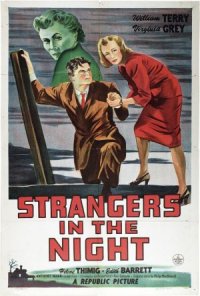
One of  director Anthony Mann’s early films, Strangers in the Night, a Republic Pictures 56-min b-filler from 1944, is being restored by the Film Noir Foundation.  To see what all the fuss is about, last night I had a look at a copy recorded from Spanish TV, which was in fair condition, if  marred by big yellow sub-titles.

I found a gothic-style thriller that  rarely transcend it’s b-origins.  I suppose it remains of interest as an Anthony Mann project, but the direction and the production as a whole are at best competent.

A story-line about a returning WW2 vet looking for a small-town girl whom he knows only from letters is the pretext for an off-beat treatment of  sexual frustration morphing into a dangerous delusion, and eventually murder.  Two middle-aged b-actresses playing out a possibly lesbian menage steal the movie from the headlined stars who provide the romantic interest.

Worth a look.

Film Noir Digest: News from Noir City 7

While the City Sleeps (1956)

Noir City 7: Best Essay

San Francisco Bay Guardian critic Max Goldberg has written what I think is the best essay to come out of Noir City 7 –  Late Edition posted on his text of light blog:

“… The newsroom is as much a part of noir’s topography as the police station, boxing ring or nightclub. Deadline-U.S.A. (1952), Scandal Sheet (1952), The Big Clock (1948), While the City Sleeps (1956):  the titles bow to the newspaper’s ubiquitous pulse by slinging shop-talk into nighthawk poetry. The press curries a surplus of centralized power in this cycle of films, exerting a primary influence over the whole urban mechanism…”

Noir City 7: Reports from Alexander Coleman

Noir fan and erudite film blogger Alexander Coleman has posted at Coleman’s Corner in Cinema some outstanding reports from and reviews of noirs screened at Frisco’s Castro Theatre at Noir City 7, including:

These posts and other noir reviews are also hosted at Dark City Dame’s Noirish City.

Noir City 7: Report by Hell on Frisco Bay

Brian from Hell on Frisco Bay in his report on Noir City has a lot of interesting news on upcoming noir-related events and impressions of some of the noirs screened this year.   Particularly exciting news is his report that Eddie Muller is working on an international noir series, and that while Muller was in Buenos Aires to meet the archivists who made last summer’s announcement of rediscovered footage lost from Fritz  Lang’s Metropolis, he came across a trove of  Argentine films from the 1930s made by the great noir cinematographer John Alton.

From The Vaults of Universal: Seven Classic Films Noir

Starting Monday February 16, the Heights Theatre in Minneapolis is screening a short series of classic films noir:

February 16 7:30pm This Gun For Hire (1942)
February 23 7:30pm Criss Cross (1949) | 9:15pm The Killers (1946)
March 2 7:30pm The Big Clock (1948)
March 9 7:30pm The Blue Dahlia (1946) | 9:15pm The Glass Key (1942)
March 16 7:30pm The Phantom Lady (1944)

Jean-Pierre Melville, Director: Notes on the French Auteur’s Career

This month’s edition of  Bright Lights Film Journal features an article by Garry Morris on Melville, whose noirs include Bob le Flambeur, Le Doulos, Le Samourai, & The Red Circle .

Robert Ryan: A Moon for the Misbegotten

This month’s edition of  Bright Lights also  features an article by Dan Callahan on noir icon Robert Ryan.

Lost Anthony Manne B-Noir to be Restored

Strangers in The Night (1944)

Eddie Muller announced at Noir City 7  that  The Film Noir Foundation together with the UCLA Film and Television Archive will restore Anthony Mann’s lost 1944 b-noir Strangers in the Night.  When I read this I was thunderstruck –  I have this movie recorded from somewhere and have never watched it!  You now know which movie I have lined up next for viewing…

Film Noir and The Doors

The Doors - Strange Days
Cover of The Door’s album Strange Days

As a child of the 60s, my favorite rock band is The Doors. The band’s innovative music and the dark subterranean lyrics of Jim Morrison never cease to enthrall me.  In previous posts I have featured lyrics from the band’s last album LA Woman:

At this year’s Sundance Festival, veteran feature-filmmaker Tom DiCillo will release his first documentary, When You’re Strange (2009), which documents the LA band’s rise in the mid-60s.

In an interview on SPOUTblog, DiCillo said: “I’ve always, always been turned on by music, and by film. The Doors’ music is extremely cinematic. Their music is very dense and highly emotional. It deals a lot with character, and blood, murder and a lot of crazy things.”

Ray Manzarek, the band’s keyboardplayer, agrees that The Doors were inspired and influenced by cinema.  Both he and Jim Morrison came out of the UCLA film school. “That’s where we became friends”, Manzarek said, “We’re definitely cinematic.” Morrison and Manzarek took film classes taught by director Josef von Sternberg.  Manzarek said von Sternberg inspired many of The Doors lyrics regarding moral ambiguity and dark eroticism.

Film Noir Digest: Wicked As They Come

Wicked As They Come (1956)

Noir City 7: Wicked as They Come Trailer

NOIR CITY 7, the 2009 San Francisco Film Noir Festival, kicks-off this Friday, January 23, at the Castro Theatre. On Saturday night at 7pm, special guest Arlene Dahl will introduce the pulp noirs Wicked as They Come (1956), and Slightly Scarlet (1956), in which she stars.

The Noir City program blurbs on these movies:

Wicked as They Come: Columbia, 94 min. Dir. Ken Hughes.“What she wanted out of life… she got out of men!” Arlene Dahl is a sizzling sensation as Kathleen Allen, a woman who learns early that sex is how she’ll get ahead in the world.

Slightly Scarlet: 1956, RKO, 99 min. Novel-James M. Cain, Dir. Allan Dwan. Arlene Dahl steals the show as sexy kleptomaniac Dorothy Lyons (opposite titian-tressed “sister” Rhonda Fleming) in this eye-popping adaptation of Love’s Lovely Counterfeit. Camera virtuoso John Alton translates noir into lurid, saturated color. It’s 50’s paperback covers come to life!in which she stars.

Seattle International Film Festival French Noir Series

This French Crime Wave 1937-1981 series at the SIFF traces the history of French noir from 1937 to 1981. Full details here.

Friday, January 16—Rififi, 7 p.m. Pepe le Moko, 9:20
Saturday, January 17—Mississippi Mermaid, 2 & 8 p.m.
Sunday, January 18—Le Cercle Rouge, 2:15 & 7 p.m.
Monday, January 19—Garde a vue, 7:30 p.m.
Tuesday, January 20—Classe tous risques, 7:30 p.m.
Wednesday, January 21—Elevator to the Gallows, 7:30 p.m.
Thursday, January 22—The Sicilian Clan, 7:30 p.m.
Friday, January 23—Bob le Flambeur, 8 p.m.
Saturday, January 24—Diabolique, 1 & 8 p.m.
Sunday, January 25—Coup de Torchon, 2, 4:30 & 7 p.m.
Monday, January 26—Pickpocket, 7:30 p.m.
Tuesday, January 27—The Champagne Murders, 7:30 p.m.
Wednesday, January 28—Riptide, 7:30 p.m.
Thursday, January 29—La Piscine, 7:30 p.m.
January 30-February 5—Shoot the Piano Player, daily 7:30 p.m., Sat. & Sun., 2:15, 4, & 7:30 p.m.

Classe tous risques

Cornell Woolrich: Dreaming, then dying

Zac O’yeah has written an an interesting feature article on the life and work of noir novelist, Cornell Woolrich, for the Wall Street Journal.

More Film Noir at NY’s Dryden Theatre

New Yorkers can plunge into the murky waters of essential film noir every Thursday in January and February at the Dryden Theatre:

January 8 Murder, My Sweet
January 15 Ride the Pink Horse
January 22 Raw Deal | T-Men
January 29 Road House | The Hitch-Hiker

February 5 In A Lonely Place
February 12 Pitfall | Nightfall
February 19 Double Indemnity
February 26 The Lady from Shanghai

More info.

Deep Discount on Film Noir Classics Collection – Vol. 1 DVD Set

DeepDiscount.com is offering this 5 DVD set for half-price at US$24.95 – that’s a low 5 bucks for each movie!

The pack contains these classic films noir:

THE ASPHALT JUNGLE
GUN CRAZY
MURDER, MY SWEET
OUT OF THE PAST
THE SET-UP

The Lost Weekend (1945): “I can’t take quiet desperation”

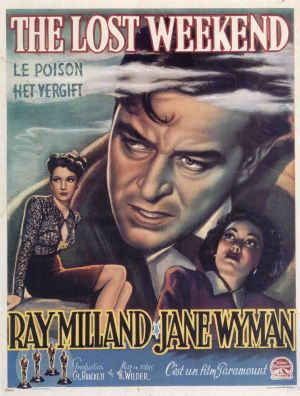
The Lost Weekend (1945)

In the seminal August 1946 article which coined the expression ‘film noir’, French film-critic Nino Frank referred to five Hollywood movies as noirs: The Maltese Falcon (1941), Double Indemnity (1944), Laura (1944), Murder, My Sweet (1944), and The Lost Weekend (1945).  By coincidence in the same month, expatriate German cultural critic, Siegfried Kracauer, who had moved to America because of WW2, in Commentary magazine argued that Hollywood films like Shadow of a Doubt (1942), The Lost Weekend (1945), and The Stranger (1946), displayed a certain decadence.

In the first book on film noir, A Panorama of American Film Noir, 1941-1953, published in France in 1955, the authors, Raymond Borde and Étienne Chaumeton, say that The Lost Weekend was only superficially a film noir, because “strangeness and crime were absent”.  In Andrew Spicer’s Film Noir (2002), The Lost Weekend does not rate a mention, and it does not merit an entry in Silver and Ward’s Film Noir: An Encyclopedic Reference (1992).

To my mind Billy Wilder’s The Lost Weekend is unequivocally a film noir. The film has a definite noir sensibility and explores the dark themes of existential angst and entrapment. While the story arc is about an alcoholic’s weekend bender which spirals out on to the edge of desperate criminality, and the portrayal of alcoholic addiction was strong enough for the liquor industry to offer Paramount a cool five million dollars to bury the picture, the underlying theme is the angst of failure, of being trapped in a life without purpose or meaning. Ray Milland is Don Birnam, a failed writer, hanging on a thread like the bottle of Rye hidden and hanging on a cord outside his bedroom window, and nothing can more powerfully express his life than when he tells his girl, Helen, why he drinks (and this excerpt from the script is testimony to the power of the screenplay penned by Wilder and long-time collaborator, Charles Brackett):

DON:
A writer. Silly, isn’t it? You see, in college I passed for a genius. They couldn’t get out the college magazine without one of my stories. Boy, was I hot. Hemingway stuff. I reached my peak when I was nineteen. Sold a piece to the Atlantic Monthly. It was reprinted in the Readers’ Digest. Who wants to stay in college when he’s Hemingway? My mother bought me a brand new typewriter, and I moved right in on New York. Well, the first thing I wrote, that didn’t quite come off. And the second I dropped. The public wasn’t ready for that one. I started a third, a fourth, only about then somebody began to look over my shoulder and whisper, in a thin, clear voice like the E-string on a violin. Don Birnam, he’d whisper, it’s not good enough. Not that way. How about a couple of drinks just to put it on its feet? So I had a couple. Oh, that was a great idea. That made all the difference. Suddenly I could see the whole thing – the tragic sweep of the great novel, beautifully proportioned. But before I could really grab it and throw it down on paper, the drink would wear off and everything be gone like a mirage. Then there was despair, and a drink to counterbalance despair, and one to counterbalance the counterbalance. I’d be sitting in front of that typewriter, trying to squeeze out a page that was halfway
decent, and that guy would pop up again.

HELEN:
What guy? Who are you talking about?

DON:
The other Don Birnam. There are two of us, you know: Don the drunk and Don the writer. And the drunk will say to the writer, Come on, you idiot.
Let’s get some good out of that portable. Let’s hock it. We’ll take it to that pawn shop over on Third Avenue. Always good for ten dollars, for another drink, another binge, another bender, another spree. Such humorous words. I tried to break away from that guy a lot of ways. No good. Once I even bought myself a gun and some bullets. (He goes to the desk) I meant to do it on my thirtieth birthday. (He opens the drawer, takes out two bullets, holds them in the palm of his hand.)

DON:
Here are the bullets. The gun went for three quarts of whiskey. That other Don wanted us to have a drink first. He always wants us to have a drink first. The flop suicide of a flop writer.

WICK [Don’s brother]:
All right, maybe you’re not a writer. Why don’t you do something else?

DON:
Yes, take a nice job. Public accountant, real estate salesman. I haven’t the guts, Helen. Most men lead lives of quiet desperation. I can’t take quiet desperation.

To complete the potent formula you have the cinematography of the great John F. Sietz, art direction by the brilliant Hans Dreier, and a deeply evocative score from Miklós Rózsa. Sietz’ fluid and lengthy takes, and moodily lit interior shots add depth to the ‘caged’ mise-en-scene of Don’s apartment: evoking a sense of desperation when Don ransacks the place searching for a bottle of Rye; and then terror at night when the DT’s take hold. On the streets of Manhattan, Sietz’ camera is in deep focus on harsh sun-lit streets of empty desperation where a staggering Don searches for an open pawn shop on Yom Kippur. Drieir elegantly furnishes Don’s tenement apartment with bookcases, sofas, lamps, and wall-hangings that disguise the places where he hides his booze. Rózsa’s score is persistent and dramatic, and he innovatively uses the early electronic instrument, the theremin, to produce an eerie and sinister motif for Don’s affliction.
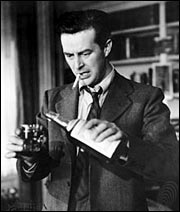
The Lost Weekend (1945)

Milland’s performance is masterful and he carries the picture.  Cast against type, his tranformation from a clean-shaven everyman to a dishevelled drunk hallucinating in a darkened room, where his eyes betray the depth of his obsessed decline,  is fully dramatic in it’s intensity. Jane Wyman as Helen, only comes into her own in the finale after she has lost a leopard-skin coat and her hair is wet and loose after being in the rain. Minus the coat and her perm she is a sensual and liberating influence. To Wilders’ and Brackett’s credit, the ending while positive remains open-ended: a relapse is just as likely as Don actually writing the great unfinished novel.  A solid contribution is made by b-actors Howard Da Silva and Doris Dowling.  Da Silva plays a sympathetic bartender who is a father-confessor figure ironically dispensing shots of rye instead of  Hail Maries. Dowling, who played the murdered wife in The Blue Dahlia (1946), is particularly engaging as a b-girl who is soft on Don. Veteran noir supporting actor, Frank Faylen, has a short but memorable appearance as a male nurse in a hospital drunks clinic. This harrowing sequence is shot in true noir style and with a frankness that works brilliantly to enlarge the drama from the particular to the social. The only weakness is a wooden portrayal of Don’s straight-laced brother.

This brings me to a particularly intriguing element in The Lost Weekend. Don is not a lecherous drunk: his desire for booze sublimates all other appetites, but interestingly Wilder weaves a stunning sexual frankness into the photoplay. The b-girl Gloria works out of Stan’s bar, and the nature of her work is up-front and personal. The male nurse, Bim, in the detox clinic is clearly gay, and his sermonising on the evils of drink has a surreal even sinister quality.

Early in the movie in an interlude told in flashback  Wilder’s sardonic humor takes center stage.  Don is at the Opera, and all on stage are drinking  champagne.  The whole sequence plays as a liquor ad tempting Don to leave the performance and try and grab hold of  a bottle of rye in the pocket of his checked-in overcoat.

A great Hollywood picture and a true noir.

Film Noir Reviews Preview

The Dark Mirror (1946)

These are the films noir I have lined up for review on FilmsNoir.Net over the next few weeks (not necessarily in order):

The Lost Weekend (1945)
Dir: Billy Wilder
Cast: Ray Milland, Jane Wyman

The Strange Love of Martha Ivers (1946)
Dir: Lewis Milestone
Cast: Barbara Stanwyck, Van Heflin, Lizabeth Scott, Kirk Douglas

Brute Force (1947)
Dir: Jules Dassin
Cast: Burt Lancaster, Hume Cronyn

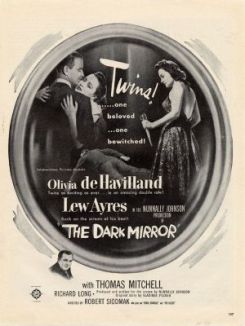
The Dark Mirror (1946)
Dir: Robert Siodmak
Cast: Olivia de Havilland, Lew Ayres

Nora Prentiss (1947)
Dir: Vincent Sherman
Cast: Ann Sheridan, Kent Smith

The Naked City (1948)
Dir: Jules Dassin
Cast: Barry Fitzgerald, Howard Duff, Dorothy Hart

Port of New York (1949)
Dir: László Benedek
Cast: Scott Brady, Richard Rober, K.T. Stevens, Yul Brynner

Macao (1952)
Dir: Josef Von Sternberg
Cast: Robert Mitchum, Jane Russell, William Bendix, Thomas Gomez, Gloria Grahame

The Night of the Hunter (1955)
Dir: Charles Laughton
Cast: Robert Mitchum, Shelley Winters, Lillian Gish

From the Shadows: Alexander Coleman and Dark City Dame

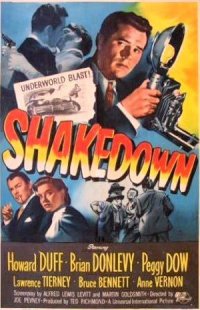
Shakedown (1950)

This January will be the Darkest Month in Coleman’s Corner.

For the month of January,  Alexander Coleman, from Coleman’s Corner in Cinema will be the guest of  Dark City Dame at  Noirish City, where he will be talking noir and selecting noirs for review on his blog.

This event will be a fitting lead-up to the Noir City 7 Film Noir Series in San Francisco from January 23 to February 1, which will have a newspaper theme –  visit the Noir City site for full details.  Alexander will don fedora and trench-coat to report direct from Noir City for Dark City Dame.