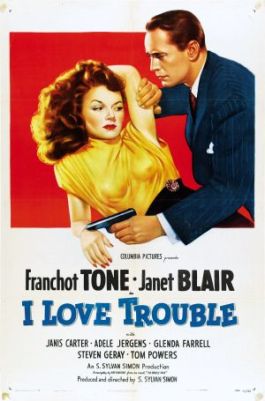
I Love Trouble (1948): Hot-jive noir

I Love Trouble (1948)

 
This is one-helluva-movie.  A gem that sparkles like the eyes of the hot dames that swagger, pout, smolder, and snap their high heels across the screen. A joyous LA romp in Marlowe territory which has it all. An enthralling thriller plot  enlivened by a hot-jive script from Roy Huggins (Too Late for Tears, Pushover). Incredibly taught and fluid direction from Columbia b-director S. Sylvan Simon.  Superb noir photography from Charles Lawton Jr.  A dynamic score from George Duning that sways effortlessly from dark melodrama to lecherous winks.
I Love Trouble (1948)

 
A great turn by Franchot Tone as LA private eye Stuart ‘George’ Bailey, who out-Bogart’s and out-Powell’s Philip Marlowe in a deliciously convoluted story of deception, greed, frame-ups, murder, and sexy high jinks. Bit player Glenda Farrell is a comic delight as Bailey’s cute, loyal, eccentric, and sharp-as-nails secretary Hazel.  Tom Powers delivers a solid performance as the aging suspicious husband who hires Bailey to tail his young wife, who is being blackmailed. Steven Geray delivers a nuanced low-key performance as mysterious crime-boss Keller, and John Ireland, Raymond Burr, and Eddie Marr are great as Keller’s heavies. Sid Tomack is in his element as a small-time chiseller who is out of his league. The dames are all delightfully buxom good-bad girls, with enough charm and innuendo for a dozen Marlowes: Janet Blair, Janis Carter, Adele Jergens, Lynn Merrick, and Claire Carleton.  A weird waitress-from-hell played by uncredited bit-player Roseanne Murray, is a scream.
I Love Trouble (1948)

 
There are laughs and smooth-as-nylons repartee, but the melodrama is hard-hitting and typically noir: guys get slapped hard, drugged, and slugged from behind. In one scene the face of a murder victim under a Malibu pier is highlighted by torch-light at night.  A particularly impressive scene is where a guy is under the threat of a gun, which is shown from the holder’s viewpoint, as it moves with the frightened target as he staggers backward and across the screen in a small room.
I Love Trouble (1948)

 
What is particularly captivating is the on-street location-shooting that gives the whole picture a verite-look.  From daylight scenes in the streets of LA to available light scenes at night in dives, suburban streets, and dark alleys in industrial areas. There is one daylight road scene where Bailey is being followed by another car, and he manoeuvres his car to dramatically confront his pursuer, and then gives chase. The positioning of the camera and the elegant panning as each car careens across the screen make the sequence one of the most exciting I have seen.

A must-see noir.  Sadly not yet available on DVD.

Where Danger Lives (1950): It’s a long road…

Where Danger Lives (1950)

A compelling RKO noir melodrama from John Farrow (The Big Clock, Night Has a Thousand Eyes, Alias Nick Beal, His Kind of Woman), with great camera work from Nicholas Musuraca, and top-line art direction from Ralph Berger and  Albert S. D’Agostino.

Where Danger Lives (1950)

A naive young doctor falls for a stunningly beautiful but unstable young woman, and ends up the target at a shoot-out on the Mexican border after a frantic road trip to escape a murder rap. Robert Mitchum is the doctor and little-known b-actress Faith Domergue is the dame. Domergue steals the picture from Mitchum.  Her nuanced performance as a ravishingly sublime femme-fatale is enthralling and she dominates every scene. There are many close-ups of her manic eyes full of menacing allure.  If she is crazy, she is the sanest psychopath to inhabit a film noir. Her guile and determination are almost heroic.

Where Danger Lives (1950)

Low angle available-light interior shots exposing ceilings early on are deftly used to frame scenes of tension and violence.The noir motif of entrapment is strongly focused by close-framed shots, particularly on the road, where the fleeing protagonists are shown within the car or from outside the car in close-up, and rarely in open spaces.  The climactic finale on a neon-lit street in a border own at night is beautifully lit and the action superbly edited. If not for Domergue’s manic turn and Musuraca’s camera, Farrow’s less than taught direction would have doomed the picture to mediocrity. The establishing scenes drag, and the middle section with Mitchum and Domergue on the lam is slow, with two aimless interludes: when they have a car accident, and in a small town where they are forced to ‘wed’.  There is an unnecessary and soppy final scene that undermines the riveting penultimate scene where the camera stares up at Mitchum’s tortured face against an industrial wire fence as the cops surround the fugitives after the shoot-out.

A uneven film made memorable by Domergue’s portrayal and the stunning climax.

Too Late For Tears (1949): Kiss of the Viper Woman

Too Late For Tears (1948)

Don’t ever change, Tiger. I don’t think I’d like you with a heart.”

From the opening scene of the silhouette of a car speeding up a winding road on a hill outside LA one dark night, you know you are in noir territory. Soon a preposterous chance event launches a wild descent into dark avarice and eroticised violence as perverse and relentless as fate itself.

Too Late for Tears is the quintessential 40s b-picture from the obscure poverty-row studio, Hunt Stromberg Productions. A crew led by pulp director Byron Haskin has filmed a purple script from Roy Huggins (The Fugitive TV series), which has the two accomplished leads Lizabeth Scott and Dan Duryea as reluctant partners in locating the claim check for a suitcase containing a hot 60 grand. The husky-voiced Scott is perfect as the housewife with attitude and a gun, and Duryea relishes his established persona of the low-life chiseler making a grab for the big-time. This movie is as hard as nails. There is not an ounce of pathos or softness, just a corrosive unbending greed against which anyone is expendable.

Too Late For Tears (1948)

The noir denouement elegantly occurs in a luxury hotel suite south of the border, where the femme-fatale imagines she is home free. Hoskin’s mise-en-scene is brilliant. The loot grabbed from a suit-case clutched madly in Scott’s hands and begged at her pursuer is ultimately worthless, and her fate is sealed by that same suit-case. A fluttering of notes down onto the hotel’s driveway is her final epitaph.

Sadly, there is no decent print of this movie currently available. Don’t buy the current DVDs – they are straight transfers of a scratchy damaged print of a public domain print available free from www.archive.org. Though there is a commentary from Eddie Muller on the DVD – I trust the proceeds are going to locating and restoring a better print.

Too Late For Tears (1948)

Hollow Triumph (1948): Baroque Noir

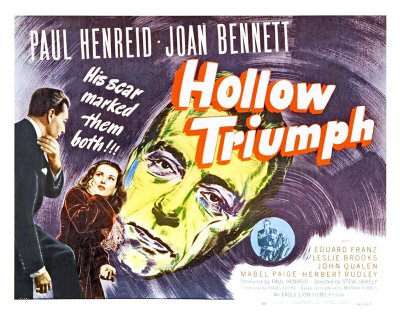
Hollow Triumph (The Scar) 1948

“It’s a bitter little world full of sad surprises, and you don’t let anyone hurt you.

Hollow Triumph (aka The Scar) is a gem of a movie. A wildly implausible plot adds to the baroque charm of this melodramatic sleeper, which bombed on its release in 1948.  The basic plot-line – a  hood on the run after robbing a gambling house takes on the identity of a psychiatrist – does not do justice to the moral perversity and spiralling ironies of fate that propel the action.

Hollow Triumph (The Scar) 1948

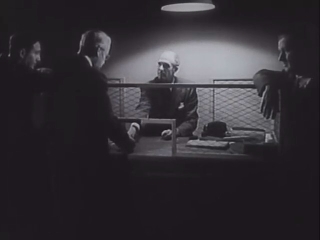
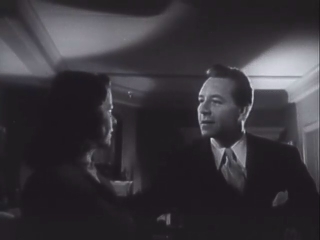
We have all the ingredients for great noir entertainment: a compelling screenplay and a witty script from Daniel Fuchs (Criss-Cross, Panic in the Streets), a director of pulp-b’s in Austro-Hungarian émigré Steve Sekely, the artful cinematography of noir icon John Alton, and Paul Henreid and Joan Bennet both cast against type in the lead roles – as mirror-reversals of the typical noir archetypes – an hommefatale of unbounded ambition and no scruples seduces a woman of strong character and with a real job.   Paul Henreid is so suave and daring, even when a photo-processor’s  diabolical and irreversibly dangerous error threatens to blow his subterfuge wide open, he  remains audacious and enthralling.  But the imperatives of the noir universe dictate that  his one-minute-to-midnight failed shot at redemption is as dramatic and ironic as it is pathetic.  On the journey to perdition we traverse a noir topography redolent with noir archetypes:  the unreformed con, the old gang coerced into a fateful big heist that goes wrong, the savage intimidation of underlings, life on the run, and the machinations required to find an out from a past that is getting ever close and will not go away.

Hollow Triumph (The Scar) 1948

All this aside, it is Alton’s dark and moody camera-work that defines the cinematic reality that lights up the screen.  There is a magnificent scene in a hotel room with Henreid and his straight but sympathetic brother, who has tracked him down to tell him that those out to kill him are closer and more adamant than he thinks. Once he learns the news, Henreid flips off  the lights in panic, fearing that his brother has led the killers to him. In the darkness, a flashing neon sign outside the windows rhythmically lights up the slats of the drawn venetian blinds sending streaked shadows across the protagonists.  Alton also constructs breathtaking hallucinatory montages that have to rank as perhaps the best I have seen in a Hollywood movie.  The stuff that noirs are made of.

T-Men (1947): Electric Noir

T-Men (1947)

T-MEN 92 min Eagle Lion Films
Two US treasury agents go undercover in LA and Detroit to infiltrate a counterfeiting operation.

Director Anthony Mann
Cinematography John Alton
Screenplay John C. Higgins (Raw Deal, He Walked by Night, Border Incident, Railroaded, Shield for Murder)
Story Virginia Kellogg (Caged, White Heat)
Starring Dennis O’Keefe, Alfred Ryder, Charles McGraw, Wally Ford, Mary Meade, June Lockhart

“Each shot with it’s distortions of space and unpredictable, dissonant lighting, forces an awareness of the visual narrative so that the jingoism  of the Treasury Department may be ignored and a vision of the noir underworld may emerge.”
– Blake Lucas in Film Noir: An Encyclopedic Reference (1992)

“effortlessly transcends its semi-documentary brief (with blandly ‘official’ commentary) to land deep in noir territory, concerned less with the heroic exploits of its T-Men than with personality perversities involved in undercover work (the wrenching imperative to deny friends, wives, feelings, even to the point of standing by while a partner is cold-bloodedly executed). John Alton’s superlative camerawork counterpoints tensions and perspectives with almost geometrical precision.”
– T.M. in the Time Out Film Guide

Director Anthony Mann and cinematographer John Alton transform a police procedural screenplay into a dark visionary descent into a subterranean noir realm, where two undercover cops inhabit a flip-side life of criminality, brutality, and violence.  These men exist almost exclusively as ciphers whose lives have meaning only in the dark seething undertow of a sinister metropolis. So immersed are these men, that the dying words of one are cheap remonstrations of deceit, and the final vengeful shootout delivers a duel to the death.  Add to the mix, stand-out performances by Dennis O’Keefe as the T-man O’Brien, Wally Ford as a doomed hood who carries the richly redolent moniker of ‘the Schemer’, and Charles McGraw as the ruthless hit-man ‘Moxie’, and you have a top-flight thriller.

T-Men (1947)
T-Men (1947)

Every scene in this movie is a set-piece where the mis-en-scene, the lighting, and the camera’s fluid peregrinations in an electric fusion of a chiaroscuro aesthetic and technical mastery,  draw the viewer into a hyper-reality of grim tension, dark tenements, hellish steam baths, desolate streets, seedy nightclubs, drab wharves, rusting cargo steamers, sinister business offices, and the decadent palatial homes of mobsters.  This nether world is rotten to the core – each time a boss is uncovered yet another further up the social scale surfaces.

Only a touch of pathos is allowed when one of the T-Men and his wife have to deny their identities and feign being strangers, and even this scene telegraphs the cop’s fate as we leave the wife with the glint of a tear in her estranged eyes.

T-Men (1947)
T-Men (1947)

One of the classic noirs – not to be missed.

The Night of the Hunter (1955): Not Noir

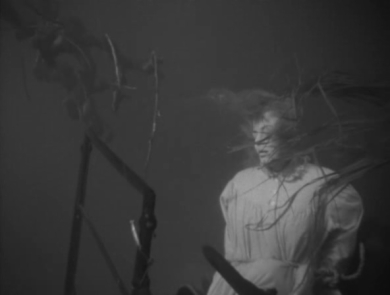
The Night of The Hunter (1955)

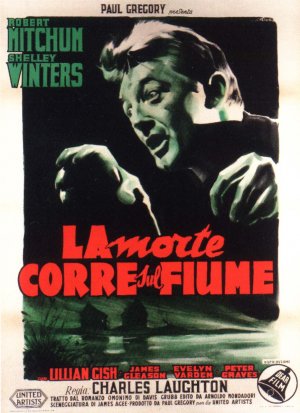
In the only film directed by Charles Laughton, The Night of the Hunter, we have an example of the danger of applying a template approach to establishing a picture as a film noir. Expressionist lighting and criminality – tick. But these elements alone do not a noir make. The Night of the Hunter is a gothic tale of good versus evil: there is no ambivalence nor an inversion of traditional values. Good triumphs over evil and the story ends.

This is not to say Night of the Hunter is not a great film- it assuredly is.  A tale about a psychotic and murderous Southern preacher terrorising two children who know the whereabouts of a loot of stolen money is not without flaws, but great nonetheless. The compelling screenplay, first class acting, atmospheric cinematography, and an enthralling stylised mise-en-scene from a first-time director make it great.

The editing is not fluid however, and the narrative flow suffers. Whether this is due to cuts made after completion of the preview version is uncertain. In a new book on the making of the movie, author Jeffrey Coachman says Laughton re-interpreted James Agee’s script, which itself was based on the first novel of Davis Grubb. The original Agee script surfaced in 2003, and out-takes still exist and have been viewed by Couchman. Also certain studio scenes clash jarringly with on-location shots.  Scenes in a small town near the end of the film are so obviously set-bound, that the drama takes on a theatrical tone which weakens the ‘reality’ of the story. The ending steers perilously close to sentimentality, but is saved by the luminous acting of Lillian Gish.

Other weaknesses relate to a certain moral relativism. The opening scene that establishes the story arc is not as strong as it should be – a weak performance by Peter Graves as the father on-the-run with the loot is redeemed only by the young actors playing his children. The father is caught and hanged, after sharing his cell with the evil preacher played superbly by Robert Mitchum, who learns that the loot has been hidden but not where. In the cell, disturbingly, the father justifies his crime, and presumably the killing of two people during the robbery, by saying he did it so his kids would not suffer during the hard times of the depression. After the hanging, the hangman is shown going home to his wife and young children and his remorse is clearly established. Yet at the end he is shown gleefully anticipating the hanging of another man – the preacher. An elderly married couple who are friends of Grave’s widow and portrayed as the salt of the earth in their generosity and concern for the woman alone struggling to raise her two children, at the end of the movie are transformed into unhinged rabble-rousers screaming for revenge and leading a lynch mob.

These weaknesses aside, there are stunningly elegiac scenes as the story unfolds. The most compelling is of the murdered widow still sitting upright in a car submerged in a river.

The Night of The Hunter (1955)

Dark Passage (1947): Not so dark

Dark Passage (1947)


I start viewing each Humphrey Bogart picture with a heightened anticipation, so strong is the Bogart persona in any movie.  Alas, Dark Passage is one of the few  Bogart pictures that disappoints.  Bogart goes through the motions of an escaped con on the run trying to clear himself of a murder charge, and Lauren Bacall look great, but for a thriller the whole affair is flat.

Based on a story by David Goodis, the screenplay relies on too many implausible coincidences.  The pedestrian direction of Delmer Daves (The Red House) constrains the  camera of cinematographer Sid Hickox (To Have and Have Not, The Big Sleep, Possessed, White Heat), and the Franz Waxman score is sadly undistinguished.  You don’t see Bogart’s face  for the first half of the movie, with the camera taking a point of view angle – it didn’t work in Lady in The Lake (1947) and it doesn’t work here.  The ending is lame, and the climax is ho-hum even though a dame falls out of the window of an apartment building!

Dark Passage (1947)

Deep focus outdoor scenes on the streets of San Francisco sustain visual interest, and the hilly topography results in some great angled shots.  Snappy lines of dialog enliven some static scenes, and there are interesting bit-roles that to a limited extent mitigate the film’s overarching weaknesses.  Agnes Moorehead is entertaining as a closet psychopath, but her camp characterisation is out-of-place in an otherwise earnest scenario.   A veteran bit-player with an  expressively craggy visage, Houseley Stevenson, is great as an eccentric  bootleg plastic surgeon.  Tom D’Andrea as a helpful cab driver,  Clifton Young as a small-time hood turned blackmailer, and  Tory Mallison as Bogart’s only friend, contribute immensely in roles that are pivotal to the story.  To give Daves, who adapted Goodis’ novel, due credit, the taxi cab scene is great – with Bogart’s “old” face in shadow in the back seat working so much better than the POV gimmick.

As for Dark Passage being a film noir, I suppose at a stretch you could say that there is an underlying theme of entrapment, but there are no noir atmospherics or motifs.

Angel Eyes: Femmes-Noir

This is an elegant homage by Rob in L.A. to some of the iconic femmes-noir. Make sure your speakers are on as the haunting rendition by Bruce Springsteen of Angel Eyes is integral to the experience.

Credits

Song: “Angel Eyes,” music by Matt Dennis, lyrics by Earl Brent. Performed by Bruce Springsteen.

Film clips:

Marie Windsor in THE NARROW MARGIN (1952)
Cleo Moore in ON DANGEROUS GROUND (1951)
Claire Trevor in BORN TO KILL (1947)
Veronica Lake in THIS GUN FOR HIRE (1942)
Ella Raines in PHANTOM LADY (1944)
Louise Brooks in PANDORA’S BOX (1928)
Jean Gillie in DECOY (1946)
Jane Russell in HIS KIND OF WOMAN (1952)
Anne Baxter in THE BLUE GARDENIA (1953)
Lauren Bacall in THE BIG SLEEP (1946)
Jane Greer in OUT OF THE PAST (1947)
Rita Hayworth in THE LADY FROM SHANGHAI (1948)
Bibi Andersson and Liv Ullmann in PERSONA (1966)
Lana Turner in THE POSTMAN ALWAYS RINGS TWICE (1946)
Simone Simon in CAT PEOPLE (1942)
Clara Bow in MY LADY OF WHIMS (1925)
Ingrid Bergman in ARCH OF TRIUMPH (1948)
Monica Vitti in L’ECLISSE (1962)
Marie Windsor in THE NARROW MARGIN (1952)
Anna May Wong in PICCADILLY (1929)
Ella Raines in PHANTOM LADY (1944)
Gloria Grahame in THE BIG HEAT (1953)
Ava Gardner in THE KILLERS (1946)
Lizabeth Scott in DEAD RECKONING (1947)
Hedy Lamarr in ALGIERS (1938)
Ella Raines in PHANTOM LADY (1944)
Gene Tierney in LAURA (1944)
Joan Crawford in MILDRED PIERCE (1945)
Dorothy Dandridge in ISLAND IN THE SUN (1957)
Constance Dowling in BLACK ANGEL (1946)
Mary Meade in T-MEN (1947)
Rita Hayworth in GILDA (1946)
Peggy Cummins in GUN CRAZY (1950)
Lizabeth Scott in DEAD RECKONING (1947)
Fay Helm in PHANTOM LADY (1944)
Louise Brooks in PANDORA’S BOX (1928)
Marlene Dietrich in SHANGHAI EXPRESS (1932)

Shock (1946): The Killer Shrink from Frisco!

Shock (1946)

Shock is a perverse b-thriller noir from 20th Century Fox. So traumatised is a young married woman after surreptitiously witnessing a murder that she lapses into catatonia. The shrink charged with her care in the sanatorium is the killer. An enticingly preposterous story with a super-suave performance by a clean-shaven Vincent Price as the shrink, and a smouldering turn by a 30-something Lynn Bari as his girl-friend and erstwhile femme-fatale.  Atmospherically shot by Joseph MacDonald (The Dark Corner, Call Northside 777, Panic in the Streets, Niagara) with fluid direction by Alfred L. Werker (He Walked by Night).

The highlight is when a psychotic patient escapes from his room in the sanatorium on a stormy night and causes havoc. It is a brilliantly executed sequence with a bravado performance by a veteran uncredited bit-player from the silent era, John Davidson.

Shock (1946) Shock (1946)

A camp delight.

The Naked City (1948): “There are 8 million stories… “

The Naked City 1948

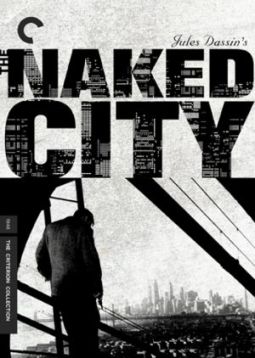
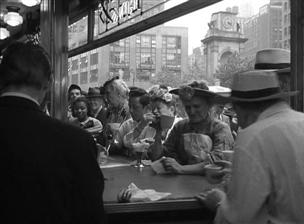
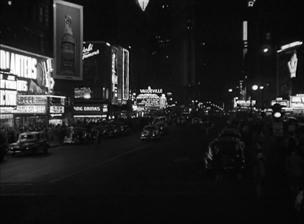
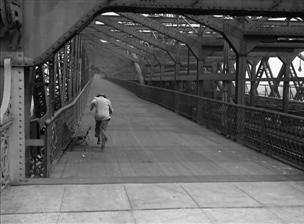
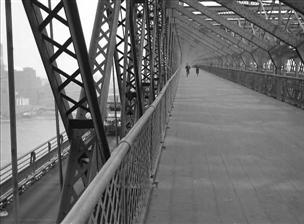
Jules Dassin’s third major feature, The Naked City, is legendary for its cine-verite portrayal of the city of New York: on the streets and in deep focus, with a stunning climax on the Williamsburg bridge.  Deservedly, in 1949 William H. Daniels received an Academy Award for Best Black-and-White Cinematography and Paul Weatherwax  an Oscar for Best Film Editing.  Miklós Rózsa and Frank Skinner contribute a solid musical score.   A voice-over narration by producer, Mark Hellinger, who died before the movie’s release, follows the story of a murder investigation by NY homicide cops.

The Naked City 1948

The Naked City 1948

The story is well-paced with the who-dun-it and why tension elegantly elaborated. While the cast is solid and the dialog has a sardonic edge, the picture is essentially a police procedural of little irony or depth, and with a ‘magazine expose’ feel . Once we are into the story, Hellinger’s voice-over becomes tedious, and by the climax downright annoying, as he starts addressing a hood on the run. Thematically, there is little to distinguish The Naked City as a film noir. We have to wait for Thieves Highway the following year to begin to appreciate Dassin’s greatness as a noir director.

The Naked City 1948

thenakedcity76-_sm

It is the city of New York and its people that hold our attention, and the several bit-portrayals of people going about their lives are truly engaging. The final scene where a street-sweeper in profile scoops up yesterday’s papers from the gutter and moves on into the New York night gives an arresting hard-bitten closure to the story behind the murder and to the film itself.

The Naked City 1948

The Naked City 1948