Noirs on US Cable: September

Kiss of Death (1947)
Kiss of Death (1948)

September 5
Fox Where the Sidewalk Ends (1950)
Fox Road House (1948)
Fox Kiss of Death (1947)

September 6
TCM The Night of the Hunter (1955)

September 7
TCM Thunder Road (1958)
TCM Out of the Past (1947)

September 8
Fox Where the Sidewalk Ends (1950)

September 10
TCM Odds Against Tomorrow (1959)

September 12
TCM Journey into Fear(1943)

September 13
Fox Road House (1948)
Fox Kiss of Death (1947)
Fox Moontide (1942)

September 14
TCM The Blue Gardenia (1953)
TCM The Strange Love of Martha Ivers (1946)
TCM Force of Evil (1948)

September 14
TCM Johnny Allegro (1949)

September 17
Fox Kiss of Death (1947)

September 23
TCM He Walked By Night (1948)
TCM 711 Ocean Drive (1950)

September 24
TCM The Glass Key (1942)

September 25
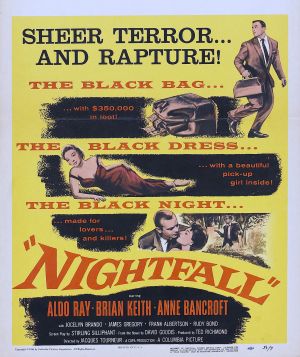
TCM Nightfall (1956)

September 27
TCM Gilda (1946)
TCM The Maltese Falcon (1941)
TCM Kansas City Confidential (1952)

Reports from David Goodis Retrospective

Dark Passage (1947)
Dark Passage (1947)

In his The Evening Class blog, Michael Guillen, has posted a series of reports and interviews from The Dark Cinema of David Goodis series, including introductory remarks to each screening from Eddie Muller and Pacific Fim Archives director Steve Seid:

The Dark Cinema of David Goodis Series

Nightfall (1957)

Streets of No Return: The Dark Cinema of David Goodis will run from August 1 – 23 at the Pacific Film Archive. Kelly Vance in a feature in today’s East Bay Express, previews the program and gives a short biography of Goodis.

The films to be shown:

And Hope to Die
The Burglar
The Burglars
Dark Passage
Descent into Hell
Nightfall
The Professional Man x Two
Shoot the Piano Player

The Unfaithful

There is a full program at the Archive’s web site.

Touch of Evil: 50th Anniversary Edition DVD

Touch of Evil (1958)

A special 50th Anniversay 2-DVD set of Orson Welles’ film noir, Touch of Evil (1958), to  be released by Universal on October 7, will include in three versions of the movie, which most noir pundits agree marks the end of the classic film noir cycle:  theatrical, preview and restored based on Welles’ original vision, and a copy of the  58-page memo Welles  wrote to the studio before the film’s release asking for his original-cut re to  be restored, after it had been butchered by studio hacks. The request fell on deaf ears.

More info from Welles.Net.

Full Program for French Crime Wave Series Now Out

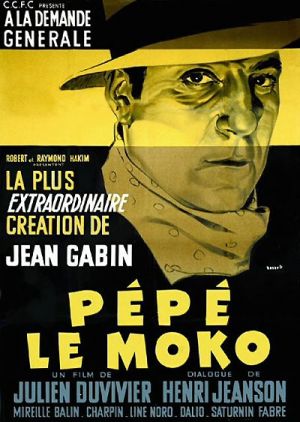
Pépé Le Moko (1937)Pépé Le Moko (1937)

Further to my post of July 11, the full program for the The French Crime Wave: Film Noir & Thrillers 1937-2000 series is now available on the New York Film Forum Web Site. The Series has been dedicated to the memory of Jules Dassin, who died this year.

Over four weeks from August 8 to September 4 the NY Film Forum Movie House, 209 West Houston Street, New York NY 10014, will screen 38 French films noir and thrillers:

Band Of Outsiders
Bob Le Flambeur
Borsalino
Breathless
Casque D’or
Le Cercle Rouge
La Cérémonie
Classe Tous Risques
The Clockmaker
Coup De Torchon
Diabolique
Le Doulos
Elevator To The Gallows
Eyes Without A Face
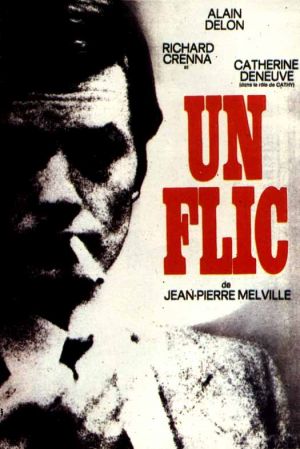
Un Flic
Garde À Vue
Goupi Mains Rouges
A Man Escaped
Mississippi Mermaid
Murderous Maids
Pépé Le Moko
Pickpocket
Pierrot Le Fou
La Piscine
Police Python 357
Purple Noon
Quai Des Orfèvres
Rififi
Riptide
Série Noire
Shoot The Piano Player
The Sicilian Clan
The Thief Of Paris
Les Tontons Flingueurs
Touchez Pas Au Grisbi
La Vérité
The Wages Of Fear
We Are All Murderers

Evelyn Keyes Dead at 91

The Prowler (1951)Evelyn Keyes, who died on July 4, starred in a number of films noir: Johnny O’Clock (1947), The Killer That Stalked New York (1950), The Prowler (1951), and 99 River Street (1953).

The Prowler (1951)

The French Crime Wave: Film Noir & Thrillers 1937-2000

Over four weeks from August 8 to September 4 the NY Film Forum Movie House, 209 West Houston Street, New York NY 10014, will screen 39 (!) French films noir and thrillers.

The full program has not yet been released, but the French Embassy’s French culture site has released early details:

This festival of 39 prime examples opens with the late ex-pat Jules Dassin’s classic heist picture Rififi, which kick-started a whole new cycle of French Noir, and includes both classics and rarities by such masters of the genre as Jean-Pierre Melville (Bob le flambeur, Le Cercle rouge, Un flic), Jacques Becker (Touchez pas au grisbi), Henri-Georges Clouzot (Diabolique, Wages of Fear), Georges Franju (Eyes Without a Face), René Clément (Purple Noon), Louis Malle (Elevator to the Gallows), Claude Chabrol (La Cérémonie), and François Truffaut’s Mississippi Mermaid, The Bride Wore Black). Among the many stars showcased are the five great hommes durs (tough guys) of the genre — Jean Gabin, Lino Ventura, Yves Montand, Jean-Paul Belmondo, and Alain Delon — and such femmes fatales as Simone Signoret, Jeanne Moreau, Catherine Deneuve, and Brigitte Bardot. The festival concludes with a one-week run of Truffaut’s Shoot the Piano Player.

Director’s cut of Metropolis found

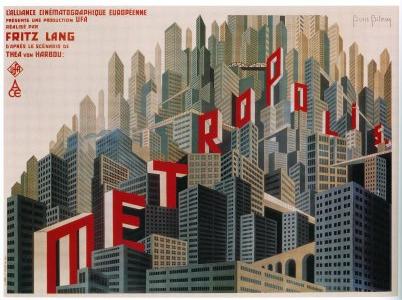
Metropolis (1927)

The long-lost original print of a Fritz Lang’s silent masterpiece, Metropolis (1927), has been found in Argentina.

The original 3½-hour film was believed lost  after its US distributor, Paramount, cut it by 30 minutes after a poor reception from critics. But the German newspaper Die Zeit has reported that a copy of the original was sent to Argentina in 1928, where it has been gathering dust in the Buenos Aires Film Museum.

The lost footage, some of which is badly scratched, includes battle scenes and sections that flesh out a number of subplots and characters. Paula Felix-Didier, the curator of the museum, viewed the film only after a chance remark from a projectionist, who noted that it was longer than other versions. A film restorer who has seen the new footage said the film had its rhythm back. Source: The Telegraph – London

Framed (1975) Released on DVD

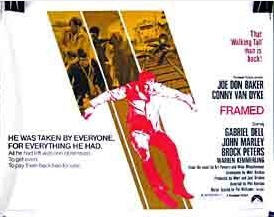
Framed (1975)

The last movie from a team of noir veterans, Framed (1975), has been released on DVD.  Dave Kehr’s NY Times review is worth reproducing in full:

Released in 1975, “Framed” is among the last of the old-school films noirs. Three principal members of its creative team were part of the genre’s prime: the director Phil Karlson (“99 River Street,” 1953), the producer and screenwriter Mort Briskin (“Quicksand,” 1950), the cinematographer Jack A. Marta (who shot close to 200 B movies for Republic Pictures). The plot is practically a pocket guide to noir conventions. Joe Don Baker, a big man with a sad mouth, stars as Ron Lewis, a professional gambler who stumbles across a homicide involving some unknown, powerful people, who get him out of the way by sending him to prison on a trumped-up charge.

When, four years later, Lewis returns to the unnamed Southern metropolis he calls home, he finds that his adversaries have taken political control of the city and are moving in on the state. But Lewis, dehumanized by his experiences, isn’t deterred: with the help of a prison buddy, a syndicate hit man with a Sonny Bono haircut (Gabriel Dell, one of the original Dead End Kids back in the 1930s), he sets out to exact a terrible, bloody revenge.

“Somebody I don’t know took everything I had away from me,” he says, in a line from the Film Noir Hall of Fame, “and I’m going to make him pay. Double.”

Karlson and Briskin enjoyed a freak hit in 1973 with “Walking Tall” — essentially, a retooling of Karlson’s noir classic of 1955, “The Phenix City Story” — with Mr. Baker as a Southern sheriff fighting corruption. Their “Walking Tall” clout allowed them to make “Framed” without compromises, and this is a harsh, unlovely film, charged with unsettling anger and filled with a violence that was quite graphic for the time, and is still startling today.

Although “Framed” would prove to be the last film for both men, it is no nostalgic farewell. It’s a poison-pen letter filled with bitterness, paranoia and despair. When Lewis finally tracks down the individual responsible for his suffering, he finds — in another classic noir device — a man much like himself, with personal reasons for what he’s done. At the end of the journey lies its beginning, a film noir way of knowledge. (Legend Films, $14.95, R)

New Book on Edgar G. Ulmer

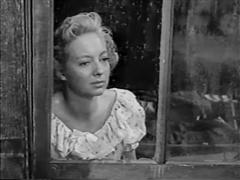
Edgar G Ulmer

A new book on the work of Poverty-Row director, Edgar G. Ulmer, who made the cult b-noir, Detour (1945), was released in May.

The book, Edgar G. Ulmer: Detour on Poverty Row, was reviewed today by Michael H. Price in the Fort Worth Business Press:

[In] Edgar G. Ulmer: Detour on Poverty Row … Editor [Gary D.] Rhodes and a well-chosen crew of contributing writers consider Ulmer in light of not only his breakthrough film, 1934’s The Black Cat at big-time Universal Pictures, or such finery-on-a-budget exercises as Bluebeard (1944) and Detour (1945), but also Ulmer’s tangled path through such arenas as exploitation films (1933’s Damaged Lives), Yiddish-language pieces (1937’s Green Fields), well-financed symphonic soap opera (1947’s Carnegie Hall), and ostensible schlock for the drive-in theaters (1957’s Daughter of Dr. Jekyll)… A perceptive chapter from Christopher Justice wonders aloud whether the writer-director might be considered “the godfather of sexploitation,” in view of the “new aesthetic terrain and … core prototypes” that can be observed in such films as Damaged Lives and Girls in Chains (1943) and The Naked Venus (1958)… Tony Williams regards Ulmer as an advancer, rather than a follower, of the “psychobiography” approach that Orson Wells had defined with Citizen Kane in 1941 — on the evidence of an often-maligned, oftener-ignored Ulmer picture called Ruthless (1948). (Ruthless stars Zachary Scott as an industrialist who might make Welles’ Charles Foster Kane look like Rebecca of Sunnybrook Farm by comparison.)