The Big Combo (1955): Quintessential Noir

The Big Combo (1955)

Obsessed cop hunts down a psychotic crime boss

You think this is a mink… you think these are the skins of little wild animals sewn together for your pleasure – you’re mistaken… these are the skins of human beings… people, who have been beaten, sold, robbed, doped, murdered by Mr Brown.

I live in a maze… a strange blind backward maze, and all the little twisting paths lead back to Mr Brown.

The Big Combo is the greatest film noir of the 50’s: put simply a masterpiece of the genre. Directed by maverick “B” director Joseph H. Lewis and filmed by master cinematographer John Alton from a tight screenplay from Philip Yordan, this movie is totally engrossing and visually stunning. Each scene is a study in composition and expressionist lighting. The cast is exceptionally strong and each player delivers a nuanced performance. The hip 50s score of David Raksin introduced over the opening credits is both surreal and portentous.

There are no femme-fatales but three women who are pivotal to a tragic story of sex, obsession, psychosis, and perverted love.

While not wishing to downplay Jean Wallace, who is arresting as the female lead, for me Rita, the stripper and erstwhile girlfriend of the obsessed cop, holds the central interest. Played beautifully by Helene Stanton, a B actress in her first role (followed by some other minor roles until she disappeared into obscurity in 1957), Rita is the most fascinating and real person in the story: any more about the role will risk spoilers.

The Big Combo (1955)

Her scenes linger long in the memory, and when the film is over you realise how much integrity she has. That Helene Stanton could bring such depth to a supporting role is testimony to her strength as an actress and director Lewis’ ability to foster strong performances from raw talent.

If you only ever see one film noir, this is it.

The Big Combo

International Neo-Noirs

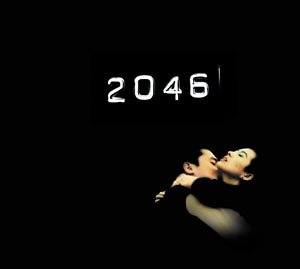
2046

Widen your cinematic experience and consider these neo-noir releases:

The Conformist (Italy – 1970)
Get Carter (UK – 1971)
The American Friend (Germany – 1977)
Veronika Voss (Germany – 1982)
Le Femme Nikita (France – 1990)
Zentropa (Denmark – 1991)
Foreign Land (Brazil – 1995)
Croupier (UK – 1997)
Insomnia (Norway – 1997)
Fallen Angel (Hong Kong – 2000)
Lantana (Australia – 2001)
City Of God (Brazil – 2002)
2046 (Hong Kong – 2004)
36 Quai des Orfèvres (France – 2004)
El Aura (Argentina- 2005)

They Live by Night (1948): Great but is it noir?

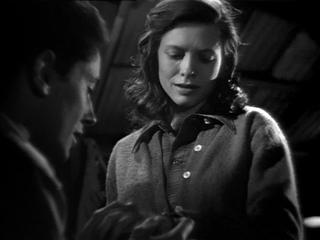
They Live By Night (1948)

This first feature from Nicholas Ray is a great film in every sense: tight and inventive direction, a sensitive script from Charles Schnee adapted from Edward Anderson’s novel “Thieves Like Us”, moody noir lighting and photography by George E. Diskant, and terrific performances from the two young leads: Cathy O’Donnell and Farley Granger.

From Steven H. Schueur’s book Movies On TV: “… possibly the most romantic crime film ever made. Granger and O’Donnell beguilingly portray an awkward young couple who are forced into becoming ‘lovers on the run’ … Their sympathetic relationship is depicted with sensitivity and touching detail, and the performances are remarkably intense…”

They Live By Night is a tragedy of Shakespearean dimensions and  transcends film noir. The genre is more crime melodrama with noir elements. We know the relationship is doomed to fail in violent tragedy, not because this is a film noir, but as an audience we have seen the crime movies that Hollywood churned out in the 30’s and early 40’s.

The two young protagonists have no way out as they do not have the maturity to make the decisions they are forced to make, and this is telegraphed by Ray at the film’s opening as sub-titles over a scene of the two lovers in the throes of gentle passion: ” … this boy and this girl were never properly introduced to the world we live in … “.

A masterpiece of 40s Hollywood cinema.

They Live By Night (1948)

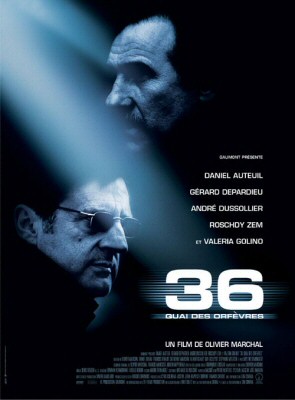
36 Quai des Orfèvres (France 2004): Brilliant Neo-Noir

36 Quai des Orfèvres (France 2004): Brilliant Neo-Noir

This neo-noir cum policier is a must see thriller with stunning noir cinematography. Olivier Marchal’s direction is relentless, with great performances from a stellar cast. This is Paris hip, dark, and mean.

This slideshow requires JavaScript.

The File On Thelma Jordan (1950): You always intend when you have to…

The File On Thelma Jordan (1950)

A married DA falls for a woman with a past

Thelma Jordan, the last film noir by Robert Siodmak is under-rated, and not because of Siodmak, whose lacklustre direction disappoints, but for the intelligent script and a bravura performance from Barbara Stanwyck, who plays Thelma, the woman with a past. I have deliberately not described her as a femme-fatale, as her character is multi-layered. She is trapped by her past but genuinely loves the DA who falls for her.

Noir determinism propels the story, which to a degree is melodramatic and contrived, but the pyschological elements and literate study of the dynamics of marriage and immaturity give the film more depth than most melodramas.

“Id’ like to say I didn’t intend to kill her, but when you have a gun, you always intend when you have to…”

The File On Thelma Jordan (1950)

Film Noir: Getting Started

As introductions to film noir, you can’t go past these two books, which are immensely readable and entertaining:

The Rough Guide to Film Noir (2007)
A great introduction that covers the genre from early
German expressionism to the latest neo-noirs, and highlights the movies to look out for.

Film Noir by Alain Silver (2004)
A general overview of film noir covering its most important themes with many rare stills. Among the films covered are: Double Indemnity, Kiss Me Deadly, Gun Crazy, Criss Cross, Detour, In A Lonely Place, T-Men, Out of the Past, The Reckless Moment, and Touch of Evil.

Scarlet Street (1946): Unrelenting Noir

Scarlet Street (1946)

The banal and squalid machinations of a floozey and her pimp, and a lonely older man’s infatuation lead to inevitable destruction

Scarlet Street, a classic film noir from Fritz Lang, shattered the closed romantic realism of Hollywood. It is unremitting in its pessimism. A dark mood and pervading doom are devastating in their intensity.

On the surface the streetwalker Kitty (Joan Benett) is the femme-fatale to Edward G. Robinson’s chump, Chris, with her manipulative and abusive no-good boyfriend as her ally. But Kitty is not an active protagonist. She is an empty-headed girl who thinks she is in love with her pimp, Johnny (Dan Duryea), and who is pushed all the way by his cheap stratagems to milk Chris for money.

Like the Swede in Criss Cross, Chris is not so much dealt a raw deal by fate but by his own naivety and irrational need to believe that Kitty loves him.

Scarlet Street (1946)

New Criterion DVD: Drunken Angel (aka Yoidore tenshi – Japan 1948)

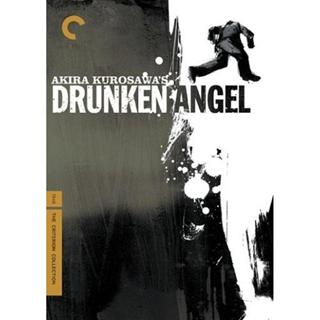
Drunken Angel (Japan - 1948)

Drunken Angel is the first Kurosawa film starring Toshiro Mifune, and has a strong noir mood.

From the New York Times review of the new Criterion release 27 November:

The liner notes for this Criterion Collection release identify Drunken Angel as a film noir, and visually the movie often suggests the dark, dangerously askew world that Hollywood directors like Anthony Mann and Robert Siodmak were developing during the same period in their urban thrillers. But thematically “Drunken Angel” hails back to an earlier genre, the tenement dramas of the 1920s and ’30s… with their principled heroes and calls for social reform. For every virtuoso sequence – like the Mifune character’s climactic knife fight with his former gang boss, which ends with the two squirming in a pool of white paint – there is a bluntly didactic scene in which the doctor rails against feudal traditions and demands better hygiene.

Shimura and Mifune went on to play symbolic father-and-son-type pairs in several Kurosawa films, including the dazzling and more truly noir-flavored Stray Dog of 1949; their pairing seems to represent the fundamental division in Kurosawa’s work between high-minded sentiment and down-and-dirty action. (Criterion Collection, $39.95, not rated.)

The Crimson Kimono (1959): Little Tokyo Rift

The Crimson Kimono (1959)

An unusual film from pulp noir director, Samuel Fuller, set in LA’s Little Tokyo. The search for the killer of a stripper brutally gunned down in late-night traffic on the streets of LA is the pretext for a deft study of race, love, jealousy, and friendship. Fuller’s signature expressionist lighting, jumpy takes, and jarring jazz score keep the viewer off-balance.

Fuller’s screenplay takes us from inner-city sleaze to a Shinto temple and back. There are intriguing conversations on art and painting, love and music, race and prejudice, loyalty and friendship, that not only propel the narrative but also give the major characters amazing depth and complexity for such a short film (82 mins). The thriller aspect is not neglected with an exciting surprise ending.

The Crimson Kimono (1959)

I am struck by Fuller’s humanity. Little Tokyo is not a just an exotic locale, it is place of genuine interest that is explored with intelligence and respect. There is a quiet hiatus in a Shinto temple where a peripheral character, a Japanese-American man, attends a memorial service for his son, a US soldier killed in action.

The Crimson Kimono (1959)

A strong performance by then new-comer, James Shigeta, as an LA cop, is complemented by solid support from Glenn Corbett as his police partner and ex-Army buddy. Victoria Shaw and Anna Lee shine as the female leads Chris and Mac, intelligent women of contrasting ying and yang persuasions: Chris the demure innocent abroad and love interest, and Mac as the hard-drinking painter and proto-feminist with a heart of gold. Fuller truly loved and respected women, taking the noir genre beyond the narrow misogyny of the femme-fatale stereotype.

Enjoy it on a wide-screen.

The Crimson Kimono (1959)

New DVD Set: Film Noir: Five Classics from the Studio Vaults

They Made Me a FugitiveScarlet Street

A new DVD set has just been released by KINO with some interesting and obscure titles, including a pristine HD transfer of the Fritz Lang classic, Scarlet Street:
Film Noir: Five Classics from the Studio Vaults – Scarlet Street/Contraband/Strange Impersonation/They Made Me A Fugitive/The Hitch-Hiker

The Hitch-Hiker

Each movie in the Set was reviewed today by Grady Hendrix in the The New York Sun: Ladies Of the Dark

Details courtesy of Amazon.com:

SCARLET STREET (1945) – A FILM BY FRITZ LANG – WITH EDWARD G. ROBINSON, JOAN BENNETT & DAN DURYEA – A box-office hit in its day (despite being banned in three US states), Scarlet Street is perhaps legendary director Fritz Lang’s finest American film. But for decades, Scarlet Street has languished on poor quality VHS tape and in colorized versions. Kino’s immaculate new HD transfer, from a 35mm Library of Congress vault negative, restores Lang’s extravagantly fatalistic vision to its original B&W glory. When middle-aged milquetoast Chris Cross (Edward G. Robinson) rescues street-walking bad girl Kitty (Joan Bennett) from the rain slicked gutters of an eerily artificial backlot Greenwich Village, he plunges headlong into a whirlpool of lust, larceny and revenge.

CONTRABAND (AKA Blackout) (1940) – A FILM BY MICHAEL POWELL – WRITTEN BY EMERIC PRESSBURGER – WITH CONRAD VEIDT & VALERIE HOBSON – Contraband is a comedy thriller in the vein of Hitchcock’s The Thirty-Nine Steps and The Lady Vanishes. The film is an early treasure from the writer-director team of Emeric Pressburger and Michael Powell (The Red Shoes), who have been hailed by critics as jewels in the crown of British cinema. Set in England during the early days of WW II, Contraband stars Conrad Veidt and Valerie Hobson as a Danish sea captain and his enigmatic passenger who are kidnapped by a cell of Nazi spies operating from a basement in London’s Soho. In evocatively Hitchcockian fashion, the plot progresses as a chase that puts the characters in one peculiar set of surroundings after another.

STRANGE IMPERSONATION (1947) – A FILM BY ANTHONY MANN – WITH BRENDA MARSHALL & LYLE TALBOT – Hard-boiled film noir masquerading as a women’s melodrama, Strange Impersonation is a twisted tale of jealousy, murder, revenge and facial disfigurement from director Anthony Mann (T-Men, Raw Deal).

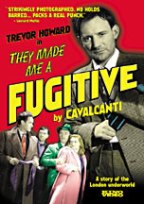
THEY MADE ME A FUGITIVE (AKA I Became A Criminal) (1947) – A FILM BY CAVALCANTI – STARRING TREVOR HOWARD & SALLY GRAY – Alberto Cavalcanti (Dead of Night), one of the key figures in French and British cinema for several decades, turns his sights on the London underworld in the engrossing Brit Noir gangland drama They Made Me a Fugitive. Set in unsettled postwar England where crime is on the upsurge, Fugitive is a suspenseful genre film which uses the picturesque Soho district as background to brilliant effect. The brooding and atmospheric cinematography of cameraman Otto Heller (Funeral in Berlin) is in the noir visual tradition, while the film’s authenticity is due to the director’s command of documentary technique. The London pubs, alleys, and back bedrooms turn into the poetry of urban realism.

THE HITCH-HIKER (1953) – A FILM BY IDA LUPINO – STARRING EDMOND O BRIEN, FRANK LOVEJOY & WILLIAM TALMAN – The only true film noir ever directed by a woman, this tour-de-force thriller (considered by many, including Lupino herself, to be her best film) is a classic, tension-packed, three-way dance of death about two middle-class American homebodies (Edmond O’Brien and Frank Lovejoy) on vacation in Mexico on a long-awaited fishing trip. Suddenly their car and their very lives are commandeered by psychopathic serial killer Emmett Myers (William Talman). The striking light/dark contrasts, the stunning compositions (such as the two kidnap victims separated by a narrow stream from a gun-cradling madman with a lazy eye) and the spatial integrity of a determining sense of locale (the pitiless topography of a rockbound, horizonless Mexico over which hovers an ever-present doom) all contribute mightily to this fascinating character study.