The Hitch-Hiker (1953): Desert Noir

The Hitch-Hiker (1953)Two ordinary Joes driving to Mexico on a fishing trip are waylaid by a serial killer on the run (RKO 71 mins). Directed by actress Ida Lupino and based on a true story adapted by maverick writer Daniel Mainwaring. Cinematography by veteran noir cameraman Nicholas Musuraca.

Usually billed nowadays as the only film noir directed by a woman, this b-noir starts out well but fails to develop sufficient tension and a flat ending disappoints.  Lupino’s direction is adequate, but the strong opening noir-lit scenes of urban hijack and murder would be largely the work of Musuraca. Even Musuraca seems to lose it in the open spaces of the Mexican desert where most of the subsequent action is played out.

The Hitch-Hiker (1953)

Star-billing is given to Edmond O’Brien and Frank Lovejoy as the hostages, but they are constrained by their largely passive roles, and it is b-noir regular, William Talman, in a memorable portrayal as the psychotic killer, who holds the picture together.  The desperado’s savage menace and barely contained hysteria is entirely convincing, and it is this that saves the movie from obscurity.

The Big Steal (1949): “Oh Mexico”

The Big Steal (1949)

Comedy melodrama. Army officer (Robert Mitchum) is framed for a robbery and sets off after the culprit in a wild car chase across Mexico with a swell girl (Jane Greer). A hoot! Directed by Don Seigel and written by Gerald Drayson Adams and Geoffrey Homes from a story by Richard Wormser.

Last year in an insightful post on Mexico and Film Noir on his mardecortesbaja.com blog, Lloydville said: “Greer and Mitchum in Out Of the Past have their romantic idyll in Mexico but can’t bring the magic of it back with them to the States.  This fits in with the notion of Mexico as a lost or unattainable paradise.  But sometimes the idea of Mexico went to filmmakers’ heads – they got giddy with the possibilities of it.  Films that started out noir would, once they crossed south of border, turn into larks, light-hearted and feckless. Re-teamed in The Big Steal, Greer and Mitchum venture into Mexico to try to extricate themselves from typical noir predicaments involving betrayal and unjust accusation, but the dark clouds vanish almost immediately – they find love and high-spirited adventure instead of noir’s dark, impenetrable maze, and all ends well.  Film noir expert Elizabeth Ward amusingly suggests that The Big Steal ought to be labelled fiesta noir…”

The Big Steal is a fun ride with a nice twist at the end that leaves you wanting more. Mitchum and Greer are magic together.  There are really funny running gags with Greer delivering great lines with wit and charm: any guy with blood in his veins will fall for her in this picture.

The Big Steal (1949)

The supporting cast is strong, with a great turn by the veteran Mexican-born  actor Ramon Novarro as a wiley Mexican police inspector, who has some magic lines. The scene where Greer fabricates an elopement story for the soft-hearted foreman of a road-gang is high farce infused with a true empathy and affection for the romance of Mexico and her people. This affection permeates the whole film with a sense of true liberation.  The bouncy Mexican musical soundtrack echoes this mood of fun and adventure.

Two of my favorite songs reflect this love of Mexico: Elvis singing Mexico (Tepper,Bennett) in his 1963 movie Fun In Acapulco, and James Taylor’s Mexico. Elvis sings Mexico with such joy that for as long as the song lasts his voice takes you there:

Mexico, Mexico
They’ve got muchas, mucha-chas, amigos
…Latin features, never saw such adorable creatures
…Love to dig, ooh…the nights here

We live it up and love it up amigo
Life begins when you’re in Mexico

You never order, water
When you order south of the border
…In to kiss a lovely senorita
You do the samba, la bamba
…I’ll go where you go
Life begins when you’re in Mexico

Mexico, Mexico
They’ve got muchas mucha-chas, amigos
…never saw such adorable creatures

We’ll live it up and love it up amigo
Life begins…when you’re in…MEXICO…

James Taylor’s Mexico is more plaintive and shares a longing for some mythical place:

Way down here you need a reason to move
Feel a fool running your stateside games
Lose your load, leave your mind behind, Baby James

Oh, Mexico
It sounds so simple I just got to go
The sun’s so hot I forgot to go home
Guess I’ll have to go now

Americano got the sleepy eye
But his body’s still shaking like a live wire
Sleepy Senorita with the eyes on fire

Oh, Mexico
It sounds so sweet with the sun sinking low
Moon’s so bright like to light up the night
Make everything all right

Baby’s hungry and the money’s all gone
The folks back home don’t want to talk on the phone
She gets a long letter, sends back a postcard; times are hard

Oh, down in Mexico
I never really been so I don’t really know
Oh, Mexico
I guess I’ll have to go

Oh, Mexico
I never really been but I’d sure like to go
Oh, Mexico
I guess I’ll have to go now

This love for Mexico is expressed more deeply and poetically in Jack Kerouac’s On the Road:

I was alone in my eternity at the wheel, and the road ran straight as an arrow. Not like driving across Carolina, or Texas, or Arizona, or Illinois; but like driving across the world and into the places where we would finally learn ourselves among the Fellaheen Indians of the world, the essential strain of the basic primitive, wailing humanity that stretches in a belt around the equatorial belly of the world from Malaya…to Morocco to the selfsame deserts and jungles of Mexico.

Oh Mexico…

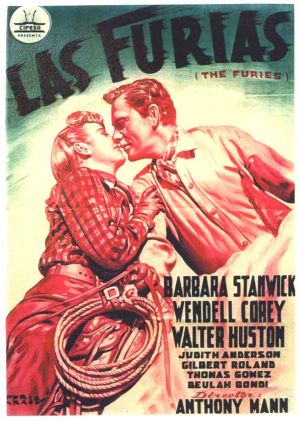
New Criterion DVD: “The Furies”

The Furies (1950)

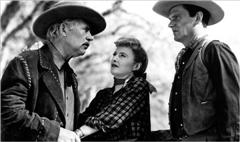
Criterion today released on DVD one of the great noir westerns, The Furies (1950) directed by Anthony Mann.

From the LA Times review by Dennis Lim:

In truth, “The Furies,” frontier setting notwithstanding, barely counts as a western. There are elements of film noir in both the plot and the look; many key scenes unfold under cover of darkness (Victor Milner earned an Oscar nomination for his moody cinematography). Above all, though, it plays like a Freudian melodrama, dissecting the hysterical and ultra-competitive love-hate relationship between widowed patriarch T.C. Jeffords ( Walter Huston) and his headstrong daughter, Vance ( Barbara Stanwyck).

From the NY Times review by Dave Kehr:

Mann gives the action a metaphysical dimension that overwhelms easy psychoanalytic readings. As in his films noirs (Raw Deal, Desperate), he systematically composes his shots to create a sense of instability, using lines of perspective or boldly massed foregrounds to pull the images off balance. The titanic struggle between father and daughter has knocked the world off its axis.

The Furies (1950)

Links:
LA Times Review by Robert Lim
NY Times Review by Dave Kehr
Criterion: The Furies
The New Yorker Review by Richard Brody
The House Next Door Review by Dan Callaghan

Rare Screenings at Fifth Annual Albuquerque Film Noir Festival

Repeat Performance

This year’s 5th Annual Noir Film Festival, which started Friday today at the Guild Cinema in Nob Hill, Albuquerque (3405 Central Ave NE  255-1848), features some rarely screened titles that should have local film noir fans very excited:

JUNE 20 & 21 (FRIDAY & SATURDAY):

The Hidden Room

DOUBLE INDEMNITY (3:00, 7:00)
Dir. Billy Wilder – 1944 – 107m

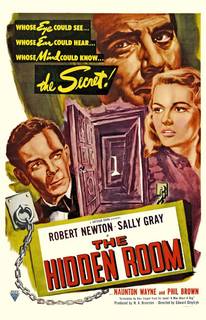
THE HIDDEN ROOM (a.k.a. OBSESSION) (5:10, 9:10)
Dir. Edward Dmytryk – 1949 – 96m – UK

JUNE 22 & 23 (SUNDAY & MONDAY):

REQUIEM FOR A HEAVYWEIGHT
The Original “Playhouse 90” Live Television Version (3:30, 7:00)
Dir. Ralph Nelson – 1956 – 90m

99 RIVER STREET (5:15, 8:45)
Dir. Phil Karlson – 1953 – 86m

JUNE 24 & 25 (TUESDAY & WEDNESDAY):

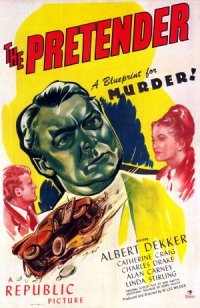
The Pretender

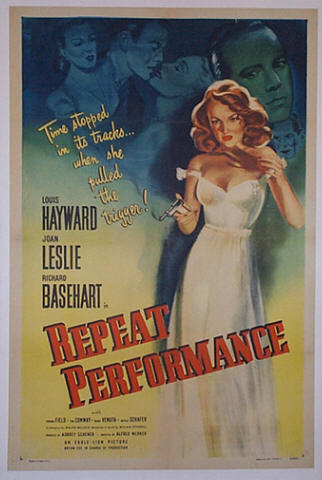
REPEAT PERFORMANCE (5:15, 8:30)
Dir. Alfred L. Werker – 1947 – 91m

THE PRETENDER (7:00 ONLY)
Dir. W. Lee Wilder – 1947 – 69m

JUNE 26 & 27 (THURSDAY & FRIDAY):

TOMORROW IS ANOTHER DAY (3:10, 7:00)
Dir. Felix E. Feist – 1951 – 90m

KANSAS CITY CONFIDENTIAL (5:00, 8:45)
Dir. Phil Karlson – 1952 – 99m

JUNE 27 & 29 (SATURDAY & SUNDAY):

WIDMARK AND DASSIN
NIGHT AND THE CITY (2:30, 6:30)

ROAD HOUSE (4:30, 8:30)
Dir. Jean Negulesco – 1949 – 95m

JUNE 30 & JULY 1 (MONDAY & TUESDAY):

RARELY-SCREENED JOSEPH LOSEY
THE BIG NIGHT (5:30, 8:35)
Dir. Joseph Losey – 1951 – 75m

QUICKSAND (7:05 ONLY)
Dir. Irving Pichel – 1949 – 79m

JULY 2 & 3 (WEDNESDAY & THURSDAY):

CINEMATOGRAPHER JOHN ALTON IN TECHNICOLOR
SLIGHTLY SCARLET (5:00, 9:00)

JOSEPH LOSEY IN THE U.K.
THE CRIMINAL (7:00 ONLY)
Dir. Joseph Losey – 1960 – 97m – UK – Shown on digital video

JULY 4 & 5 (FRIDAY & SATURDAY):

CRY OF THE CITY (3:30, 7:05)
Dir. Robert Siodmak – 1948 – 95m

RARE SCREENING
CELL 2455, DEATH ROW (5:30, 9:05)
Dir. Fred F. Sears – 1955 – 77m


JULY 6 & 7 (SUNDAY & MONDAY):

RESTORED 35MM PRINT
THE BLACK BOOK (a.k.a. REIGN OF TERROR) (3:30, 7:00)
Dir. Anthony Mann – 1949 – 89m

STRANGE ON THE RANGE!
TERROR IN A TEXAS TOWN (5:20, 8:45)
Dir. Joseph H. Lewis – 1958 – 81m

JULY 8 & 9 (TUESDAY & WEDNESDAY):

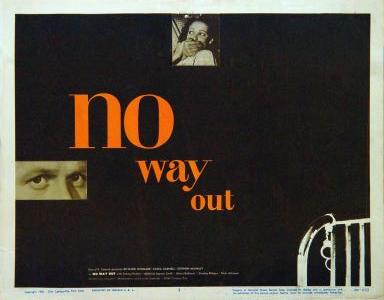
No Way Out

THE CRIMSON KIMONO (5:20, 9:05)
Dir. Sam Fuller – 1959 – 81m

RICHARD WIDMARK
NO WAY OUT (7:00 ONLY)
Dir. Joseph L. Mankiewicz – 1950 – 106m

Full details here.

Key Largo (1948): Almost Noir


Key Largo (1948)

Returning WW2 vet fights gangsters on the Florida keys

The director of Key Largo, John Huston, co-wrote the screenplay with Richard Brooks, from a play by Maxwell Anderson.  The stage origins of the film are evident, but this strengthens the atmosphere of claustrophobia as the action is played out inside a seaside guest-house boarded-up against a hurricane.

The cast is particularly strong with Humphrey Bogart as the war vet, Edward G. Robinson as the over-the-hill gangster Johnny Rocco staging a comeback, with Claire Trevor as his alcoholic mole and Thomas Gomez as Rocco’s No.2, and Lauren Bacall as a young war widow with the legendary Lionel Barrymore as her father-in-law. Trevor deservedly won a best-supporting-actress Oscar for her role.

For some the returning war vet theme gives the movie a film noir quality – even though the action takes place in a non-noir locale and there is no cross-over between the good guys and the bad guys. I feel the picture is essentially a good-triumphs-over-evil tale laced with a swan-song for the gangster flick and leavened with post-war existentialist angst.

Bogart’s vet, Frank McLoud, shares the angst  of post-war Europe, where many returning to the peace with expectations of a better world that would justify the suffering and destruction, are confronted with the reality that nothing has changed. Disillusioned and bitter, the moral absolutism that underpinned their sacrifice dissolves into a weary relativism where one less Johnny Rocco is not worth dying for.

The climax and resolution of the story complete with a non-noir ending, also give little support to the view that Key Largo is a film noir. As the final scene hits the screen, it is the strength of family and the selfless pursuit of established values that destroy evil, with the existential anti-hero morphing into a hero of the classic mold. As McLoud says: “When your head says one thing and your whole life says another, your head always loses.”

Key Largo 1948

Woody Haut’s Blog: Noir Fiction and Film

I Wake Up Screaming

For those of you interested in the writers of noir fiction and the Hollywood screen-writers who penned the movies of the classic noir period, a visit to Woody Haut’s Blog is strongly recommended. Woody Haught is a journalist and the author of Pulp Culture: Hardboiled Fiction and the Cold War, Neon Noir: Contemporary American Crime Fiction, and Heartbreak and Vine: The Fate of Hardboiled Writers in Hollywood.

His essays are well-written and provide some fascinating insights. These sample posts should be of direct interest to readers of FilmsNoir.Net:

The Woman in the Window (1944): Over-rated

The Woman in the Window (1944)“The shopworn and superfluous ending has all the impact of a stale peppermint upon a man who has ordered a steak dinner.”
– Motion Picture Herald on the film’s release

Even without the cop-out ending, I find it hard to see Fritz Lang’s The Woman in The Window as other than a minor film noir. Although Freudian symbolism abounds and the noir theme of lives destroyed by chance events and small decisions is deftly handled, the movie is slow and ponderous – like the middle-aged law professor protagonist. Definitely one of Lang’s lesser works. Lang’s similarly-themed Scarlet Street (1945), made a year later with the same leads, is much stronger.

To give it credit the picture was popular with audiences and made money, but producer and screenwriter, Nunnally Johnson, was less than impressed, and it was received coolly by the critics.

In an interview in 1975, Lang justified the ending in these words:

This movie was not about evil… it was about psychology, the subconscious desires, and what better expression of those than in a dream, where the libido is released and emotions are exxagerated… [an] audience wouldn’t think a movie worthwhile in which a man kills two [sic] people and himself just because he had made a mistake by going home with a girl…

The irony of the second part of the quote will not be lost on film noir aficionados.

The Woman in the Window (1944)

Mildred Pierce (1945): “alligators have the right idea… they eat their young”

Mildred Pierce (1945)

“this etched-in-acid film chronicles the flaws in the American dream…”
– Steven H. Scheuer

“Constant, lambent, virulent attention to money and its effects, and more authentic suggestion of sex than one hopes to see in American films.”
– James Agee

Mildred Pierce (1945)

One of the great Hollywood melodramas with an Oscar-winning performance from the luminous Joan Crawford as Mildred. Better than the James M. Cain novel on which it is based, Mildred Pierce under the assured direction of Michael Curtiz, and with stunning film noir photography by cinematographer Ernest Haller, is top-class entertainment.

The story of family tragedy played out against the pursuit of the California dream of wealth and ease through hard-work and ambition destroyed by wastrel conceit and shameless greed, is as strong an indictment of the moral corrosiveness of wealth and privilege as Hollywood has achieved. But it is also a story of profound humanity and the worth of simple decency and personal integrity. Mildred makes tragic mistakes and misplaces her trust and love, but she is always true to herself, and in even in her darkest hour towers above the morass of greed and selfishness that would suck her down.

These frames from the movie illustrate the visual dynamite that explodes on the screen in the film’s most dramatic moments:

This slideshow requires JavaScript.

The Devil Thumbs A Ride (1947): A Dark Little Gem

devilthumbsrideThe Devil Thumbs A Ride (1947) made as a B-filler by RKO is a tight thriller that takes only 63 minutes from the first gun-shot to the last. Tough guy actor Lawrence Tierney plays Steve Morgan, a cold-blooded killer on the run.

The leaky plot and B-grade supporting cast add a camp quality to the mix, and there are plenty of high-jinks with crackling dialog and absurd twists that keep you mesmerised: a highlight is when Morgan is on his knees cleaning a spot off a rug after a house has been trashed, and asks for cleaning fluid…

Why a film noir? There is a profoundly tragic element in the needless brutal death of a young female drifter who also thumbs a ride in a morbid turn of fate. The role is nicely played by a Betty Lawford, in her only major role.

Watch it as it was intended – as the first movie in a double-feature.

The Big Sleep (1946): Love’s Vengeance Lost

The Big Sleep 1946

Howard Hawks’ The Big Sleep is one of the truly great Hollywood pictures: the Raymond Chandler novel is brought to the screen with panache and authority, and the chemistry between Bogart and Bacall is unsurpassed.

While the protagonist lovers are good guys and there is no femme-fatale, the movie has a strong noir aura. The darkly lit atmosphere and strong sexual tension shape our response to a grim and dissolute nether world where PI Philip Marlowe doggedly solves an enigma within a mystery, in a plot so convoluted not even the film-makers fully understood it.

The picture is essentially a love story where the lovers must overcome mutual distrust and risk all to escape a brutal nightmare of betrayal and death. The Big Sleep is a lot darker than the earlier Murder, My Sweet (aka Farwell, My Lovely – 1944). The Marlowe of The Big Sleep is tougher, more driven, and morally suspect.

I find the actions of Marlowe in the final reel disturbing. He is almost a proto-Dirty Harry. Clearly shaken by the death by poisoning while he stood by of the small-time hood who leads Marlowe to the final showdown, Marlowe responds with vengeful brutality in the shootout with the goon, Canino, and then in the final scene when he confronts the crooked casino-operater, Eddie Mars.

While the killing of Canino at a stretch can be put down to self-defense, there is no moral justification apart from vengeance in the way Marlowe engineers the death of Eddie Mars – the killing is gratuitous and was not the only way out for Marlowe and Vivian. It is this final scene that marks The Big Sleep as a film noir. Marlowe has survived and got the girl – but at what cost?