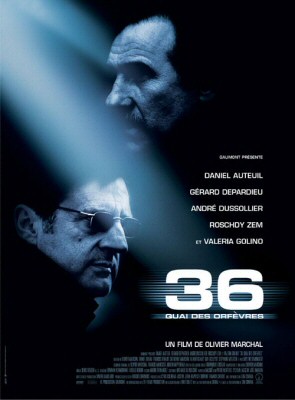
This neo-noir cum policier is a must see thriller with stunning noir cinematography. Olivier Marchal’s direction is relentless, with great performances from a stellar cast. This is Paris hip, dark, and mean.

FilmsNoir.Net – all about film noir
the art of #filmnoir @filmsnoir.net | Copyright © Anthony D'Ambra 2007-2025
This neo-noir cum policier is a must see thriller with stunning noir cinematography. Olivier Marchal’s direction is relentless, with great performances from a stellar cast. This is Paris hip, dark, and mean.

A married DA falls for a woman with a past
Thelma Jordan, the last film noir by Robert Siodmak is under-rated, and not because of Siodmak, whose lacklustre direction disappoints, but for the intelligent script and a bravura performance from Barbara Stanwyck, who plays Thelma, the woman with a past. I have deliberately not described her as a femme-fatale, as her character is multi-layered. She is trapped by her past but genuinely loves the DA who falls for her.
Noir determinism propels the story, which to a degree is melodramatic and contrived, but the pyschological elements and literate study of the dynamics of marriage and immaturity give the film more depth than most melodramas.
“Id’ like to say I didn’t intend to kill her, but when you have a gun, you always intend when you have to…”

As introductions to film noir, you can’t go past these two books, which are immensely readable and entertaining:
The Rough Guide to Film Noir (2007)
A great introduction that covers the genre from early German expressionism to the latest neo-noirs, and highlights the movies to look out for.
Film Noir by Alain Silver (2004)
A general overview of film noir covering its most important themes with many rare stills. Among the films covered are: Double Indemnity, Kiss Me Deadly, Gun Crazy, Criss Cross, Detour, In A Lonely Place, T-Men, Out of the Past, The Reckless Moment, and Touch of Evil.

The banal and squalid machinations of a floozey and her pimp, and a lonely older man’s infatuation lead to inevitable destruction
Scarlet Street, a classic film noir from Fritz Lang, shattered the closed romantic realism of Hollywood. It is unremitting in its pessimism. A dark mood and pervading doom are devastating in their intensity.
On the surface the streetwalker Kitty (Joan Benett) is the femme-fatale to Edward G. Robinson’s chump, Chris, with her manipulative and abusive no-good boyfriend as her ally. But Kitty is not an active protagonist. She is an empty-headed girl who thinks she is in love with her pimp, Johnny (Dan Duryea), and who is pushed all the way by his cheap stratagems to milk Chris for money.
Like the Swede in Criss Cross, Chris is not so much dealt a raw deal by fate but by his own naivety and irrational need to believe that Kitty loves him.

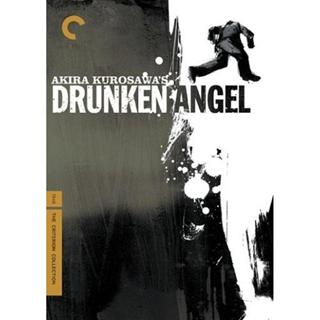
Drunken Angel is the first Kurosawa film starring Toshiro Mifune, and has a strong noir mood.
From the New York Times review of the new Criterion release 27 November:
The liner notes for this Criterion Collection release identify Drunken Angel as a film noir, and visually the movie often suggests the dark, dangerously askew world that Hollywood directors like Anthony Mann and Robert Siodmak were developing during the same period in their urban thrillers. But thematically “Drunken Angel” hails back to an earlier genre, the tenement dramas of the 1920s and ’30s… with their principled heroes and calls for social reform. For every virtuoso sequence – like the Mifune character’s climactic knife fight with his former gang boss, which ends with the two squirming in a pool of white paint – there is a bluntly didactic scene in which the doctor rails against feudal traditions and demands better hygiene.
Shimura and Mifune went on to play symbolic father-and-son-type pairs in several Kurosawa films, including the dazzling and more truly noir-flavored Stray Dog of 1949; their pairing seems to represent the fundamental division in Kurosawa’s work between high-minded sentiment and down-and-dirty action. (Criterion Collection, $39.95, not rated.)

Now that I have your attention.
I have just been googling with Google Scholar, and have been amazed at the wealth of film noir material this Beta service unearths. There are book extracts, complete books, and journal articles on many and varied aspects of the genre.
This brings me to the heading for this post. A very interesting article I uncovered comes from the Journal of Criminal Justice and Popular Culture: Personality Disorder And The Film Noir Femme Fatale by Scott Snyder of the University of Georgia:
Motion pictures can influence the development of both normal and disordered personality. The femme fatale of the film noir movies of the 1940s and 1950s is representative of several related personality disorders characterized by histrionics, self-absorption, psychopathy, and unpredictability. This report will examine how various societal factors occurring during World War II and its aftermath influenced the portrayal of these disordered females and how these depictions, in turn, reflected and influenced American culture at the time. Specific reference to issues of criminology, economics, gender, as well as feminist viewpoints on this phenomenon will be explored.
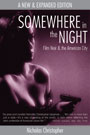
Intellectually stimulating, thoroughly researched, and excellently written. Christopher writes with the mind of a scholar and the heart of a poet . – Publishers Weekly
As Christopher observes . . . film noir is more than just a style – it’s a way of looking at the world, ‘a dark mirror reflecting the dark underside of American urban life’. – Michiko Kakutani, New York Times
Author Nicholas Christopher from this new and expanded edition of Somewhere in the Night: Film Noir and the American City
I had seen film noirs before, with only the vaguest notion of what that term really signified (something dark and sinister?), and was attracted by their unique visual style, gritty, textured rendering of urban life, sharply drawn characters, and psychological complexity.
Starting with the classic Out of the Past, Christopher explores over 300 films noir by identifying the genre’s central motif: “The city as labyrinth is key to entering the psychological and aesthetic framework of the film noir.”.

Some more interesting articles on Film Noir:
Film Noir’s Knights of the Road by John Belton
What Is This Thing Called Noir? by Alain Silver and Linda Brookover
10 Shades of Noir – Film Noir: An Introduction
Beyond the Golden Age: Film Noir Since the ’50s by C. Jerry Kutner
Dames in the Driver’s Seat: Rereading Film Noir by Deane R Coolidge
Orson Welles’s The Trial: Film noir and the Kafkaesque by Jefftrey Adams
Naremore and Noir: More than night by Lev Peter
Film Noir by Chris Routledge
Creatures of Darkness: Raymond Chandler, Detective Fiction, and Film Noir M S Peters

These thumbnail interpretations from the book Film Noir by Alain Silver and James Ursini, are compelling renditions of the two essential themes of film noir:
The Haunted Past… In the noir world both past and present are inextricably bound… One cannot escape one’s past… And only in confronting it can the noir protagonist hope for some kind of redemption, even if it is at the end of a gun.
The Fatalistic Nightmare. The noir world revolves around causality. Events are linked… and lead inevitably to a heavily foreshadowed conclusion. It is a deterministic universe in which psychology… and even the structures of society… can ultimately override whatever good intentions and high hopes the main characters may have.
(p. 15)

An unusual film from pulp noir director, Samuel Fuller, set in LA’s Little Tokyo. The search for the killer of a stripper brutally gunned down in late-night traffic on the streets of LA is the pretext for a deft study of race, love, jealousy, and friendship. Fuller’s signature expressionist lighting, jumpy takes, and jarring jazz score keep the viewer off-balance.
Fuller’s screenplay takes us from inner-city sleaze to a Shinto temple and back. There are intriguing conversations on art and painting, love and music, race and prejudice, loyalty and friendship, that not only propel the narrative but also give the major characters amazing depth and complexity for such a short film (82 mins). The thriller aspect is not neglected with an exciting surprise ending.

I am struck by Fuller’s humanity. Little Tokyo is not a just an exotic locale, it is place of genuine interest that is explored with intelligence and respect. There is a quiet hiatus in a Shinto temple where a peripheral character, a Japanese-American man, attends a memorial service for his son, a US soldier killed in action.

A strong performance by then new-comer, James Shigeta, as an LA cop, is complemented by solid support from Glenn Corbett as his police partner and ex-Army buddy. Victoria Shaw and Anna Lee shine as the female leads Chris and Mac, intelligent women of contrasting ying and yang persuasions: Chris the demure innocent abroad and love interest, and Mac as the hard-drinking painter and proto-feminist with a heart of gold. Fuller truly loved and respected women, taking the noir genre beyond the narrow misogyny of the femme-fatale stereotype.
Enjoy it on a wide-screen.

 FilmsNoir.Net - all about film noir