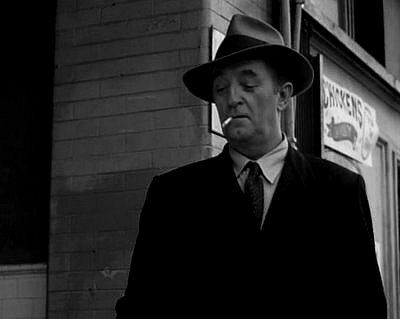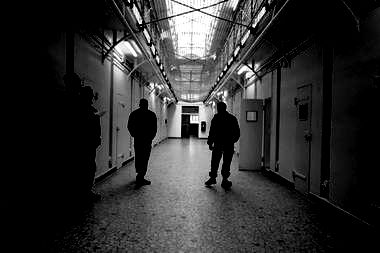
Noir Poets: Johnny Cash

In Your Mind

In your mind, in your mind
One foot on Jacob’s ladder
And one foot in the fire
And it all goes down in your mind

Living at the bottom of the stairs in your life
Never a smile knocking on your door
The air is blue and so are you
Prehistoric monsters on the floor

Last verse of your last song
And God don’t hear dead men
The end of the line is in your mind
And you’ll be staying in

In your mind, in your mind
Bone for bone and skin for skin
Eye for eye and tooth for tooth
Heart for heart and soul for soul
Somebody said what is true

Lock it up and close it down
The sound of morning like a dove
High beyond the rattle and roar
Look into the face of love

In your mind, in your mind
One foot on Jacob’s ladder
And one foot in the fire
And it all goes down in your mind

In your mind, in your mind
Sunday words are back again
And you’ll eat your fun of the middleman’s pie
But just a piece you understand
You’ll get the rest up in the sky

Praise and glory, wounded angel
Shuffling round the room
Eternity is down the hall
And you sit there bending spoons
In your mind, in your mind
Father, son and holy ghost
Sacrificial drops the pain
On a silver planet cross
Sanctification on a chain

They say redemption draws knives
Storms of silence from above
Stop your ears close your eyes
Try to find the face of love

In your mind, in your mind
One foot on Jacob’s ladder
And one foot in the fire
And it all goes down in your mind

________________________________________
Johnny Cash  (1995) Song of Cash, Inc (ASCAP)
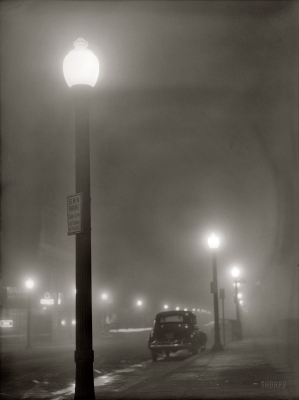
The Noir City: The fog of angst


Foggy night in New Bedford Massachusetts January 1941
Jack Delano – US Office of War Information

Full Confession (1939): Interesting Early Noir

Part of the fun of having an interest in old movies is discovering an obscure title. Full Confession is so obscure that I could find only one frame and a lobby card on the Web, and no posters. It is not on DVD and while TCM has the movie in its catalog, it is not currently scheduled. I caught it on late night television over here.

While Full Confession is no lost gem, it deserves attention. Ostensibly a b-melodrama from the RKO factory, it is interesting for a number of reasons.

A compelling if contrived plot has a Catholic priest from an Irish parish connected in the fate of two men: a family man unjustly facing the chair for murder and the actual killer, who has been paroled from a stretch for robbery. The killer who had after a prison ‘accident’ confessed to the murder to the priest in a death-bed confession, survives after receiving a blood transfusion of the priest’s blood. The killer is not an evil man but tragically impulsive and this, together with his loving relationship with a modest and decent woman who is not aware of his guilt, evoke sympathy for his desire to ignore his conscience and make a new life. The dramatic tension of the priest being bound by the secrecy of the confessional and the imperative to save an innocent man drives the narrative once the killer is released.

A strong film crew and cast give the movie a certain patina. The director is John Farrow with cinematography by Roy Hunt, and original music by Roy Webb. An ensemble of veteran character actors complete the picture: Victor McLaglen plays the killer, Sally Eilers is the girl he loves, Joseph Calleia plays the priest, and Barry Fitzgerald the condemned man.

Farrow and Hunt while hobbled by some clunky expository sequences, which are largely the fault of the script, for the most part fashion impressive dramatically expressionistic scenes from, by necessity, darkly-lit studio sets, evoking the protagonist’s state of mind as he battles with his conscience and lashes out with desperate physical responses to his predicament. There are also well-constructed collages and voice-overs to portray his inner turmoil evocatively underscored by Roy Webb’s eerie orchestral accompaniment. Farrow uses the camera with panache and many scenes see the mise-en-scene explored with fluid elegant takes. Some scenes are overtly self-conscience, but are within the limitations imposed by the constraints of b film-making, and to be expected.

This expressionism and evident noir motifs I think fully qualify Full Confession as an early noir. We have the themes of fate dealing losing cards, physical entrapment and mental anguish, and redemption as a double-edged sword.

Essential if you are interested in the origins of the classic film noir cycle.

The Noir City: Electric stars on main street

No colors anymore I want them to turn black

Electric stars on main street
No moonlight
A desert wilderness of concrete and steel
Sphinx cars abandoned relics
of  broken dreams
gravestones for lost souls

Winna Winifried in Renoir’s La Nuit du Carrefour (1932): “a bizarre gamin”

For Else

Stoned, immaculate

Siren for a delicious purgatory
a wanton butterfly she flutters wings that beckon
to a bed of lurid bliss

She mopes she languishes she swoons
she formulates a trajectory to the stars
from the milky way of her bosom to the glistening ivory of her ice cold thighs

A gambit for a gentle trap so you can fall into a warm moist grotto
and shut her doe eyes with kisses four

She does not leave you by a cold hill side
but caresses your tongue in her luscious mouth
her lips labia that clasp a deep penetration
and hold you transfixed

She leaves you a broken wreck
panting for more

You beg for
just a glimpse

An insolent glare has you shuddering
you want her to incinerate you with those eyes
incendiary transports to a cosmic nirvana

Her anger and petulant pout
a delirium
a narcotic –
you will expire for a fix

Until she graces her enfolding embrace over you
and sighs deep ecstatic sighs

Agony
Until she turns you to her
and you drown in a dark languid pool


Alias Nick Beal (1949): The Devil wears Armani

“I don’t do much business with preachers”

Alias Nick Beal (1949)

Ray Milland is Lucifer, alias Nick Beal ‘Agent’, who, with the help of b-girl Audrey Totter goes shopping for the soul of honest DA and aspiring governer Thomas Mitchell.  Add to the mix smart direction from John Farrow, a killer script from Jonathon Latimer, superb noir lensing by Lionel Lindon, and a haunting score from Franz Waxman. Garnish with a bespectacled George Macready cast against type as a reverend running a boy’s club, and you have a thoroughly entertaining melodrama. Milland dominates as Beelzebub in a sharp suit and rakish fedora. He slaps, ices, insinuates, and connives a swathe through the earnest life of Joseph Foster DA, after with his help Foster naively cuts a legal corner in nailing a hood.  The mis-en-scene is canny, and particularly inspired is the use of a seedy wharf-side bar as Nick’s ‘office.’ The only weakness is the bible-saves ending, though Nick is left free to disappear into a harbor fog to corrupt other souls.

The story offers an intriguing twist to the noir punishment and redemption motifs.  Nick has a written contract for the DA’s soul – vetted  as enforceable by his global legal team – which will only be triggered if when-push-comes-to-shove Foster does the right thing by a public mea-culpa and renouncing of his ill-gotten gains.  A wily trap indeed.   The jaws snap shut at the instant of redemption. But a noir ending would have had the hapless DA disappearing into the fog en-route to the Island of Almas Perdidas.

Noir Poets: Raymond Chandler

Farewell My Lovely (1975)

It got darker. I thought; and thought in my mind moved with a kind of sluggish stealthiness, as if it was being watched by bitter and sadistic eyes. I thought of dead eyes looking at a moonless sky, with black blood at the corners of the mouths beneath them. I thought of nasty old women beaten to death against the posts of their dirty beds. I thought of a man with bright blond hair who was afraid and didn’t quite know what he was afraid of, who was sensitive enough to know that something was wrong, and too vain or too dull to guess what it was that was wrong. I thought of beautiful rich women who could be had. I thought of nice slim curious girls who lived alone and could be had too, in a different way. I thought of cops, tough cops that could be greased and yet were not by any means all bad, like Hemingway. Fat prosperous cops with Chamber of Commerce voices, like Chief Wax. Slim, smart and deadly cops like Randall, who for all their smartness and deadliness were not free to do a clean job in a clean way. I thought of sour old goats like Nulty who had given up trying. I though of Indians and psychics and dope doctors.

Raymond Chandler, Farewell, My Lovely, 1940, ch.34 par.3

When Strangers Marry (1944): Into the seething labyrinth

When Strangers Marry (aka Betrayed 1944)

The noir city in all its desperate foreboding: a dancing sign flashes in an angel’s face.  An angel innocent and afraid yet ventures into the seething labyrinth with a stranger, her husband, running from capture into the city of entrapment.

You trust no-one, fear the worst, and blunder from one dead-end into another.  Dark faces and sharp dressers in sinister doorways.  Share a cab with a bawling waif, a dying woman on borrowed time, and a suspicious driver.  Stop! Get out!  Onto dark streets, smoke-filled dives, cafés on the edge of purgatory, and hellish rooms for rent.  A young girl in pig-tails as likely to betray you as the mother with arms folded in menace then her cold hand out for payment in advance.  Nowhere left to run.  The rented room a cell you can’t leave.

“I didn’t do it.” You believe him, why did he run?

They find you anyway, and take him away.

Where to now? The loyal ex, the nice guy you rejected with his pipe and his dog. He’ll know. Back to the hotel.  A letter sent too early, an echo of another to be sent, waiting for you.  What does it mean? Turn around fast. The street is a long way down. Run.  The beau doesn’t, it’s all cool. Packs his bag, stuffs an envelope, and mails it at the lift-well while the inquisitive cop isn’t looking.  He can’t sweat it though, he panics, it all falls down, and the new letter bursts open with the truth.

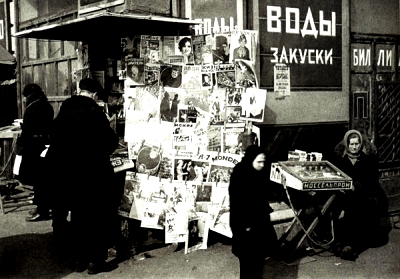
Noir Poets: M. Ageyev

Moscow 1929

And there were boulevards that seemed boring at first, but were not, boulevards where the sunflower shells were so thoroughly mixed with the dust-grey sand that they could not be swept away; where the pissoir, in the form of a slightly raised, partially open scroll, gave off such a smell that it made one’s eyes smart from a distance; where the evenings brought out painted old women in rags hawking twenty-kopeck love in lifeless, scratchy gramophone-record voices, while the days saw people scurrying past the circus poster of a beauty in tights leaping through a torn hoop, her peach-coloured thigh pierced by the nail holding the poster in place; and if anyone did chance to perch on a dusty, empty bench, it was merely to rest his load or else, having gobbled up enough sulphur matches or taken a sufficient swig of acid from the apothecary’s phial, to fall on his back and, writhing in pain, have one last look at the watery Moscow sky above him.

M. Ageyev, Novel With Cocaine, 1929 (?)
translated from the Russian by Michael Henry Hein (Picador 1985)

Noir Poets: Jim Morrison

Jim Morrison - The Lords and The New Creatures.jpg

The City. Hive, Web, or severed
insect mound. All citizens heirs
of the same royal parent.

The caged beast, the holy center,
a garden in the midst of the city.

“See Naples & die.”
Jump ship. Rats, sailors
& death.

So many wild pigeons. Animals
ripe w/ new diseases.
“There is only one disease
and I am its catalyst,”
cried doomed pride of the carrier.

Fighting, dancing, gambling,
bars, cinemas thrive
in the avid summer.

From The New Creatures (1970)