Journey Into Fear (1943): Oriental Intrigue

Journey Into Fear (1943)

An hapless US munitions engineer visiting the Levant is the target of Gestapo spies
(1943 RKO. Directed by Norman Foster 79 mins restored version)
Unreleased preview version 91 mins

A Mercury Theater Production
Cinematography by Karl Struss
Screenplay by Joseph Cotten, Richard Collins, Ben Hecht and Orson Welles
Novel by Eric Ambler
Original Music by Roy Webb and Rex Dunn
Art Direction by Albert S. D’Agostino and Mark-Lee Kirk

Starring:
Joseph Cotten – Howard Graham
Dolores del Rio – Josette Martel
Orson Welles – Colonel Haki
Ruth Warrick – Mrs. Stephanie Graham

The official historical record has it that Orson Welles simply played a role in this movie, but original sources confirm that the film owes a lot to his creative genius. He had a part in writing the screenplay and in the direction. As Borde and Chaumeton say in their book A Panorama of Film Noir (1955):

“Journey into Fear, or ‘how fear makes people heroic’, bears the signature of Norman Foster, to be sure. But then Orson Welles collaborated on the scenario, and the exceptional breeziness and subtlety of his style emerge in the precision of the shooting script and the plastic beauty of the photography. Basing the film on a spy case that’s only a pretext and visibly turns into a hoax, Foster and Welles have rediscovered the chief laws of the noir genre: an oneiric plot; strange suspects; a silent killer in thick glasses, a genuine tub of lard buttoned up in a raincoat, who before each murder plays an old, scratched record on an antique phonograph; and the final bit of bravura, which takes place on the facade of the grand hotel of Batum. We may admire Orson Welles, with graying hair and mustache, in one of those minor, easy-going roles in which he excels: the Turkish Colonel Haki, head of the intelligence service and a womanizer.”

After mutilating The Magnificent Ambersons (1942) the year before, the studio bosses at RKO unsheathed their hatchets and hacked the completed Journey Into Fear from 91 minutes to 69 minutes for the US version and 71 minutes for the European release, and this was after various cuts from the screenplay required by the Breen office and The Legion of Decency. The 79 minute version currently available is a partial restoration, and the Welles.Net archive has a report of a further restoration. This report also provides some fascinating background on which scenes were cut.

The censors of the time, as from time immemorial, didn’t want audiences to have any fun, so as well cutting most political talk, they also had removed many scenes with ironic sexual references and any mention of religion. Still Journey Into Fear survives as a fascinating movie with moody atmospherics, exotic locales, sexy dames, weird villains, politics, wisdom, philosophy, and a wry humor.

A flawed gem, the picture is in a class of its own, and reminds me of John Huston’s glorious Beat The Devil (1953). Both movies have one guiding tenet: life is meant to be irreverent fun!

The beautiful opening shot before the credits that cranes up and peers into the window of a dingy hotel room at night and ends only after 80 seconds when the occupant leaves, and the magnificent climax on the outside ledges of another hotel at night during a rain-storm, are signature Welles. Welles has been quoted as saying that during filming, while the job of direction was given to Norman Foster, scenes were directed by “whoever was nearest the camera”. Bosley Crowther wrote in the NY Times on the film’s release: “that final duel in the beating rain on the ledge of a Batum hotel Mr. Foster [sic] has directed a melodramatic climax that is breathless and intense.”

Journey Into Fear (1943)

Those familiar with the early novels of Englishman, Eric Ambler, will know that the on-screen person of Joseph Cotton is a perfect fit for the typical Ambler hero: a timid middle-class everyman who becomes unwittingly embroiled in a nefarious and dangerous caper where he discovers guile and courage he never thought himself capable of, and after his adventure, is happy to return to the succour of a comfortable obscurity. Welles himself has a rollicking good-time hamming it up as a womanising Turkish intelligence officer. Dolores Del Rio is wonderful as a cabaret singer with sexy exotic charm, loyalty, and a calm worldly-wise aplomb: she is the perfect foil to the shy and unromantic Cotten.

The art direction for the early cabaret scene where Cotton is made to realise he is the target of a hit-man is beautifully evocative, and the whole sequence is immensely entertaining. When the action quickly moves to a tramp steamer, the sense of claustrophobia is deftly handled. To quote Crowther again: “The fright of the ordnance expert is constantly underscored by an uncanny use of light and distorted shadows in the ratty corridors of the ship; in a blacked-out cabin one senses the terror of the hidden expert as footsteps echo from the pitch-dark screen”.  Supporting roles that impinge on the protagonist have significant dialog and their characterisations are deeply drawn and well-acted. These characters also act as a philosophical chorus in scenes that while having a peripheral connection to the action, are anchored with elegant ruminations on god, war, love, death, politics, and marriage.

This is a connoisseur’s film: for those who rejoice in its eccentricities, wit, and romantic melodrama, while lamenting what has been lost to the barbarians.
Otto Preminger: A Slap Too Many

Angel Face (1952)

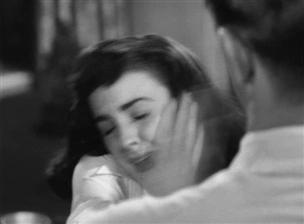
Early in the film Angel Face (1952), Robert Mitchum slaps Jean Simmons in the face:

When [autocratic director Otto] Preminger called for retake after retake, Mitchum, worried about his costar’s face, finally hit the director across the face and then asked him if he would like another slap.
– Mayer and Mc Donnell, Encyclopedia of Film Noir (2007)

The Harder They Fall (1956): For a few lousy bucks

The Harder They Fall (1956)

In his last role, Humphrey Bogart, as an aging down-on-his-luck sportswriter, is drafted into fronting for a mob-controlled boxer. ( Dir. Mark Robson 109 mins)

After a stunning opening which tracks a series of cars heading to a New York boxing studio, The Harder They Fall, lapses into a visually mediocre boxing movie.  Strong performances from a haggard Bogart, who died not long after completing the picture,  and Rod Steiger as the mobster, keep the interest up, but overall the picture is flat and unmoving.

Bogart’s redemption comes too late and reluctantly, and seems shallow after the avoidable death of a punch-drunk boxer in which he is complicit.

What is interesting is the inclusion of fight fans in the denunciation of the “sport”. Bogart tells the boxer Toro when trying to persuade him to throw his championship fight to avoid getting hurt:

What do you care what a bunch of bloodthirsty, screaming people think of you?  Did you ever get a look at their faces? They pay a few lousy bucks hoping to see a man get killed. To hell with them! Think of yourself. Get your money and get out of this rotten business.

Another cynical touch is the scene where the mob “accountant” insists on itemising the “deductibles” from the million dollar take on the fight leaving the hapless boxer with $49.07 after “overheads”.

Factual Note: The interview on skid-row of real-life ex-boxer, Joe Greb, was not scripted or rehearsed.

The Harder They Fall (1956)

Body and Soul (1947): “Everybody dies”

Body and Soul (1947)

“A knockout on all levels. In what’s probably the greatest performance of his career, John Garfield portrays Charlie Davis, a Jewish prizefighter who quickly rises to the top of the heap, only to fall hard and fast. Robert Rossen‘s direction is superb, and the marvelous photography of James Wong Howe and the Oscar-winning editing by Robert Parrish set a whole new standard for fight pictures.”

TV Guide

“With its mean streets and gritty performances, its ringside corruption and low-life integrity, Body and Soul looks like a formula ’40s boxing movie: the story of a (Jewish) East Side kid who makes good in the ring, forsakes his love for a nightclub floozie, and comes up against the Mob and his own conscience when he has to take a dive. But the single word which dominates the script is ‘money’, and it soon emerges that this is a socialist morality on Capital and the Little Man – not surprising, given the collaboration of Rossen, Polonsky (script) and Garfield, all of whom tangled with the HUAC anti-Communist hearings (Polonsky was blacklisted as a result). A curious mixture: European intelligence in an American frame, social criticism disguised as noir anxiety (the whole film is cast as one long pre-fight flashback).”

– Time Out

“It is Canada Lee, however, who brings to focus the horrible pathos of the cruelly exploited prizefighter. As a Negro ex-champ who is meanly shoved aside, until one night he finally goes berserk and dies slugging in a deserted ring, he shows through great dignity and reticence the full measure of his inarticulate scorn for the greed of shrewder men who have enslaved him, sapped his strength and then tossed him out to die. The inclusion of this portrait is one of the finer things about this film.”

– Bosley Crowther, The New York Times, November 10, 1947

Body and Soul is one of the great movies of the 40’s.  The powerful screenplay by Abraham Polonsky is brought to the screen with an authority and beauty that is still breathtaking. From the editing to the photography and direction, the film is a work of art.  Throughout the picture, from the opening scene of the empty boxing ring and the fluid use of flashback and dreaming to the sensational fight climax, there is an assured elegance and, most profoundly, a freedom of expression that is rarely matched.  (The film was made by Garfield’s independent Enterprise Pictures.  Sadly, after one more great noir film, Force of Evil (1948), where the numbers racket came under the spotlight, and starring John Garfield with  the screenplay and direction by Polonksy, the company folded.)

The essential quality of Body and Soul is integrity: a masterwork by craftsmen committed not only to their craft but to film as social critique.  On one level the picture is a brilliant melodrama and exposé of the fight game, and on another level a savage indictment of money capitalism where the individual has only commodity value, and the artisan and worker is owned body and soul by the capitalist. The boss and the laborer, even the crooked fight promoter and the boxer, are in antagonistic relations of production dictated by the market. When Charlie Davis in an heroic act of rebellion, in finally refusing to throw his last fight, breaks the chains of greed that bound him to a venal, shallow and alienated existence, his action is a subversive challenge not only to the crooked capitalist but to the false imperative that dictates he should act only in his material self-interest. By rejecting this false consciousness he not only exposes himself to retribution but to penury.  In the final words in the movie, spoken by Garfield to the promoter, he throws down the revolutionary gauntlet in an ironic play on the words “everybody dies” used by the promoter in an earlier scene when he writes off the life of the black boxer Ben:

Charlie: Get yourself a new boy. I retire.
Roberts: What makes you think you can get away with this?
Davis: What are you gonna do? Kill me? Everybody dies.

The final sad irony is the destruction of the careers of Polonsky and Garfield, and Canada Lee, who plays the black boxer Ben, by the HUAC which-hunt only a few years later.  Garfield died prematurely in 1952 at the age of 39 as the HUAC blacklist finally took its toll on his ailing health.

Body and Soul (1947)

Gun Crazy (1950): Not so Bonnie and Clyde

Gun Crazy (1950)Violent femme and husband with a gun fetish decide to emulate Bonnie & Clyde (Orig title: Deadly is the Female, King Bros Productions 1950, Directed by Joseph H. Lewis, 86 mins)

I greatly admire Lewis’s film noir The Big Combo (1955), but Gun Crazy is a lesser work.  I am not sure it is even a film noir.

While there is a potent mix of sex and violence, layered with psycho-sexual motifs and fetishes, the narrative lacks tension and some scenes are very slow. Peggy Cummins is strong as the psychopathic urban gun-slinger, Laurie, but there is no depth or history to this woman who kills on reflex and with no remorse. The rest of the cast is ok only, and it is the director’s signature obsession with violence as a sexual psychosis that drives the story.  Gun Crazy is really a robbers-on-the run movie with noir pretensions, and these are only really evident in the climactic early morning shoot-out at the end in a fog-laden creek.  Bart, Cummins’ partner in crime, achieves some sort of redemption by shooting Laurie dead before she can kill two of his un-armed child-hood friends, one a deputy sheriff, who approach them  pleading that they give themselves up, after which he is killed in a hail of police bullets.  There is a tragic irony here: the man who is not a killer kills his reason for being.

The much-acclaimed long take inside the get-away car before, during, and after a bank robbery, is innovative for the period, but the action is flat until after the heist and they are pursued by the cops.  Low and high camera angles are used by Lewis to express mood and suggest sexual undercurrents, but if they operate on the audience, do so only unconsciously. While much has also been made of the ‘amour fou’ of the two protagonists, it is more an instinctual sexual attraction that is sustained on Laurie’s part by the sexual gratification that she achieves in their life crime.

Interesting historically and although it transcends its b origins, Gun Crazy is not a great movie. It’s cult status has more to do with the perversity of the theme and the performance of Cummins, than its merits as a filmic work.

Gun Crazy (1950)

Noir Directors: Edward Dmytryk

Mirage (1965)Mirage (1965)

From an article, Film noir goes to war, in the TLS by Philip French:

Edward Dmytryk, Canadian son of Ukrainian immigrants, worked his way up in the cinema business from studio messenger boy to make Farewell My Lovely [aka Murder, My Sweet (1944)] . He followed this with two other crucial noir pictures, Cornered (1945), about war crimes and neo-Nazism, and Crossfire (1947), centring on returning veterans and post-war anti-Semitism. He was one of the Hollywood Ten, left-wing filmmakers jailed for refusing to cooperate with the House Un-American Activities Committee (HUAC). Unlike the others, he emerged from prison to reappear before HUAC, name former Communist associates and go back to work, making large-scale anti-Communist and conformist potboilers. But in 1965 he directed Mirage, an undervalued noir thriller, shot in black-and-white, turning on one of the genre’s favourite themes, amnesia, and indicting the military-industrial establishment which Dwight D. Eisenhower had warned against in one of his final speeches as President. It helped open the way for a new kind of political cinema that was to include such post-Watergate movies as The Parallax View and Three Days of the Condor.

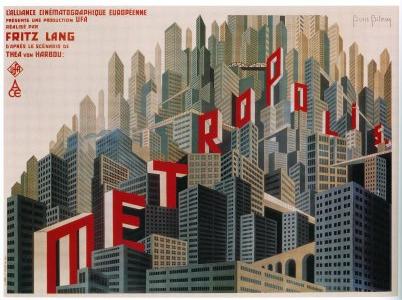
Director’s cut of Metropolis found

Metropolis (1927)

The long-lost original print of a Fritz Lang’s silent masterpiece, Metropolis (1927), has been found in Argentina.

The original 3½-hour film was believed lost  after its US distributor, Paramount, cut it by 30 minutes after a poor reception from critics. But the German newspaper Die Zeit has reported that a copy of the original was sent to Argentina in 1928, where it has been gathering dust in the Buenos Aires Film Museum.

The lost footage, some of which is badly scratched, includes battle scenes and sections that flesh out a number of subplots and characters. Paula Felix-Didier, the curator of the museum, viewed the film only after a chance remark from a projectionist, who noted that it was longer than other versions. A film restorer who has seen the new footage said the film had its rhythm back. Source: The Telegraph – London

New Book on Edgar G. Ulmer

Edgar G Ulmer

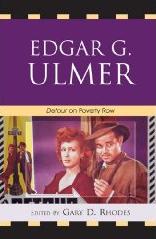
A new book on the work of Poverty-Row director, Edgar G. Ulmer, who made the cult b-noir, Detour (1945), was released in May.

The book, Edgar G. Ulmer: Detour on Poverty Row, was reviewed today by Michael H. Price in the Fort Worth Business Press:

[In] Edgar G. Ulmer: Detour on Poverty Row … Editor [Gary D.] Rhodes and a well-chosen crew of contributing writers consider Ulmer in light of not only his breakthrough film, 1934’s The Black Cat at big-time Universal Pictures, or such finery-on-a-budget exercises as Bluebeard (1944) and Detour (1945), but also Ulmer’s tangled path through such arenas as exploitation films (1933’s Damaged Lives), Yiddish-language pieces (1937’s Green Fields), well-financed symphonic soap opera (1947’s Carnegie Hall), and ostensible schlock for the drive-in theaters (1957’s Daughter of Dr. Jekyll)… A perceptive chapter from Christopher Justice wonders aloud whether the writer-director might be considered “the godfather of sexploitation,” in view of the “new aesthetic terrain and … core prototypes” that can be observed in such films as Damaged Lives and Girls in Chains (1943) and The Naked Venus (1958)… Tony Williams regards Ulmer as an advancer, rather than a follower, of the “psychobiography” approach that Orson Wells had defined with Citizen Kane in 1941 — on the evidence of an often-maligned, oftener-ignored Ulmer picture called Ruthless (1948). (Ruthless stars Zachary Scott as an industrialist who might make Welles’ Charles Foster Kane look like Rebecca of Sunnybrook Farm by comparison.)

The Big Sleep (1946): Love’s Vengeance Lost

The Big Sleep 1946

Howard Hawks’ The Big Sleep is one of the truly great Hollywood pictures: the Raymond Chandler novel is brought to the screen with panache and authority, and the chemistry between Bogart and Bacall is unsurpassed.

While the protagonist lovers are good guys and there is no femme-fatale, the movie has a strong noir aura. The darkly lit atmosphere and strong sexual tension shape our response to a grim and dissolute nether world where PI Philip Marlowe doggedly solves an enigma within a mystery, in a plot so convoluted not even the film-makers fully understood it.

The picture is essentially a love story where the lovers must overcome mutual distrust and risk all to escape a brutal nightmare of betrayal and death. The Big Sleep is a lot darker than the earlier Murder, My Sweet (aka Farwell, My Lovely – 1944). The Marlowe of The Big Sleep is tougher, more driven, and morally suspect.

I find the actions of Marlowe in the final reel disturbing. He is almost a proto-Dirty Harry. Clearly shaken by the death by poisoning while he stood by of the small-time hood who leads Marlowe to the final showdown, Marlowe responds with vengeful brutality in the shootout with the goon, Canino, and then in the final scene when he confronts the crooked casino-operater, Eddie Mars.

While the killing of Canino at a stretch can be put down to self-defense, there is no moral justification apart from vengeance in the way Marlowe engineers the death of Eddie Mars – the killing is gratuitous and was not the only way out for Marlowe and Vivian. It is this final scene that marks The Big Sleep as a film noir. Marlowe has survived and got the girl – but at what cost?

Crime Wave (1954): On The Streets of LA

Crime Wave 1954

An ex-con trying to stay clean is sucked into a bank heist when a former cell-mate turns-up at his apartment after a late night gas-station smash and grab goes wrong and a cop is killed.

Andre de Toth’s Crime Wave (1954) gives star billing to Sterling Hayden as the LAPD homicide detective hunting down the killers, but all major players in this police procedural have equal presence. From the gas-station attendant to the crooked vet who patches up wounded hoods on the run, and the aging parole officer woken in the night by a call from one of his ‘boys’, each character is deeply drawn.

A very tight story of 74 minutes played out on the streets of LA, has a feel so authentic, you think it happened yesterday and for real. The noir theme of an inescapable past propels the drama at a personal level in the claustrophobic constraints of an apartment, while out on the streets and in police headquarters the camera observes the manhunt with detachment and precision.

A masterwork.

Crime Wave 1954  Crime Wave 1954

Crime Wave 1954   Crime Wave 1954