The Origins of Noir: The Case for the Policier

“Renoir’s second talkie, La Nuit du carrefour (1932)— my all-time favorite French noir, and the sexiest movie he ever made…  his edgy adaptation of Georges Simenon’s Maigret at the Crossroads, filmed in a foggy suburb that vibrates with off-screen sounds and a mysterious Danish heroine (Winna Winifried), cries out for discovery.” – Jonathon Rosenbaum

In 1931 Georges Simenon’s crime novel La Nuit du Carrefour was published by the French pulp magazine Police Magazine:

La Nuit De Carrefour (1932)

In 1932 Jean Renoir in his second film adapted the story for the screen:

La Nuit De Carrefour (1932) La Nuit De Carrefour (1932)

La Nuit De Carrefour (1932) La Nuit De Carrefour (1932)

La Nuit De Carrefour (1932) La Nuit De Carrefour (1932)

Cinematic Cities: “We all live in the city”

The Crimson Kimono (1959)

Jim Morrison - The Lords and The New Creatures.jpg
Jim Morrison, 'The Lords: Notes on Vision' from The Lords and New Creatures (Simon Shuster 1969) p.12

Christ in Concrete: Not on Wall Street

Christ in Concrete by Pietro Di Donato

There is a certain irony in this excerpt from the novel by Italo-American Pietro Di Donato, Christ in Concrete (1939), a story of Italian immigrant building workers and their families in Brooklyn during the Depression. In 1949 a film adaptation of  the novel by director Edward Dmytryk, featured teeming tenements and residential streets shot with a provocatively gritty realism and film noir atmospherics. A powerful leftist denunciation of capitalism, the picture had to be filmed in the UK, and was buried a few days after its US release by a reactionary backlash. The film is the closest an Anglo-American movie ever got to the aesthetic and socialist outlook of Italian neo-realism. My review of the movie last Easter is here.

Raymond Chandler: True Noir

“Yet the darkest of Chandler now appears clean-cut. Chandler evoked the spirit of noir through mood-setting and language, not cheap graphic gore. Now work that is hailed as ‘dark’ often seems close to putrid, almost unreadable…”
– Mick Hume, ‘Watching the Detectives’, AIR Magazine, March 2010, p18.

The High Window - Raymond Chandler

Last Friday marked the 50th anniversary of Raymond Chandler’s death.  The passing of the man who wrote detective stories with poetic prose like this,  “The night was all around, soft and quiet. The white moonlight was cold and clear, like the justice we dream of but don’t find”, from The High Window (1942).

Today most noir fiction reads like Spillane on crack.  Many so-called noir writers are misappropriating noir by depicting violence, including sexual violence, so graphically you wonder who is the real psychopath.

I am reminded of these lines in Chandler’s Playback, where Marlowe narrates: “I picked a paperback off the table and made a pretense of reading it. It was about some private eye whose idea of a hot scene was a dead naked woman hanging from the shower rail with the marks of torture on her… I threw the paperback into the wastebasket, not having a garbage can handy at the moment.”

Film Noir: Forthcoming Books

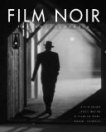
Cover for 'The Film Noir Encyclopedia'

The Film Noir Encyclopedia (new editon)
Alain Silver; Elizabeth Ward; James Ursini; Robert Porfirio
Release Date: May 13th, 2010  Pre-Order

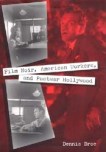
Film Noir, American Workers, and Postwar Hollywood (Working in the Americas)
Prof. Dennis Broe
Release Date: April 1st, 2010  Pre-Order

Cover for 'Historical Dictionary of Film Noir'
Historical Dictionary of Film Noir
Andrew Spicer
Release Date: April 15th, 2010  Pre-Order

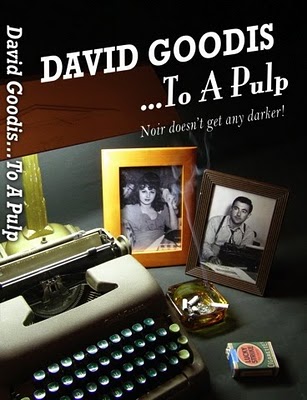
David Goodis…To A Pulp

David Goodis

David Goodis… To A Pulp, a film biography of noir writer David Goodis, premieres this Friday, March 5, in Philadelphia. For film-maker Larry Withers making the movie was a peak into the once-hidden life of his mother, Elaine Astor, who had previously been married to Goodis.  Read all about it at Mike Lipkin’s Noir Journal.

Cornell Woolrich: The shadows come from within

Night Has a Thousand Eyes Book Cover

I was left alone there a long time. I could see, all right, and know the things about me. My car was there at the curb, glistening in the dark, with a thin ripple of wet orange paint running down its hood in one place where the light from the doorway struck out at it. A ripple that never moved, and yet was warped and liquid as running ripples are. I even shifted once, from where she had left me standing, and moved over to it, and stood up close beside it, my hands pressing down tight upon the top of the door, as if I were unsteady and needed something to cling to in order to remain upright. My head inclined, as if peering intently at the upholstery of the seat backs.

Yes, the car was real, it was there. My hands could feel it, my eyes could see it, I had but to touch a button to make light shoot out of it, light that no shadows could withstand; but yet the shadows had the best of it, it was powerless to rive this pall that blanketed the eyes that looked at it, the mind that considered it. It could not take me out of the shade, it was I who had brought it into the shade with me; its powers of contrast were lost, it became one with the other Gothic shadows about me. For the shadows came from within, and so anything they fell upon was shadowed. Just as if you front your eyes with a piece of smoked glass, the most sparkling sunlight will become somber.

Each unto himself has his own world that he looks out upon, and though someone else were to stand on the very selfsame inch of ground your feet were placed upon, guided by chalk marks, he would not see the same things you did. There would have been two different views there, not just one. Or is there any world at all, I wondered, out there before us as we look upon it; may it not be inside, behind the eyes, and out front nothing, just a blank infinite? But madness lurked along that trail, and I quickly turned aside.

– Cornell Woolrich, Night Has a Thousand Eyes (1945)

W R Burnett: Master of noir imagery

The Asphalt Jungle

From W.R. Burnett’s novel  The Asphalt Jungle (1949).  Notice how often the adjective ‘black’ is used.

Dix made no comment and sat looking off across the wide black river,
which moved sluggishly southward between its steep cement
embankments toward its faraway union with the Mississippi.
There was no moon, but the sky was cloudless and a handful of bright
stars, diamond points of bluish light, glittered coldly over the tall
buildings on the far shore. The houses along the embankment were
almost all dark, but here and there a window showed light and cast
golden zigzag reflections onto the shiny black pavement of the river. A
slow, damp wind was blowing, carrying a smell of deep water.
Late as it was, traffic was fairly heavy on the big, three-lane bridge.
Suddenly a siren wail rose from the darkness of the far shore, and in a
moment a prowl car passed them, going back at high speed toward
the hilly slums of the Camden Square district.

_____________________

A dark, blustery night had settled down like a cowl over the huge,
sprawling Midwestern city by the river. A mist-like rain blew between
the tall buildings at intervals, wetting the streets and pavements and
turning them into black, fun-house mirrors that reflected in grotesque
distortions the street lights and neon signs.

The big downtown bridges arched off across the wide, black river into
the void, the far shore blotted out by the misty rain; and gusts of wind,
carrying stray newspapers, blew up the almost deserted boulevards,
whistling faintly along the building fronts and moaning at the
intersections. Empty surface cars, and buses with misted windows,
trundled slowly through the downtown section. Except for taxis and
prowl cars, there was no traffic.

River Boulevard, wide as a plaza and with its parkways and arched,
orange street lights stretching off into the misty horizon in diminishing
perspective, was as deserted as if a plague had swept the streets
clean. The traffic lights changed with automatic precision, but there
were no cars to heed or disobey them. Far down the boulevard, in the
supper-club section of the city, elaborately glittering neon signs
flashed off and on to emptiness. The night city, like a wound-up toy,
went about its business with mechanical efficiency, regardless of man.

_____________________

Dix sat up with a start and looked about him as if he’d never seen this
place before—never heard of it even. He had an uneasy feeling that he had
been lifted up in the night by unknown hands and carried to
this place of exile, this alien city with its canyons of masonry and its
unpredictable and ugly ways—far from home, far from sense and
meaning, far from any resting place.

_____________________

They were living very close to the river now, and all night long they
could hear the tugs moaning as they slid downstream pulling the
big coal barges; and sometimes, when it was exceptionally quiet,
they could hear the waves, stirred by the passage of the heavyladen
barges, washing and slapping against the old wharves at the
foot of Front Street. Through their one window they could see the
Lackawanna Street Bridge arching off toward the tall buildings of
the downtown area across the river. In the daytime the bridge was
huge, gray, and misty-looking; at night it was nothing but a long,
brilliant garland of yellow lights, duplicated upside down in the
black water.

_____________________

They cleared the suburb at last, and huge factories and warehouses
began to loom along their route. A light mist started to fall, making little
pinkish haloes about the street lights. For a while they skirted a
railroad embankment, and a freight train passed them going toward
town, and they heard the lonely, off-key ringing of the crossing-bells.
At last they pulled clear of the giant warehouses, the factories, the big
viaducts arching up out of the mists to nowhere, and came out into a
wide, flat, sparsely settled area, with a few poor, frame houses
grouped along cracked and weed-bordered sidewalks.

The mist turned to a drizzle, and the wet asphalt shone like black
glass, palely reflecting the widely separated street lights. A cold
wind began to blow, and Riemenschneider huddled down into his
big overcoat.

Chandler on Cain: “Proust in greasy overalls”

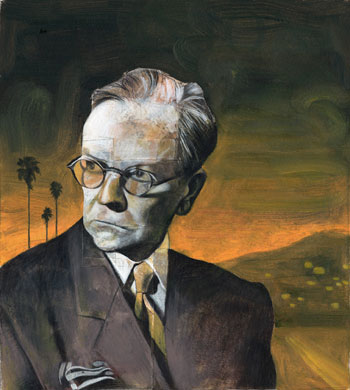
Raymond Chandler
“RAYMOND CHANDLER ” LOS ANGELES TIMES

Raymond Chandler wrote his publisher Alfred Knopf in February 1943:

I hope the day will come when I don’t have to ride around on Hammett and James Cain, like an organ grinder’s monkey. Hammett is all right. I give him everything. There were a lot of things he could not do, but what he did he did superbly. But James Cain—faugh! Everything he touches smells like a billygoat. He is every kind of writer I detest, a faux naif, a Proust in greasy overalls, a dirty little boy with a piece of chalk and a board fence and nobody looking. Such people are the offal of literature, not because they write about dirty things but because they do it in a dirty way.

– Frank MacShane, The Life of Raymond Chandler, 1978, p101)

Sweet Clover

The Killers

The headlight-beams of his car kept slashing up the road ahead of them like ploughshares, seeming to cast aside its topsoil of darkness, reveal its borax-like white fill, and spill that out all over the roadway.  Then behind them the livid furrows would heal again into immediate darkness.

It seemed hours they’d been driving like this, in silence yet acutely aware of one another. Trees went by, dimly lit up from below, along their trunks, by the passing reflection of their headlight-wash, into a sort of ghostly incandescence.  Then at times there weren’t any trees, they fell back, and a plushy black evenness took their place—fields or meadows, she supposed—that smelled sweeter. Clover. It was beautiful country around here; too beautiful for anyone to be in such a hell of suffering in the midst of it.

Roads branched off at times, too, but they never took them. They kept to this wide, straight one they were on.

– Cornell Woolrich, I Married A Dead Man (1948)