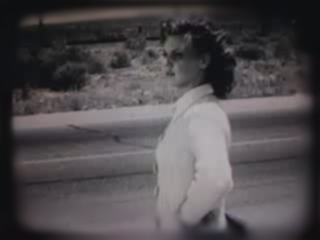
Vera: No Detours

Detour (1945)

Dedicated to Ann Savage

“Come on, come on
Put your hands into the fire
Explain, explain
As I turn and meet the power
This time, This time
Turning white and senses dire
Pull up, pull up
From one extreme to another”
– Into the Fire by 13 Senses

standing by the highway
alone against eternity
one last chance
to make it – big time

your dyin’ babe
lungs can’t hold out too long
against the rising tide
choking blood

you need a ride
booze
a shower
wash the lizard’s skin from your nails

he offers
okay
what the hell!
maybe this time

another loser
lost
so stupid
he thinks fate did it

make it happen
he’s a goner
one last chance
do it

you need love babe
I need dough more
this guy’s a ticket
to blow before I split

booze
makes me sad
lonely
love me

just one time
before I go

The Reckless Moment (1949): “we want to liquidate our stock while the market is high”

The Reckless Moment (1949)

The Reckless Moment (aka The Blank Wall) (1949)

Columbia Pictures 82 mins
Directed by Max Ophuls

Cinematography by Burnett Guffey
Screenplay by Henry Garson and Robert W. Soderberg
Adapted by Mel Dinelli & Robert E. Kent
from Elisabeth Sanxay Holding’s story, ‘The Blank Wall’

Cast:
Lucia Harper – Joan Bennett
Martin Donnelly  – James Mason
Ted Darby – Shepperd Strudwick
Nagle – Roy Roberts
Sybil – Francis Williams

After concealing her daughter’s accidental killing
of a man a housewife is blackmailed by a hood

The Reckless Moment, Max Ophuls’ last Hollywood picture is a great film. It is a brilliant example of the dynamics of the auteur working inside the studio system. Ophuls’ takes a basic blackmail story and through his long and fluid takes and subtle mise-en-scene infuses it with a complexity and subtlety rarely matched in film noir.  Joan Bennett as the threatened middle-class housewife, Lucia Parker, and James Mason as the Irish blackmailer Donnelly, are both impeccable, but it is Joan Bennett as the wife and mother plunged into a noir world of criminality that carries the drama forward. She struggles to defend an idyllic domesticity against a rising tide of darkness that would engulf her family. Veteran noir cinematographer, Burnett Guffey, smoothly establishes the impending entrapment within mobile tracking shots that move from light to dark, from unruffled clarity to shadows and unsettling movement, from the beguiling every-day to  menacing disturbance.  The Reckless Moment is richly rewarding and its richness is best savored over repeated viewings.

The Reckless Moment (1949)

After viewing the movie and starting my research, I became more and more perturbed. Reviews by many respected critics were scathing at worst or damning by faint praise in their dismissal of the film.  Bosley Crowther in the New York Times on the film’s opening, rather smugly concluded “a feeble and listless drama with a shamelessly callous attitude”, and Variety said “a tense melodrama projecting good mood and suspense… matter-of-fact technique used in the script and by Max Ophuls’ direction doesn’t permit much warmth to develop for the characters”.  Many books on film noir ignore it or mention it only in passing.

Finally, I came across an article by the film critic Robin Wood, where my feelings about the film were confirmed, and alas I was also made starkly aware of my signal failings as a writer on film. The article is titled, Plunging Off the Deep End into the Reckless Moment’, and appeared in the Spring 2002 edition of the CineAction film journal. The Deep End is  a 2002 remake of Ophul’s film by Scott McGhee and David Siegel, which beside the Ophuls original, Wood says, “dwindles into insignificance”.  In his erudite article in a shot-by-shot analysis of a particular early scene in Ophuls’ work, Wood perceptively draws out Ophuls’ mastery and his purpose, with flair and passion:

If [Ophuls] had directed The Reckless Moment in complete freedom the film would certainly have been different; it would not necessarily have been better. The film’s richness of meaning derives from its being ‘a Hollywood film’ as well as ‘an Ophuls film’: it is nourished by a whole system of generic convention and highly developed methodology (which Ophuls everywhere modifies, inflects and enriches). I personally find it a denser, more complex, ultimately more rewarding film than La Ronde, a film generally thought of as ‘pure Ophuls’. The richness derives largely from the interaction between two major Hollywood genres, usually regarded as incompatible: the woman’s melodrama and film noir. Its structure is built upon an alternation between the domestic world and the noir world, represented by Lucia’s upper middle-class home near a small town, and Los Angeles. The film opens with Lucia ‘invading’ Los Angeles to confront Ted Darby [an older man Lucia’s daughter is seeing played by Shepperd Strudwick], which is answered by Donnelly’s invasion of the home; in the second half the pattern is repeated by Lucia’s step by step descent (bank, loan office, pawn shop) into the noir world in her efforts to raise the blackmail money… The second shot is the sequence’s longest and most elaborate long take with camera movement (just over two minutes without a cut). Lucia completes her entry into the dining room; the table is laid for the family dinner; there is a window in the background, darkness outside, where Lucia and Donnelly will end their negotiations, the sequence as a whole leading Lucia from the apparent security of the brightly lit dining room into a world of darkness and shadows, the Donnelly world of film noir…  Perhaps the most remarkable aspect of this extremely complex, marvellously controlled shot is Ophuls’ treatment of space, its effect almost subliminal. On the one hand we have been given, in unbroken movement, a tour of the entire open plan layout of the downstairs of the house, the exact relation of kitchen to dining room, dining room to living room, the various exits and possible entrances, all clear if we concentrate. At the same time, however, the continuous reframings, the camera’s turns and returns, become so disorienting that all our confidence in knowing exactly where we are, in what direction we are facing, is undermined. It’s an extraordinary effect, at once establishing and destroying our sense of the well-designed security of the bourgeois home corresponding, we may feel, to Lucia’s growing sense of anxiety and dread, her sense that the secure existence (her own, her family’s, the household’s) she has so carefully (and at such personal cost) striven to build and preserve is crumbling around her. The effect is underlined by the two most obvious decisions evident in Ophuls’ mis-en-scene: Lucia’s stasis, as if paralysed, contrasted with Donnelly’s constant restless movement about the room? the tracking camera and its continuous reframings that consistently favour Donnelly, bringing him into the foreground, his dark overcoat dominating the image, Lucia reduced often to long shot or excluded from the frame altogether…

I recommend the full article to readers of FilmsNoir.Net – but only if you have seen the movie, which came out on DVD in 2006.

Ruthless (1948): “Not a man, a way of life”

Ruthless (1948)

I am ambivalent about Ruthless. The king of B-pictures, Edgar G. Ulmer, was given a bigger-than-usual budget for this Eagle-Lion melodrama. Technically accomplished with a solid cast and a compelling story of an amorally ambitious man, the film never quite achieves an intensity of purpose that would make it truly memorable.

In a scenario reminiscent of  Orson Welles’ Citizen Kane, Zachary Scott plays Horace Vendig, an investment  tycoon who ruthlessly pursues wealth as some sort of revenge against a deprived early childhood. The story is told in flashback sequences triggered by events at a gala reception at his mansion, where he has invited all those he has wronged to announce a benevolent fund for peace, which may be an act of contrition but is more likely a tax dodge.  He claims his act is selfless, but his unrepentant arrogant sense of entitlement is exposed in the closing scenes, which precipitate a suitably noir finale.

Two guests are the initial catalysts for the flashbacks.  The film opens with a middle-aged man of means and a young attractive woman being driven to the reception. The guy is Vic Lambdin (Louis Hayward), a childhood friend of Vendig’s who broke with him after a dispute over Vendig’s callous business practices.  The girl is Mallory Flagg, Vic’s rather mysterious and elegant fiance, who has an uncanny resemblance to a childhood sweetheart of  both men.  It is Mallory’s presence that drives the drama at the reception though she is more a bystander at the finale. Mallory is intriguing and for me upstages all the other protagonists:  you never quite understand her motivation or her loyalty until the very end. She is played with such intelligence and wit by b-actress, Diana Lynn, that she is a joy to watch, and Ulmer certainly thought so – her glittering eyes, her classic profile and elegant movement are lavishly indulged in all her scenes. Strange and sad that her career  never moved beyond b-movies and television.

Ruthless (1948)

Worth watching.

Human Desire (1954): The beast within

Human Desire (1954)

Fritz Lang’s Human Desire, made after The Big Heat (1953), brings together the two stars from that film, Glenn Ford and Gloria Grahame, in a relentlessly sordid noir melodrama of lust, infidelity, murder, and deceit played out on a wide screen.

The screenplay by Alfred Hayes, who worked on Lang’s Clash By Night (1952), is based on Emil Zola’s novel La Bête Humaine, which was first adapted for the screen by Jean Renoir in 1938 in one of the major films of the French poetic realism cycle, and starred Jean Gabin and Simone Simon. The poetic realism cycle of the late 1930s in France is considered by some film scholars a precursor to American film noir, and the eroticism of the Renoir film makes the strongest case for such a connection. That said, I see that little is to be gained by comparing Lang’s picture with Renoir’s.  Each film is grounded in a different social milieu, and Lang’s effort is more deterministic as befits a late cycle American noir.

Human Desire (1954)

For the first five minutes of the picture Lang introduces his story using shots of a locomotive-powered inter-urban passenger train barrelling through a flat landscape and one last tunnel before it reaches the ordered tangle of converging and diverging tracks at its destination.  From the first frame the evocative musical score of Daniele Amfitheatrof  establishes both an echo of the train’s rumbling progress and a dark counterpoint that portends the dark drama that will follow in the diesel’s wake.  Lang brilliantly uses the train’s inexorable passage and the determinism of the rails that brook no turning back or detour: fate is laid out in hard steel, and the switches and way-lays are beyond the driver’s control – all he can do is slow or speed his progress along an ineluctable pre-ordained trajectory – and even then he has a schedule to stick to.

Jeff Warren (Glenn Ford), a returning Korean war vet is shown as the driver in fast cuts to the cabin of the speeding locomotive. This  montage of scenes establishes a parallel metaphor. Jeff as the train driver is essentially passive and has no control over the train’s path, and in his life he is also happy to go with the flow, not to think too much about where his headed or why.

When he hits town his stated ambition is to keep a steady job, go fishing, and take in a movie.  A decent young girl who has been waiting for him declares herself as the ‘right woman’ to share this life, but he is passive and makes no serious effort to deepen the relationship.  Trouble starts when he meets the wrong woman on a train, soon after a murder has been committed in an adjoining carriage. Enter the erotic Gloria Grahame, sexually available and looking for a drink, but she settles for a cigarette and a languorous kiss between strangers. She is married to an insanely jealous older man, whom she does not love. But can she love any man? She is damaged goods and desperately needs help to escape not only the confines of her marriage but destroy the terrible secret hold her husband has over her. Situation dire.  Is she a femme-fatale, or a woman so used and abused by men from a young age that she is forced to use her sexuality as a weapon just to survive?   She lies but she doesn’t lie, she tells the truth but not the whole truth, and not all at once.

Human Desire (1954)

Grahame’s performance is powerfully convincing and Broderick Crawford is solid as the husband, but Ford lets the team down badly – rarely is his lack of depth so visible and so damaging. The strength of the climax requires more than Ford is capable of and the drama is dissipated to the extent that he needs to show terror, contempt, or real anger.

Even with this significant weakness, Lang and his cameraman, Burnett Guffey, are unrelenting in their unblinking gaze on the dark underside of modern American life.  Lang does not flinch from showing the ugliness and malevolence in a world brightly lit and without visible shadows: a man has been murdered behind a closed train compartment door – cut to a close-up of another man’s hand holding a bloodied knife wiping the blood off by rubbing the blade on his suit.

Act of Violence (1948): “No law says you got to be happy”

Act of Violence (1948)

An under-rated film noir from director Fred Zinnemann, Act Of Violence is to my mind one of the great 40s noirs.  A strong story and fast-paced direction combine with brilliant moody photography from Robert Surtees to deliver a solid cinematic experience. The noir themes of the damaged war veteran and a protagonist desperately trying to break free of the past are woven into a dark scenario of entrapment.

Act of Violence (1948)

The idyllic family life of a vet, Frank Enley (Van Heflin), living the good life in a small town outside LA but harboring a dark secret, is torn apart by another vet, Joe Parkson (Robert Ryan), with a gun and a terrible unrelenting need for vengeance.

Zinneman has compete control of his mise-en-scene. The movie’s opening scene showing a dark figure in long shot against NY harbor limping hurriedly towards a tenement in the rain at night, telegraphs the darkness to follow without a line of dialog. The tension is established when the man is seen in an apartment hastily packing a revolver and filling a suitcase before boarding a bus for LA. When he tracks down his target the bright world of a loving family, a successful business, community respect, and fishing on the lake, becomes progressively darker and dangerous, and the action moves from comfortable suburbia in daylight to dark threatening city locales at night. A fishing trip is cut short, but not before a strong wind across the lake occasions a sense of unease.  Back home, life for Frank’s unsuspecting young wife (Janet Leigh) and their small child is turned upside down when he returns a scared desperate man in terror of what lies outside his placid suburban garden.  First the lights go out, and then as each shade in the house is drawn down in turn, the dream is transformed into a nightmare.  A man with a limp shuffles outside and tries the doors of the house. In the darkness, a dripping kitchen tap which in the distraught silence is like the sound of a fast-beating heart, attests to the terror of the moment.  Later on with considerable irony, in the confines of an LA hotel fire-escape, Frank reveals to his wife the terrible truth behind this calamity, lamenting that there is nothing he can do to escape his pursuer.

Act of Violence (1948)

Shortly after, in flight from Joe, Frank running desperately down dark desolate and dirty city streets, lands in a bar, where he hooks up with an aging b-girl played by Mary Astor. She takes him home and in a calculated act of ‘charity’ then takes Frank to a dive to meet a shyster lawyer who she says can help him. A plan is hatched with a goon to get rid of the pursuer for 10 grand, and Frank spends the night at the girl’s apartment. Next morning he comes to his senses and confronts what has to be done.

The final climactic scene is played out in long-shot and in deep focus, night-for-night on a railway platform.  The stuff noirs are made of.

Act of Violence (1948)

Act of Violence (1948)

The Locket (1946): Freudian Melodrama

The Locket (1946)

A young woman who is a kleptomaniac and a pathological
liar wreaks havoc in the lives of three men
(1946 RKO. Direction by John Brahm 85 mins)

Cinematography by Nicholas Musuraca
Screenplay by Norma Barzman (uncredited) and Sheridan Gibney
Original Music by Roy Webb
Art Direction by Albert S. D’Agostino and Alfred Herman

Starring:
Laraine Day – Nancy Monks Blair Patton
Brian Aherne – Dr. Harry Blair
Robert Mitchum – Norman Clyde
Gene Raymond – John Willis

“Never has the device of the flashback been taken so far.  Narratives are jumbled up, parentheses opened, exploits slot one inside the other like those Chinese toys sold in bazaars, and the figure of the heroine gradually comes into focus: beneath her somewhat obscure charm there lurks a dangerous and perverse mythomaniac”
– Borde & Chaumeton,  A Panorama of American Film Noir 1941-1953 (1955)

“The Locket is a radically ambivalent film… [it’s] oscillation between condemnation and sympathy for its central protagonist, draws attention to the processes of narration and to the attempt of male narrators to control the ‘problem’ of femininity.”
– Andrew Spicer, Film Noir (2002)

The Locket is a bizarre melodrama that marks one the first films noir to use Freudian concepts to explore criminal psychology.  Though the film is studio bound, the film-makers have used this constraint to advantage. Under the assured direction of John Brahm [who also directed The Brasher Doubloon (1947), Hangover Square (1945), and The Lodger (1944)], cinematographer Musuruca, and art directors Albert S. D’Agostino and Alfred Herman, place the story firmly in a suffocatingly surreal mise-en-scene.  The atmosphere is decidedly gloomy – even baroque – with many dramatic scenes so darkly lit that there is aura of grim foreboding that goes far beyond the immediate action.

The Locket (1946)

Larain Day, a little known b-actress, is entirely convincing as Nancy, the woman who weaves an elaborate charade only a disturbed mind could navigate, handling the melodramatic climax with considerable style.

The first thing that takes your breath away is what Borde & Chaumeton describe as a “technical shot in the dark”:  the audacious use of flashback. There are two male narrators and finally Nancy herself, who each in turn construct a flashback within a flashback within a flashback. The final flashback takes Nany back to her childhood where her widowed mother works as a servant in the mansion of a haughty rich woman.  The scenario in this flashback intelligently establishes the root cause of Nancy’s psychosis, while her treatment as a child of ‘the help’ initiates in the viewer sympathy for the character as a child, and an ambivalent empathy for the troubled woman she becomes.

A music box and its tune is a strong motif in the film, and in the climactic ending, this musical motif triggers a psychotic episode that is both cathartic and catastrophic. These scenes depicting Nancy’s disintegrating mental and physical state are inventively portrayed by innovative camera-work and by Roy Webb’s musical acumen.

The theme of entrapment is multi-layered.  While Nancy is a prisoner of her compulsion and childhood trauma, each of the men who love her is equally attracted and repelled by the enigma that lies beneath her longed for persona. One of the men, an artist played by Robert Mitchum, expresses this exasperation in a portrait of Nancy in which her eyes are incomplete.

The Locket (1946)

A must-see noir.

Nightmare Alley (1947): Geeks and Freaks

Nightmare Alley (1947)

In Nightmare Alley (1947), based on the dark novel by William Lindsay Gresham, you enter a bizarre oneiric universe of thwarted ambition and inescapable degradation.

A world of geeks and freaks, where a predatory femme-fatale uses greed not sex to trap her prey, where the hallucinations at the bottom of an empty gin bottle transport you to hell, where illusion and reality fuse into a phantasmagoria of tarot cards and hangmen, and where both tabernacles and carnival tents mock faith and trade on gullibility.  Life is a squalid con where you can trust no one, the only solace is in booze, and redemption is as a carnival geek fed on live chickens.

Director Edmund Goulding and cinematographer Lee Garmes fashion a monstrous world of dark nights and sordid shadows.  Death and opportunism are pulled out of an illusionist’s trunk, and a fog of angst shrouds all in its wake. There are no actors here: only visages and apparitions that inhabit a shadow play where Jungian archetypes invade your subconscious.

Never was a film noir more aptly titled – the nightmare at the end of the dark alley of the soul.

Nightmare Alley (1947)

Jonathan Auerbach: Noir Citizenship and Anthony Mann’s Border Incident

Border Incident (1949)

Jonathan Auerbach is professor of English at the University of Maryland, and is currently writing a book titled ‘Dark Borders: The Un-Americaness of Film Noir’.

Professor Auerbach, in a recent issue of the scholarly Cinema Journal (47, No. 4, Summer 2008) in an article titled Noir Citizenship: Anthony Mann’s Border Incident, posits an ambitious thesis about national borders and the borders of film genres, as set out in the article’s abstract:

Looking closely at how images subvert words in Anthony Mann’s generic hybrid Border Incident (1949), this article develops the concept of noir citizenship, exploring how Mexican migrant workers smuggled into the United States experience dislocation and disenfranchisement in ways that help us appreciate film noir’s relation to questions of national belonging.

The article offers a rich analysis of Anthony Mann’s Border Incident (1949), and develops a fascinating study of the sometimes antagonistic dynamic between the police procedural plot imperatives of the screenplay, and the subversive visual imagery fashioned by cinematographer John Alton.  It is essential reading for anyone interested in film noir.

Professor Auerbach’s conclusions are compelling, but to my mind can be taken further.  In his final paragraph he says:

Throughout, I have been using the word ‘noir’ as a noun and adjective in ways that inevitably suggest that the term has some substantive, intrinsic meaning, just as I have similarly referred to ‘America’ and ‘Mexico’ as fixed entities. But, as… other scholars have insisted, ‘film noir’ as coined by the French soon after World War II had absolutely no institutional bearing on American studio production and marketing during the 1940s (unlike Westerns or musicals), and took on critical significance in the United States only as a generic category well after the fact. In this regard, it makes more sense to think of film noir less as a bounded genre that a ‘meta-genre’—a threshold concept, or better yet, a concept or mode that tests the very permeability and limits of borders… In the case of Border Incident—especially due to Alton’s cinematography—what cannot be named in terms of generic narrative is the elemental muck and chaos that underlies civilization (contra the Western), the lack of any moral compensation for injustice (contra the social problem film), and, most profoundly, the exercise of law based on nothing but the sovereign nation’s capacity to invoke at will a state of exception or emergency (contra the police procedural). These truths do not themselves constitute the content of Border Incident, and cannot be contained by the generic label ‘film noir’.  But in so powerfully probing boundaries, they do compel us to consider how genres are made and remade, and nations as well.

The scene in Border Incident where the undercover agent Jack, is murdered by the furrowing blades of a tractor is one of the most horrific in film noir, and Professor Auerbach rightly observes that the agent “gets ground into American soil by the monstrous machinery of US agribusiness… [this is] a purely noir moment of recognition that reveals the terrifying underbelly of the American farm industry itself in its dependence on and ruthless exploitation of Mexican labor”.

But Professor Auerbach skirts the irony of the history of wider US involvement in Central and South America, where the integrity of national borders has been ignored and the poor exploited in the service of US strategic and corporate interests.

Is The Green Cockatoo (UK 1937) the first film noir?

The Green Cockatoo (1937)

I came across this article in The Guardian (UK) today by film writer, Andrew Pulver:
Is Graham Greene the father of film noir?.

Graham Greene wrote an original script for a British crime thriller called The Green Cockatoo (aka Four Dark Hours or Race Gang), released in 1937, which is hardly-ever screened and is available only from the British National Film Archive. Pulver requested a screening and in his article he reports that the movie “has a similar [to film noir] commitment to the boiled-down essentials of the crime genre” . He also discusses these Greene noirs: The Third Man, Ministry of Fear, Brighton Rock, The Fallen Idol, and This Gun For Hire.  Coincidentally, Allan Fish of Wonders in the Dark posted an excellent review of Brighton Rock yesterday.

I have not seen The Green Cockatoo, so I must rely on the writing of others. I have not seen The Green Cockatoo, so I must rely on the writing of others. The Green Cockatoo since reviewed on December 3, 2010.

The Green Cockatoo was screened at the 43rd New York Film Festival in September 2005 and was reviewed by Keith Uhlich of Slant, and his closing remarks seem to establish its noir credentials: “Director William Cameron Menzies, an award-winning production designer, grounds The Green Cockatoo in expressionist shadows that anticipate Carol Reed’s The Third Man (the ne plus ultra of Greene’s cinema output) and the writer himself is evident via the piece’s sense of a veiled, yet inescapable moral outcome with which each character must deal.”

Hal Erickson in the All Movie Guide says of the film: “Filmed in 1937, the British Four Dark Hours wasn’t generally released until 1940, and then only after several minutes’ running time had been shaved off. The existing 65-minute version stars John Mills, uncharacteristically cast as a Soho song and dance man. When Mills’ racketeer brother Robert Newton is murdered, Mills takes it upon himself to track down and punish the killers. Rene Ray, the girl who was with Newton when he died, helps Mills in his vengeful task.”

Bosley Crowther in the NY Times: “With all its disintegration, though, it is still better melodramatic fare than is usually dished out to the patient Rialto audiences… An unknown here, Rene Ray, is very attractive as a wide-eyed country girl unwittingly involved in the Soho proceedings.”

James Naremore’s in his book on film noir, More Than Night (UCLA, 1998), in a chapter titled ‘Modernism and Blood Melodrama’, explores the noir sensibility and the English literary critique of modernity found in the writings of Eliot, Joseph Conrad, and of course, Grahame Greene, in the first half of the last century. Naremore discusses Greene’s 1939 novel Brighton Rock and the 1947 film adaptation in considerable detail. This quote from Naremore when analysing the influence of French poetic realism on Greene, is relevant:

Greene recognized that film was a mass medium, and he believed that highly charged poetic imagery should rise out of popular narrative. He insisted that ‘if you excite your audience first, you can put over what you will of horror, suffering, truth’. The logical formula for such effects, he observed, was ‘blood melodrama’. The problem in England was that ‘there never has been a school of popular English blood. We have been damned from the start by middle-class virtues, by gentlemen cracksmen and stolen plans and Mr. Wu’s’. The solution was ‘to go further back than this, dive below the polite level, to something nearer to common life’. If the British could only develop ‘the scream of cars in flight, all the old excitements at their simplest and most sure-fire, then we can begin—secretly, with low cunning—to develop our poetic drama… Our characters can develop from the level of The Spanish Tragedy toward a subtler, more thoughtful level’.

Naremore does not mention The Green Cockatoo, and I wonder if he knew of the movie when he wrote the book. It is worth noting that the film’s score was one of the first from Miklós Rózsa.

Detective Story (1951): “I built my whole life on hating my father”

Detective Story (1951)

William Wyler’s Detective Story (1951)  is an intensely rendered account of a few hours in a New York police-station.  Kirk Douglas as an inflexible embittered detective, dominates with a bravura performance, and is ably supported by an ensemble supporting cast.   Director Wyler uses the constrained space and hot humid weather to build a sense of anxiety and frustration. Even the two scenes outside the station are tightly framed: inside a taxi and in the back of a black mariah.  In this fashion Wyler turns the staginess of the screenplay, based on a Sidney Kingsley play, to advantage, and by using low angle and mid-level closely framed shots with a mis-en-scene accentuating the closeness of people and objects, he heightens the drama while sustaining visual interest.  There is no musical score but unless brought to your attention you would never notice.

The script deftly weaves the detective’s wife and their marriage with the principal story arc, and the melodramatic scenes with his wife at the station played out in confined back-rooms ratchet up the drama to histrionic levels.  The other naked city stories are elegantly woven into the tableau to reveal different aspects of the detective’s personality. Many critics have complained that the plausibility of the plot is weakened by there being no deep explanation for the Douglas character’s tortured and fanatical hatred of all transgressors, and his easily-triggered violence, apart from his own testimony that he hated his father, who was a hood and drove his mother insane. But to my mind, from weakness comes strength.  In real life, we rarely have either the luxury, skill, or inclination to go beyond  immediate actions and their consequences, and the nature of the story makes it entirely plausible that the other protagonists and the audience must deal directly and urgently with this troubled in-your-face cop.

Detective Story (1951)

The resolution is strong and very down-beat, and this deepens the poignancy of the final aerial shot of a young couple having been released from purgatory, bolting out of the station and running for dear life. A solid noir drama.

The 2003 DVD print is crisp and clean, and the audio crystal clear.