Blog Feed

Breathless (A Bout De Souffle) – France 1959: New Wave Noir

Breathless (A Bout De Souffle) - France 1959: New Wave Noir

This iconoclastic debut by the French New Wave pioneer, Jean Luc Godard, has been re-released on a 2 disc DVD set with a new HD digital transfer from Criterion. The transfer has been supervised by the original director of photography of Breathless, Raoul Coutard. In the words of Amazon contributor, Jonathan E. Haynes “jehaynes” (Berkeley, CA): “With Coutard involved in Criterion’s issue, the film has undoubtedly been restored to some of its original, shocking, ragged beauty”.

The second disc includes archival interviews with the director and Jean-Paul Belmondo, who plays the young punk with noir affectations. Jean Seberg is perfect as the young American student in Paris ‘living dangerously’.

Breathless (A Bout De Souffle) - France 1959: New Wave Noir

Australian critic, Adrian Martin in 2004: “there is a semblance of a thriller plot complete with a betrayal, tailing cops, and a final shootout… but the subtle, formal pleasures of Breathless have yet to be fully appreciated. Whether through accident or design, Godard’s low-budget on-the-fly shooting style produced remarkable innovations.”

Forget about Tarantino, Godard is the genuine originator of (Martin again) “the mixture of loose gangster-crime plot, a smart attitude, and a hip array of high and low culture citations… and there is an insolent mildly outrageous rap pouring from Belmondo’s punk motormouth, but even that scarcely contradicts the Chandler-Hammett-Spillane tradition of hard-boiled talk.” (1001 Movies)

The original film noir jazz score by Martial Solal is available on CD:

Michael Clayton (2007): Noir elements

Michael Clayton (2007)

“I’m a janitor.”

George Clooney plays Michael Clayton, a fixer for a big NY law firm’s well-heeled clients who get into trouble. When the firm’s top litigator Arthur (Tom Wilkinson) goes off the wall, Clayton’s called in to clean up. Any more and I risk spoilers.

My only comment: the wrong guy is given the film’s title, and that another protagonist risks more for higher purpose and deserves fuller exploration.

Don’t miss it.

Noir vs Tarantino

I recently became embroiled elsewhere in a debate about the films of Quentin Tarantino, which I dislike, finding them ugly and fascist in their violence, misogyny, and concern with the squalid aspects of contemporary America.

Others however, wax lyrical on his “vision”, the “beauty” of his dialog, and his technical re-invention of the exploitation genre of the 70s. This perspective is justified using high language and erudition.

What has this got to do with film noir? Well, it is about film, why films are made, and what makes them of value.

Films are essentially entertainment, Hollywood films anyway, and commodities produced for profit. Somehow, this endeavour has produced and continues to produce films that not only have wide appeal but value as works of art to a lesser or greater degree. The great films noir had both popular appeal and artistic merit because their themes address the human condition and the frailty of normal lives, which at any moment can be plunged into the chasm of chaos, through chance or individual action – innocent or otherwise. How moral ambivalence, lust, love and greed can destroy lives is explored outside the closed romantic realism of mainstream movies.

What do the films of Tarantino offer outside some appeal to a coterie of aficionados who elevate technique over content? Violence, criminality, and baseness as urban cool.

Guilty By Suspicion (1992): Black Not Noir

After writing yesterday’s post, The Left Hand Of Noir, which referred to the HUAC Hollwood blacklistings of the 50’s, I recalled the excellent 1992 film Guilty by Suspicion starring Rober De Niro:

David Merrill, a successful director, has spent the last couple of years working on movies overseas. He returns right in the middle of the McCarthy era Communist witch-hunt that was sweeping through Hollywood. When first approached by the ‘inquisitors’ he rebuffs them, not realizing how much influence they have. He soon finds that he can’t get work, having been blacklisted for failing to cooperate. However, if he will just tell them what they want to know, he can go back to work… From IMDB: Written by Brian W Martz {B.Martz@Genie.com}

The original screenplay was written by Abraham Polonsky, the writer of Body and Soul (1947) and writer/director of Force of Evil (1948), two of the great films noir of the 1940s, which both starred John Garfield, who was also blacklisted.

When the director, Irwin Winkler, decided to rewrite the script by changing De Niro’s character from a Communist to a ‘liberal’, Polonsky had his name removed from the film’s credits. Polonksy said in an interview in the New York Times: “I wanted it to be about Communists because that’s the way it really happened… They didn’t need another story about a man who was falsely accused.

The careers of Polonsky and Garfield were effectively destroyed by the thugs on the HAUC. Garfield’s already frail health did not recover from the blow and he died two years later in 1952 at age 39.

The Left Hand Of Noir

Lloydville of mardecortesbaja.com has posted another interesting and provocative article on the origins of film noir: MORE ON FILM NOIR AND THE DEATH OF GOD:

…certain modern commentators want to see film noir as a phenomenon with essentially political implications – something that’s not hard to argue given the leftist leanings of many of the great masters of the noir tradition, a number of whom were eventually blacklisted. But seeing film noir as essentially political expression I think sells the phenomenon short… If film noir were simply a reflection of the politics of its leftward-leaning makers, it ought to be terribly dated today, after the demystification of Communism and Stalin, those ephemeral shibboleths for which the Hollywood radicals martyred themselves.

Lloydville’s post has prompted some musings of my own.

The concern with existential angst is what attracted me to films noir, and Lloydville’s recent posts have prompted me to look at certain films in new ways. More particularly, I have always dismissed Detour (1945) as an oddity that I didn’t take too seriously, mainly because the protagonist brought his fate upon himself by his own foolishness, and I saw the plot as too contrived. But now after reading Llloydville’s post I feel that perhaps, Al makes disastrous choices because he has lost a defining paradigm for life and his  immaturity. An indifferent universe may have played a stronger role in his downfall, than I previously thought.

I agree that there are elements of the socio-political in many noirs: Dassin, Lang, and Wilder come immediately to mind, but I disagree with some aspects of Lloydville’s analysis of leftism and film noir. Many of the great European film noir directors that landed in Hollywood, fled fascism, and I see no evidence that they had any Stalinist inclinations. We must be careful not to confuse leftism with authoritarian communism.

The leftist critique of the intellectual left of Europe was a response to existentialism and, as Lloydville says, the death of God. For others the response was an inclination to nihilism, and yes, Stalinism. We can see nihilism too in many noirs.

That said, I agree the political is only one element of many in the film noir genre, and placing exclusive emphasis on this element in a director’s oeuvre is invalid and limiting.

I also cannot agree with Lloydville’s view that “Hollywood radicals martyred themselves.”. They were destroyed for the most part because of past associations or beliefs that they in most cases no longer held, and principally for their innate decency and courage when they placed loyalty and morality ahead of self-interest. If they were martyrs, their sacrifice was for the highest ideals not “ephemeral shibboleths”.

Decoy (1946): B- Psuedo-Noir

Decoy (1946)

A B- crime movie with noir pretensions. An overblown plot, average acting, and pedestrian direction add up to another camp oddity like Detour (1945), despite a fair effort by Jean Gillie as the maniacal femme-criminale.

Beats me why it has cult status for some.

Nietzsche and the Meaning of Noir

In A Lonely Place (1950): A Psychic Prison

My proposal, then, is that noir can also be seen as a sensibility or worldview which results from the death of God, and thus that film noir is a type of American artistic response to, or recognition of, this seismic shift in our understanding of the world. This is why Porfirio is right in pointing out the similarities between the noir sensibility and the existentialist view of life and human existence. Though they are not exactly the same thing, they are both reactions, however explicit and conscious, to the same realization of the loss of value and meaning in our lives.

Mark Conard looks at existentialism, definitions and the meaning of Film Noir, in an authorised excerpt from the book The Philosophy of Film Noir: Nietzsche and the Meaning of Noir:Movies and the ‘Death of God’.

The Origins of Noir

Lloydville of mardecortesbaja.com has posted a series of interesting and provocative articles this month on the origins of film noir and a paradigm for classifying noirs:

Lloydville finds the origins of film noir in post-WW2 disillusionment, while I see the origins as more rooted in European existentialism through the post-war influence of directors such as Wilder, Siodmak, Lang, De Toth, Sirk, Ulmer, Dmytryk, Tourneur, Von Sternberg, and others. I also question the usefulness of developing a schema of sub-genres.

Lloydville is a thinker and his posts go beyond plot outlines and arcane trivia. While I don’t agree with all he says, I have found reading the posts stimulating and thought-provoking.

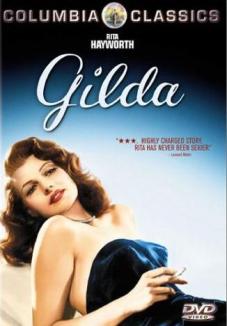
Gilda (1946): Lovely Rita…

Gilda (1946)

“if i had been a ranch, they woud have named me ‘Bar Nothing’ …”

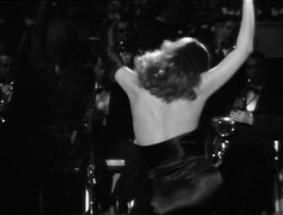
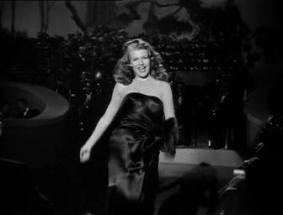
Aptly titled, this film is all about Rita Hyaworth’s Gilda: forget the weak story and the plot holes, just marvel at the beauty and charisma of this woman. She dances, she struts, she pouts, and she acts with passion and flair!

Gilda (1946)Gilda (1946)

And forget it if you are looking for a film noir: it is not. As a film it ranks with flawed gems like Beat The Devil – it just doesn’t add up but you have a helluva time anyway.

The Cabinet of Dr Caligari (Germany 1919)

Caligari

This bizarre and hysterical silent film, an early entry in the horror genre from director, Robert Weine, is seen by many as the genesis of expressionist cinema, which flourished in Germany in the 1920’s, and in turn influenced the stark lighting associated with Hollywood film noir. Fritz Lang had some early involvement with the film, but this was in the planning stages.

The Cabinet of Dr Caligari (Germany 1919)The Cabinet of Dr Caligari (Germany 1919)

But I support the heretical view that the expressionist connection is tenuous. The sets are staged distortions with shadows painted on, and the action filmed using flat internal lighting and a static camera center-stage. The film has little if any relevance to film noir in theme or filmic technique, apart from the use of flashback within a flashback.