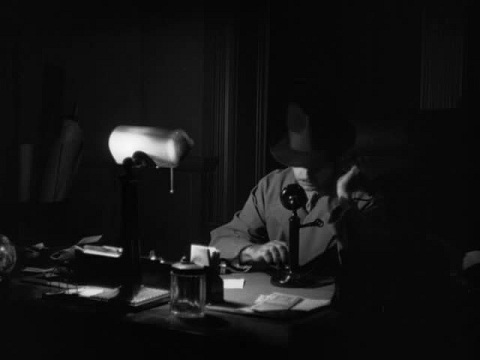
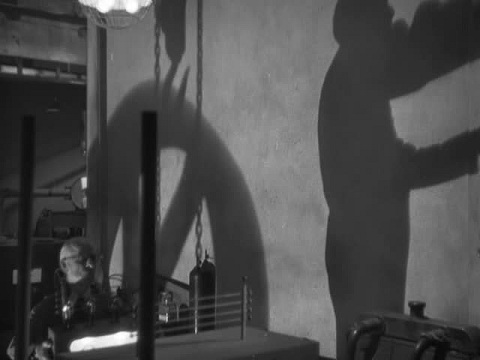
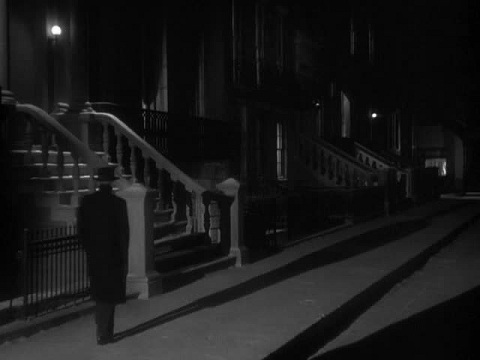
La Bionda (The Blonde – Italy 1992)

An amnesiac femme-fatale the titular blonde is fate’s doleful instrument in this little known neo-noir from Italian writer/director Sergio Rubini.  Dark destiny takes an innocent young man with a limp and throws him onto a nocturnal autostrada littered with blood and a burst suitcase full of cash, with a woman running screaming into the night.  A tragedy of gothic proportions played first as an unlikely love story takes you inexorably where so many noirs have taken us before.  A blameless life and an accepting obscurity are not enough to protect the mild protagonist from a wild furiously indifferent universe.

Who are we? Are we the sum of our experiences? Or a persona that can be discarded through accident or design but never entirely or without consequences? Natasha Kinski is the blonde, suffering from amnesia after she runs into the path of a car and is knocked over. The driver (played by Rubini) a young man from the rural South struggling to keep afloat in a Milan of dark elegance. A city where deep shadows seep from the classroom where he hunches over a desk learning the skills of a watchmaker, and out into the streets. La bionda needs help and crashes in his apartment. She gives him focus and a strange purpose through a hesitant yet compelling obligation.   For a few short days they float in a maelstrom of doubt tempered by a softening dependency and growing intimacy. She searching for who she is, and he glimpsing what he could be.  But reality intervenes, she remembers, and he is abandoned. He searches for her, finds her, but she is not the girl she was for those few short days. She is hard-bitten enough to know that he can’t be a part of that dark and sordid existence.  He, oblivious, naively pursues a chimera of his own making, drawn on into a catastrophe with a brutally visceral and operatic climax.

Director Rubini is not passive. He takes his camera and literally spins it around scenes and events. Colors have a brightness and profundity that fuel both the emotional intensity of the protagonists, and telegraph the dangers that will entrap all the players in the end.  Kinski when she returns to her erstwhile existence is embodied in red – lips, dress, and her car. Dark and vengeful destiny pursues her in black, and the hapless anti-hero stumbles along in white – ignoring Fate’s little hurdles that more than once give him a chance to escape.

Patience with an early slow pace more concerned with characterisation than narrative drive is amply rewarded in a dénouement of almost unbearable hysteria.


Hudson, NY: Scenes from Odds Against Tomorrow Then and Now

Robert Wise’s classic film noir Odds Against Tomorrow – see my review here – was shot on location in New York City and in the Hudson river town of  Hudson, NY. Noir aficionado and film-maker Ray Ottulich visited Hudson this month and has kindly allowed me to publish his photographs of locales used in Odds Against Tomorrow matched to actual frames from the movie. I have taken some liberties with the montages to present them here, cropping and super-imposing shots to hopefully make the comparisons more dynamic.  Ray’s creative talent and invaluable contribution to film noir history is to be applauded.  After all, as the years roll on, the odds are against these locales remaining as they are. Great work Ray!

Hudson is where the heist, which is the dramatic focus of the movie, takes place, and a fair amount of screen time is spent observing the central characters as they wait out the day of the heist which goes down that night.

Wicked Women: “transforming sexist into sexy”

The Justice & Police Museum in Sydney is hosting an exhibition of original paintings by Australian artist Rosemary Valadon Wicked Women features portraits of contemporary Australian women inspired by pulp fiction and film noir.  Valadon’s paintings are promoted as both embracing and subverting  the genre’s stereotypes – sexist becomes sexy.

Tara Moss, Rachel Ward, Skye Leckie, Imogen Kelly, Sonia Kruger, Ros Reines, Larissa Behrendt, Antonella Gambotto-Burke, Margaret Cunneen, Essie Davis, Annette Shun Wah, Kara Shead, each chose a classic film poster or book cover for their sitting.

The paintings are indeed a cheeky and edgy feminist response to the motif of the dangerous femme deftly portrayed, and with a real feel for noir archetypes.

The exhibition runs from Saturday 20 October 2012 to Sunday 28 April 2013.


New Film Noir Poster Book: “Where Danger Lives’

Alain Silver and James Ursini have produced yet another book on film noir. This time they look at the graphics used to market noir movies.  The book titled ‘Film Noir Graphics: Where Danger Lives’ is lavishly illustrated with over 300 full color posters, lobby cards, and other marketing handouts. All the graphics are rendered in high resolution from pristine originals. Many items I have not seen before, and quite a few are for more obscure films that will whet the appetite of many a noir fan.

More a coffee-table short black than a serious study, the book is one you will want to dip into between movie sessions.  There is a commentary of sorts organized by chapters with titles derived from major films noir, such as ‘Touch of Evil’ and ‘Night and the City’.  The narrative is a set of elaborated captions that segue into each other as you move from page to page.  Silver and Ursini attempt to unify their comments by covering the use of noir motifs and how these elements are rendered by the artists who produced the artwork. Differences across studios and countries are identified.  What is interesting is the artistic license taken by some artists depicting scenes and themes which are not found in the actual movie.  There is a degree of repetition in the text from chapter to chapter, and sometimes the commentary jumps across pages and you find that you are not quite sure which graphic is being referred to.

Whether the US$40 price-tag is value for money is debatable.  The internet is a treasure trove for poster addicts, with such sites as movieposterdb.com offering free downloads of high-res images organized in a searchable database.  It comes down to the value you place on the commentary, which does offer some insights. What is missing is a wider survey of the role of graphics in movie marketing, and a behind the scenes look at who the artists were and how the material was produced.

You can buy the book from Amazon. An eBook version is not currently available.


Naked Alibi (1954): “bizarre images, strange juxtapositions, and erotic plays”

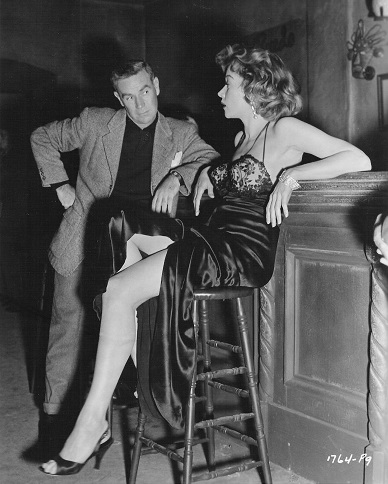
Director Jerry Hopper with Gloria Grahame on the set of Naked Alibi

James Naremore in his introduction to the English translation of the seminal book on film noir by Raymond Borde and Etienne Chaumeton, ‘A Panorama of American Film Noir, 1941-1953’, surveys the contribution of the Surrealist critique of cinema, and posits that “at certain moments, even in ordinary genre film or grade-B productions, [cinema] could involuntarily throw off bizarre images, strange juxtapositions, erotic plays of light and shadow on human bodies, thus providing an opportunity for the audience to break free of repressive plot conventions and indulge in private fantasies.”

More fully Naremore says:

The best account of the Surrealist fascination with cinema as a whole can be found in Paul Hammond’s witty, perceptive introduction to ‘The Shadow and Its Shadow: Surrealist Writings on the Cinema’… Hammond, who is also the translator of this edition of Panorama, reminds us that during the years immediately after the First World War, the original Surrealists used movies as an instrument for the overthrow of bourgeois taste and the desublimation of everyday life. Engaging In what Hammond describes as “an extremely Romantic project” and an “inspired salvage operation,” [André] Breton and his associates would randomly pop in and out of fleapit theaters for brief periods of time, sampling the imagery and writing lyrical essays about their experiences. Like everyone in the historical avant-garde, they were captivated by modernity, but they particularly relished the cinema because it was so productive of the “marvelous” and so like a waking dream. Willfully disrupting narrative continuities, they savored the cinematic mise-en-scene, which functioned as a springboard for their poetic imagination; and out of the practice they developed what Louis Aragon called a “synthetic” criticism designed to emphasize the latent, often libidinal implications of individual shots or short scenes. Even when cinema became too expensive for Breton’s style of serial viewing, it remained the fetishistic medium par excellence. At certain moments, even in ordinary genre films or grade-B productions, it could involuntarily throw off bizarre images, strange juxtapositions, and erotic plays of light and shadow on human bodies, thus providing an opportunity for the audience to break free of repressive plot conventions and indulge in private fantasies.

Naked Alibi an unpretentious b-movie from late in the classic noir cycle has just such a surreal quality. Whether from the cheapness of the production, the bizarre plot, or the literal darkness of much of the film, the picture is not so much a banal pastiche of noir motifs and set pieces, but an oneiric hallucination where characters from other films noir assemble onto a movie lot by some perverse twist of fate, and play out an adventure that makes as much sense as Luis Bunuel’s L’Age d’Or.

Made by a bunch of stringers – bar the great Russell Metty who lensed – the movie holds a strange fascination. Shot in the flat TV-style that emerged in the 50s there is little to recommend the picture as a cinematic effort – though Metty and director Jerry Hopper do hit some scenes out of the park, thanks to a peppering of classic film noir lighting and framing, and a theatrical final shootout across rooftops.

Stars Sterling Hayden and Gloria Grahame each wander in from some other set, Hayden perhaps taking a breather from Crime Wave and Grahame on the loose from Human Desire. Hayden is a cop who is fired after he pursues a model-citizen played by Gene Barry for the killing of the three cops – Barry has an angelic wife and a baby in a crib. The big surprise is Barry, who later made it big on TV as Bat Masterson. As the villain leading a truly bizarre Jeckyll & Hyde existence as a small-town baker – in one scene he is shown in his store icing a cake! – who falls foul of the law after he is picked up as drunk and disorderly, he leaves Hayden and Grahame behind in a wake of attitude and booze. But the motive for the killings is so flimsy you can’t understand why Hayden doesn’t give it up, tailing the suspect until Barry can’t take it any more and leaves town to “calm his nerves”. Apparently the baker takes regular business trips on his own, so the wife and kid are left behind. The plot is moot on why a baker would need to make business trips. Anyway.

Hayden pursues Barry down to a Mexican border town where Barry is revealed as a chronic drunk and mean racketeer, after Grahame is shown flashing a lot of flesh as a chanteuse in a cheap dive. It turns out Barry is Grahame’s long-lost boyfriend. Barry’s reunion with Grahame is particularly sordid and sexually charged. A classic triangle ensues. One thing leads to another, and Hayden gets his man on ice and Grahame checks out in Hayden’s arms after stopping two bullets from Barry’s gun in a low-rent reprise from Fritz Lang’s The Big Heat from the year before.

Take with a lot of booze.


Everbody Knows The Dice are Loaded

“Everybody knows that the dice are loaded
Everybody rolls with their fingers crossed
Everybody knows that the war is over
Everybody knows the good guys lost
Everybody knows the fight was fixed
The poor stay poor, the rich get rich
That’s how it goes
Everybody knows”

The finale from Season 3 of the noirish and very downbeat TV show Damages (2010) closes with Leonard Cohen’s ‘Everybody Knows’ sung by Holly Figueroa over the soundtrack, bringing to a close a sorry tale of greed, corruption, and downright evil set in the bright concrete canyons of Manhattan, where life is cheap and the pursuit of wealth by any means a sordid mantra.

A recent study by Emmanuel Saez from the University of California shows that in the United Sates between 2009 and 2010, the first year of the current ‘recovery’ the one percent captured 93% of the growth in national income (The Wall Street Journal, March 6 2012). This is only the most recent manifestation of the growing inequality in America which began during the Reagan presidency, and has seen the top 10 pct of income earners share of national income return to the obscene levels of the years just before The Big Crash in 1929 – the top 10pct of income earners grabbing half of national income – as shown in this graph from The Saez study.


Johnny Eager (1941): “Just another hood I guess”

“If this were serious drama one might complain that what makes Johnny [Eager] tick remains a mystery, that lovely students of sociology aren’t apt to embark on discussion with a parolee on Cyrano de Bergerac’s apostrophe to a kiss. But as pure melodrama Johnny Eager moves at a turbulent tempo. Mr. Taylor and Miss Turner strike sparks in their distraught love affair. Van Heflin provides a sardonic portrait of Johnny’s Boswell, full of long words and fancy quotations.”

–  Theodore Strauss, New York Times (1942)

A confoundingly entertaining pastiche the 1942 MGM gangster melodrama Johnny Eager has Robert Taylor and Lana Turner as star-crossed lovers, with Van Heflin as a drunkard and consigliore to Taylor’s titular mob boss.  Heflin received a richly-deserved Best Supporting Actor Oscar for his role.

An unashamedly contrived scenario by John Lee Mahin from a story by James Edward Grant has Johnny the conniving gangster find redemption too late and with a belly full of lead.  There are queer overtones as Heflin holds the dying Taylor in his arms whose last words wax nostalgic for the ‘figurative mountains’ they never climbed together.

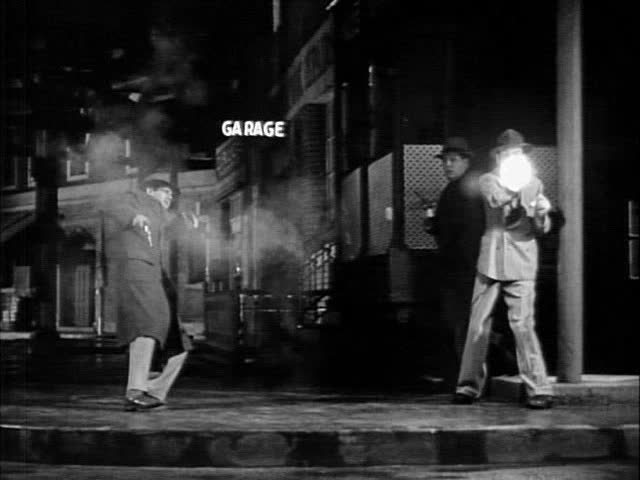
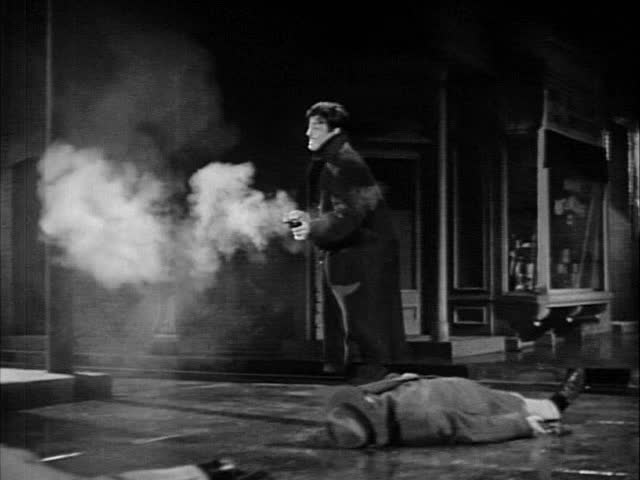
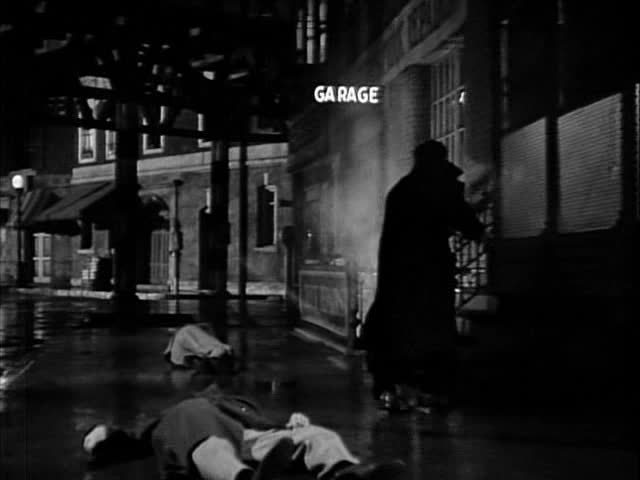
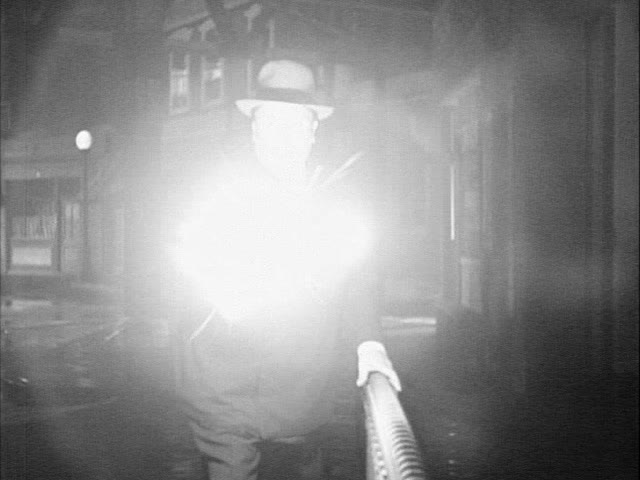
Emeritus director Mervyn LeRoy fashions a faux silk purse that has you believing the absurd coincidences and machinations which propel the flatly presented narrative to an out-of-left-field hiatus of beguiling expressionist cred. Much is owed to veteran DP Harold Rosson whose masterful lighting of the final sequence on dark city streets elevates the affair to something more than the sum of what has come before.  Taylor and Turner, who are inspired to break-out of their corn-fed roles with the able assistance of Heflin and a motley crew of craven hoods, deliver a mesmerising operatic finale, closed by a wonderfully ironic final frame that is pure cinema.

Slaughter on Tenth Avenue (1957): On The Waterfront Not

Based on William Keating’s autobiography, “The Man Who Rocked the Boat’, which chronicles his experiences as an Assistant DA in NYC in the 1950s, Slaughter on Tenth Avenue has Keating fighting corruption and union racketeering on the waterfront as he pursues a murder prosecution.  A straight union organiser has been gunned down after refusing to bend to the demands of racketeers, and the DA’s office must build a case in the face of witness intimidation.

Richard Egan in a straight-up effort plays Keating.  Jan Sterling is good as the victim’s wife, and a young Walter Matthau impresses as a racketeer defending his turf.  With the support of crime drama heavies Dan Duryea as a wily defence attorney, and Charles McGraw as an unorthodox cop, there is enough talent on show to hold your interest.  With these names and a good story you would think the producers had the makings of a solid noir.  What you get though is a second-rank police procedural with no real tension and about as noir as Liberace.  This did not stop the film featuring at Noir City 2012.  Overall, there is a derivative feel to the scenario, which borrows from but never matches the intelligence and power of On the Waterfront.

While not to be confused with the Richard Rodgers’ musical ballet from Rodgers and Hart’s 1936 Broadway musical comedy ‘On Your Toes’, Rodger’s music is used in the score, and to good dramatic effect.  Indeed, it is the jazzy musical arrangement by Herschel Burke Gilbert in the opening scenes that hits the spot.

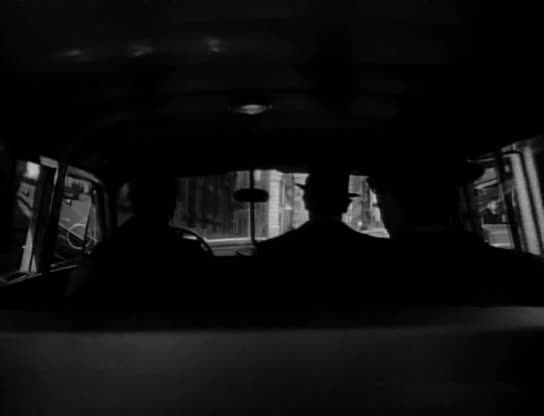
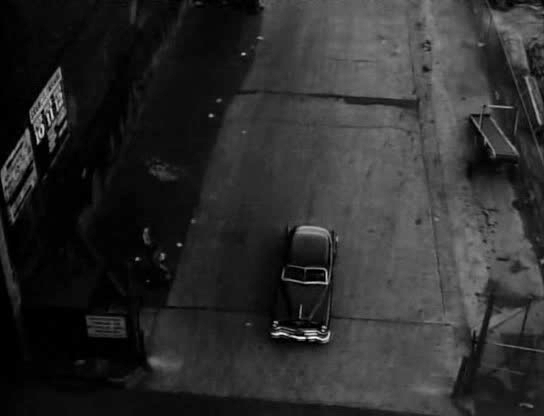
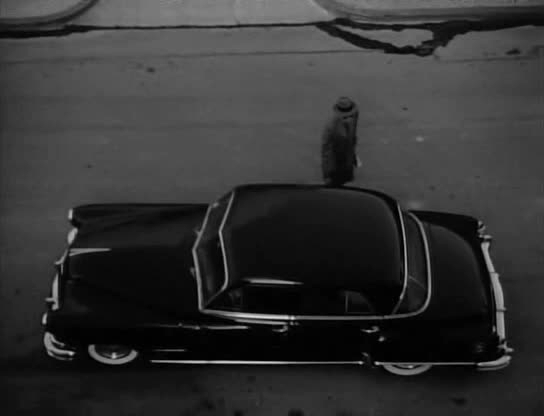
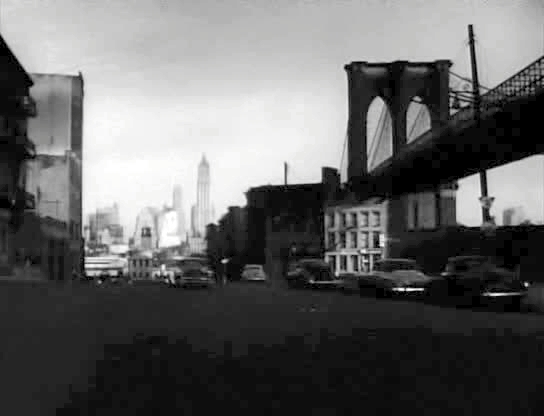
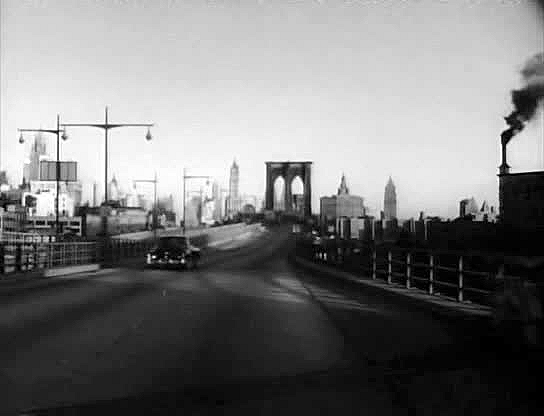
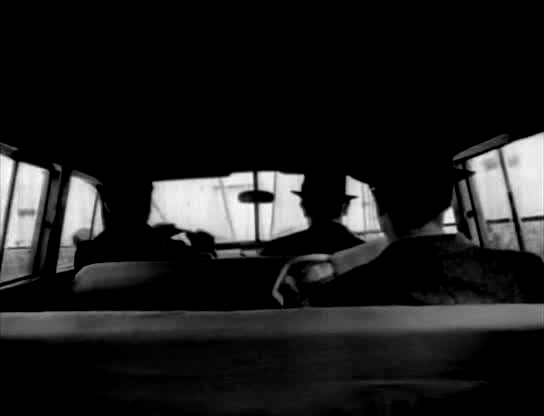
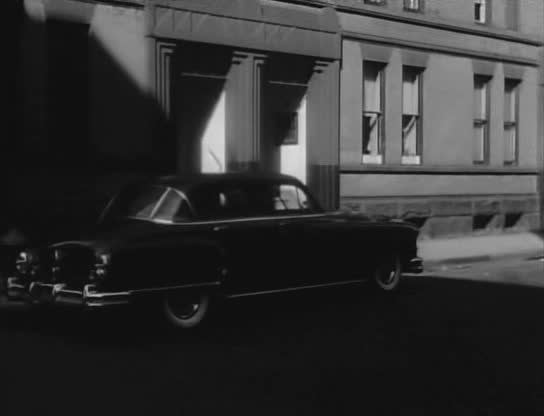
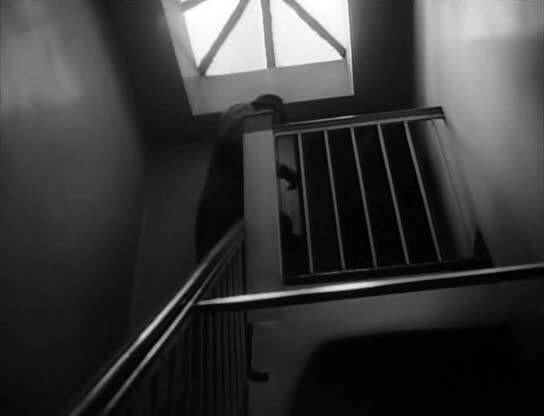
The opening titles are superimposed over the prelude to the hit, a stunning sequence that is sadly a false dawn, with the rest of the picture playing out at a plodding pace.  We see the perps drive from the waterfront to a tenement for the hit.  There is a wonderful gestalt at work with the contributions of composer Gilbert, DP Fred Jackman Jr., editor Russell F. Schoengarth, and director Arnold Laven, who  together create one of the most arresting sequences in a Hollywood crime movie ever.  These scenes are beautifully paced and edited, shot from a plethora of angles, including elegant aerial and tracking shots, and from inside the car – all perfectly lit.  You just want the titles to get the hell out of the way!


Cinematic Cities: New York 2007 – “a life in hell”

I come to the city alone
I packed up my life and my home
’cause I feel like a body at rest
Is a life in Hell
So unpack my bags, unpack my bags
Kiss her on the mouth, and she says,
“Smile little lamb”

From “When I am Through With You” by The VLA  (2006)

The TV series Damages (Fox 2007-2012) set in NYC  has the coolest opening credits.  A patina of noir with a dark pounding soundtrack featuring  “When I am Through With You” by The VLA.

The Thin Man (1934): James Wong Howe’s Noir Counterpoint

When director W.S. Van Dyke commissioned a screenplay from Dashiell Hammett’s last novel, The Thin Man, a throw-away story about a retired gumshoe drawn back into the business to investigate a series of murders in NYC, he asked for a comic script.  He got an enjoyable if innocuous screwball comedy playing on the dick, Nick Charles, being married to a wealthy dame, both of them being lushes, and having an eccentric mutt.

The casting is perfect with William Powell as Nick and the saucy Myrna Loy playing Nora his better-half.  The mutt is played by a wire fox terrier called Asta – think ‘Eddie’ from TV’s Frasier. A frothy mix of mystery, sleuthing, and wry banter delivers a diverting movie which has you smiling if not laughing.

DP James Wong Howe is integral to sustaining interest. While the comic antics are fun and add spritz to a weak story, and true both leads are delightful, it is the darkly lit mystery scenes set-up by Howe that impress cinematically. It is of course hard to delineate where the DP’s contribution starts and ends, though I would venture to say that with a less talented DP I doubt there would have been the same fluid camera work and darkly expressionist counterpoint that sustains the narrative.

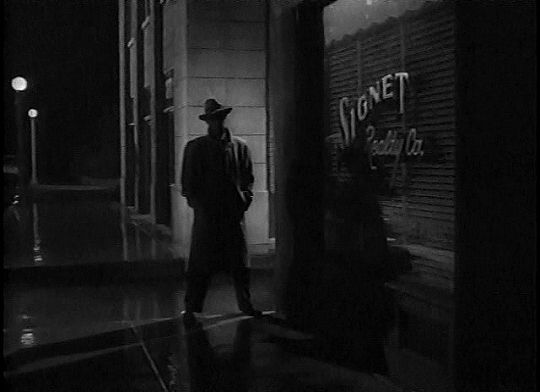
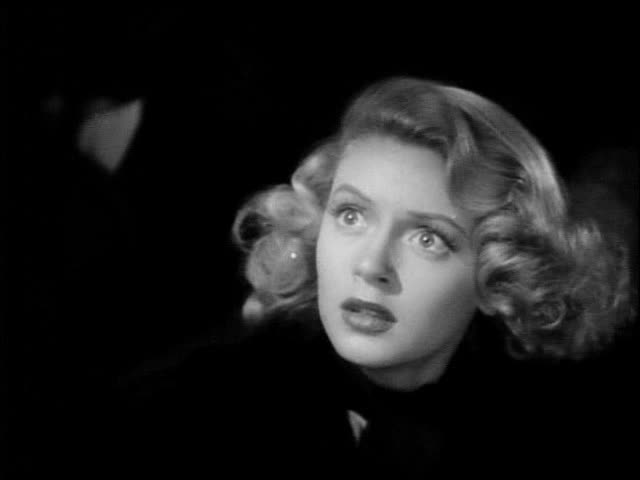
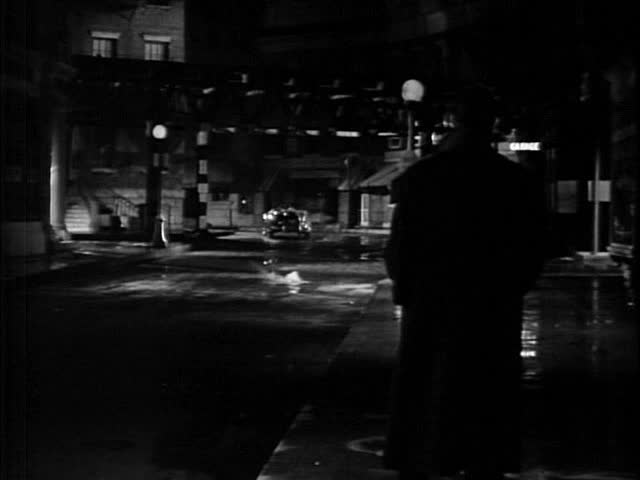
Some  additional frames from the movie to support my case: