Film Noir: Another Recommended Reading List

Another list of recommended books on Film Noir History & Theory from an Amazon.com customer with comments:

Film Noir: An Encyclopedic Reference to the American Style, Third Edition

by Alain Silver
Buy new: $25.55 / Used from: $14.35
The essential reference book for film noir of the classic period. Includes some discussion of neo-noir. Plot summaries, names, dates, and critical analysis for nearly 300 films.

Film Noir by Andrew Spicer

Buy new: $10.17 / Used from: $5.72
Concise and readable introduction to film noir theory. Covers classic, modern, and post-modern noir. Includes essays on 3 directors and lists of films.

The Dark Side of the Screen: Film Noir by Foster Hirsch

Buy new: $19.77 / Used from: $10.32
Another introductory text. Published in 1981, this was one of the first books on film noir written in English. Older and less comprehensive than the Spicer book, but still a solid introduction.

Dark City: The Lost World of Film Noir by Eddie Muller

Buy new: $16.47 / Used from: $11.94
Engaging survey of classic film noir written for a popular audience. Not intended to be comprehensive, but an winning introduction to great films for casual fans and noir buffs.

A Panorama of American Film Noir, 1941-1953 by Raymond Borde

Buy new: $11.53 / Used from: $6.95
Noir film theory’s seminal work, first published in France in 1955, on which all subsequent theory was built. Amazingly insightful, considering it lacked the benefit of hindsight.

Film Noir Reader by Alain Silver

Buy new: $22.95 / Used from: $5.60
Collection of essays written 1950s-1990s. Important seminal works, including Schrader’s “Notes on Film Noir”, plus modern studies of specific films and directors. Classic and neo-noir.

Film Noir Reader 2 by Alain Silver

Buy new: $15.60 / Used from: $6.85
More seminal essays, including Nino Frank’s, and an eclectic assortment of more recent essays that explore films, directors, themes, influences, and music. Classic and neo-noir.

Film Noir Reader 3: Interviews with Filmmakers of the Classic Noir Period by Alain Silver

Buy new: $22.50 / Used from: $14.06
Interviews with 18 directors, cinematographers, actresses, composers, writers, producers of the classic noir period, conducted by Robert Porfirio, Alain Silver, and James Ursini.

Film Noir Reader 4: The Crucial Films and Themes by Alain Silver

Buy new: $17.21 / Used from: $9.32
Mostly modern essays discussing key films and themes. Mixed bag. Some excellent historical studies, but too many essays rooted in socio-political agendas.

More than Night: Film Noir in Its Contexts by James Naremore

Buy new: $17.95 / Used from: $11.01
A scholarly analysis of “film noir” as an idea formed ex post facto that continues to resonate through contemporary media. Classic noir, neo-noir, and related crime films.

Detours and Lost Highways: A Map of Neo-Noir by Foster Hirsch

Buy new: $20.00 / Used from: $5.94
Follows neo-noir 1960-1999, as the style became a Hollywood mainstay. Analysis of old ideas and new trends, from the surprisingly retro to audaciously original films. Best book on neo-noir.

Shades of Noir: A Reader (Haymarket)

Buy new: $20.00 / Used from: $6.20
Ten highly academic essays focus on the origins of film noir motifs and their relationships to American culture. Classic & neo-noir. Dense, hard-core film theory. Not for casual fans.

New York Noir: Crime Photos from the Daily News Archive by William Hannigan

Buy new: $19.77 / Used from: $18.98
Not film theory, but it should be. These tabloid photographs from 1920s-1950s will disabuse you of the widely held belief that film noir’s vice, violence, and realism were products of the WWII era.

Somewhere in the Night by Nicholas Christopher

Buy used from: $2.31
Personal treatise focusing on elements of post-WWII urban environment which the author believes shaped film noir style. Interesting, thoughtful, but a stretch in terms of theory.

Out of the Past: Adventures in Film Noir by Barry Gifford

Buy new: $20.00 / Used from: $8.20
Barry Gifford’s personal take on 118 crime films released 1933-1988. If you find most film noir books too dry or academic, these energetic, entertaining essays might suit you.

L. A. Noir: Nine Dark Visions of the City of Angels by William Hare

Buy new: $39.95 / Used from: $25.00
Analysis of 7 classic noir films and 2 neo-noir films that take place in Los Angeles. Includes discussion of related films and the directors, actors, and writers involved in their creation.

L.A. Noir: The City as Character by Alain Silver

Buy new: $14.96 / Used from: $12.75
Classic and neo-noir in Los Angeles, with emphasis on how the city and its landmarks help create the noir mood. More than 150 b&w photos including many location photos indexed with addresses.

Film Noir by Alain Silver

Buy new: $13.59 / Used from: $6.20
Sleek, attractive showcase of over 180 photographs from classic noir films. Somewhat cursory analysis of 10 noir motifs and 10 representative films. Heavy on visuals, light on information.

Art of Noir: The Posters And Graphics From The Classic Era Of Film Noir

by Eddie Muller
Buy new: $34.65 / Used from: $25.00
A wonderful showcase of the brash, lurid poster art of classic film noir. 338 posters and lobby cards are reproduced in eye-popping color. Captions and essays expound on the bold styles.

Painting With Light by John Alton

Buy new: $19.77 / Used from: $11.99
Not film theory, but lighting theory. A handbook to cinematography written in 1949 by John Alton, low key lighting specialist and one of film noir’s most recognizable and revered cinematographers.

Its A Bitter Little World: The Smartest Toughest Nastiest Quotes From Film Noir

Buy new: $10.39 / Used from: $1.78
A nice little volume of hard-boiled quotes from film noir 1940-2005. Organized by date, theme, and indexed by film.

Hard Boiled: Great Lines from Classic Noir Films by Peggy Thompson

Buy used from: $1.88
Book of quotes from film noir and crime films 1932-1964. Organized by film, indexed by artist and first line. Includes reproductions of more than 60 movie stills and lobby cards.
Film Noir: Recommended Reading

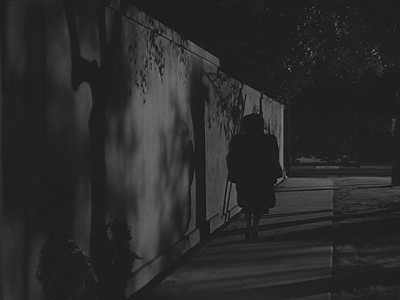
BuddBottiecher's Behind Locked Doors (1948)

I came across this interesting Film Noir Recommended Reading List by an Amazon.Com customer and his comments:

Dark City: The Lost World of Film Noir by Eddie Muller

Buy new: $16.47 / Used from: $11.94
Eddie Muller’s Dark City is one of the best books on noir out there.

Dark City: The Film Noir by Spencer Selby

Buy new: $30.00 / Used from: $29.98
A great “list” book. Noirheads use this one to keep track of what they’ve seen and what they want to see.

Film Noir: An Encyclopedic Reference to the American Style, Third Edition

by Alain Silver
Buy new: $25.55 / Used from: $14.35
Another excellent “List” book. Not much in the way of photos, but this is probably the most comprehensive list of film noir out there.

A Panorama of American Film Noir, 1941-1953 by Raymond Borde

Buy new: $11.53 / Used from: $6.95
This is the book that started it all. A must for film fans.

Death on the Cheap: The Lost B Movies of Film Noir by Arthur Lyons

Buy new: $17.50 / Used from: $9.00
The ultimate reference of all B-film noir. The book is entertaining and really digs deep trying to find some forgotten gems (and more than a few stinkers).

Early Film Noir: Greed, Lust and Murder Hollywood Style by William Hare

Buy new: $37.95 / Used from: $35.00
A collection of essays on great film noir.

The Noir Style by Alain Silver

Buy new: $48.00 / Used from: $17.99
A enjoyable coffee-table sized book with images from film noir.

Art of Noir: The Posters And Graphics From The Classic Era Of Film Noir

by Eddie Muller
Buy new: $34.65 / Used from: $25.00
This one goes great with Noir Style. A collection of colorful film noir movie posters in coffee-table-book size.

Painting With Light by John Alton

Buy new: $19.77 / Used from: $11.99
The famed movie-maker’s book on lighting. A must for noir fans and film makers. The book references The Amazing Mr. X.

New DVD Set: Film Noir: Five Classics from the Studio Vaults

They Made Me a FugitiveScarlet Street

A new DVD set has just been released by KINO with some interesting and obscure titles, including a pristine HD transfer of the Fritz Lang classic, Scarlet Street:
Film Noir: Five Classics from the Studio Vaults – Scarlet Street/Contraband/Strange Impersonation/They Made Me A Fugitive/The Hitch-Hiker

The Hitch-Hiker

Each movie in the Set was reviewed today by Grady Hendrix in the The New York Sun: Ladies Of the Dark

Details courtesy of Amazon.com:

SCARLET STREET (1945) – A FILM BY FRITZ LANG – WITH EDWARD G. ROBINSON, JOAN BENNETT & DAN DURYEA – A box-office hit in its day (despite being banned in three US states), Scarlet Street is perhaps legendary director Fritz Lang’s finest American film. But for decades, Scarlet Street has languished on poor quality VHS tape and in colorized versions. Kino’s immaculate new HD transfer, from a 35mm Library of Congress vault negative, restores Lang’s extravagantly fatalistic vision to its original B&W glory. When middle-aged milquetoast Chris Cross (Edward G. Robinson) rescues street-walking bad girl Kitty (Joan Bennett) from the rain slicked gutters of an eerily artificial backlot Greenwich Village, he plunges headlong into a whirlpool of lust, larceny and revenge.

CONTRABAND (AKA Blackout) (1940) – A FILM BY MICHAEL POWELL – WRITTEN BY EMERIC PRESSBURGER – WITH CONRAD VEIDT & VALERIE HOBSON – Contraband is a comedy thriller in the vein of Hitchcock’s The Thirty-Nine Steps and The Lady Vanishes. The film is an early treasure from the writer-director team of Emeric Pressburger and Michael Powell (The Red Shoes), who have been hailed by critics as jewels in the crown of British cinema. Set in England during the early days of WW II, Contraband stars Conrad Veidt and Valerie Hobson as a Danish sea captain and his enigmatic passenger who are kidnapped by a cell of Nazi spies operating from a basement in London’s Soho. In evocatively Hitchcockian fashion, the plot progresses as a chase that puts the characters in one peculiar set of surroundings after another.

STRANGE IMPERSONATION (1947) – A FILM BY ANTHONY MANN – WITH BRENDA MARSHALL & LYLE TALBOT – Hard-boiled film noir masquerading as a women’s melodrama, Strange Impersonation is a twisted tale of jealousy, murder, revenge and facial disfigurement from director Anthony Mann (T-Men, Raw Deal).

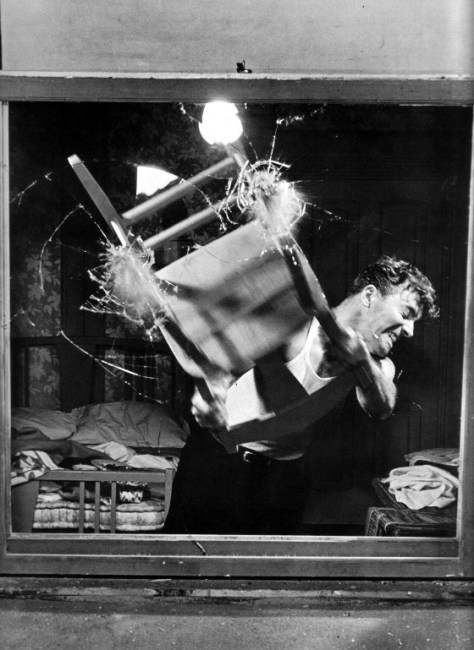
THEY MADE ME A FUGITIVE (AKA I Became A Criminal) (1947) – A FILM BY CAVALCANTI – STARRING TREVOR HOWARD & SALLY GRAY – Alberto Cavalcanti (Dead of Night), one of the key figures in French and British cinema for several decades, turns his sights on the London underworld in the engrossing Brit Noir gangland drama They Made Me a Fugitive. Set in unsettled postwar England where crime is on the upsurge, Fugitive is a suspenseful genre film which uses the picturesque Soho district as background to brilliant effect. The brooding and atmospheric cinematography of cameraman Otto Heller (Funeral in Berlin) is in the noir visual tradition, while the film’s authenticity is due to the director’s command of documentary technique. The London pubs, alleys, and back bedrooms turn into the poetry of urban realism.

THE HITCH-HIKER (1953) – A FILM BY IDA LUPINO – STARRING EDMOND O BRIEN, FRANK LOVEJOY & WILLIAM TALMAN – The only true film noir ever directed by a woman, this tour-de-force thriller (considered by many, including Lupino herself, to be her best film) is a classic, tension-packed, three-way dance of death about two middle-class American homebodies (Edmond O’Brien and Frank Lovejoy) on vacation in Mexico on a long-awaited fishing trip. Suddenly their car and their very lives are commandeered by psychopathic serial killer Emmett Myers (William Talman). The striking light/dark contrasts, the stunning compositions (such as the two kidnap victims separated by a narrow stream from a gun-cradling madman with a lazy eye) and the spatial integrity of a determining sense of locale (the pitiless topography of a rockbound, horizonless Mexico over which hovers an ever-present doom) all contribute mightily to this fascinating character study.

Cat People (1942): Another sound – the panther – it screams like a woman

Cat People (1942)

“Even as fog continues to lie in the valleys, so does ancient sin cling to the low places, the depressions in the world consciousness.”
– Opening Credits

The first of a string of B horror classics from RKO, this haunting tale of a cat-woman is an expressionist tour-de-force. Directed by Frenchman Jacques Tourneur, filmed by the Italian cinematographer Nicholas Musuraca, and produced by Russian-born Val Lewton, from a screenplay by DeWitt Bodee. Later in 1947 Tourneur and Musuraca teamed again to make Out of the Past.

Tourneur uses stark lighting and moody night shots to suggest horror and foreboding in scenes that are rendered completely only in the viewers’ imaginations.

Simone Simon portrays the woman doomed from birth with understated intensity, and her engaging performance gives the erstwhile demon a fragile humanity.

This highlights another connection to film noir. The cat woman is not just a captive of her accursed fate, but imprisoned by her very sexuality, which can be expressed only by unleashing her demonic self.

From the closing credits:

But black sin hath betrayed to endless night
My world, both parts, and both parts must die.

Holy Sonnets, V. – John Donne.

A visual feast and a multi-layered literate tale of darkness.

This slideshow requires JavaScript.

The Noir Of War

War: Vietnam 1967

Many write of the “existential dread” in the aftermath WW2 as the catalyst for film noir.

A very young Bob Dylan’s Masters of War in 1961 put the focus back on to war itself:

Come you masters of war
You that build all the guns
You that build the death planes
You that build the big bombs
You that hide behind walls
You that hide behind desks
I just want you to know
I can see through your masks

You that never done nothin’
But build to destroy
You play with my world
Like it’s your little toy
You put a gun in my hand
And you hide from my eyes
And you turn and run farther
When the fast bullets fly

Like Judas of old
You lie and deceive
A world war can be won
You want me to believe
But I see through your eyes
And I see through your brain
Like I see through the water
That runs down my drain

You fasten the triggers
For the others to fire
Then you set back and watch
When the death count gets higher
You hide in your mansion
As young people’s blood
Flows out of their bodies
And is buried in the mud

You’ve thrown the worst fear
That can ever be hurled
Fear to bring children
Into the world
For threatening my baby
Unborn and unnamed
You ain’t worth the blood
That runs in your veins

How much do I know
To talk out of turn
You might say that I’m young
You might say I’m unlearned
But there’s one thing I know
Though I’m younger than you
Even Jesus would never
Forgive what you do

Let me ask you one question
Is your money that good
Will it buy you forgiveness
Do you think that it could
I think you will find
When your death takes its toll
All the money you made
Will never buy back your soul

And I hope that you die
And your death’ll come soon
I will follow your casket
In the pale afternoon
And I’ll watch while you’re lowered
Down to your deathbed
And I’ll stand o’er your grave
‘Til I’m sure that you’re dead

Copyright © 1963; renewed 1991 Special Rider Music

The Lady From Shanghai (1947): “Then the beasts took to eating each other”

The Lady From Shanghai (1948)“Do you know…
once, off the hump of Brazil…
I saw the ocean so darkened with blood it was black…
…and the sun fainting away over the lip of the sky.
We´d put in at Fortaleza…
and a few of us had lines out for a bit of idle fishing.
It was me had the first strike.
A shark it was.
Then there was another.
And another shark again.
Till all about, the sea was made of sharks…
and more sharks still.
And no water at all.
My shark had torn himself from the hook…
and the scent or maybe the stain it was, and him bleeding his life away…
drove the rest of them mad.

Then the beasts took to eating each other.
In their frenzy…
they ate at themselves.
You could feel the lust of murder like a wind stinging your eyes.
And you could smell the death reeking up out of the sea.
I never saw anything worse…
until this little picnic tonight.
And you know…
there wasn´t one of them sharks in the whole crazy pack that survived.
l´ll be leaving you now.

George, that´s the first time..
anyone ever thought enough of you to call you a shark.
If you were a good lawyer, you´d be flattered.”

The Lady From Shanghai (1948)The Lady From Shanghai (1948)

A brilliant jigsaw of a film noir from Orsone Welles, with a femme-fatale to die for, and a script so sharp and witty, you relish every scene. You can watch it again and again, and find something new each time.

The long yacht voyage is used to both develop the characters and as a homage to Hayworth’s beauty and the eternal feminine in the flesh and in nature.

The Lady From Shanghai (1948)The Lady From Shanghai (1948)The Lady From Shanghai (1948)The Lady From Shanghai (1948)

The climactic confrontation and shootout at the end in an amusement park mirror-maze is breath-taking. The restored print available on the DVD is so sharp that it is hard to believe the picture was shot 6o years ago.

The Lady From Shanghai (1948)The Lady From Shanghai (1948)

To be savoured with patience and your full attention.

Visions of Light: Noir Cinematography

Most film analysis favours the auteur approach, where the creative credit is focused on the director.

The 1992 documentary on great cinematographers from the silent era to the 80’s, Visions of Light: The Art of Cinematography, shifts the spotlight to those who actually wielded the camera.

Orson Welles in recognition of this creative contribution, in the credits for Citizen Kane (1941), shared direction credit with his collaborator and director of photography, Gregg Toland:

Citizen Kane (1941)

The following slideshow features 32 great examples of the “black” light of film noir featured in Visions of Light. Director of Photography credits are list at the end of the post.

This slideshow requires JavaScript.

Mildred Pierce (1945) – Ernest Haller
The Killers (1946) – Woody Bredell
Out of The Past (1947) – Nicholas Musuraca
The Naked City (1948) – William Daniels
Young Man with a Horn (1950) – Ted McCord
The Big Combo (1955) – John Alton
The Night of the Hunter (1955) – Stanley Cortez
Sweet Smell of Success (1957) – James Wong Howe
Touch of Evil (1958) – Russell Metty

The Naked Kiss (1964): Pulp Noir

The Naked Kiss (1964): Pulp Noir

discomfited staggering between camp, noir, and grotesque melodrama, might be more a result of studio tampering than Fuller’s misdirection. It is also difficult to discern just what sort of censorship the studios achieved, for whatever they did was austerely permeated by social taboos the likes of abortion, prostitution, child molestation, and murder.

IMBD Comment from jeanpesce

Samuel Fuller, writer, director, and producer of The Naked Kiss, apparently disclaimed this film after alleged re-editing ordered by studio bosses before its release.

I found the film largely emotionally distant, but the story of a prostitute who tries to remake her life in the face of social prejudice and male misogyny is perversely involving. A noir sensibility pervades, but it is not really a film noir as the anti-hero is a woman who is punished for being good: though her violent actions may be justified in a closed sense, they are not necessarily the only reasonable responses.

The best scene is when the text of a newspaper headline is flashed across the screen: it is a veritable punch to the stomach.

Fuller was a pulp director who tried to understand women and support their empowerment, unlike directors like Quentin Tarantino, who seek to debase the feminine.

Something different.

Anthony Hopkins: Influenced by Film Noir

Anthony Hopkins in an interview with Cinema Blend about his new film, Slipstream, which he not only wrote and directed, but in which he also stars and wrote the music, says of his influences:

Our existence is beyond our explanation… I believe that everything is illusory, because we can’t grasp anything… The films that I really like were the film noir movies […] Those film noir things just got to me as a kid. A film that’s non-linear, Burt Lancaster in The Killers

thekiillers01.jpg

Breathless (A Bout De Souffle) – France 1959: New Wave Noir

Breathless (A Bout De Souffle) - France 1959: New Wave Noir

This iconoclastic debut by the French New Wave pioneer, Jean Luc Godard, has been re-released on a 2 disc DVD set with a new HD digital transfer from Criterion. The transfer has been supervised by the original director of photography of Breathless, Raoul Coutard. In the words of Amazon contributor, Jonathan E. Haynes “jehaynes” (Berkeley, CA): “With Coutard involved in Criterion’s issue, the film has undoubtedly been restored to some of its original, shocking, ragged beauty”.

The second disc includes archival interviews with the director and Jean-Paul Belmondo, who plays the young punk with noir affectations. Jean Seberg is perfect as the young American student in Paris ‘living dangerously’.

Breathless (A Bout De Souffle) - France 1959: New Wave Noir

Australian critic, Adrian Martin in 2004: “there is a semblance of a thriller plot complete with a betrayal, tailing cops, and a final shootout… but the subtle, formal pleasures of Breathless have yet to be fully appreciated. Whether through accident or design, Godard’s low-budget on-the-fly shooting style produced remarkable innovations.”

Forget about Tarantino, Godard is the genuine originator of (Martin again) “the mixture of loose gangster-crime plot, a smart attitude, and a hip array of high and low culture citations… and there is an insolent mildly outrageous rap pouring from Belmondo’s punk motormouth, but even that scarcely contradicts the Chandler-Hammett-Spillane tradition of hard-boiled talk.” (1001 Movies)

The original film noir jazz score by Martial Solal is available on CD: