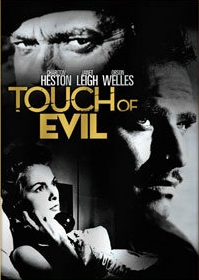
Glenn Erickson has posted on Film.com a review on the 50th Anniversary DVD Edition of Orson Welles’ Touch Of Evil (1958).
Erickson provides some fascinating background on the film’s production and its restoration 40 year later.

FilmsNoir.Net – all about film noir
the art of #filmnoir @filmsnoir.net | Copyright © Anthony D'Ambra 2007-2025
Glenn Erickson has posted on Film.com a review on the 50th Anniversary DVD Edition of Orson Welles’ Touch Of Evil (1958).
Erickson provides some fascinating background on the film’s production and its restoration 40 year later.
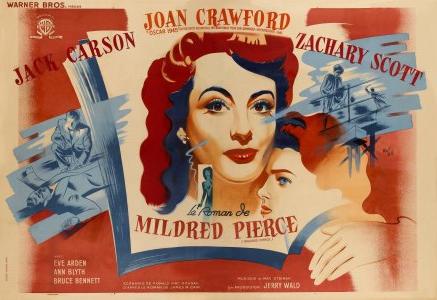
The anonymous blog, Precious Bodily Fluids, has posted an interesting feminist critique of Mildred Pierce (1945).
I disagree with much of the article, but it is well-written and offers a novel perspective. My views have been added as a comment to the post.
Lloyd Fonvielle on his mardecortesbaja.com blog has posted a concise and penetrating survey of film noir and how it informed the cinema of the 1960’s Film Noir Revisited:
Film noir had a beginning in the global dislocations and moral derangement of WWII, and an end in the open social and political critiques of the Sixties. There had never been anything quite like film noir before WWII, and there has never been anything quite like it since the Sixties. It was, and remains, a distinct tradition.

La Mariée était en noir (1968 The Bride Wore Black)
Woolrich not only dislodged the detective from his traditional pedestal — as the solver of the puzzle, the good guy who nabs the bad guy, the knight on the mean streets, the arbiter of ethics, the reader’s surrogate whose very presence is a guarantee of narrative clarity and the restoration of order in the chaotic world of crime — but challenged the very notions of hero and quest. Now the hero could be the villain, or the dupe; the quest itself could prove to be deranged, as the moral moorings of standard detective fiction fall away. That dark view was reflected in the humid nightscapes of film noir cinematography, just as Woolrich’s tilt of perspective was mirrored in the movies’ oblique camera angles and paranoid worldview.
Back in December 2003 Richard Corliss published a two-part article on the life and works of Cornell Woolrich on TimeCNN, which is a fascinating introduction to the life and fiction of this seminal noir writer:

The Motley View blog has two very erudite and concise articles on chiaroscuro lighting and analepsis in film noir referencing Billy Wilder’s Double Indemnity (1944):

But does she really love him? That’s always the question about these heroines-obsessive to the hero, central to the movie. De Carlo’s Anna [Criss-Cross], for example, is willing enough to betray her racketeer husband for love of Lancaster, but not willing to stay with him once the husband catches up with them. Not when she can take the money and run… It’s one of the noir heroine’s most invariable features that she is motivated by greed: she is poor and wants to be rich, or else she is rich and wants to be richer. She may inspire romantic dreams, but she doesn’t have them herself. Not like he does, anyway. That’s one of the advantages she has over him.
– James Harvey, Movie Love in the Fifties
NPR has posted under its You Must Read This feature, an interesting excerpt from Harvey’s book on the femme-fatale from the early 40’s to the late 50’s, with nicely drawn portraits of the femmes-fatale from The Maltese Falcon, Double Indemnity, The Killers, Criss-Cross, The Woman in the Window, Scarlet Street, Pushover, Pitfall, Gun Crazy, The File on Thelma Jordan, The Locket, and Where Danger Lives.
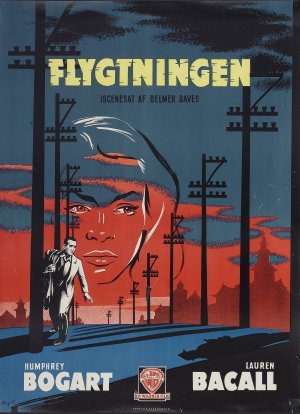
Dark Passage (1947)
In his The Evening Class blog, Michael Guillen, has posted a series of reports and interviews from The Dark Cinema of David Goodis series, including introductory remarks to each screening from Eddie Muller and Pacific Fim Archives director Steve Seid:
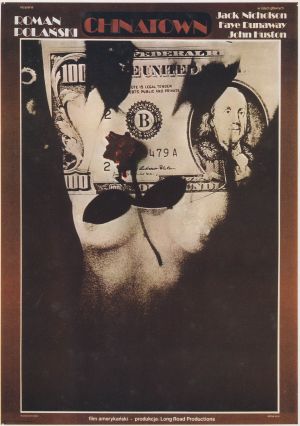
Michael Clawson has posted to his blog, Pick-Up Flix, a review of Roman Polanski’s Chinatown (1974) with an original take on Chinatown as metaphor: “the title refers to a place where law and order (i.e. death) are circumvented by the tragedy and corruption of life. Roman Polanski wasn’t creating just a mystery; he was bowing to the greatness in which mystery thrived — film noir”.
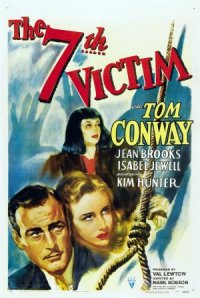
The Film Sufi blog has posted an interesting review of the Val Lewton horror flick, The Seventh Victim (1943) directed by Mark Robson: “one of a string of hypnotic films noir he brought to the screen, coming right after “The Cat People”, “I Walked With a Zombie”, and “The Leopard Man”. What makes this film interesting is the wide gulf separating its virtues and its flaws”.
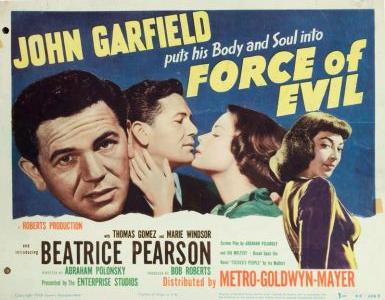
Imogen Sara Smith has written in the August issue of the Bright Lights film journal a review of Abraham Polonsky’s Force of Evil (1948). The article is a good introduction to the movie without giving too much away – an endemic weakness for many reviewers of films noir and writers on film noir.
While rightly focusing on Garfield’s characterisation as the hoodlum lawyer and the relationship with his brother played by Thomas Gomez, Smith gives too little credit to Polonsky’s solid screenplay and his impressive directorial debut.
 FilmsNoir.Net - all about film noir