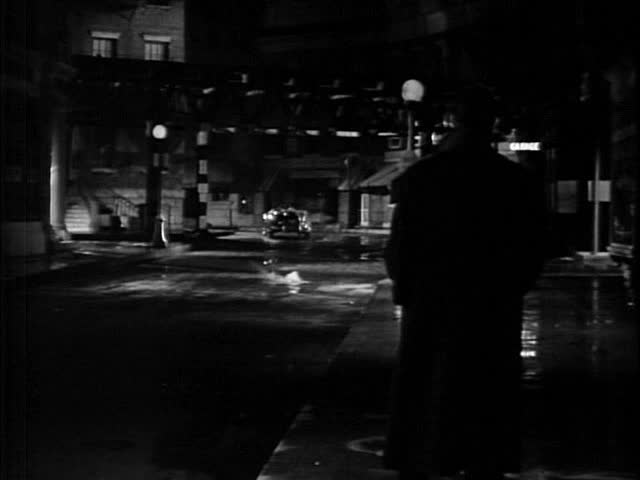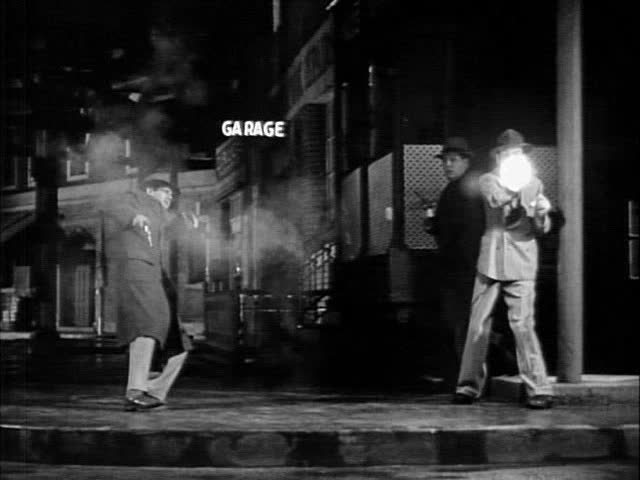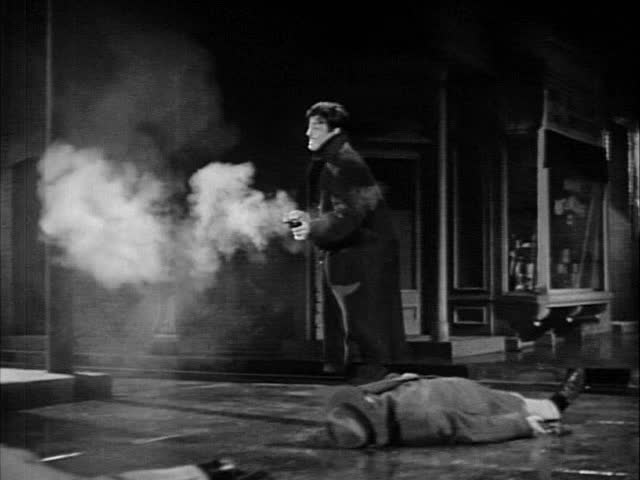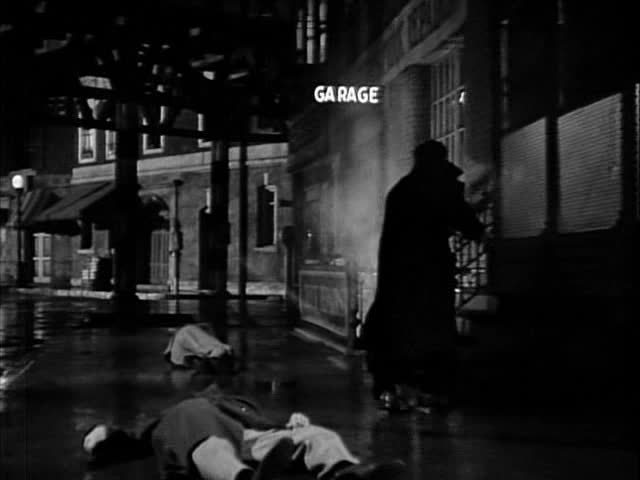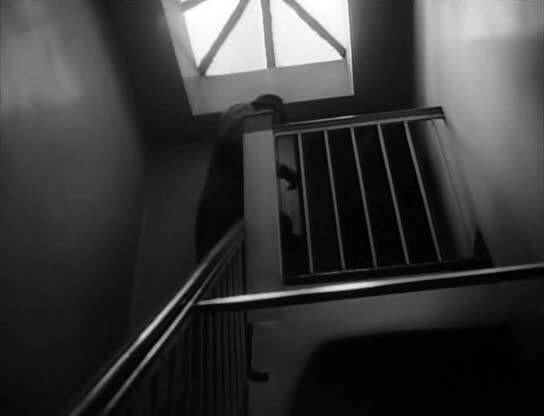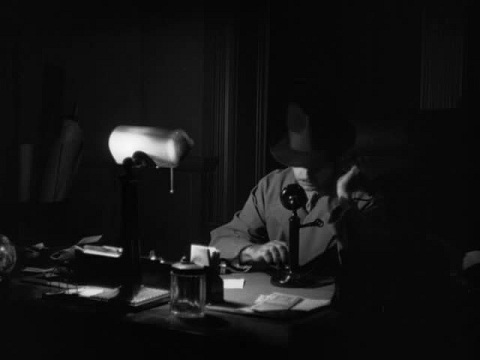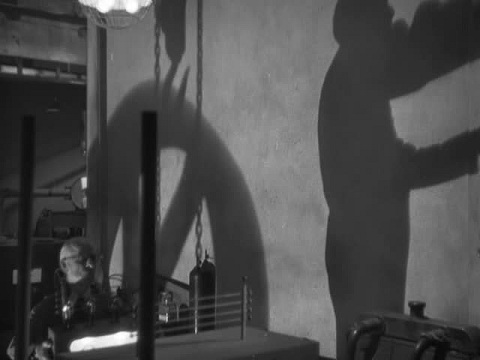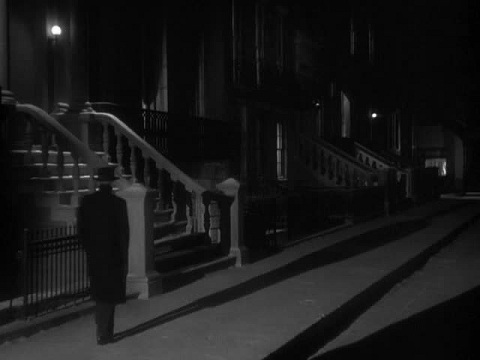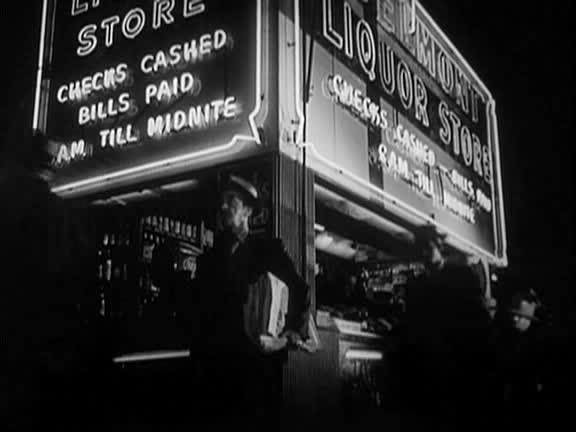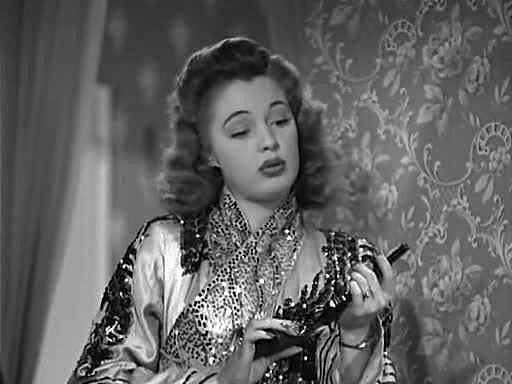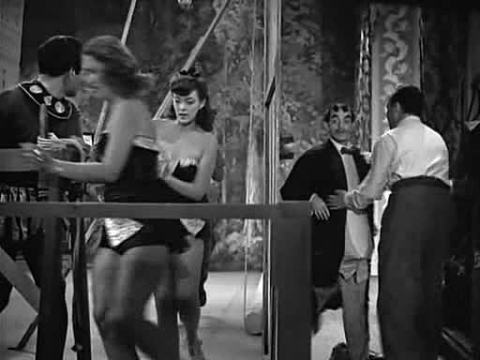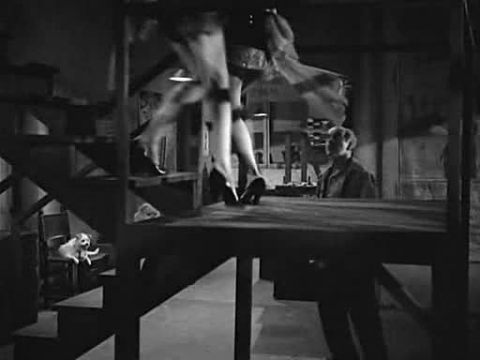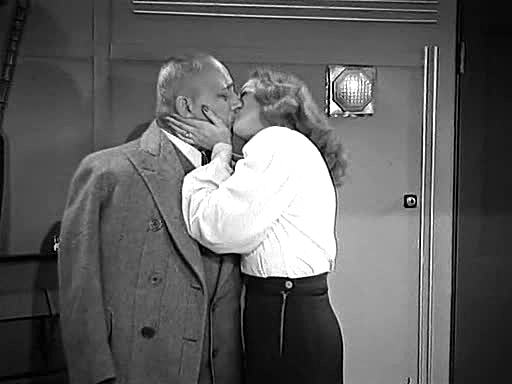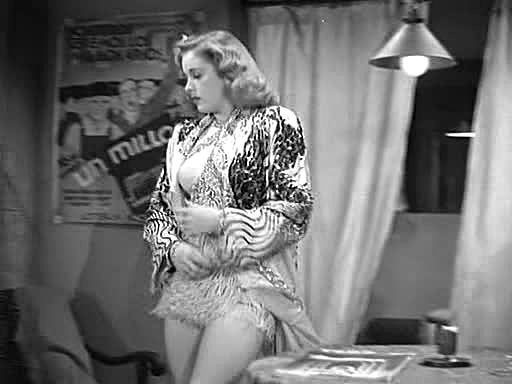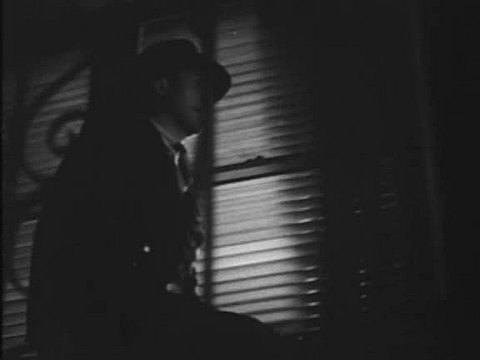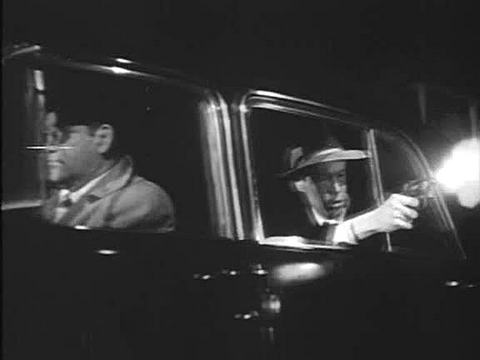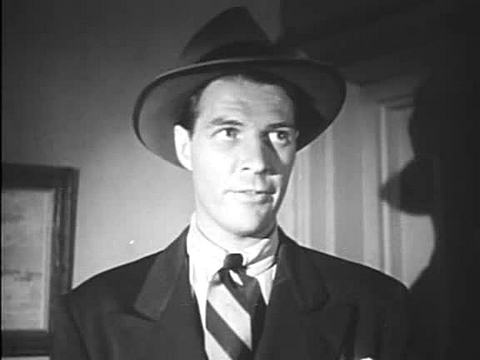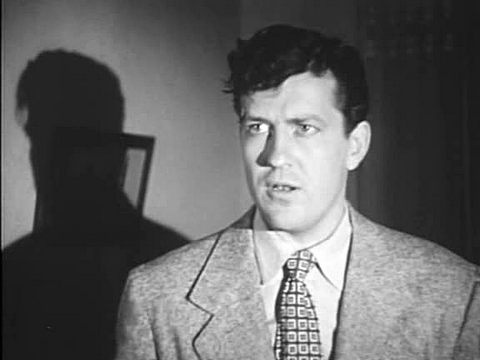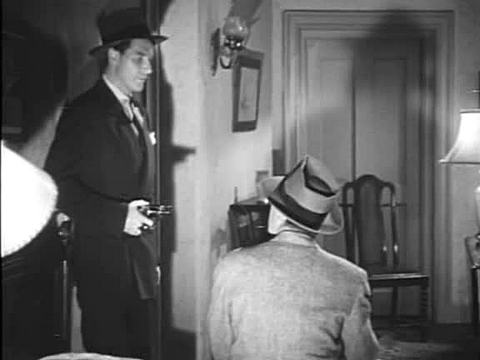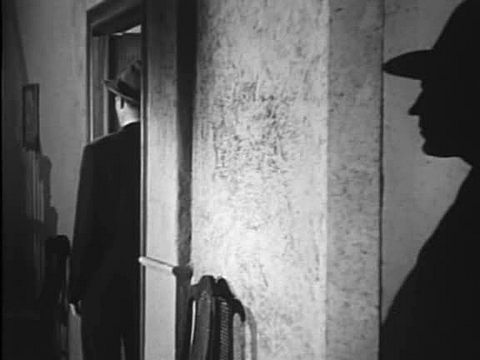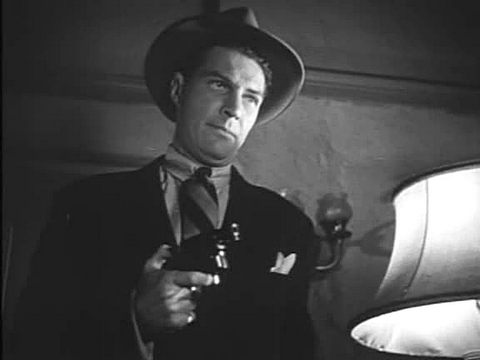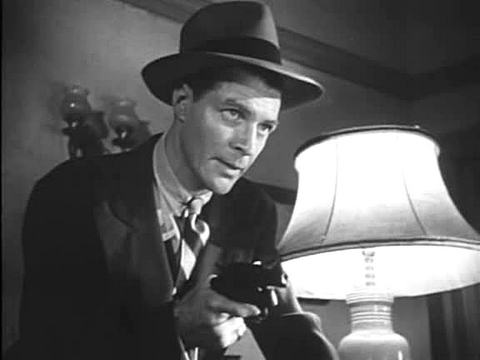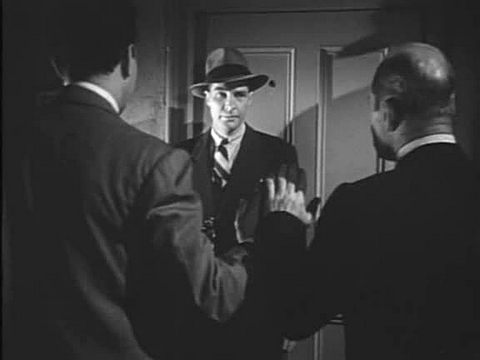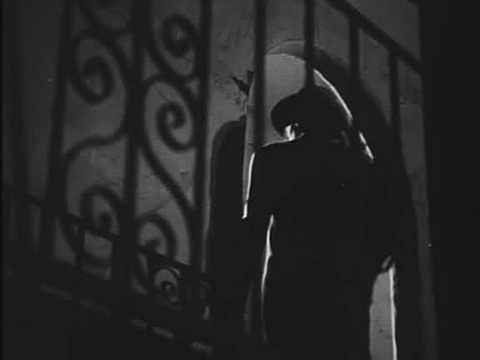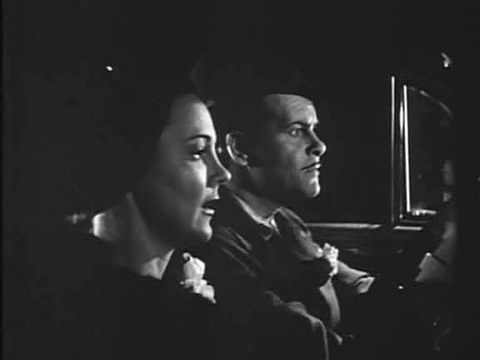
Johnny Eager (1941): “Just another hood I guess”

“If this were serious drama one might complain that what makes Johnny [Eager] tick remains a mystery, that lovely students of sociology aren’t apt to embark on discussion with a parolee on Cyrano de Bergerac’s apostrophe to a kiss. But as pure melodrama Johnny Eager moves at a turbulent tempo. Mr. Taylor and Miss Turner strike sparks in their distraught love affair. Van Heflin provides a sardonic portrait of Johnny’s Boswell, full of long words and fancy quotations.”

–  Theodore Strauss, New York Times (1942)

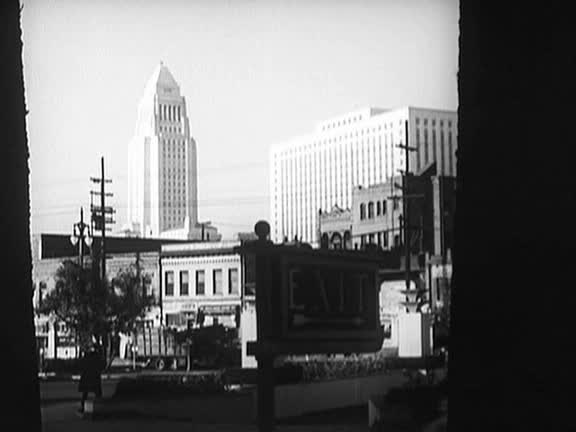
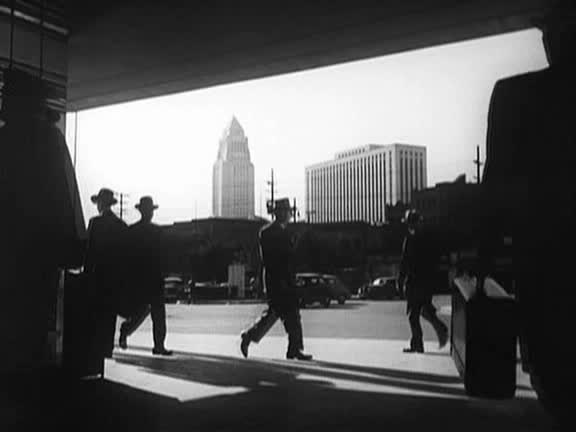
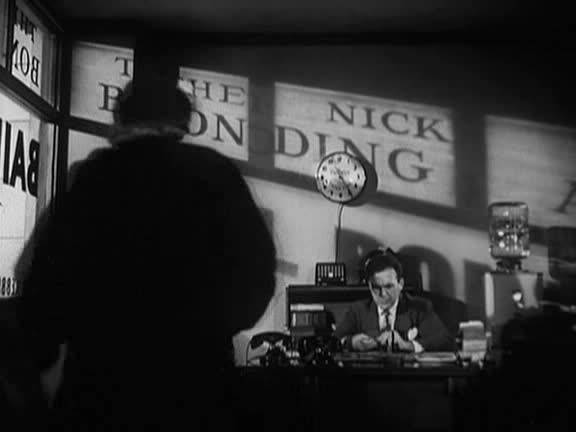
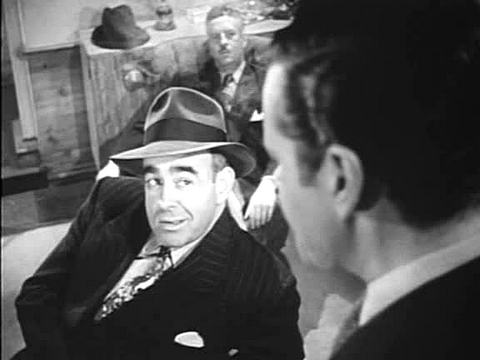
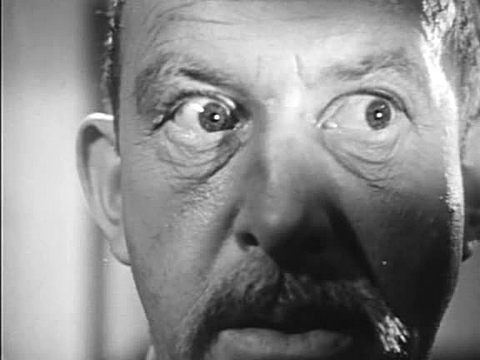
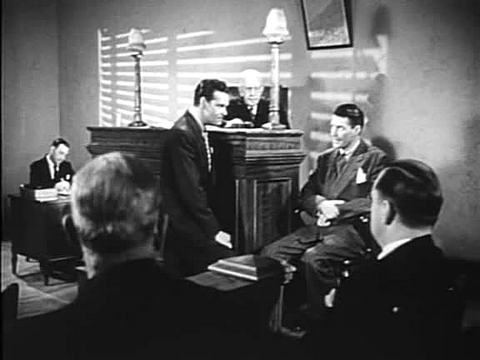
A confoundingly entertaining pastiche the 1942 MGM gangster melodrama Johnny Eager has Robert Taylor and Lana Turner as star-crossed lovers, with Van Heflin as a drunkard and consigliore to Taylor’s titular mob boss.  Heflin received a richly-deserved Best Supporting Actor Oscar for his role.

An unashamedly contrived scenario by John Lee Mahin from a story by James Edward Grant has Johnny the conniving gangster find redemption too late and with a belly full of lead.  There are queer overtones as Heflin holds the dying Taylor in his arms whose last words wax nostalgic for the ‘figurative mountains’ they never climbed together.

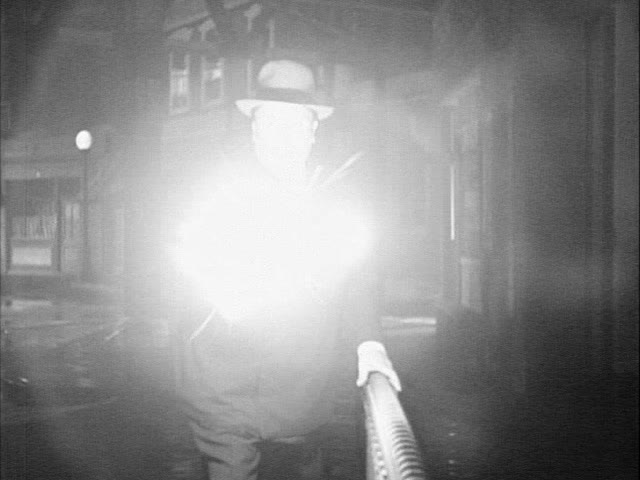
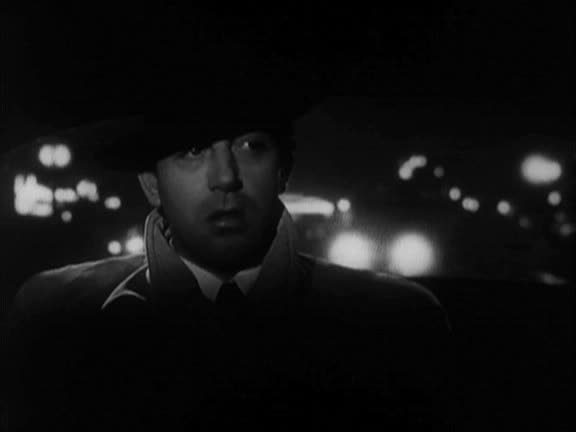
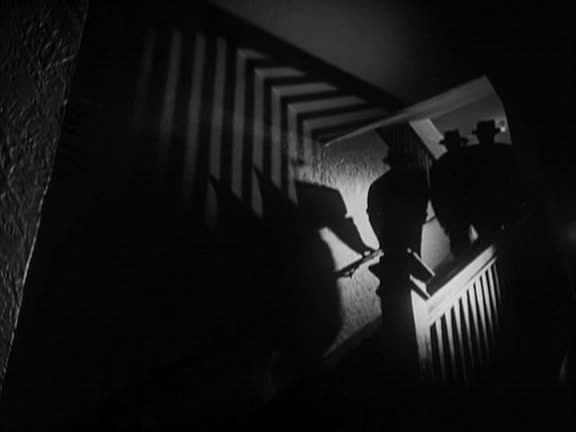
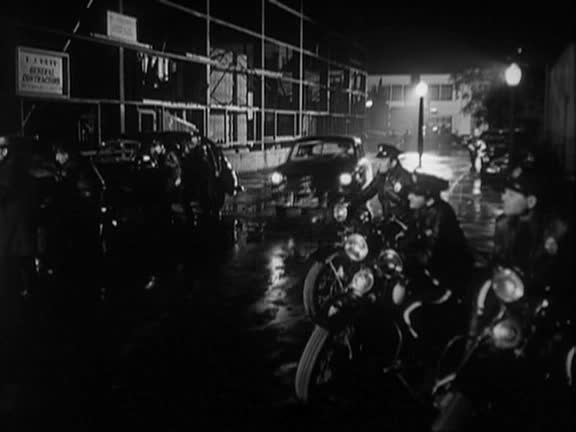
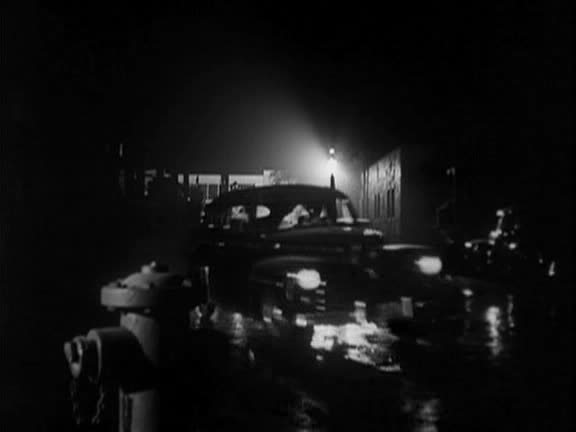
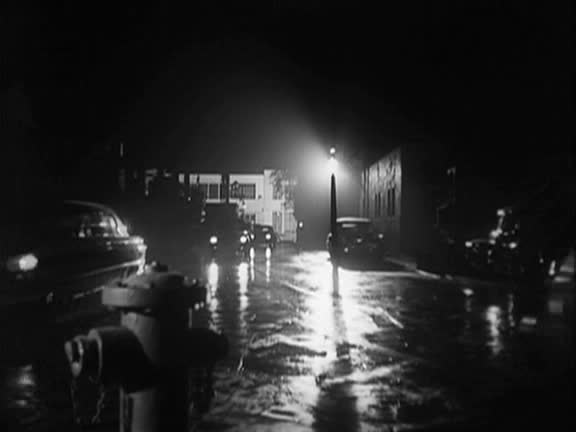
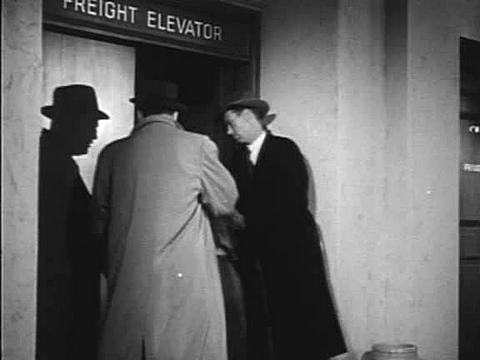
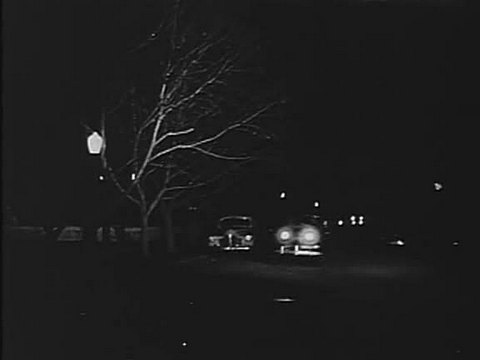
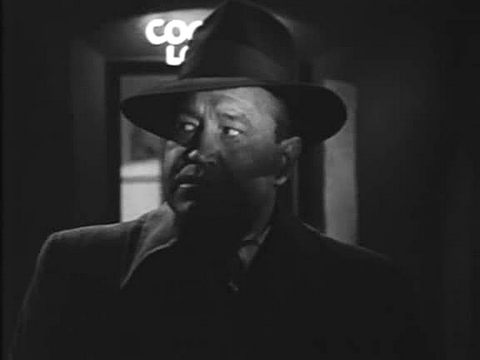
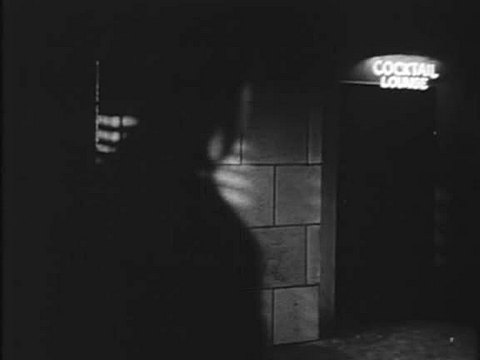
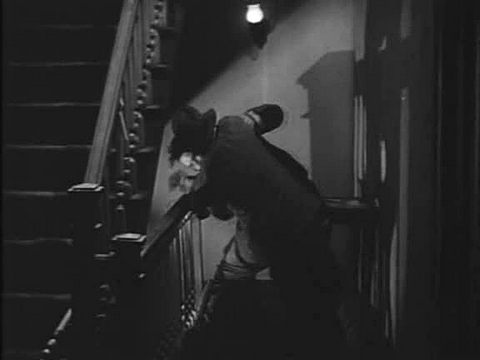
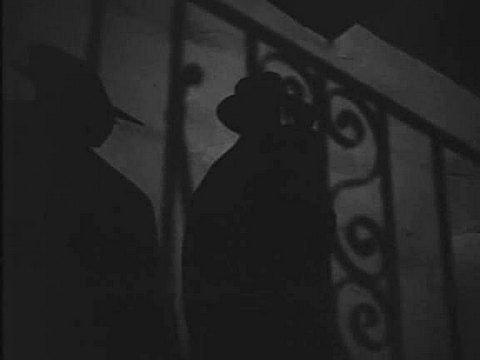
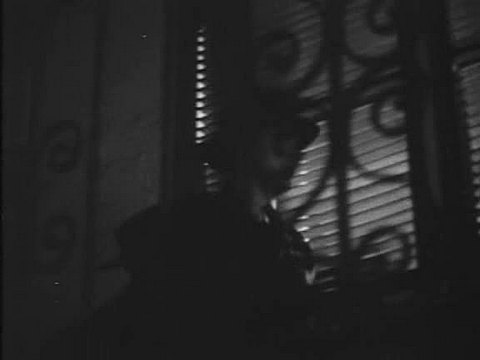
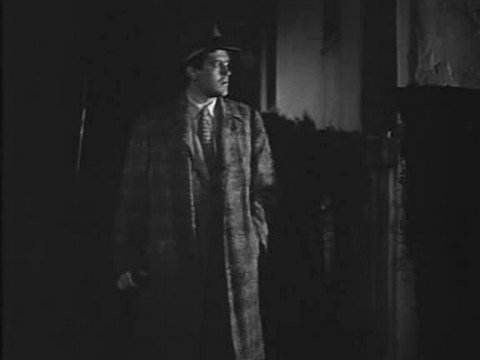
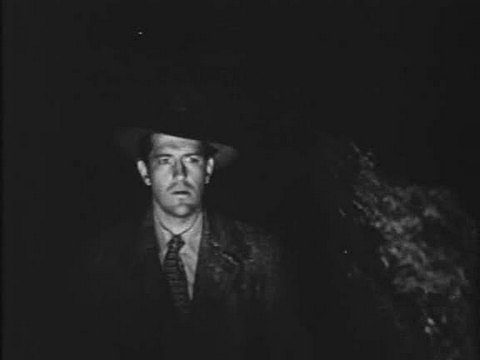
Emeritus director Mervyn LeRoy fashions a faux silk purse that has you believing the absurd coincidences and machinations which propel the flatly presented narrative to an out-of-left-field hiatus of beguiling expressionist cred. Much is owed to veteran DP Harold Rosson whose masterful lighting of the final sequence on dark city streets elevates the affair to something more than the sum of what has come before.  Taylor and Turner, who are inspired to break-out of their corn-fed roles with the able assistance of Heflin and a motley crew of craven hoods, deliver a mesmerising operatic finale, closed by a wonderfully ironic final frame that is pure cinema.

Slaughter on Tenth Avenue (1957): On The Waterfront Not

Based on William Keating’s autobiography, “The Man Who Rocked the Boat’, which chronicles his experiences as an Assistant DA in NYC in the 1950s, Slaughter on Tenth Avenue has Keating fighting corruption and union racketeering on the waterfront as he pursues a murder prosecution.  A straight union organiser has been gunned down after refusing to bend to the demands of racketeers, and the DA’s office must build a case in the face of witness intimidation.

Richard Egan in a straight-up effort plays Keating.  Jan Sterling is good as the victim’s wife, and a young Walter Matthau impresses as a racketeer defending his turf.  With the support of crime drama heavies Dan Duryea as a wily defence attorney, and Charles McGraw as an unorthodox cop, there is enough talent on show to hold your interest.  With these names and a good story you would think the producers had the makings of a solid noir.  What you get though is a second-rank police procedural with no real tension and about as noir as Liberace.  This did not stop the film featuring at Noir City 2012.  Overall, there is a derivative feel to the scenario, which borrows from but never matches the intelligence and power of On the Waterfront.

While not to be confused with the Richard Rodgers’ musical ballet from Rodgers and Hart’s 1936 Broadway musical comedy ‘On Your Toes’, Rodger’s music is used in the score, and to good dramatic effect.  Indeed, it is the jazzy musical arrangement by Herschel Burke Gilbert in the opening scenes that hits the spot.

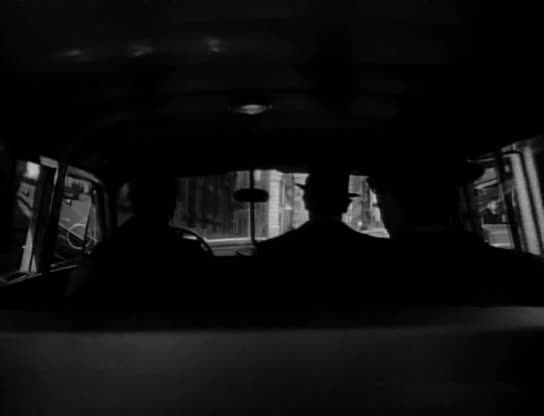
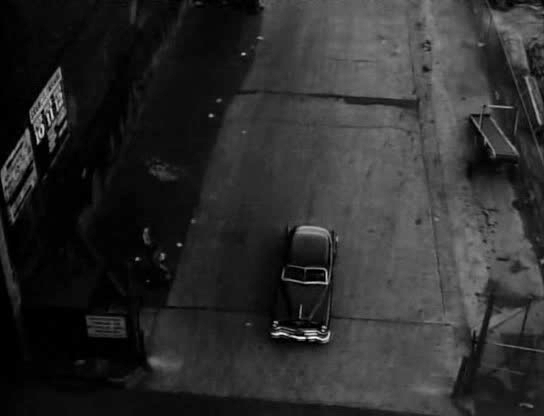
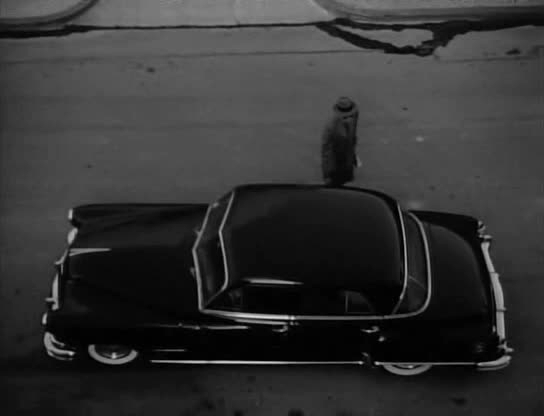
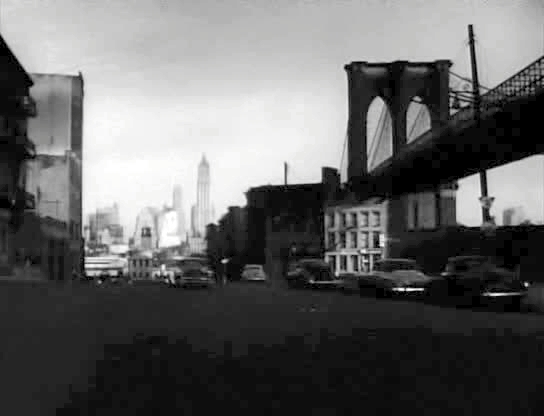
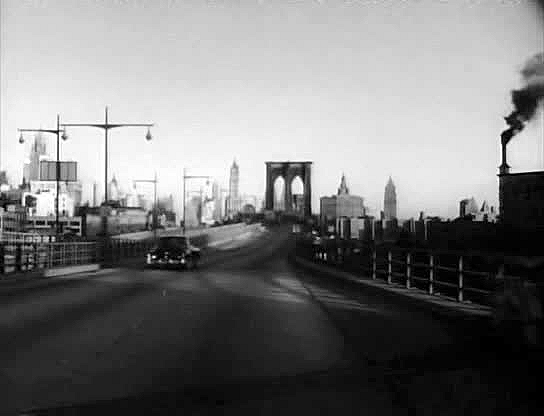
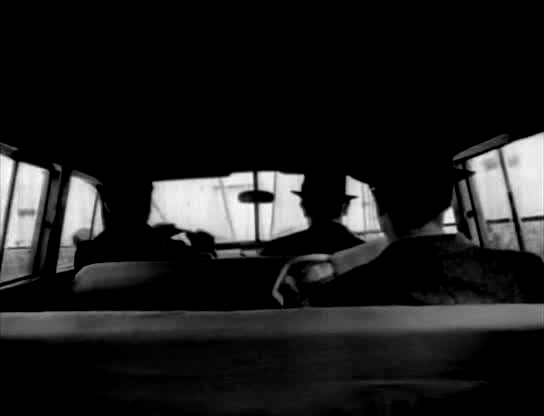
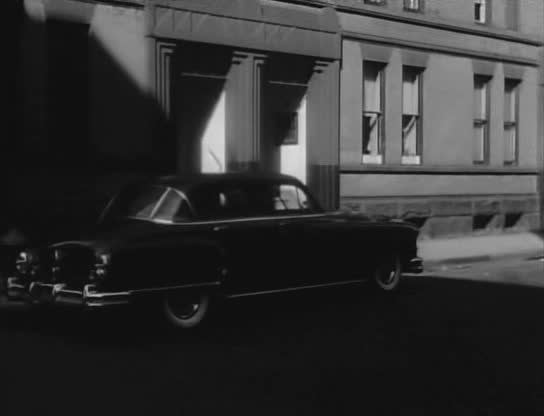
The opening titles are superimposed over the prelude to the hit, a stunning sequence that is sadly a false dawn, with the rest of the picture playing out at a plodding pace.  We see the perps drive from the waterfront to a tenement for the hit.  There is a wonderful gestalt at work with the contributions of composer Gilbert, DP Fred Jackman Jr., editor Russell F. Schoengarth, and director Arnold Laven, who  together create one of the most arresting sequences in a Hollywood crime movie ever.  These scenes are beautifully paced and edited, shot from a plethora of angles, including elegant aerial and tracking shots, and from inside the car – all perfectly lit.  You just want the titles to get the hell out of the way!


The Thin Man (1934): James Wong Howe’s Noir Counterpoint

When director W.S. Van Dyke commissioned a screenplay from Dashiell Hammett’s last novel, The Thin Man, a throw-away story about a retired gumshoe drawn back into the business to investigate a series of murders in NYC, he asked for a comic script.  He got an enjoyable if innocuous screwball comedy playing on the dick, Nick Charles, being married to a wealthy dame, both of them being lushes, and having an eccentric mutt.

The casting is perfect with William Powell as Nick and the saucy Myrna Loy playing Nora his better-half.  The mutt is played by a wire fox terrier called Asta – think ‘Eddie’ from TV’s Frasier. A frothy mix of mystery, sleuthing, and wry banter delivers a diverting movie which has you smiling if not laughing.

DP James Wong Howe is integral to sustaining interest. While the comic antics are fun and add spritz to a weak story, and true both leads are delightful, it is the darkly lit mystery scenes set-up by Howe that impress cinematically. It is of course hard to delineate where the DP’s contribution starts and ends, though I would venture to say that with a less talented DP I doubt there would have been the same fluid camera work and darkly expressionist counterpoint that sustains the narrative.

Some  additional frames from the movie to support my case:


Christmas Holiday (1944): Never mind the melodrama

Robert Siodmak’s Christmas Holiday starts off conventionally on Christmas Eve with the graduation of an army lieutenant at an army base.  Back at barracks to pack for the Christmas holidays before shipping out overseas to join the war effort, he gets a dear john telegram from the girl he hoped to marry in Frisco the day after Christmas. He still boards his flight ready to have it out with her.  But bad weather forces the plane to land in New Orleans for passengers to wait out the wind and the rain at a hotel.  The conventional is instantly jettisoned. We now enter a dark surreal world animated by suppressed taboos and violence contained within a strange subterranean universe.  Siodmak proceeds to smash genre conventions by unleashing a wild expressionist ambience that has you appalled yet enthralled.  Full of bizarre surprises like Gene Kelly as an homme-fatale!

At the hotel bar our lieutenant is befriended by a bored local newspaper reporter who is a bit of lush.  The reporter takes the soldier to a bordello to see if a local fixer can get him to Frisco faster, and if not, for a good time.  A band is playing and a sour-faced ‘hostess’ steps up to the stage and sings a sultry number motionless and deadpan – but with a voice to die for. Enter Deanna Durbin totally against type. The madame at the reporter’s suggestion has Deanna keep the soldier company while the increasingly drunk reporter goes to the office to be paid his weekly ‘honorarium’.  The reporter passes out, but not before he gives the madame an invitation to midnight mass to pass on to the lieutenant. The soldier wants to take a raincheck, but strangely the singer begs that he take her.  At the cathedral the melodrama goes into over-drive with the girl collapsing into a crying fit.  Later at an all night diner the girl reveals her current employment is a kind of escape and punishment for her husband having being convicted of murder. The rest of the scenario then plays out as a lurid story of obsession, guilt, and entrapment via a series of disjunctive flashbacks, with the dénouement played out in the darkly lit madame’s office.

Never mind the melodrama and the absurd script – by Herman J. Mankiewicz of Citizen Kane fame no less.  Siodmak subverts melodrama tropes with a series of brilliant set pieces that take your breath away.  Classical music, brilliant lighting, a meticulous mise-en-scène, the deadpan Durban visage, and the use of monumental spaces filmed with sweeping tracking and crane shots, and in deep focus – church, concert hall, and the expansive lobbies of the hotel and the brothel rendered in sublime majesty – each with an achingly intimate counterpoint – by a perverse alchemy forging a visual cornucopia that fully realizes a chemistry with DP Woody Bredell that Phantom Lady (1944) only hints at.

A lurid, crazy, and weird, yet totally compelling phantasmagoria that transcends banal genre imperatives. The crescendo of saintly escape into the black abyss of the clearing night sky revealed by departing clouds in the final scene eclipses the ending of Criss-Cross (1949).

Essential.

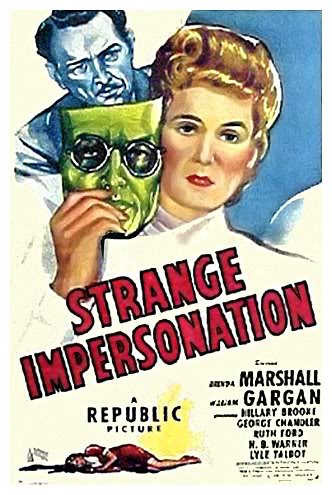
Strange Impersonation (1946): Dirty science

Strange Impersonation, a 1946 programmer from Republic Pictures is a weird confection that has you engaged throughout. An early Anthony Mann effort, the picture uses its 68 minutes with economy to tell a lurid story of blackmail, deceit, and attempted murder, where the dames hold all the cards.

A dark female trio calls the shots in a scenario that becomes more preposterous with each frame. Based on a story by Ann Wington, who also penned the original story for Mann’s The Great Flamarion from the year before, the film uses a framing device that noir aficionados will not fail to recognise early on, and to a degree may limit their enjoyment of a rather juicy tale of revenge that – without the cop-out framing – resolves itself with a rather dark twist. Mann does a respectable job with few flourishes, and only towards the end does he start to reveal his potential for noir lighting and expressionist angles.

A female chemist in a pharmaceutical company is working on a new anaesthetic, and decides to test it on herself outside-hours, aided by her female assistance, who has eyes for the chemist’s fiancé. In a melodramatic turn of events arson precipitates a double-cross worthy of the most demonic femme fatale, which then using a formula involving blackmail, an accidental death, and plastic surgery, leads on to a mission of deceit and revenge, which comes unstuck with a dark devilish irony. The male cast is by the board, while three b-actresses deliver the real goods. The chemist played by Brenda Marshall starts off demure and serious – she wears oversized glasses to press the point – but when the melodrama kicks in a darker self takes over and she is now not only of ambivalent virtue but decidedly hotter. Hillary Brooke is excellent as the two-timing assistant cum femme-fatale, and Ruth Ford (Lady Gangster 1942) is decidedly seedy as a low-life blackmailer who takes on more than she can handle.

Great fun.

The Bigamist (1953): Shades of grey

Much is made of Ida Lupino as one of the very few women who directed a Hollywood feature during the Classic period.  A creditable achievement for sure.  But she is best remembered as an actress and deservedly so.  As a director she was ok only.  She helmed the solid desert noir The Hitch-Hiker (1953) and legend has it had a role in directing the studio-imposed soft-ending in On Dangerous Ground (1952) after Nicholas Ray lost interest.

The Bigamist is not really a noir in the accepted sense but it has noir overtones. As well as directing, Lupino stars with Edmund O’Brien and Joan Fontaine. O’Brien is the bigamist, and Lupino and Fontaine the hapless wives. The strength of the picture is in the lead performances and the screenplay, which for the period is quite brave, dealing sensitively with extra-marital sex and single motherhood.  The film was an independent production of Lupino and ex-husband Collier Young, who adapted the script from a story by Larry Marcus and Lou Schor. You could say the script is soft on the bigamist. He is punished, but there is maturity and sensitivity in a scenario where decent people get themselves into a mess not so much because of selfishness or wilful deceit – rather due to all too normal human frailties.

Visually, The Bigamist is nondescript, with Lupino as director failing to utilise the proven skills of DP George Diskant – though she does infuse street scenes of LA with the isolation of the lonely out-of-towner O’Brien. (She also failed to leverage the talent of Nick Musuraca, who lensed The Hitch-Hiker.)

The noir element is of entrapment through moral weakness. O’Brien is a lonely travelling salesman in LA when he meets Lupino a young waitress on a Hollywood bus tour. In fits and starts a relationship develops and one thing leads to another, but not before O’Brien tries to extricate himself.  He has a wife in Frisco, who after finding out she is barren has become his business partner. The partnership becomes more one of business than marriage, and O’Brien who is weak and perhaps too sensitive, digs himself deeper and deeper into a bind that cannot be broken without tragic consequences.  An ambivalence that refuses to judge evokes strong realistic performances from the leads, and enlists the audience’s sympathy without overt melodrama.

A film for mature adults who understand the true meaning of ‘shades of grey’.


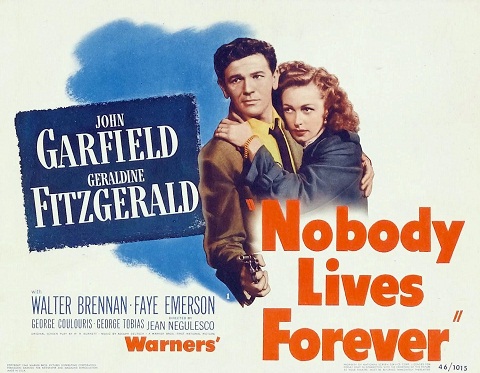
Nobody Lives Forever (1946): Dark Romance

In the opening scene of Nobody Lives Forever, wounded WW2 Nick Blake (John Garfield) is heard in voice-over introducing his home-town as the New York sky-line – viewed from his military hospital bed – moves across the screen. After he is honourably discharged, Nick heads straight to his apartment to find his girl (Faye Emerson) and the 50 g’s she has been keeping for him. Turns out she has two-timed him with a crooked lothario who shares her bed and the running of a night-club, where she sings. When confronted, she claims she lost his dough in a club venture that failed.

Nick who by now we gather was an ace con-man before he was drafted, knows better, and after roughing up the new boyfriend gets his money back plus interest. His loyal side-kick Al (George Tobias), who was the only person to greet him when he left the military hospital, wants Nick to get back into the ‘game’. But Nick wants a holiday, and they head for the beach in sunny California, where they proceed to blow the readies in a plush beach-house. Nick is not happy, walking aimlessly along the beach, sullen and withdrawn, and indifferent to the swim-suited babes running in the sand. He has looked up his old friend, Pop (Walter Brennan), an old grifter reduced to lifting wallets from carney suckers as they stare through his dime-a-view telescope. They will keep in touch.

Another has-been from the old days, Doc (George Coulouris), holed-up in a cheap hotel with a couple of low-rent heavies, has a mark, but no cash to finance the con. A lonely rich widow worth a cool $2 million is staying in a nearby exclusive hotel. Doc, who resents his lowered straits, gets wind of Nick’s being in town, and through Pop, they entice Nick into putting up the money, but to the chagrin of Doc, Nick insists he handle the con himself.

The rest of the story plays out predictably, with a final shoot-out on a fog-laden wharf.

W.R Burnett adapted his novel ‘I Wasn’t Born Yesterday’ for the screenplay. Burnett wrote stronger stories than this one – two successfully made into great noirs – High Sierra and The Asphalt Jungle. Burnett’s protagonists typically find a dark redemption in losing. Burnett’s writing while hard-boiled has a lyrical quality that reconciles the doomed trajectory of his anti-heroes, who crash out like a comet across the night sky. In Nobody Lives Forever, Burnett engineers a redemption by proxy.

Nobody Lives Forever is very much more than the sum of its parts. A great cast, the accomplished direction of Jean Negulesco (The Mask of Dimitrios, Road-House), and the rich photography of veteran DP Arthur Edeson, deliver for the discerning viewer a rich and satisfying complexity.

The cast is really superb. Garfield’s signature integrity gives Nick a depth that sustains close scrutiny. Geraldine Fitzgerald is iridescent as the widow; a mature woman of calm beauty and deep feeling, who any man would fall for. Tobias does nicely as a comic foil. Brennan imbues the washed-up old man with a real pathos, and Coulouris is his feverish best as the envious distrusting hood who once had ‘class’.

Paradoxically, Nick has come back from the war not so much damaged, but uncertain and angry about his life before the war. He has the male pride of a hood on the top of his game, but he is vulnerable. Betrayed by the woman he left behind, and in a different and more profound way betrayed by the person he used to be. The futility and violence of the war, and the valour and decency of his comrades, has been subversive. He is cranky and aimless on the sunny beach, because his old life is no longer what he wants. The modern Greek poet George Seferis evoked this kind of angst in one of his poems: “We found our life was a mistake, and we changed our life.” It will take the love of a good woman and a violent paroxysm for Nick’s alienation to find a path to redemption. Charon will also exact a heavy price. “Nobody lives forever.”

______________________
Warner Archive will release the never-available-before DVD of Nobody Lives Forever on July 19. Pre-order from Amazon.

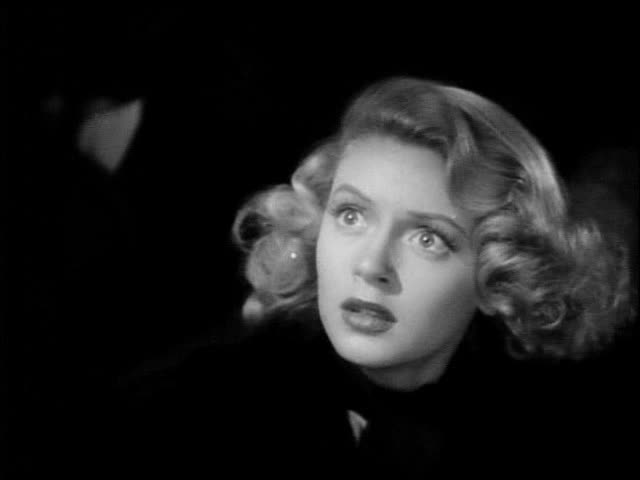
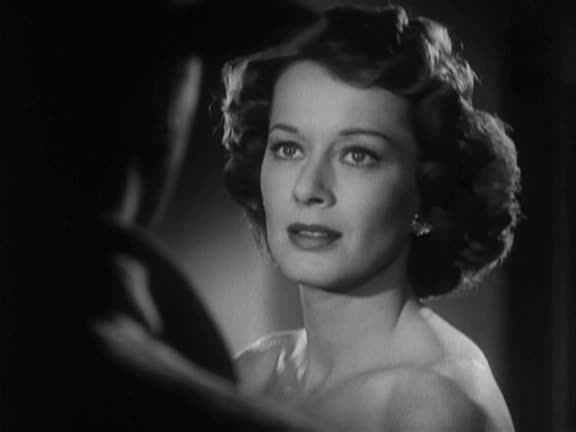
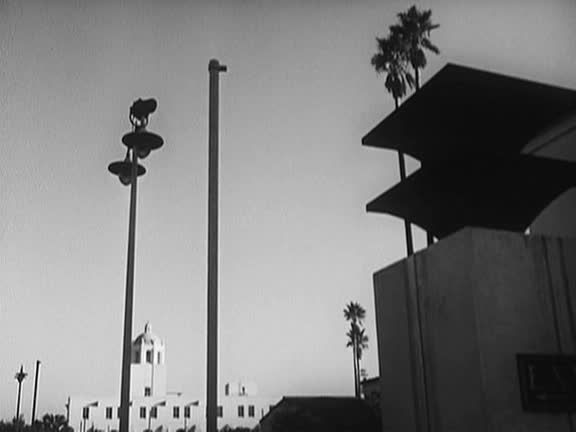
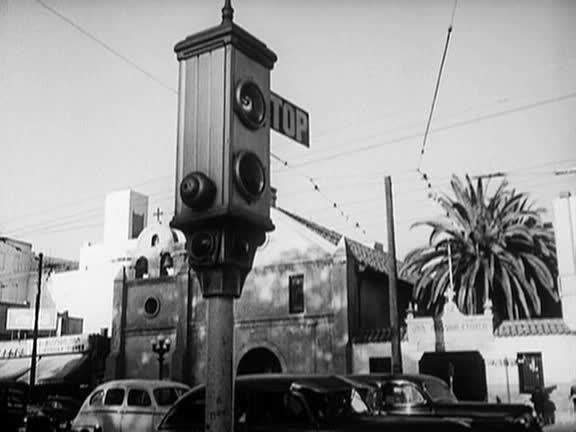
The Crooked Way (1949): John Alton’s L.A.

In the 1949 United Artists release The Crooked Way (90 mins) a WW2 vet with amnesia returns to Los Angeles to find himself. Turns out his past is less than savory. A stolid performance by John Payne as the vet is limiting, but the no-nonsense screenplay avoids melodrama and sustains interest to a violently baroque shootout at the end. Solid cameos by Sonny Tufts as a vindictive gang boss and the ever-worthy Percy Helton as a consumptive small-time hood add value. Minor actress Ellen Drew as the wife the vet didn’t know he had, delivers a great portrayal worthy of Ida Lapino or Claire Trevor – a woman made hard and vengeful by past mistreatment softens into a loyal partner and lover.

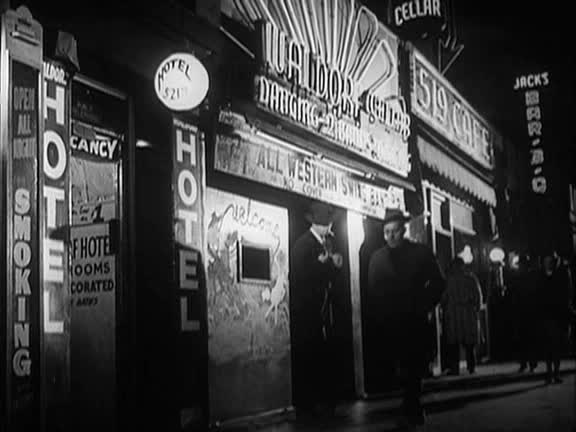
But the real star is DP John Alton who delivers expressive noir visuals that are breathtaking and so accomplished they underpin the direction of Robert Florey.

Here is Alton’s Los Angeles:


The Great Flamarion (1945): Love is a Gun

Mexico 1936. A small crowd is queuing to buy tickets to a vaudeville-style show. The camera follows the patrons down the center aisle as they find seats, and then moves just short of the stage and settles on the current musical act. The opening shot continues as Tony Cómico starts his skit until it is interrupted by two gun-shots followed by a woman’s scream from off-stage.  Cut backstage. All panic but sex is the focus. Well-endowed chorines with shapely legs run amok. The commotion settles as a female performer’s body is found in a dressing room. Meanwhile only the viewer knows a man is hiding above the stage. The cops arrive, investigate, and leave, and Tony the comic is left to lock-up. The man above the stage falls down onto the stage. He is mortally wounded. He must tell all quickly. There is no time as he will be dead by the time the cops are called. He confesses to the murder and in flashback relates his story to Tony.

The use of  flashback destroys the mystery. The film from this point has no tension, and all unfolds predictably. Director Anthony Mann in this early effort does only an adequate job dragging proceedings along . The murderer is played by the ever eccentric Erich von Stroheim, and the amply nubile b-regular Mary Beth Hughes is a femme-fatale high on aphrodisiac, with her always drunk husband a perfect fit for Dan Duryea, who early on suffers the same fate as Phyllis Dietrichson’s better-half. So we have a murder from Scarlet Street (1945) out-of Double Indemnity (1944).

What is interesting though is the overtly sexual mise-en-scene. Guns as deadly erotic toys and the female body displayed as deeply fecund and corrupting.  The story was written by Anne Wigton, who also worked on the screenplay. Another b-noir Strange Impersonation, where a dame is a blackmailer, released in the following year, was also based on a story by Wigton. Wigton wrote only two stories after acting in bit-parts in the early 40s, and before disappearing into obscurity.
As well as predatory female sexuality, The Great Flamarion features an anti-hero who shows no remorse for killing the hapless husband. This is not Scarlet Street, and there is no honeysuckle.


Shoot to Kill (1947): Visual Poetry

In a 1954 interview, French director Jean Renoir said:  “Don’t go thinking that I despise “B” pictures; in general I like them better than big, pretentious psychological films they’re much more fun. When I happen to go to the movies in America, I go see “B” pictures. First of all, they are an expression of the great technical quality of Hollywood. Because, to make a good western in a week, the way they do at Monogram, starting Monday and finishing Saturday, believe me, that requires extraordinary technical ability; and detective stories are done with the same speed. I also think that “B” pictures are often better than important films because they are made so fast that the filmmaker obviously has total freedom; they don’t have time to watch over him.”
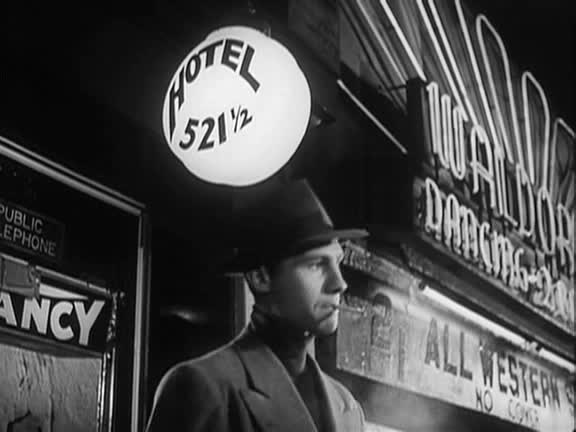
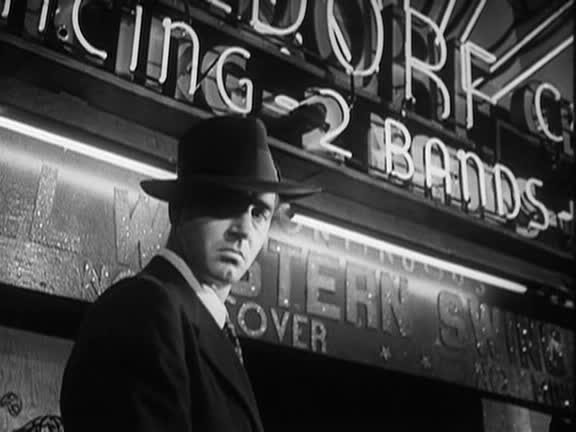
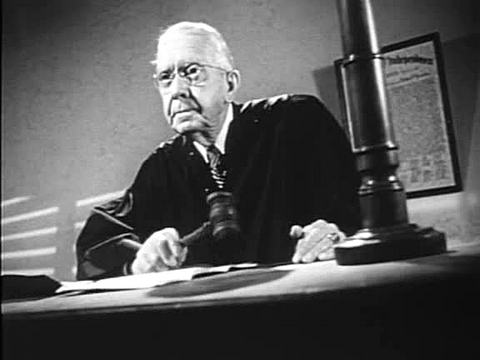
Shoot To Kill (aka Police Reporter 1947) is one of those b-pictures so loved by Renoir.  A 64 min programmer made by independent producer Robert L. Lippert, who over 10 years from 1945 to 1955 produced a swathe of el cheapo westerns and thrillers, Shoot to Kill is a gem of a noir made by a bunch of stringers.  Director William A. Berk made a stack of b’s from the early 30s through to the late 50s. DP Benjamin Kline also lensed Detour (1945) for Edgar G. Ulmer. These guys in Shoot To Kill take a taught script by Edwin V. Westrate about a corrupt and ambitious assistant DA, and fashion a movie of pulp poetry. Amazingly principal photography was completed in only five days.

Westrate’s story is convoluted with many twists and turns yet moves apace and is neatly resolved in just over an hour, with one final out-of-left-field twist.  Double and triple-crosses abound, and the story largely told in flashback manages a flashback in a flashback.  Great stuff.

The opening scene hits the screen full-on with a car chase tensely running from right to left at night on a winding country road with the squealing of tyres, and gun-shots from the pursuing police car. The credits are delayed a few seconds while the cars careen, and then the film’s title is presented in uber-cool animation. The car being pursued crashes down an embankment and the scenario is set as cops shine torches on the occupants of the car – unconscious and strewn around the wreck.  One of the cops asks off-screen what were the new DA and his wife doing in a car driven by escaped con Dixie Logan?  Revealing more risks spoilers.

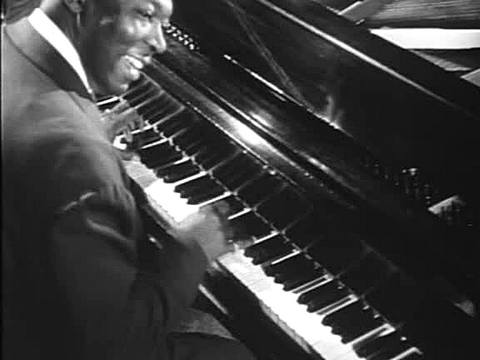
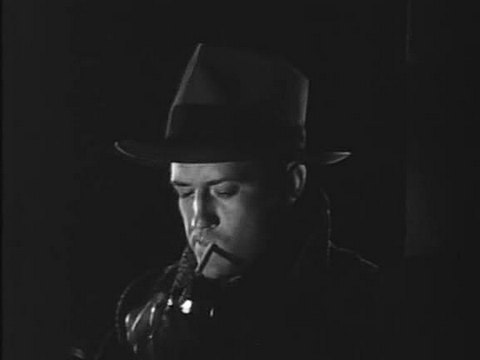
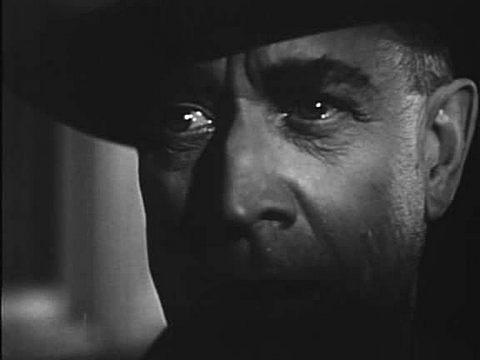
I have selected quite a few frames to showcase the noir visuals, include one from a restaurant scene with a great boogie piano interlude by black musician Gene Rodgers.

A definite must-see!