The Garment Jungle (1957): Gia Scala’s Picture

The Garment Jungle (1957)

The Garment Jungle, a contemporary expose of New York garment employers’ use of racketeers to keep unions out, disappoints. Finished by director Vincent Sherman after Robert Aldrich (Kiss Me Deadly) left production towards the end of shooting, for a Columbia a-feature it is largely set-bound, and suffers for it.

The whole affair sags and ends with a weak resolution. Lee J. Cobb in the lead is sadly flat.  Robert Loggia as an Italo-American union organiser is strong and the performance of the tragic Gia Scala as his young wife dominates the picture.  She is palpably alive on the screen and thoroughly immersed in her role. The sequence where she is introduced is the film’s highlight. Shot at a union dancing-class on a steamy-night where the dance music is a dissonant counterpoint to the drama, she is by turns sensual, fiery, gentle, and despairing. Here and in the external shots on the streets of  NY, when they are used, the mise-en-scene and cinematography are truly inspired.  We can commend cameraman Joseph F. Biroc, but who directed these scenes? My bet was Aldrich.

The Garment Jungle (1957)

Silver and Ward list the movie in Film Noir: An Encyclopedic Reference, and to my mind ‘invent’ some film noir connections in the mise-en-scene and the lighting of some scenes. But For me The Garment Jungle is strictly melodrama.

Two John Alton Films On New DVD Set

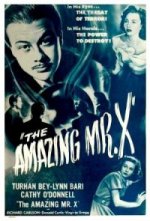
The Amazing Mr X (1948) Reign of Terror (1949)

The Classic Film Noir, Vol. 3 2-DVD Box set to be released by VCI Entertainment on March 31, features upgraded transfers of two John Alton lensed movies that have until now been available only as poor quality public domain copies. The films are Bernard Vorhaus’s Amazing Mr. X (1948), also known as The Spiritualist,  and  Anthony Mann’s Reign of Terror (1949), aka The Black Book.   NY Times movie critic Dave Kehr reviews these new releases here (half-way down the page).

They Made Me a Killer (1946): “You asked for it sister”

They Made Me Killer (1946)

“Come on Jack let’s dance.”
“Go away will ya. Gotta get this barrel straight.”
“Too bad that gun can’t cook!”
“Well that makes you both even.”

An obscure programmer that goes for just 64 minutes, They Made Me a Killer, is a tidy little thriller. An innocent guy is framed for a bank heist after a crooked dame sets him up, and faces a murder rap for the killing of a security guard and a cop. He makes a break at a hospital after a guy who could corroborate his innocence dies without making a statement to the cops. It is is non-stop action with a neat romantic interest, and an inventive technical ruse to get the evidence the guy needs to secure his freedom.

The hospital escape scene is distilled noir. The fugitive slugs a cop in the back of the head with the cop’s gun, and then tips the bed with body of the guy that has just died still in it over another cop! He makes his final escape from a window after knock-out punching a female nurse in the face! And he ain’t no saint: he gets the girl and his freedom only after an attempt to turn-up the loot and keep it for himself fails.

Great b-feature!

The Man Who Cheated Himself (1949): True Noir

The Man Who Cheated Himself (1949)

In San Francisco a middle-aged cop attempts to cover-up a murder committed by his rich girl-friend and being investigated by him and his rookie detective brother.

The only film ever produced by Jack M. Warner Productions, The Man Who Cheated Himself is a superbly crafted b-noir of 81 action-packed minutes. Under the tight control of director Felix E. Feist (The Devil Thumbs a Ride, Tomorrow Is Another Day, This Woman Is Dangerous ) even minor exposition scenes are focused on moving the compelling narrative forward. The film is shot both with economy and flair by Russell Harlan (Gun Crazy, The Thing from Another World, The Blackboard Jungle, King Creole, Rio Bravo). A solid script from Seton Miller (Dust Be My Destiny, Ministry of Fear, Convicted) deftly handles the tense sub-text.

The performances are solid all-round. The cop is played Lee J. Cobb, his girl-friend by Jane Wyatt, with  John Dall, of Gun Crazy fame,  in his last film role as Cobb’s brother. Cobb’s acting  is inspired as the hard-bitten cop who by his own admission has let a woman he can’t trust get “under his skin”. Wyatt impresses as the femme-noir, and Dall is convincing as the brother who suspects Cobb is hiding something.

Most of the film is shot on the streets of Frisco in deep focus and this gives the picture a gritty realist feel. The highlights are three brilliant scenes: one in the middle and two at the end of the movie.

The Man Who Cheated Himself (1949)

In the first, in a typically noir twist, the murder weapon, which had been thrown into the river, surfaces as the gun used to gun-down a store-keeper in a robbery. While serving as the catalyst for the brother’s suspicions, the scenes where the hood is trailed and caught is a bleak unsentimental vignette of a young man’s fall into criminality. The emotional power behind this sequence is left to the audience to develop.  The final interrogation scene is stunningly shot and lit from a low angle.

In the second, Cobb and Wyatt, holed-up in an  abandoned prison at the foot of the Golden Gate bridge, are hiding from Dall who is searching the long hallways and metal stairwells.  Cobb and Wyatt are concealed atop a guard tower out of Dall’s direct sight when the wind takes Wyatt’s scarf.  This McGuffin brilliantly deepens this already tense sequence as the scarf wraps itself against a pillar, and then taken again by the wind floats down into the prison’s central courtyard as Dall enters it.

The Man Who Cheated Himself (1949)

Lastly, the final scene in the picture in a court-house has to be one of the most brutally frank and downbeat endings in the noir canon. Played without words, the two pratoganists’ actions and expressions deliver an acid resolution totally devoid of pretence or sentiment, and marked only by Cobb’s weary bemusement as he ponders his fate, after seeing his distrust finally vindicated.

A fantastic movie and a great noir.

Impact (1949): Noir Mash-Up

Impact (1949)

A United Artists release of 111 minutes, Impact looks like an A-movie wearing a B-suit: it doesn’t fit. The movie starts off noir in San Francisco, veers into bucolic redemption hokum in a small mid-western town, and then returns to Frisco for a turn at melodrama, ever ready to lapse into a comic interlude – and even slapstick. The plot is entirely derivative, with obvious parallels to Fritz Lang’s Fury (1936) and Busby Berkeley’s They Made Me a Criminal (1939).  A cheating wife conspires with her lover to kill her wealthy husband, but the ill-planned job is botched, the husband survives but is believed dead, and the wife is charged with his murder.

Impact (1949)

The direction by Arthur Lubin is tight and the deep-focus photography on the streets of Frisco from Ernest Laszlo (Manhandled, DOA, M (1951), The Well, Kiss Me Deadly, The Big Knife, While the City Sleeps) is top-notch, particularly in a pursuit though Chinatown late in the picture, and during the murder attempt on a mountain road at night near the beginning of the picture which is solidly noir in its immediate fiery and darkly dramatic aftermath.

Impact (1949)

The dames hold this picture together. Helen Walker is a treat as the conniving wife of the businessman played by Brian Donlevy, who sleepwalks through the picture.  Ella Raines is the wholesome country girl who falls for Donlevy, and Anna May Wong is engaging as the wife’s maid. Veteran character actor Charles Coburn is polished as a cop.

Surprisingly it all seems to hang together well enough, and on balance is quite enjoyable.

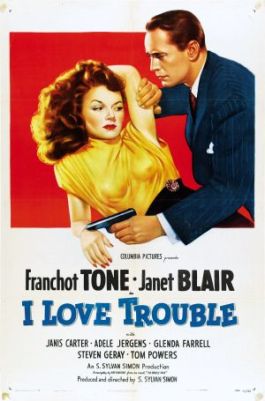
I Love Trouble (1948): Hot-jive noir

I Love Trouble (1948)

 
This is one-helluva-movie.  A gem that sparkles like the eyes of the hot dames that swagger, pout, smolder, and snap their high heels across the screen. A joyous LA romp in Marlowe territory which has it all. An enthralling thriller plot  enlivened by a hot-jive script from Roy Huggins (Too Late for Tears, Pushover). Incredibly taught and fluid direction from Columbia b-director S. Sylvan Simon.  Superb noir photography from Charles Lawton Jr.  A dynamic score from George Duning that sways effortlessly from dark melodrama to lecherous winks.

I Love Trouble (1948)

 
A great turn by Franchot Tone as LA private eye Stuart ‘George’ Bailey, who out-Bogart’s and out-Powell’s Philip Marlowe in a deliciously convoluted story of deception, greed, frame-ups, murder, and sexy high jinks. Bit player Glenda Farrell is a comic delight as Bailey’s cute, loyal, eccentric, and sharp-as-nails secretary Hazel.  Tom Powers delivers a solid performance as the aging suspicious husband who hires Bailey to tail his young wife, who is being blackmailed. Steven Geray delivers a nuanced low-key performance as mysterious crime-boss Keller, and John Ireland, Raymond Burr, and Eddie Marr are great as Keller’s heavies. Sid Tomack is in his element as a small-time chiseller who is out of his league. The dames are all delightfully buxom good-bad girls, with enough charm and innuendo for a dozen Marlowes: Janet Blair, Janis Carter, Adele Jergens, Lynn Merrick, and Claire Carleton.  A weird waitress-from-hell played by uncredited bit-player Roseanne Murray, is a scream.

I Love Trouble (1948)

 
There are laughs and smooth-as-nylons repartee, but the melodrama is hard-hitting and typically noir: guys get slapped hard, drugged, and slugged from behind. In one scene the face of a murder victim under a Malibu pier is highlighted by torch-light at night.  A particularly impressive scene is where a guy is under the threat of a gun, which is shown from the holder’s viewpoint, as it moves with the frightened target as he staggers backward and across the screen in a small room.

I Love Trouble (1948)

 
What is particularly captivating is the on-street location-shooting that gives the whole picture a verite-look.  From daylight scenes in the streets of LA to available light scenes at night in dives, suburban streets, and dark alleys in industrial areas. There is one daylight road scene where Bailey is being followed by another car, and he manoeuvres his car to dramatically confront his pursuer, and then gives chase. The positioning of the camera and the elegant panning as each car careens across the screen make the sequence one of the most exciting I have seen.

A must-see noir.  Sadly not yet available on DVD.

Where Danger Lives (1950): It’s a long road…

Where Danger Lives (1950)

A compelling RKO noir melodrama from John Farrow (The Big Clock, Night Has a Thousand Eyes, Alias Nick Beal, His Kind of Woman), with great camera work from Nicholas Musuraca, and top-line art direction from Ralph Berger and  Albert S. D’Agostino.

Where Danger Lives (1950)

A naive young doctor falls for a stunningly beautiful but unstable young woman, and ends up the target at a shoot-out on the Mexican border after a frantic road trip to escape a murder rap. Robert Mitchum is the doctor and little-known b-actress Faith Domergue is the dame. Domergue steals the picture from Mitchum.  Her nuanced performance as a ravishingly sublime femme-fatale is enthralling and she dominates every scene. There are many close-ups of her manic eyes full of menacing allure.  If she is crazy, she is the sanest psychopath to inhabit a film noir. Her guile and determination are almost heroic.

Where Danger Lives (1950)

Low angle available-light interior shots exposing ceilings early on are deftly used to frame scenes of tension and violence.The noir motif of entrapment is strongly focused by close-framed shots, particularly on the road, where the fleeing protagonists are shown within the car or from outside the car in close-up, and rarely in open spaces.  The climactic finale on a neon-lit street in a border own at night is beautifully lit and the action superbly edited. If not for Domergue’s manic turn and Musuraca’s camera, Farrow’s less than taught direction would have doomed the picture to mediocrity. The establishing scenes drag, and the middle section with Mitchum and Domergue on the lam is slow, with two aimless interludes: when they have a car accident, and in a small town where they are forced to ‘wed’.  There is an unnecessary and soppy final scene that undermines the riveting penultimate scene where the camera stares up at Mitchum’s tortured face against an industrial wire fence as the cops surround the fugitives after the shoot-out.

A uneven film made memorable by Domergue’s portrayal and the stunning climax.

Too Late For Tears (1949): Kiss of the Viper Woman

Too Late For Tears (1948)

Don’t ever change, Tiger. I don’t think I’d like you with a heart.”

From the opening scene of the silhouette of a car speeding up a winding road on a hill outside LA one dark night, you know you are in noir territory. Soon a preposterous chance event launches a wild descent into dark avarice and eroticised violence as perverse and relentless as fate itself.

Too Late for Tears is the quintessential 40s b-picture from the obscure poverty-row studio, Hunt Stromberg Productions. A crew led by pulp director Byron Haskin has filmed a purple script from Roy Huggins (The Fugitive TV series), which has the two accomplished leads Lizabeth Scott and Dan Duryea as reluctant partners in locating the claim check for a suitcase containing a hot 60 grand. The husky-voiced Scott is perfect as the housewife with attitude and a gun, and Duryea relishes his established persona of the low-life chiseler making a grab for the big-time. This movie is as hard as nails. There is not an ounce of pathos or softness, just a corrosive unbending greed against which anyone is expendable.

Too Late For Tears (1948)

The noir denouement elegantly occurs in a luxury hotel suite south of the border, where the femme-fatale imagines she is home free. Hoskin’s mise-en-scene is brilliant. The loot grabbed from a suit-case clutched madly in Scott’s hands and begged at her pursuer is ultimately worthless, and her fate is sealed by that same suit-case. A fluttering of notes down onto the hotel’s driveway is her final epitaph.

Sadly, there is no decent print of this movie currently available. Don’t buy the current DVDs – they are straight transfers of a scratchy damaged print of a public domain print available free from www.archive.org. Though there is a commentary from Eddie Muller on the DVD – I trust the proceeds are going to locating and restoring a better print.

Too Late For Tears (1948)

Hollow Triumph (1948): Baroque Noir

Hollow Triumph (The Scar) 1948

“It’s a bitter little world full of sad surprises, and you don’t let anyone hurt you.

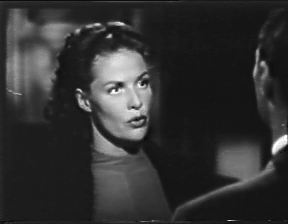
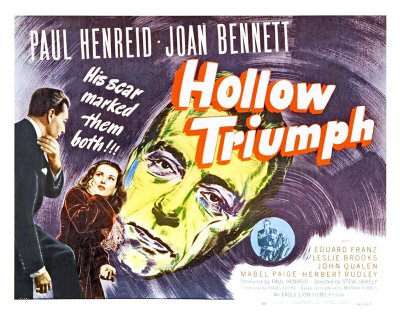
Hollow Triumph (aka The Scar) is a gem of a movie. A wildly implausible plot adds to the baroque charm of this melodramatic sleeper, which bombed on its release in 1948.  The basic plot-line – a  hood on the run after robbing a gambling house takes on the identity of a psychiatrist – does not do justice to the moral perversity and spiralling ironies of fate that propel the action.

Hollow Triumph (The Scar) 1948

We have all the ingredients for great noir entertainment: a compelling screenplay and a witty script from Daniel Fuchs (Criss-Cross, Panic in the Streets), a director of pulp-b’s in Austro-Hungarian émigré Steve Sekely, the artful cinematography of noir icon John Alton, and Paul Henreid and Joan Bennet both cast against type in the lead roles – as mirror-reversals of the typical noir archetypes – an hommefatale of unbounded ambition and no scruples seduces a woman of strong character and with a real job.   Paul Henreid is so suave and daring, even when a photo-processor’s  diabolical and irreversibly dangerous error threatens to blow his subterfuge wide open, he  remains audacious and enthralling.  But the imperatives of the noir universe dictate that  his one-minute-to-midnight failed shot at redemption is as dramatic and ironic as it is pathetic.  On the journey to perdition we traverse a noir topography redolent with noir archetypes:  the unreformed con, the old gang coerced into a fateful big heist that goes wrong, the savage intimidation of underlings, life on the run, and the machinations required to find an out from a past that is getting ever close and will not go away.

Hollow Triumph (The Scar) 1948

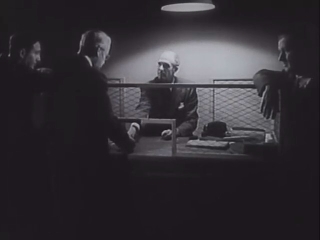
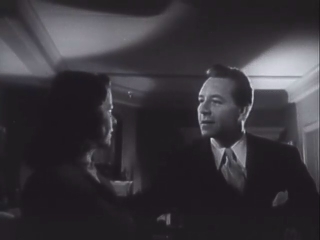
All this aside, it is Alton’s dark and moody camera-work that defines the cinematic reality that lights up the screen.  There is a magnificent scene in a hotel room with Henreid and his straight but sympathetic brother, who has tracked him down to tell him that those out to kill him are closer and more adamant than he thinks. Once he learns the news, Henreid flips off  the lights in panic, fearing that his brother has led the killers to him. In the darkness, a flashing neon sign outside the windows rhythmically lights up the slats of the drawn venetian blinds sending streaked shadows across the protagonists.  Alton also constructs breathtaking hallucinatory montages that have to rank as perhaps the best I have seen in a Hollywood movie.  The stuff that noirs are made of.

T-Men (1947): Electric Noir

T-Men (1947)

T-MEN 92 min Eagle Lion Films
Two US treasury agents go undercover in LA and Detroit to infiltrate a counterfeiting operation.

Director Anthony Mann
Cinematography John Alton
Screenplay John C. Higgins (Raw Deal, He Walked by Night, Border Incident, Railroaded, Shield for Murder)
Story Virginia Kellogg (Caged, White Heat)
Starring Dennis O’Keefe, Alfred Ryder, Charles McGraw, Wally Ford, Mary Meade, June Lockhart

“Each shot with it’s distortions of space and unpredictable, dissonant lighting, forces an awareness of the visual narrative so that the jingoism  of the Treasury Department may be ignored and a vision of the noir underworld may emerge.”
– Blake Lucas in Film Noir: An Encyclopedic Reference (1992)

“effortlessly transcends its semi-documentary brief (with blandly ‘official’ commentary) to land deep in noir territory, concerned less with the heroic exploits of its T-Men than with personality perversities involved in undercover work (the wrenching imperative to deny friends, wives, feelings, even to the point of standing by while a partner is cold-bloodedly executed). John Alton’s superlative camerawork counterpoints tensions and perspectives with almost geometrical precision.”
– T.M. in the Time Out Film Guide

Director Anthony Mann and cinematographer John Alton transform a police procedural screenplay into a dark visionary descent into a subterranean noir realm, where two undercover cops inhabit a flip-side life of criminality, brutality, and violence.  These men exist almost exclusively as ciphers whose lives have meaning only in the dark seething undertow of a sinister metropolis. So immersed are these men, that the dying words of one are cheap remonstrations of deceit, and the final vengeful shootout delivers a duel to the death.  Add to the mix, stand-out performances by Dennis O’Keefe as the T-man O’Brien, Wally Ford as a doomed hood who carries the richly redolent moniker of ‘the Schemer’, and Charles McGraw as the ruthless hit-man ‘Moxie’, and you have a top-flight thriller.

T-Men (1947)
T-Men (1947)

Every scene in this movie is a set-piece where the mis-en-scene, the lighting, and the camera’s fluid peregrinations in an electric fusion of a chiaroscuro aesthetic and technical mastery,  draw the viewer into a hyper-reality of grim tension, dark tenements, hellish steam baths, desolate streets, seedy nightclubs, drab wharves, rusting cargo steamers, sinister business offices, and the decadent palatial homes of mobsters.  This nether world is rotten to the core – each time a boss is uncovered yet another further up the social scale surfaces.

Only a touch of pathos is allowed when one of the T-Men and his wife have to deny their identities and feign being strangers, and even this scene telegraphs the cop’s fate as we leave the wife with the glint of a tear in her estranged eyes.

T-Men (1947)
T-Men (1947)

One of the classic noirs – not to be missed.