Christmas Noir

Kiss Me Deadly (1955)

In the opening sequence of Robert Aldrich’s Kiss Me Deadly (1955), on Mike Hammer’s  car radio after picking up the panting Christina, the radio announcer introduces then plays the Nat King Cole recording, Rather Have the Blues:

The night is mighty chilly, and conversation seems pretty silly
I feel so mean and wrought, I’d rather have the blues than what I’ve got.
The room is dark and gloomy, you don’t know what you’re doing to me
The way it has got me caught, I’d rather have the blues than what I’ve got.

All night, I walk the city, watching the people go by.
I try to sing a little ditty, but all that comes out is a sigh.
The street looks very frightening, the rain begins and then comes lightning.
It seems love’s gone to pot, I’d rather have the blues than what I’ve got…

Summary Noir Reviews: Highway Crack-Up at Moontide

Apology For Murder

Apology for Murder (1945) Entertaining PRC rip-off of Double Indemnity. Hugh Beaumont plays the sap to Anne Savage’s femme-fatale. Savage dominates in a camp turn that has you wanting more.

Crack-Up (1946)

Crack-Up (1946) A rollicking b-thriller. Pat O’Brien and Claire Trevor hunt down art forgery racket.  Some noir overtones and moody photography with the clever use of flashback.

Endless Desire (Hateshinaki yokubo 1958 Japan)

Endless Desire (Hateshinaki yokubo 1958 Japan) A darkly sardonic tale of greed punished by relentless fate. Bravura direction and cinematography, with a hip 50s jazz score. The movie opens with credits passing over a locomotive thundering along the rails – an opening very reminiscent of  Fritz Lang’s Human Desire.  A group of hoods and a wily femme-fatale tunnel for hidden loot with attendant double-crosses and a final triple-cross. A comic side-plot of a young couple’s courtship is nicely intertwined and the femme-fatale seduction of the callow youth is played for laughs. A brilliant climax in teeming rain at night in deserted city streets and the final denouement on an abandoned bridge thrill.

He Walked By Night

He Walked By Night (1948) A psychopathic killer is stalked by cops. An amazing chase climax in underground drains is the highlight. DP John Alton’s visual poetry offsets zero characterisation.

Highway 301 (1950)

Highway 301 (1950) A taut crime-doesn’t pay b with Steve Cochran dominating as a savage hood. Cochran’s cold-blooded point-blank murder of a former girl friend is chilling,  and his pursuit of the hapless wife of a dead gang-member is remorseless and unrelenting. The violent dispatch of these women is down-right disturbing.  Memorable drawn-out tour-de-force climax on dark city streets.

I Walk Alone

I Walk Alone (1948) A great noir sleeper from director Byron Haskin. Crooked nightclub-impresario Kirk Douglas has framed boot-legging partner Burt Lancaster, who went down for a 14 year stretch. Lancaster returns looking for his cut, and falls for chanteuse Lizabeth Scott, the two-timing Douglas’ girl on-the-side.  Wendell Corey is the fall guy. Lancaster oozes integrity, Scott decency, and Douglas villainy. Corey the crooked accountant is more resonant as the primal noir protagonist.

I Was a Communist for the FBI

I Was a Communist for the FBI (1951) Slick reds-under-the-bed homage to HUAC. FBI plant Frank Lovejoy saves pinko dame in great noir rail-yard shoot-out.

Moontide

Moontide (1944) Savvy pairing of Jean Gabin and Ida Lupino in a moody noir melodrama by the sea aching with love, humor, fog, and angst.  A nice reversal of noir motifs: a guy with a past, a dame with no future, and an homme-fatale. Gabin in his first Hollywood picture oozes Gallic charm. Lupino you have to fall in love with. Cameron Mitchell is great as the  low- life homme-fatale, with Claude Rains out-of-place as an enigmatic intellectual-cum-nightwatchman. Camp elements like Mitchell flicking Raines’ naked butt with a towel  in a communal shower (behind a low wall of course); Gabin a $2 a day fish bait-seller dressed for his aboard-barge wedding in the most elegant suit this side of Paris; and Raines advising Lupino on her wedding night on the erotic obligations of a wife.  Wonderful expressionist revenge climax on a dark pier at night.  Archie Mayo directed with cinematography from Charles Clarke and Lucien Ballard (uncredited).  Originally a Fritz Lang vehicle he was replaced by Mayo two weeks into shooting.  How much the finished film owes to Lang is an intriguing mystery.

My Name Is Julia Ross

My Name Is Julia Ross (1945) Gothic noir is Joseph H. Lewis’ first notable film. Nina Foch is convincing as abducted young woman whose sanity is under assault. Richly atmospheric but marred by hurried ending after 60 minutes.

The Bribe (1949): Too late the fireworks

The Bribe (1949)

“Price and Laughton make a formidable pair of heavies in this otherwise feeble thriller shot on a cheaply rigged-up corner of the MGM backlot. Taylor isn’t up to moral dilemma as a US government agent sent to crack illicit aircraft engine trading in the Caribbean, yet tempted by a lucrative cash offer and the irresistible charm of café chanteuse Gardner.”
– Time Out Film Guide

You would think a movie boasting the talent invested here by MGM just couldn’t miss. But it does. The Bribe which flopped at the box-office never gets off the ground until the end with some pyrotechnical wizardry.  We have an a-list production team in Director Robert Z. Leonard and DP Joseph Ruttenberg,  supplied with a ripping story, a good script, an exotic latin locale, and a score from Miklós Rózsa.  Robert Taylor is a jaded chain-smoking war vet turned undercover-cop, Ava Gardner the angelic wife  of a lush moonlights as a sultry cabaret singer, Charles Laughton is a scruffy low-life with bad feet, and Vincent Price is the suave villain.

It starts off noir with Taylor’s cop sweating out a tropical storm in his hotel-room with a dame on his mind – you know because there is his voice-over.  He can’t trust the woman but wants her bad.  To keep her he has to go over to the other side, and a bribe offered by Laughton as Price’s voluble emissary is an added incentive to go over.  We then segue into a long flashback to establish what he is doing in a hotel on an island off  the coast of South America.  Taylor is wooden and a drag on the story which moves too slowly and with little tension. Gardner is eminently watchable and convincing.  Her single cabaret outfit is sensuous and quite revealing, but she is no Gilda.  Laughton and Price give their roles a sardonic edge, with Laughton nicely hamming it up as a sloven conniver. When the flashback is over towards the end we hit noir territory again.

What saves the film from obscurity is the literally explosive climax, an imaginatively choreographed and technically daring shootout at night.  This tour-de-force noir denouement is a blast!

Cinematic Cities: The Shanghai Night

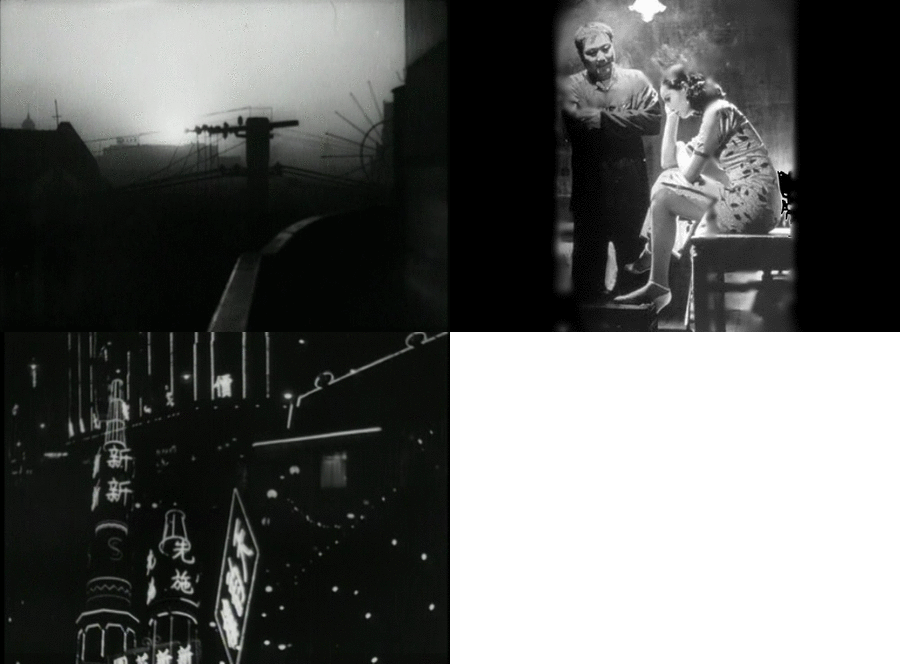
The Goddess (1934)

The Goddess (Shen nu – China 1934)
Director Yonggang Wu | DP Hong Weilie

One of the masterpieces of the silent cinema starring the legendary Chinese actress Ruan Lingyu,  is a fatalistic story of entrapment and futility, which presages French poetic realism. The film is a profound and mesmerising critique of greed and bourgeois hypocrisy, set against the tender counterpoint of the bond between mother and child.  The streets of Shanghai are a glittering purgatory. The fallen woman walks the dark streets of oppression and shame. Trapped and struggling, loving and kind, a prostitute and an angel, she soars with wings of  joy for a brief instant above the sordid infamy of vanity, exploitation, and deprivation. A woman’s anguished bid for freedom is a revolutionary act.  The whore and the mother the existential  heroine made flesh.

Noir Digest: Noir City 2010

Noir City 2010

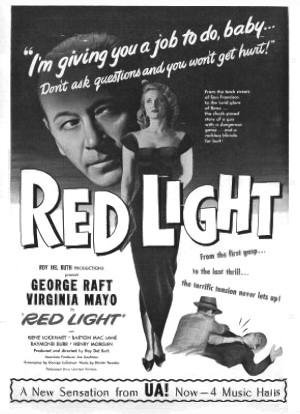
Red Light (1949)

San Francisco’s NOIR CITY 8 film noir series returns to San Francisco’s Castro Theatre January 22-31 2010. The full program is here.

Movies not on DVD on the program:

FLY BY NIGHT (1942) Dir. Robert Siodmak
DEPORTED (1950) Dir. Robert Siodmak
CRY DANGER (1951) Dir. Robert Parrish, newly restored
THE MOB (1951) Dir. Robert Parish
THE GANGSTER (1947) Dir. Gordon Wiles
HE RAN ALL THE WAY (1951) Dir. John Berry
ONE GIRLS’ CONFESSION (1953) Dir. Hugo Haas
WOMEN’S PRISON (1955) Lewis Seiler
RED LIGHT (1949) Dir. Roy Del Ruth
WALK A CROOKED MILE (1948) Dir. Gordon Douglas
SLATTERY’S HURRICANE (1949) Dir. Andr? de Toth
INSIDE JOB (1946) Dir. Jean Yarbrough
HUMAN DESIRE (1954) Dir. Fritz Lang
ESCAPE IN THE FOG (1945) Dir. Budd Boetticher
  • FLY BY NIGHT (1942) Dir. Robert Siodmak
  • DEPORTED (1950) Dir. Robert Siodmak
  • CRY DANGER (1951) Dir. Robert Parrish, newly restored
  • THE MOB (1951) Dir. Robert Parish
  • THE GANGSTER (1947) Dir. Gordon Wiles
  • HE RAN ALL THE WAY (1951) Dir. John Berry
  • ONE GIRLS’ CONFESSION (1953) Dir. Hugo Haas
  • WOMEN’S PRISON (1955) Lewis Seiler
  • RED LIGHT (1949) Dir. Roy Del Ruth
  • WALK A CROOKED MILE (1948) Dir. Gordon Douglas
  • SLATTERY’S HURRICANE (1949) Dir. Andr? de Toth
  • INSIDE JOB (1946) Dir. Jean Yarbrough
  • HUMAN DESIRE (1954) Dir. Fritz Lang
  • ESCAPE IN THE FOG (1945) Dir. Budd Boetticher

Columbia Noir DVD Set

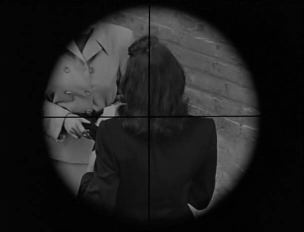
The Sniper

Columbia Pictures Film Noir Classics, Vol. 1 a new noir collectors DVD set has just been released. The films in the set:

  • The Big Heat
  • 5 Against the House
  • The Lineup
  • Murder by Contract
  • The Sniper

The special features include commentaries by Michael Man, Martin Scorsese, Christopher Nolan, Eddie Muller, and James Ellroy.

Le quai des brumes (Port of Shadows – France 1938): Poetic Realism

portofshadows

The fog of angst seeps from the faces of two doomed lovers in the dank gloom of Le Havre. Jean is on the run and Nelly is trapped in a psychic prison as real as the physical constraints on her existence. Happiness is something that may exist but neither knows it.

They meet by chance one night in a broken-down bar on the waterfront amongst the detritus of an ephemeral humanity. Panama’s is a haven for the down-and-out named for the hat of the publican, an old shaman with a rusted soul as deep as the canal he visited in his youth. Father confessor of a convent for lost souls. He keeps his counsel, asks no questions, and strums his guitar.

And everywhere the fog and the harbor with rusting hulks at anchor ever-waiting transport for deliverance. The two lovers stroll as tentative friends with a hope as forlorn as it is sublime, when a bright clarity intrudes, a hood with a malice as sharp as his clothes and his shave, and as evil as his cowardice.

A night of bliss follows. Jean and Nelly find love at a sea-side carnival and that elusive union we all seek – in a rented room. They keep missing pernicious Fate a drunken vagabond. The glory of a new dawn is soon shattered. They each leave alone. Fate occupies the sheets of last night’s passion, and they are lost.

“Kiss me. We don’t have much time.”

The Black Cat (1934): Erotic nightmare

The Black Cat (1934)

Edgar G. Ulmer’s trash-noir Detour (1945) has a cult following. The film relates a fatalistic story of a guy so dumb he blames fate for the consequences of his own foolishness. Anne Savage, as the street-wise dame who incredulously falls for the sap, is memorable.

Earlier in 1934 Ulmer directed The Black Cat starring Boris Karloff and Bela Lugosi. Loosely based on a short story by Edgar Allan Poe, the movie is a camp masterpiece.  Set in the wonderfully gothic modernist house of a sinister architect, it is a mad expressionist tale of abduction, revenge, sexual obsession, camp horror, and unbridled eroticism.  Sex is the primary motif and there is a sense of unreality with the action moving with the strange fractured incoherence of a dream. In a sense Ulmer prefigures the oneiric and sexual motifs of the classic noir period. A must-see.

This trailer I have created focuses on the pervasive eroticism… see the shapely legs of the comely heroine get the Von Sternberg treatment!
The clip has been blocked by NBC Universal on copyright grounds.

NOIR CITY DC: The 2009 Film Noir Festival

Alias Nick Beal (1949)

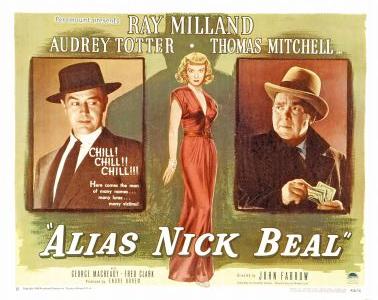
The Film Noir Fndation is presenting the NOIR CITY DC: The 2009 Film Noir Festival  over October 24 – November 4.

The program features new 35mm prints of these classic noirs:

  • SLIGHTLY SCARLET (1956)
  • ACE IN THE HOLE (1951)
  • GUN CRAZY (1950)
  • WICKED AS THEY COME (UK, 1956)
  • ALIAS NICK BEAL (1949)
  • THE BIG COMBO (1955)
  • SHAKEDOWN (1950)
  • BEYOND A REASONABLE DOUBT (1956)
  • OUT OF THE PAST (1947)
  • THE KILLERS (1946)
  • HOLLOW TRIUMPH (1948)

Full details here.

10 Never Before on DVD Noirs Released

Highway 301 (1950)

This month’s Warner Archive new releases include these never-on-dvd-before noirs.

  • BERLIN EXPRESS (1948)
  • KILLER MCCOY (1947)
  • I DIED A THOUSAND TIMES (1955)
  • THE TALL TARGET (1951)
  • PAY OR DIE (1960)
  • SUSPENSE (1946)
  • HIGHWAY 301 (1950)
  • LIGHTNING STRIKES TWICE (1951)
  • THE SEARCH (1948)
  • TERM OF TRIAL (1963)

Caged (1950): “the plot of our life sweats in the dark like a face”

Caged (1950)

… the plot of our life sweats in the dark like a face
the mystery of childbirth, of childhood itself
grave visitations
what is it that calls to us?
why must we pray screaming?
why must not death be redefined?
we shut our eyes we stretch out our arms
and whirl on a pane of glass
an afixiation a fix on anything the line of life the limb of a tree
the hands of he and the promise that she is blessed among women…”

Patti Smith – Dancing Barefoot (1979)

Caged (1950) is a gritty hard-hitting social problem picture from Warner Bros. A young woman is jailed after she is an unwitting accomplice in a gas-station robbery with her husband, who is killed during the heist.  The sheltered girl on admittance to a women’s prison discovers she is pregnant, but her condition does not protect her from the humiliation and brutalisation of prison life. Melodramatic but with a strong social conscience that targets corrupt authorities, the movie is downbeat and pessimistic.  Eleanor Parker in the lead is powerfully convincing, and is supported by a strong female cast, including Agnes Moorehead as a compassionate and crusading  superintendent, and Hope Emerson as a corrupt and sadistic block matron.  Though set-bound the regimentation and claustrophobia of incarceration is given a strong expressionist treatment by director John Cromwell and DP Carl Guthrie.  A moody evocative score from Max Steiner adds emotional depth.