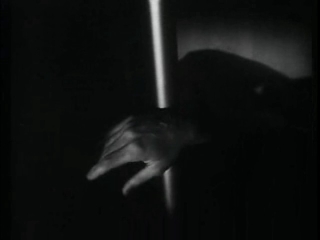
Noir: Compassion in the Shadows

When Strangers Marry (aka Betrayed 1944)

the ‘meaning’ of the noir city is not to be found in the narrative’s surface
details but in its shadows, in the intangibles of tone and mood

– Frank Krutnik, ‘Something More Than Night’, The Cinematic City (ed David B. Clarke), p 98-99

The more I read about noir, the more I am convinced that few pundits, critics, academics, or film bloggers really know noir. Sure, there are many who write lyrically and compellingly, there are those who can mimic to perfection the hard-boiled lingo, and there are those who have a thorough knowledge of the history and the arcane, but most don’t understand noir.

Noir is a semiotic aesthetic. It is not about the surface, it is about the shadows. The noir narrative is only a framework for holding together a dark but deeply moral vision of life. Noir is not morally ambivalent: it is unforgiving and the transgressor pays for his transgressions. While the punishment of destiny is inescapable, there is the chance of redemption, and redemption comes from a deep compassion. A compassion that comes from the knowledge of the chaos and the utterly random contingency at the core of existence. Noir goes beyond the despair of the existentialists, it finds in the desperate and often violent failings of humanity, the soul. The soul that is not corporeal yet pervades physical reality by manifesting our sins and desires in the dark shadows of night, when the alienating mantel of awareness dissolves into those places where lost souls wander: the dives, the dark city streets, lonely desolate beaches, dust country roads, squalid tenements, and dank stairwells.

Forget all you have read about noir and look at noir with your own eyes and ears. Welcome to the shadows.
Noir Poets: Jack Kerouac

Jack Kerouac

I stayed in San Francisco a week and had the beatest time of my life… I stopped, frozen with ecstasy on the sidewalk. I looked down Market Street. I didn’t know whether it was that or Canal Street in New Orleans: it led to water, ambiguous, universal water, just as 42nd Street, New York, leads to water, and you never know where you are… And for just a moment I had reached the point of ecstasy that I always wanted to reach, which was the complete step across chronological time into timeless shadows, and wonderment in the bleakness of the mortal realm, and the sensation of death kicking at my heels to move on, with a phantom dogging its own heels, and myself hurrying to a plank where all the angels dove off and flew into the holy void of uncreated emptiness, the potent and inconceivable radiancies shining in bright Mind Essence, innumerable lotuslands falling open in the magic mothswarm of heaven. I could hear an indescribable seething roar which wasn’t in my ear but everywhere and had nothing to do with sounds. I realized that I had died and been reborn numberless times but just didn’t remember especially because the transitions from life to death and back to life are so ghostly easy, a magical action for naught, like falling asleep and waking up again a million times, the utter casualness and deep ignorance of it. I realized it was only because of the stability of the intrinsic Mind that these ripples of birth and death took place, like the action of wind on a sheet of pure, serene, mirror-like water. I felt sweet, swinging bliss, like a big shot of heroin in the mainline vein; like a gulp of wine late in the afternoon and it makes you shudder; my feet tingled. I thought I was going to die the very next moment. But I didn’t die, and walked four miles and picked up ten long butts and took them back to Marylou’s hotel room and poured their tobacco in my old pipe and lit up. I was too young to know what had happened.

On The Road, 1957

Cry Danger (1951): About as noir as white coffee

Cry Danger (1951)

Cry Danger, a Dick Powell vehicle from RKO, is a flaccid affair with no tension and labored humor. Powell plays ‘Rocky’ Malloy, a guy with a past just released from a life stretch after 5 years in the can, thanks to the better-late-than-never testimony of a vet with a wooden leg and a drink problem. Back in LA he shacks up in a trailer park to shake down the hood that framed him. A novel twist at the end can’t save the show.

Rookie director Robert Parrish is to blame: the pacing is sluggish and you keep waiting for something to happen. There is no atmosphere and it all plays out like a too long second-rate 50s TV police drama. A sorry example of how not to make a noir. Powell and Rhonda Fleming, as the love interest, are wasted, as is DP Joe Biroc, who never really gets a chance to insinuate some LA darkness into the mix. The promise of the opening scene when we see Powell arriving by train is never realised after being immediately negated by the absurd use of rear-screen projection shots for scenes outside the railway station. There is a noirish shot of Powell entering a bar at night, but it is all technique and no soul.

Overrated and dull.

Noir Poets: Bob Dylan

Young Man With a Horn (1950)

Not Dark Yet

Shadows are falling and I’ve been here all day
It’s too hot to sleep, time is running away
Feel like my soul has turned into steel
I’ve still got the scars that the sun didn’t heal
There’s not even room enough to be anywhere
It’s not dark yet, but it’s getting there

Well, my sense of humanity has gone down the drain
Behind every beautiful thing there’s been some kind of pain
She wrote me a letter and she wrote it so kind
She put down in writing what was in her mind
I just don’t see why I should even care
It’s not dark yet, but it’s getting there

Well, I’ve been to London and I’ve been to gay Paree
I’ve followed the river and I got to the sea
I’ve been down on the bottom of a world full of lies
I ain’t looking for nothing in anyone’s eyes
Sometimes my burden seems more than I can bear
It’s not dark yet, but it’s getting there

I was born here and I’ll die here against my will
I know it looks like I’m moving, but I’m standing still
Every nerve in my body is so vacant and numb
I can’t even remember what it was I came here to get away from
Don’t even hear a murmur of a prayer
It’s not dark yet, but it’s getting there

Copyright © 1997 by Special Rider Music

The Cinematic City: “the meaning is in the shadows”

When Strangers Marry (aka Betrayed 1944)

When Strangers Marry (aka Betrayed 1944)
King Bros/Monogram 67 mins
Director: William Castle
Cinematography: Ira Morgan
Score: Dimitri Tiomkin

“as When Strangers Marry illustrates, it is precisely through the triggering of sensations that film noir speaks most eloquently. A mode of signification that privileges connotation over the denotative, cause-and-effect logic of linear narrative, the highly-wrought noir aesthetic ensures that the ‘meaning’ of the noir city is not to be found in the narrative’s surface details but in its shadows, in the intangibles of tone and mood.” – Frank Krutnik, ‘Something More Than Night’, The Cinematic City (ed David B. Clarke), p 98-99

When Strangers Marry, made by the King Brothers, an independent production team signed to Monogram, was shot in ten days for under $50,000 and marketed as a “nervous A”. But Monogram could not get a percentage deal and the movie opened as a b, doing good business and garnering critical praise. James Agee said of the movie: “I have seldom, for years now, seen one hour so energetically and sensibly used in a film. Bits of it, indeed, gave me a heart-lifted sense of delight in real performance and perception and ambition which I have rarely known in any film context since my own mind, and that of moving-picture making, were both suffi­ciently young”.

Five Star Final (1931): Down with the bosses!

Five Star Final (1931)

The great Edward G. Robinson is the hard-boiled editor of a big-city tabloid. The owner of the paper comes up with the idea of boosting circulation by pursuing a lurid expose on the fate of a woman convicted of a crime of passion 10 years earlier, with tragic consequences.  Directed by the distinguished Mervyn LeRoy, Five Star Final is an early Warner ‘social protest’ movie, and the sort of movie that epitomises the pre-Code talkies: sharp dialog, sexual innuendo, irreverent satire, and social criticism.  While the picture is marred by the stagy treatment of the melodrama involving the family destroyed by the tragedy that ensues, the immensity of the tragedy and its putrid genesis sustain a powerful and still relevant narrative.  Boris Karloff is a hoot as an amoral ‘undercover’ reporter: Edward G. calls him “the most blasphemous thing I’ve ever seen”.

But is it a film noir? I think there are sufficient noir elements to sustain a strong case: the theme of the corrupt brutality of ‘business’, individual entrapment, the futility of trying to escape a dark past, and a downbeat ending.

The final three minutes are brilliant.

The Subversive Truth of Noir: The Breaking Point (1950)

The Breaking Point (1950)

The final image of The Breaking Point (1950), a great John Garfield film directed by Michael Curtiz, and to my mind infinitely superior to a film it is often compared to,  Howard Kawk’s over-rated To Have and Have Not (1944), is the most poignant and subversive image in all of noir.  The death of a decent black man is of no consequence:  his despairing boy ignored and left to discover the fate of his father alone – completely alone.

La Pantera Negra (Mexico 2010): The Black Panther

Featured this month at the Edinburgh International Film Festival: “Dishevelled private eye Nico Beamonte’s latest case comes from God himself – possibly. He wants Nico to find the mysterious Black Panther. But who, or what, is the Black Panther? And what has this got to do with a cryogenically frozen Mariachi singer and a 1950s flying saucer? Surrealism, Mexican-style – as if film noir had collided with props left over from a Ray Harryhausen film.”

Not Dark Yet: “Cancel my subscription to the resurrection”

The Killers

Shadows are falling and I’ve been here all day
It’s too hot to sleep, time is running away
Feel like my soul has turned into steel
I’ve still got the scars that the sun didn’t heal
There’s not even room enough to be anywhere
It’s not dark yet, but it’s getting there

Bob Dylan – Copyright © 1997 by Special Rider Music

It was getting dark. I turned on the bed-side lamp and hit the bed a dead weight.  Closed my tired desparate eyes.  Or that’s how they looked in the fly-specked-mirror in the fetid washroom down the hall. I had splashed water on my face, but I was still bothered by the heat, which hung over me like a sordid blanket. Is this what death is like, or a cold clammy fog in which you are forever lost?

I must have slept or did I?  The slatted light from the flashing red neon sign outside was making crazy patterns on the ceiling.  Discordant jazz notes drifted in through the open window from a bar down in the street.  A woman was wailing now. Somewhere in this flophouse.  Her no-doubt bloated weeping eyes blackened by fear and habitual abuse.  A door slammed and not long after heavy footfalls lumbered down the stairs outside.  She stopped her lament.  The band was no longer playing.  It got quiet.  The silence broken occasionally by car-tyres swishing on the wet asphalt.

The bed was stale and hard, but it was kind of bracing, a distraction from the heat.  It was dark now and the room flashed in and out of a red glow adrift in some parallel universe.  Where was I?  Who was I?  Who cared?  I switched on the radio.  A long dead Jim Morrison was singing.  “When the music’s over, turn out the light”.  Dead 40 long years?  How old was I then? How alive?  How real?  Don’t ask where the years have gone.

I was scared. Always had been. What’s it like to be comfortable in your skin?  To never see the chaos and the terror just beyond.  As empty and lost as I feel?  Who cares?  Another futility to add to the deck.

I had drifted somewhere and woke with a start. The pillow was soaked and my shirt collar awash with a cold sweat. I needed a drink. I grabbed the half-empty Tequila bottle and took a shot.  It burned with a fragrance sweet as my mother’s smile.  I was tired of waiting. Why didn’t they come now and put an end to it.  My hands shook as I lit a cigarette.  My last?  I watched the lingering smoke snake towards the window.  Is this how your soul finally escapes? Slowly and reluctantly before it dissolves into the big night?  I turned off the lamp. “Cancel my subscription to the resurrection.”