Toward a Definition of Film Noir

The File On Thelma Jordan

In their seminal book, A Panorama of American Film Noir, 1941-1953, authors Raymond Borde and Etienne Chaumeton, closed the opening chapter with these thoughts on the recurring motifs of films noir in the classical period:

It is easy to come to a conclusion: the moral ambivalence, criminal violence, and contradictory complexity of the situations and motives all combine to give the public a shared feeling of anguish or insecurity, which is the identifying sign of film noir at this time. All the works in this series exhibit a consistency of an emotional sort; namely, the state of tension created in the spectators by the disappearance of their psychological bearings. The vocation of film noir has been to create a specific sense of malaise. (p.13)

In his Introduction to the English translation, James Naremore refers to the Surrealist critique of cinema, and makes this telling observation:

At certain moments, even in ordinary genre film or grade-B productions, [cinema] could involuntarily throw off bizarre images, strange juxtapositions, erotic plays of light and shadow on human bodies, thus providing an opportunity for the audience to break free of repressive plot conventions and indulge in private fantasies. (p.xi)

Film Noir: Getting Started

As introductions to film noir, you can’t go past these two books, which are immensely readable and entertaining:

The Rough Guide to Film Noir (2007)
A great introduction that covers the genre from early
German expressionism to the latest neo-noirs, and highlights the movies to look out for.

Film Noir by Alain Silver (2004)
A general overview of film noir covering its most important themes with many rare stills. Among the films covered are: Double Indemnity, Kiss Me Deadly, Gun Crazy, Criss Cross, Detour, In A Lonely Place, T-Men, Out of the Past, The Reckless Moment, and Touch of Evil.

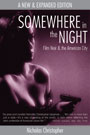
New Edition: Somewhere in the Night – Film Noir & the American City

Somewhere in the Night - Film Noir & the American City

Intellectually stimulating, thoroughly researched, and excellently written. Christopher writes with the mind of a scholar and the heart of a poet . Publishers Weekly

As Christopher observes . . . film noir is more than just a style – it’s a way of looking at the world, ‘a dark mirror reflecting the dark underside of American urban life’. – Michiko Kakutani, New York Times

Author Nicholas Christopher from this new and expanded edition of Somewhere in the Night: Film Noir and the American City:

I had seen film noirs before, with only the vaguest notion of what that term really signified (something dark and sinister?), and was attracted by their unique visual style, gritty, textured rendering of urban life, sharply drawn characters, and psychological complexity.

Starting with the classic Out of the Past, Christopher explores over 300 films noir by identifying the genre’s central motif: “The city as labyrinth is key to entering the psychological and aesthetic framework of the film noir.”.

The Themes of Film Noir

Out Of The Past (1947)

These thumbnail interpretations from the book Film Noir by Alain Silver and James Ursini, are compelling renditions of the two essential themes of film noir:

The Haunted Past… In the noir world both past and present are inextricably bound… One cannot escape one’s past… And only in confronting it can the noir protagonist hope for some kind of redemption, even if it is at the end of a gun.

The Fatalistic Nightmare. The noir world revolves around causality. Events are linked… and lead inevitably to a heavily foreshadowed conclusion. It is a deterministic universe in which psychology… and even the structures of society… can ultimately override whatever good intentions and high hopes the main characters may have.

(p. 15)

Film Noir: Another Recommended Reading List

Another list of recommended books on Film Noir History & Theory from an Amazon.com customer with comments:

Film Noir: An Encyclopedic Reference to the American Style, Third Edition

by Alain Silver
Buy new: $25.55 / Used from: $14.35
The essential reference book for film noir of the classic period. Includes some discussion of neo-noir. Plot summaries, names, dates, and critical analysis for nearly 300 films.

Film Noir by Andrew Spicer

Buy new: $10.17 / Used from: $5.72
Concise and readable introduction to film noir theory. Covers classic, modern, and post-modern noir. Includes essays on 3 directors and lists of films.

The Dark Side of the Screen: Film Noir by Foster Hirsch

Buy new: $19.77 / Used from: $10.32
Another introductory text. Published in 1981, this was one of the first books on film noir written in English. Older and less comprehensive than the Spicer book, but still a solid introduction.

Dark City: The Lost World of Film Noir by Eddie Muller

Buy new: $16.47 / Used from: $11.94
Engaging survey of classic film noir written for a popular audience. Not intended to be comprehensive, but an winning introduction to great films for casual fans and noir buffs.

A Panorama of American Film Noir, 1941-1953 by Raymond Borde

Buy new: $11.53 / Used from: $6.95
Noir film theory’s seminal work, first published in France in 1955, on which all subsequent theory was built. Amazingly insightful, considering it lacked the benefit of hindsight.

Film Noir Reader by Alain Silver

Buy new: $22.95 / Used from: $5.60
Collection of essays written 1950s-1990s. Important seminal works, including Schrader’s “Notes on Film Noir”, plus modern studies of specific films and directors. Classic and neo-noir.

Film Noir Reader 2 by Alain Silver

Buy new: $15.60 / Used from: $6.85
More seminal essays, including Nino Frank’s, and an eclectic assortment of more recent essays that explore films, directors, themes, influences, and music. Classic and neo-noir.

Film Noir Reader 3: Interviews with Filmmakers of the Classic Noir Period by Alain Silver

Buy new: $22.50 / Used from: $14.06
Interviews with 18 directors, cinematographers, actresses, composers, writers, producers of the classic noir period, conducted by Robert Porfirio, Alain Silver, and James Ursini.

Film Noir Reader 4: The Crucial Films and Themes by Alain Silver

Buy new: $17.21 / Used from: $9.32
Mostly modern essays discussing key films and themes. Mixed bag. Some excellent historical studies, but too many essays rooted in socio-political agendas.

More than Night: Film Noir in Its Contexts by James Naremore

Buy new: $17.95 / Used from: $11.01
A scholarly analysis of “film noir” as an idea formed ex post facto that continues to resonate through contemporary media. Classic noir, neo-noir, and related crime films.

Detours and Lost Highways: A Map of Neo-Noir by Foster Hirsch

Buy new: $20.00 / Used from: $5.94
Follows neo-noir 1960-1999, as the style became a Hollywood mainstay. Analysis of old ideas and new trends, from the surprisingly retro to audaciously original films. Best book on neo-noir.

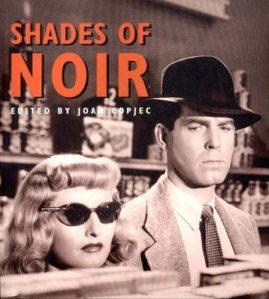
Shades of Noir: A Reader (Haymarket)

Buy new: $20.00 / Used from: $6.20
Ten highly academic essays focus on the origins of film noir motifs and their relationships to American culture. Classic & neo-noir. Dense, hard-core film theory. Not for casual fans.

New York Noir: Crime Photos from the Daily News Archive by William Hannigan

Buy new: $19.77 / Used from: $18.98
Not film theory, but it should be. These tabloid photographs from 1920s-1950s will disabuse you of the widely held belief that film noir’s vice, violence, and realism were products of the WWII era.

Somewhere in the Night by Nicholas Christopher

Buy used from: $2.31
Personal treatise focusing on elements of post-WWII urban environment which the author believes shaped film noir style. Interesting, thoughtful, but a stretch in terms of theory.

Out of the Past: Adventures in Film Noir by Barry Gifford

Buy new: $20.00 / Used from: $8.20
Barry Gifford’s personal take on 118 crime films released 1933-1988. If you find most film noir books too dry or academic, these energetic, entertaining essays might suit you.

L. A. Noir: Nine Dark Visions of the City of Angels by William Hare

Buy new: $39.95 / Used from: $25.00
Analysis of 7 classic noir films and 2 neo-noir films that take place in Los Angeles. Includes discussion of related films and the directors, actors, and writers involved in their creation.

L.A. Noir: The City as Character by Alain Silver

Buy new: $14.96 / Used from: $12.75
Classic and neo-noir in Los Angeles, with emphasis on how the city and its landmarks help create the noir mood. More than 150 b&w photos including many location photos indexed with addresses.

Film Noir by Alain Silver

Buy new: $13.59 / Used from: $6.20
Sleek, attractive showcase of over 180 photographs from classic noir films. Somewhat cursory analysis of 10 noir motifs and 10 representative films. Heavy on visuals, light on information.

Art of Noir: The Posters And Graphics From The Classic Era Of Film Noir

by Eddie Muller
Buy new: $34.65 / Used from: $25.00
A wonderful showcase of the brash, lurid poster art of classic film noir. 338 posters and lobby cards are reproduced in eye-popping color. Captions and essays expound on the bold styles.

Painting With Light by John Alton

Buy new: $19.77 / Used from: $11.99
Not film theory, but lighting theory. A handbook to cinematography written in 1949 by John Alton, low key lighting specialist and one of film noir’s most recognizable and revered cinematographers.

Its A Bitter Little World: The Smartest Toughest Nastiest Quotes From Film Noir

Buy new: $10.39 / Used from: $1.78
A nice little volume of hard-boiled quotes from film noir 1940-2005. Organized by date, theme, and indexed by film.

Hard Boiled: Great Lines from Classic Noir Films by Peggy Thompson

Buy used from: $1.88
Book of quotes from film noir and crime films 1932-1964. Organized by film, indexed by artist and first line. Includes reproductions of more than 60 movie stills and lobby cards.

Film Noir: Recommended Reading

BuddBottiecher's Behind Locked Doors (1948)

I came across this interesting Film Noir Recommended Reading List by an Amazon.Com customer and his comments:

Dark City: The Lost World of Film Noir by Eddie Muller

Buy new: $16.47 / Used from: $11.94
Eddie Muller’s Dark City is one of the best books on noir out there.

Dark City: The Film Noir by Spencer Selby

Buy new: $30.00 / Used from: $29.98
A great “list” book. Noirheads use this one to keep track of what they’ve seen and what they want to see.

Film Noir: An Encyclopedic Reference to the American Style, Third Edition

by Alain Silver
Buy new: $25.55 / Used from: $14.35
Another excellent “List” book. Not much in the way of photos, but this is probably the most comprehensive list of film noir out there.

A Panorama of American Film Noir, 1941-1953 by Raymond Borde

Buy new: $11.53 / Used from: $6.95
This is the book that started it all. A must for film fans.

Death on the Cheap: The Lost B Movies of Film Noir by Arthur Lyons

Buy new: $17.50 / Used from: $9.00
The ultimate reference of all B-film noir. The book is entertaining and really digs deep trying to find some forgotten gems (and more than a few stinkers).

Early Film Noir: Greed, Lust and Murder Hollywood Style by William Hare

Buy new: $37.95 / Used from: $35.00
A collection of essays on great film noir.

The Noir Style by Alain Silver

Buy new: $48.00 / Used from: $17.99
A enjoyable coffee-table sized book with images from film noir.

Art of Noir: The Posters And Graphics From The Classic Era Of Film Noir

by Eddie Muller
Buy new: $34.65 / Used from: $25.00
This one goes great with Noir Style. A collection of colorful film noir movie posters in coffee-table-book size.

Painting With Light by John Alton

Buy new: $19.77 / Used from: $11.99
The famed movie-maker’s book on lighting. A must for noir fans and film makers. The book references The Amazing Mr. X.

Nietzsche and the Meaning of Noir

In A Lonely Place (1950): A Psychic Prison

My proposal, then, is that noir can also be seen as a sensibility or worldview which results from the death of God, and thus that film noir is a type of American artistic response to, or recognition of, this seismic shift in our understanding of the world. This is why Porfirio is right in pointing out the similarities between the noir sensibility and the existentialist view of life and human existence. Though they are not exactly the same thing, they are both reactions, however explicit and conscious, to the same realization of the loss of value and meaning in our lives.

Mark Conard looks at existentialism, definitions and the meaning of Film Noir, in an authorised excerpt from the book The Philosophy of Film Noir: Nietzsche and the Meaning of Noir:Movies and the ‘Death of God’.

Charles McGraw: Biography of a Film Noir Tough Guy

The Narrow Margin (1952): B plus

Charles McGraw: Biography of a Film Noir Tough Guy
Alan K. Rode
ISBN 978-0-7864-3167-0
228pp
Hardcover (7 x 10) 2008
US$45

To be published mid-October.
Pre-order from Amazon.

Charles McGraw appeared in many classic noirs including The Killers (1946) and The Narrow Margin (1952). The author, film historian and journalist Alan K. Rode, is a director of the Film Noir Foundation.

From the publisher:

Whether portraying tough cops or sadistic killers, McGraw brought a unique authenticity to the screen. Emphasizing his impact on the film noir style, this comprehensive biography examines McGraw’s lengthy career against the backdrop of a changing Hollywood. Through numerous personal interviews with his surviving intimates, close acquaintances and co-workers, his tumultuous personal life is detailed from his earliest days to his bizarre, accidental death. Also included are an extensive critical filmography of McGraw’s feature film career, a complete list of television appearances and previously unpublished film stills and personal photos.

From James Ellroy:

A spellbinding account of the great noir heavy…and a must-have addition to all film-noir libraries. Deft biography and overall wild tale.

The book has also been reviewed on TCM.

Film Noir: Critical Origins

Thomas Leitch of the University of Delaware, in his book, Crime Films: Genres In American Cinema (Cambridge University Press, 2004), gives a nice introduction to the critcal origins of film noir (my emphasis):

The term film noir was first coined by French reviewer Nino
Frank when the end of the wartime embargo brought five 1944
Hollywood films – The Woman in the Window, Laura, Phantom
Lady, Double Indemnity, and Murder, My Sweet – to Paris in the same
week in 1946
. All five films seemed to take place in a world marked by
menace, violence, and crime and yet distinct from the world of the
gangster cycle of the 1930s. In christening the young genre, Frank was
thinking not so much of earlier movies as of earlier novels. The label
film noir was adapted from Marcel Duhamel’s Série noire translations
for Gallimard of British and American hard-boiled novels. The private-eye
stories of Dashiell Hammett and of Raymond Chandler, whose gorgeously
overwrought prose made him the most obvious stylistic patron
of noir, had broken the decorum of the formal detective story
from Conan Doyle to Agatha Christie. But an even closer analogue was
to be found in the breathless suspense novels of James M. Cain (The
Postman Always Rings Twice, 1934; Double Indemnity, 1936) and Cornell
Woolrich (The Bride Wore Black, 1940; Phantom Lady, 1942), which
trapped their heroes in a nightmarishly claustrophobic world of evil.

Except for their common breeding ground in anonymous, claustrophobic
cities that dramatized postwar alienation and disillusionment,
noir heroes could not have had less in common with their gangster
forebears. The principals of this new breed of crime films were not
promethean challengers, or even professional criminals, defying the
repressive institutions of their worlds, but hapless, sensitive, often
passive amateurs who typically were seduced into criminal conspiracies
through their infatuations with the sultry, treacherous heroines,
femmes fatales who had no counterpart in the man’s world of Hollywood
gangster films. Unlike gangster films, which traced the rigidly
symmetrical rise and fall of their outsized heroes, films noirs more often
showed their heroes fatalistically sinking into a pit after the briefest
of come-ons. The heroes of noir often dreamed of dabbling briefly
in crime before returning to their normal lives, or found themselves
trapped in the criminal plots of others despite their own innocence.
In either case, the way back to normalcy was barred; they were so
completely doomed by the slightest misstep, and their doom so openly
telegraphed to the audience from the opening scene, that the very
idea of heroism, even criminal heroism, became hopelessly distant…
(pp. 126-127)

Noir Books List

This page provides a full and comprehensive listing of books on film noir that can be purchased on-line.