Blog Feed

A Psychoanalysis Of Noir

I am currently reading, the first ever book about film noir, A Panorama of American Film Noir, 1941-1953, published in France in 1955, and only translated into English in 2000.

It is a revelation. Authors Borde and Chaumeton, in seeking to explain why films noir appeared, see a major influence as the emergence of a wider awareness of psychoanalysis and its motifs in America at the time. Their analyses of their canon of the first big three post-war noirs are centered on the films’ dream-like qualities and the emergence of protagonists with pronounced psychoses: The Big Sleep (1945), Gilda (1946), and The Lady From Shanghai (1947).

Within the noir series Gilda was a film apart, an almost unclassifiable movie in which eroticism triumphed over violence and strangeness. Howard Hawke’s The Big Sleep is, on the other hand, a veritable classic of the genre, the essential laws of which it encapsulates… The Lady From Shanghai is a film noir in the full sense of the term… the director’s [Orson Welles] personality bursts out at every step, extends beyond the bounds of the series, and streams forth in a whole series of marvelous images.

The authors’ views on each of these movies are deeply eloquent. Very brief excerpts follow.

Gilda (1946)

Gilda: [the] apparently disconcerting plot is often… studied in the extreme… [tracing] … in the umpteen wrangles of Johnny Farrell, torn between Gilda and her husband, who’s clearly a father substitute father for him.

The Big Sleep

The Big Sleep: The sordid settings and their bizarre details, the brief but merciless fistfights, the furtive murders, the sudden reversal of roles, the “objects” in the Surreal sense of the word… the eroticism of blood and pain (Vivian kissing Marlowe’s bruised lips) … the wild dancing of the women… Never will film noir further the the description of a cynical, sensual, and ferocious world.

The Lady From Shanghai (1948)

The Lady From Shanghai: The main characteristic of this confused story is an atmosphere of malaise. But [the film] is mainly impressive for its extraordinary technical mastery… when the drama begins to take shape, the virtuosity of the direction becomes perceptible: a motley assortment of mobile shots, tilted frames, unexpected framings, long circular panning or tracing shots.

It is interesting that Borde and Chaumeto see virtuosity where the accepted wisdom is that these elements are weaknesses arising from post-production studio ‘butchering’ of Welles’ original vision. The authors indicate they were aware of this intervention.

[piclens-lite-link]

The Noir Anti-Hero

The Set-Up (1949)

Today I came across an article by one Tom Hart on the (alleged by some) neo-noir film Sin City in an obscure UK students portal.

Hart argues that this movie among other things bastardises the conventions of film noir insofar as there is no redeemed anti-hero. Strangely though he goes on to illustrate his point by referencing Bogart’s Rick in Casablanca.

What is interesting is Hart closes his piece with a nice take on the noir protagonist:

Noir anti-heroes can be amoral, cynics, corrupt, tormented by angst, ambiguous, absurd, but they are never, in the final event, without the courage to choose the absurd path in life. Sin City provides the basis for a great noir, but fails to deliver a redeemed anti-hero.

As Albert Camus observed:

‘In the midst of winter, I finally learned that there was in me an invincible summer.’

Two Films Noir Added Library of Congress National Film Registry

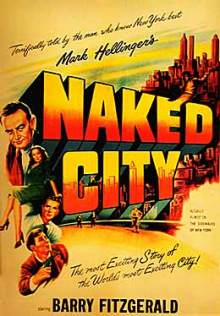
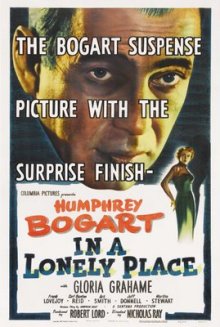
The US Library of Congress has just added 25 films to the National Film Registry, including two films noir: The Naked City (1948) and In A Lonely Place (1950).

The Naked City (1948)In A Lonely Place (1950)

Film Noir and The Unconscious

The Killers

These on-line papers from the 2004 Conference of the Society for Critical Exchange make fascinating reading.

Shadowing Film Noir: Hollywood’s Political Unconscious

A Touch of Yellow in Film Noir
Sheng-mei Ma, Michigan State U.

‘Queer Eye’ for a ‘Straight Dick’: Contextualized Homosexuals in Film Noir
Scott F. Stoddart, Marymount Manhattan C

Face Plates: T-Men, Counterfeiting, and Noir Representation
Mark Osteen, Loyola C.

Toward a Definition of Film Noir

The File On Thelma Jordan

In their seminal book, A Panorama of American Film Noir, 1941-1953, authors Raymond Borde and Etienne Chaumeton, closed the opening chapter with these thoughts on the recurring motifs of films noir in the classical period:

It is easy to come to a conclusion: the moral ambivalence, criminal violence, and contradictory complexity of the situations and motives all combine to give the public a shared feeling of anguish or insecurity, which is the identifying sign of film noir at this time. All the works in this series exhibit a consistency of an emotional sort; namely, the state of tension created in the spectators by the disappearance of their psychological bearings. The vocation of film noir has been to create a specific sense of malaise. (p.13)

In his Introduction to the English translation, James Naremore refers to the Surrealist critique of cinema, and makes this telling observation:

At certain moments, even in ordinary genre film or grade-B productions, [cinema] could involuntarily throw off bizarre images, strange juxtapositions, erotic plays of light and shadow on human bodies, thus providing an opportunity for the audience to break free of repressive plot conventions and indulge in private fantasies. (p.xi)

The Big Combo (1955): Quintessential Noir

The Big Combo (1955)

Obsessed cop hunts down a psychotic crime boss

You think this is a mink… you think these are the skins of little wild animals sewn together for your pleasure – you’re mistaken… these are the skins of human beings… people, who have been beaten, sold, robbed, doped, murdered by Mr Brown.

I live in a maze… a strange blind backward maze, and all the little twisting paths lead back to Mr Brown.

The Big Combo is the greatest film noir of the 50’s: put simply a masterpiece of the genre. Directed by maverick “B” director Joseph H. Lewis and filmed by master cinematographer John Alton from a tight screenplay from Philip Yordan, this movie is totally engrossing and visually stunning. Each scene is a study in composition and expressionist lighting. The cast is exceptionally strong and each player delivers a nuanced performance. The hip 50s score of David Raksin introduced over the opening credits is both surreal and portentous.

There are no femme-fatales but three women who are pivotal to a tragic story of sex, obsession, psychosis, and perverted love.

While not wishing to downplay Jean Wallace, who is arresting as the female lead, for me Rita, the stripper and erstwhile girlfriend of the obsessed cop, holds the central interest. Played beautifully by Helene Stanton, a B actress in her first role (followed by some other minor roles until she disappeared into obscurity in 1957), Rita is the most fascinating and real person in the story: any more about the role will risk spoilers.

The Big Combo (1955)

Her scenes linger long in the memory, and when the film is over you realise how much integrity she has. That Helene Stanton could bring such depth to a supporting role is testimony to her strength as an actress and director Lewis’ ability to foster strong performances from raw talent.

If you only ever see one film noir, this is it.

The Big Combo

International Neo-Noirs

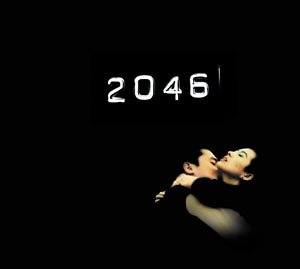
2046

Widen your cinematic experience and consider these neo-noir releases:

The Conformist (Italy – 1970)
Get Carter (UK – 1971)
The American Friend (Germany – 1977)
Veronika Voss (Germany – 1982)
Le Femme Nikita (France – 1990)
Zentropa (Denmark – 1991)
Foreign Land (Brazil – 1995)
Croupier (UK – 1997)
Insomnia (Norway – 1997)
Fallen Angel (Hong Kong – 2000)
Lantana (Australia – 2001)
City Of God (Brazil – 2002)
2046 (Hong Kong – 2004)
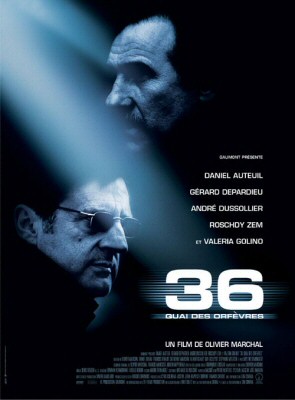
36 Quai des Orfèvres (France – 2004)
El Aura (Argentina- 2005)

They Live by Night (1948): Great but is it noir?

They Live By Night (1948)

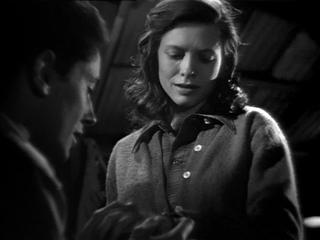
This first feature from Nicholas Ray is a great film in every sense: tight and inventive direction, a sensitive script from Charles Schnee adapted from Edward Anderson’s novel “Thieves Like Us”, moody noir lighting and photography by George E. Diskant, and terrific performances from the two young leads: Cathy O’Donnell and Farley Granger.

From Steven H. Schueur’s book Movies On TV: “… possibly the most romantic crime film ever made. Granger and O’Donnell beguilingly portray an awkward young couple who are forced into becoming ‘lovers on the run’ … Their sympathetic relationship is depicted with sensitivity and touching detail, and the performances are remarkably intense…”

They Live By Night is a tragedy of Shakespearean dimensions and  transcends film noir. The genre is more crime melodrama with noir elements. We know the relationship is doomed to fail in violent tragedy, not because this is a film noir, but as an audience we have seen the crime movies that Hollywood churned out in the 30’s and early 40’s.

The two young protagonists have no way out as they do not have the maturity to make the decisions they are forced to make, and this is telegraphed by Ray at the film’s opening as sub-titles over a scene of the two lovers in the throes of gentle passion: ” … this boy and this girl were never properly introduced to the world we live in … “.

A masterpiece of 40s Hollywood cinema.

They Live By Night (1948)

36 Quai des Orfèvres (France 2004): Brilliant Neo-Noir

36 Quai des Orfèvres (France 2004): Brilliant Neo-Noir

This neo-noir cum policier is a must see thriller with stunning noir cinematography. Olivier Marchal’s direction is relentless, with great performances from a stellar cast. This is Paris hip, dark, and mean.

This slideshow requires JavaScript.

The File On Thelma Jordan (1950): You always intend when you have to…

The File On Thelma Jordan (1950)

A married DA falls for a woman with a past

Thelma Jordan, the last film noir by Robert Siodmak is under-rated, and not because of Siodmak, whose lacklustre direction disappoints, but for the intelligent script and a bravura performance from Barbara Stanwyck, who plays Thelma, the woman with a past. I have deliberately not described her as a femme-fatale, as her character is multi-layered. She is trapped by her past but genuinely loves the DA who falls for her.

Noir determinism propels the story, which to a degree is melodramatic and contrived, but the pyschological elements and literate study of the dynamics of marriage and immaturity give the film more depth than most melodramas.

“Id’ like to say I didn’t intend to kill her, but when you have a gun, you always intend when you have to…”

The File On Thelma Jordan (1950)