Noir City 2009 Program

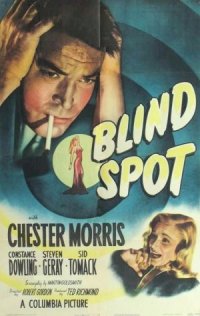
Blind Spot (1947)

Thanks to Dark Cty Dame for advance details of the program for NOIR CITY 7, the 2009 San Francisco Film Noir Festival, to be held January 23–February 1, 2009, at the Castro Theatre, and which will have a newspaper theme:

Friday, January 23
Deadline USA (1952)
Scandal Sheet (1952)

Saturday, January 24
Matinee:

Chicago Deadline (1949)
Blind Spot (1947)
Evening show (with Arlene Dahl):
Slightly Scarlet (1956)
Wicked as They Come (1956)

Sunday, January 25
Ace in the Hole (1951)
Cry of the Hunted (1953)

Monday, January 26

Alias Nick Beal (1949)
Night Editor (1946)

Tuesday, January 27

The Harder They Fall (1956)
Johnny Stool Pigeon (1949)

Wednesday, January 28

While the City Sleeps (1956)
Shakedown (1950)

Thursday, January 29

The Big Clock (1948)
Strange Triangle (1946)

Friday, January 30
The Unsuspected (1947)
Desperate (1947)

Saturday, January 31
Matinee:
Two O’Clock Courage (1945)
Beyond a Reasonable Doubt (1956)
Evening show:
One False Move (1992)

Sunday, February 1

Shock Corridor (1963)
The Killers (1946) (newly restored)

Full details to be announced.

Film Noir Notes: New Melville DVDs and San Francisco Noir Locales

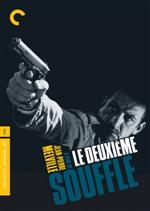
Le Deuxième Souffle (1966)

New Melvillle DVDs from Criterion
Criterion has released two new DVDs from French director, Jean-Pierre Melville: Le Doulos (1962) and Le Deuxième Souffle (1966).  Read the reviews at IFC Film News.

Virtual Tour of San Francisico Noir Locales
At 7:30 p.m. Nov. 11 the San Francisco Film Society’s creative director, Miguel Pendás, will take you on a virtual tour of “the ritzy homes of the rich on Nob Hill to the sleazy dives of the working class on the Embarcadero to see where some of the classic moments of 1940s and 1950s cinema were set” and explore  shooting locations of classic noirs such as Dark Passage, The Lady from Shanghai, Born to Kill, Sudden Fear, and The Maltese Falcon. Guest speaker Eddie Muller will provide an historical context and talk about his favorite San Francisco noir locations. Full Details

German Expressionism: Not Orthochrome Nor Panchromatic

Nosferatu (1922)Nosferatu (1922)

Following my recent posts on German expressionism and its influence on film noir, I came across something interesting.  While recognising that the expressionist classics of the early 1920s had more than a chiaroscuro look to define their imagery, this characteristic is cited as the most relevant connection with Hollywood noir of the 40s and 50s.

Before the mid-1920s film stock was ‘colour-blind’ as it did not absorb the tones between light and dark, so the processed images had very stark contrast.  It was not until 1924-25, with the appearance of first Orthochrome and then the superior Panchromatic films, that the processed film could render a broad spectrum of grey tones.

This begs the question: was German expressionist chiaroscuro more a result of technical limitation than a creative initiative?

Detnovel.com on the Origins of Film Noir

dr caligari
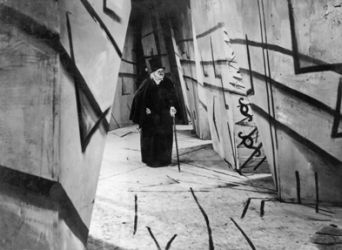
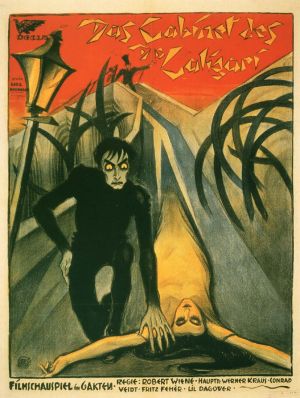
The Cabinet of Dr. Caligari (1920)

Many thanks to the ubiqutious Dark City Dame for bringing a compelling resource to my attention.

Dr William Marling, Professor of English at Case Western Reserve University in Cleveland, has on the detnovel.com film noir portal gathered an impressive collection of his essays on noir and its origins in German expressionism and hard-boiled fiction of the 20s and 30s.

In his introductory essay he reminded me that German expressionism as manifested in films like The Cabinet of Dr Caligari was not only about chiaroscuro lighting, but also that (my emphasis):

Expressionist movie-makers liked to employ extreme camera angles, tight close-ups, very slow dissolves, fast cutting and fast motion – anything that emphasized subjectivity.

German Expressionism: New DVD Collection

Cabinet of Dr. Caligari

Kino has released a 4-DVD box set titled German Expressionism Collection, which includes four silent classics from the period of German expressionism, which some film scholars consider is the genesis of the dark shadowy look of film noir.

The four titles are:

The Cabinet of Dr. Caligari (1920) Directed by Robert Wiene
Warning Shadows (1923) Directed by Arthur Robison
The Hands of Orlac (1924) Directed by Robert Wiene
Secrets of a Soul (1926) Directed by G.W. Pabst

The Hands of OrlacSecrets of the Soul

The release is reviewed here by Justin DeFreitas of The Berkely Daily Planet

Blood on the Moon (1948): Quintessential Noir Western

Blood on the Men (1948)

A drifter becomes embroiled in a violent dispute between an Arizona cattle rancher and local homesteaders. (1948 RKO. Directed by Robert Wise 88 mins)

Cinematography by Nicholas Musuraca
Screenplay by Lillie Hayward and Luke Short (adaptation of his novel “Gunman’s Chance”)
Film Editing by Samuel E. Beetley
Art Direction by Albert S. D’Agostino and Walter E. Keller
Original Music by Roy Webb
Starring Robert Mitchum, Barbara Bel Geddes, and Robert Preston
Filmed on location in Arizona and the RKO Ranch California
Robert Wise also directed: The Set-Up (1949) and Odds Against Tomorrow (1959)

“A bevy of late ’40s RKO talent, including ace cameraman Nick Musuraca, combine to make an intriguing noir Western. A complex tale of duplicity and split loyalties is played out against a noir backdrop of low-ceilinged bars and rain-soaked windswept darkness. Mitchum delivers his customarily immaculate, stoned performance as a reluctant hired gun duped into heading a trumped-up homesteaders’ revolt, and Bel Geddes plays the spunky cowgirl who engages him in erotic gun-play.” – By NA for the Time Out Film Guide

Blood on the Moon: what a great title for a noir western from a dream RKO film noir team!  Steven H. Scheuer in his Movies on TV guide rates this movie as only 2½ out of 4 stars, but his terse write-off, to my mind perversely establishes its noir credentials: “Murky, violent, post-war western”.

The film weaves a classic noir scenario into a western with all the motifs of the genre: the mysterious drifter with divided loyalties, the virginal rancher’s daughter in britches, the conniving proto-gangster, the crooked Indian-Reservation agent, hired-guns, shout-outs, bar-room brawls, and the Arizona backdrop, while organically integrating the noir elements of the redeemed noir protagonist, doom-laden atmospherics, outbursts of  violence, and vengeance into the story.

Mitchum as the drifter is classic Mitchum, and Barbara Bel Geddes truly engaging as the rancher’s younger daughter, with Robert Preston delivering a competent bad-guy, who in a neat twist is the homme-fatale to the rancher’s older daughter.  The wonderful Walter Brennan is great as an old homesteader, who as an active protagonist personifies the moral underpinnings of the story and its resolution.

But the movie belongs to director Wise and cinematographer Musuruca.  From the opening frame of the drifter’s silhouette riding over  a mountain pass in driving rain in the day’s gloaming, you know you are in noir territory.  The night-for-night scenes use available light and sharp contrasts to develop the dark themes of violence and betrayal, with interior scenes using key lighting and disturbing angular shots to establish risk and menace. The daylight scenes are filmed in classic western-style with deep focus and from higher angles. There is a brilliantly filmed cattle stampede at night in the middle of the film, that has to be text-book.  The score from Roy Webb adapts seamlessly from the dramatic to elegiac scenes of the lone horseman on the plain.

 

Gambling House (1950): Obscure Gem

Gambling House (1951)

After small-time hood, Mike Fury (aka Furioni) beats a rap for a murder committed by a crooked casino-boss, he has to collect from the capo who welshes on the deal, and fight deportation as an undesirable alien. (1950 RKO. Directed by Ted Tetzlaff 80 mins)

Apart from leads Victor Mature and Wiliam Bendix, the only other strong film noir connection for Gambling House, is Roy Webb’s soundtrack. With a plot broadly similar to Mature’s earlier Kiss of Death (1947), this is a tight thriller-melodrama with nicely-integrated social and romance angles. Mature is charming as the reforming hood, Bendix dependable as the casino-operater, and Terry Moore truly engaging as the love interest.

The cinematography and art direction have a gritty noir look with deep-focus New York location shooting. The direction is tight with not a false step for the full 80 minutes.

The cast is entirely convincing, and the post-war migration and citizenship themes are handled simply at a personal level with a moving sincerity, and without grand-standing.

An engaging picture which has an immediacy that belies its age.

Gambling House (1950)

The Noir Night

film noir

Have you ever lain awake at night and wondered why you like films noir?

In my case I have come to the realisation that is the look of noir that has me hooked. No matter how good a film noir, I feel let down if it doesn’t look noir: the mystery and angst of dark city streets are buried deep within me.

When I was a kid in the early 60s in Sydney, I slept in a room above my parent’s store along a main drag, and if I couldn’t sleep I stared mesmerised at the shafts of light from car headlights flashing across my darkened ceiling, lost in the anguished mysteries that invade your psyche late at night.

My old man had a beat-up pickup truck for the store, which was also the family car. A sister of my mother lived way across the other side of the city, and after visiting her we returned home late at night driving through the glitz of Broadway and Kings Cross, and then on to the darker streets of the inner suburbs, with me sitting out in the truck’s tray and my parents and younger brother in the cab. The moody city streets were mine and each corner and door-way had an immediate mystery to ponder…

Otto Preminger: A Slap Too Many

Angel Face (1952)

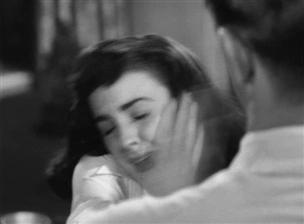
Early in the film Angel Face (1952), Robert Mitchum slaps Jean Simmons in the face:

When [autocratic director Otto] Preminger called for retake after retake, Mitchum, worried about his costar’s face, finally hit the director across the face and then asked him if he would like another slap.
– Mayer and Mc Donnell, Encyclopedia of Film Noir (2007)

Noteworthy Reviews

The Big Sleep

I recommend these recent reviews of films noir for their originality:

Precious Bodily Fluids Blog:

The Big Sleep
“The movie had everything going for it. But when one watches it, one finds that it is exceedingly difficult to read. The camera work is anything but polished. Cuts exist where they shouldn’t, and directional shots are at times awkward and superfluous. Hawks did not shoot the film as one expects film noir stuff to be shot. There are certainly the token shadows and curling smoke, not to mention some low shots and close-ups. But that Expressionistic element borrowed from German cinema in the previous decades is near-absent. While there are shadows, characters are not generally dwarfed by them. The contrast is rather minimal – this is less a “black-and-white” film than a “gray” film.”

Chinatown
“Polanski photographed the film largely in POV shots. The number of over-the-shoulder perspectives we get (almost all over Nicholson’s shoulder) becomes nearly claustrophobic. This sort of effect connects ChinatownThe Big Sleep or Huston’s The Maltese Falcon. with the old detective noirs, such as Hawks’ The Big Sleep or Huston’s The Maltese Falcon.”

Gilda
“From the film’s earliest scenes, one of the main characters is Bannin’s walking stick, which doubles as a protruding blade at Bannin’s pressing of a button. That the stick/blade is phallic goes without saying: it wields Bannin’s power, it extends, and its blade signifies castration of the other. Bannin calls it his ‘friend’, and proclaims, ‘It speaks when I wish it to speak, it is silent when I wish it to be silent.’ Johnny quickly identifies himself with the stick/blade: ‘You have no idea how faithful and obedient I can be.'”

Mildred Pierce
“It turns out that this film was released in 1945 just as the troops were returning home from the war. It also turns out that the film overtly attempted to reinstate masculine authority after a period of women running many of the businesses in the country.”

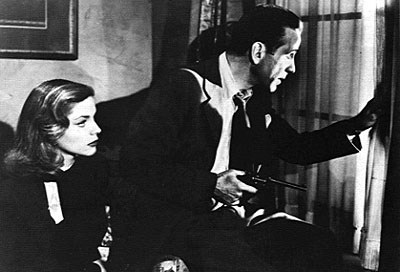
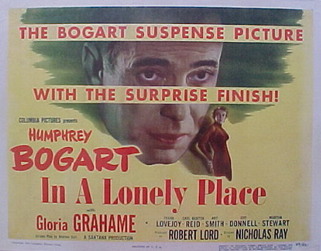
In A Lonely Place

The Dancing Image Blog:

Force of Evil
“Because at the end of the film, the greatest force of evil is not any one individual but the whole rotten system. Sure, it’s a racket; sure it’s a criminal enterprise. But writer/director Abraham Polonsky goes out of his way to establish the Combine as not so different from major banks and corporations – characters continually repeat, ‘it’s business!’ when confronted with the charge of gangsterism.”

In a Lonely Place
“The movie opens with a rearview mirror reflection of Dixon Steele’s wounded eyes, held in relief against the almost abstract high beams and street lights of a Hollywood boulevard. Hollywood is that lonely place – as is any place were sensitive souls gather to use and abuse one another.”

Kiss of Death
“Kiss of Death was shot entirely on location in New York. And indeed this is no idle boast; the movie is deeply enriched by the lived-in sense its, well, lived-in locations provide. The oppressive claustrophobia of an elevator as a desperate criminal tries to escape from a robbery in a busy building. The steep, narrow, and crowded architecture of Nettie’s (Coleen Gray) apartment as she welcomes Nick Bianco (Victor Mature) home from prison.”