
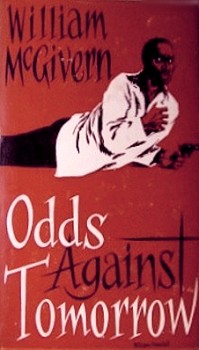
Earl Slater – the white man:
Earl limped about pointlessly examining the junk on top of the mantel, studying the sturdy old beams and floor boards, pausing once to frown at the broken radio on the table. I’ll never see any of this again, he thought. Never see this room again in my life. Why should that bother him? he wondered. It was a cold, stinking dump. No man in his right mind would want to see it again. But leaving it reminded him of the other places he had left. He stood fingering the glass, while a dizzying succession of rooms and barracks and Army camps flashed through his mind. He was always the guy who had to leave, he thought. Everybody else stayed put, cozy and snug, while he hit the road. He never went back anywhere. There was no place on earth that called out to him, no stick or stone or blade of grass that belonged to him and nobody else.
Was it because he was dumb? Because he couldn’t feel what other people felt? The confident peace he had known after talking with Ingram had deserted him; he was uncertain again, worried and tense, afraid of the shadows in his mind.
Talking with Ingram he had licked this feeling. Or thought he had. Everybody was alone. Not just him, everybody. But what the hell did that mean? How did knowing that help you? he wondered.
Johnny Ingram – the black man:
A state trooper in a blue drill uniform was staring curiously at Ingram’s tear-filled eyes. “What have you got to cry about?” he said. “You’re not hurt.”
“Never mind,” a voice cut in quietly. Ingram recognized the voice of the big sheriff in Crossroads. “Let him alone.” The authority in the sheriff’s voice was unmistakable, but so was the understanding; the trooper turned away with a shrug, and Ingram wept in peace.
Later he was taken outside on a stretcher. The rain had stopped but a sprinkling of water from the trees mingled with the blood and tears on his face. Far above him he saw a single star shining in the sky. Everything was dark but the star, he thought. In his mind there was a darkness made up of pain and fear and loneliness, but through it all the memory of Earl blazed with a brilliant radiance. Without one you couldn’t have the other, he realized slowly. Without the darkness there wouldn’t be any stars. It was worth it then. Whatever it cost, it was worth it. . . .




 FilmsNoir.Net - all about film noir