From the Shadows: Alexander Coleman and Dark City Dame

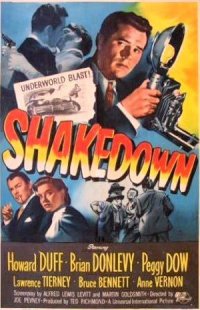
Shakedown (1950)

This January will be the Darkest Month in Coleman’s Corner.

For the month of January,  Alexander Coleman, from Coleman’s Corner in Cinema will be the guest of  Dark City Dame at  Noirish City, where he will be talking noir and selecting noirs for review on his blog.

This event will be a fitting lead-up to the Noir City 7 Film Noir Series in San Francisco from January 23 to February 1, which will have a newspaper theme –  visit the Noir City site for full details.  Alexander will don fedora and trench-coat to report direct from Noir City for Dark City Dame.

Ann Savage: Postcript

Detour (1945)

I have come across two interesting video clips on YouTube. The first features a short interview with Ms Savage about Detour from a documentary on the film’s director Edgar G. Ulmer.  The second is the official trailer for My Winnipeg.  Of interest also is Eddie Muller‘s book Dark City Dames: The Wicked Women of Film Noir which has a chapter on Ms Savage based on a mid-90s interview.

Ann Savage Dead at 87

Ann Savage - Detour (1948)
“Say who do you think you’re talking to – a hick? Listen Mister, I been around,
and I know a wrong guy when I see one. What’d you do, kiss him with a wrench?

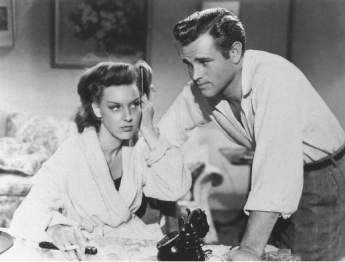
Ann Savage, who played the dark dame, Vera, in Edgar G. Ulmer’s cult noir Detour (1945), has died aged 87.

Her Hollywood career had largely been over since the mid-1950s, but she had a resurgence over the past year with a starring role in Canadian cult filmmaker Guy Maddin’s My Winnipeg. Starting with her 1943 debut in the crime story One Dangerous Night, Savage made more than 30 films through the 1950s, including the Westerns Saddles and Sagebrush and Satan’s Cradle, musicals  such as Dancing in Manhattan and Ever Since Venus, and wartime stories like Passport to Suez (AAP).

When announcing her passing,  Savage’s manager, Kent Adamson said of her performance in Detour:

It’s actually a showcase role… [Tom] Neal and Savage really reversed the traditional male-female roles of the time. She’s vicious and predatory. She’s been called a harpy from hell, and in the film, too, she’s very sexually aggressive, and he’s very, very passive. It’s very unusual for a 40s film to have a woman come on that strong.

The Time Out Film Guide says of Detour:

Neither pure thriller nor pure melodrama (though it has its true complement of doomed lovers, dead bodies, and a cruel sexual undertow), on an emotional level it most resembles the wonderful purple-pulp fiction of David Goodis. Passion joins with folly to produce termite art par excellence.

Detour is in the public domain, and can be viewed below.

[veoh]http://www.veoh.com/videos/v9268445jrF3f3C[/veoh]


“The B List” in Paperback

The Well (1951)

The B List: The low-budget beauties, genre-bending mavericks, and cult classics we love (Da Capo Press. $15.95. 288 pages), edited by David Sterritt and John Anderson, has been released as a paperback. The book is organised by genre – film noir, road movies, horror movies etc. Contributors include the Village Voice’s J. Hoberman, Newsweek magazine’s David Ansen, Salon’s Stephanie Zacharek, Roger Ebert and others.

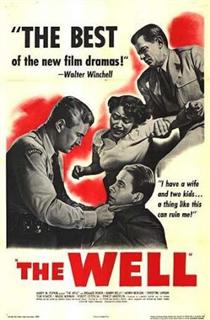
The Noir section is fairly predictable, though The Well (1951) is a new one for me.  I see King Greole (1958) is included under a rock movies section, though it could also be seen as having noir elements, and for me is  Elvis Presley’s best movie (I am a closet Elvis fan).

You can check out the contents in full at Amazon.

Wierd Science…

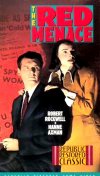
The Red Menace (1948)

Tomorrow evening the University of Maryland will host a debate headlined The Un-Americaness of Film Noir. The background provided by the University is certainly interesting:

Jonathan Auerbach’s book in progress Dark Borders offers a political reading of American film noir as a Cold War genre centrally concerned with redefining citizenship. It begins with questions of affect and aesthetics–the strange tone of disenfranchisement or non-belonging that haunts so many of these mid-century crime movies. Freud’s notion of the unheimliche links the uncanny mood of these important films with fears that “Un-Americans” and un-American values might overtake or undermine the homeland. These anxieties surface during a series of wartime and post war emergency measures, beginning with the anti-sedition Smith Act (1940), the Mexican migrant worker Bracero Program (1942), the domestic internment of Americans of Japanese ancestry (1942), and the HUAC hearings in 1947 that sought to criminalize native-born communists (the CPUSA). This talk will be discussing one key scene in the anti-communist film The Red Scare (1949) in conjunction with a little-known but very striking movie (arguably the first film noir) Stranger on The Third Floor (1940), starring Peter Lorre, that imagines the rule of fascist law in the USA and that conceives of madness as a foreign country.

Wild stuff!  More info here.

Noir City 2009 Program

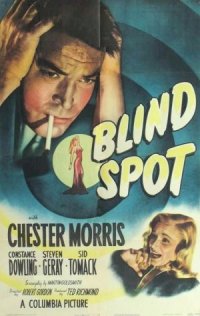
Blind Spot (1947)

Thanks to Dark Cty Dame for advance details of the program for NOIR CITY 7, the 2009 San Francisco Film Noir Festival, to be held January 23–February 1, 2009, at the Castro Theatre, and which will have a newspaper theme:

Friday, January 23
Deadline USA (1952)
Scandal Sheet (1952)

Saturday, January 24
Matinee:

Chicago Deadline (1949)
Blind Spot (1947)
Evening show (with Arlene Dahl):
Slightly Scarlet (1956)
Wicked as They Come (1956)

Sunday, January 25
Ace in the Hole (1951)
Cry of the Hunted (1953)

Monday, January 26

Alias Nick Beal (1949)
Night Editor (1946)

Tuesday, January 27

The Harder They Fall (1956)
Johnny Stool Pigeon (1949)

Wednesday, January 28

While the City Sleeps (1956)
Shakedown (1950)

Thursday, January 29

The Big Clock (1948)
Strange Triangle (1946)

Friday, January 30
The Unsuspected (1947)
Desperate (1947)

Saturday, January 31
Matinee:
Two O’Clock Courage (1945)
Beyond a Reasonable Doubt (1956)
Evening show:
One False Move (1992)

Sunday, February 1

Shock Corridor (1963)
The Killers (1946) (newly restored)

Full details to be announced.

Film Noir Notes: New Melville DVDs and San Francisco Noir Locales

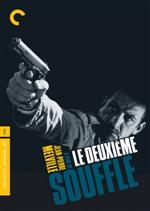
Le Deuxième Souffle (1966)

New Melvillle DVDs from Criterion
Criterion has released two new DVDs from French director, Jean-Pierre Melville: Le Doulos (1962) and Le Deuxième Souffle (1966).  Read the reviews at IFC Film News.

Virtual Tour of San Francisico Noir Locales
At 7:30 p.m. Nov. 11 the San Francisco Film Society’s creative director, Miguel Pendás, will take you on a virtual tour of “the ritzy homes of the rich on Nob Hill to the sleazy dives of the working class on the Embarcadero to see where some of the classic moments of 1940s and 1950s cinema were set” and explore  shooting locations of classic noirs such as Dark Passage, The Lady from Shanghai, Born to Kill, Sudden Fear, and The Maltese Falcon. Guest speaker Eddie Muller will provide an historical context and talk about his favorite San Francisco noir locations. Full Details

German Expressionism: New DVD Collection

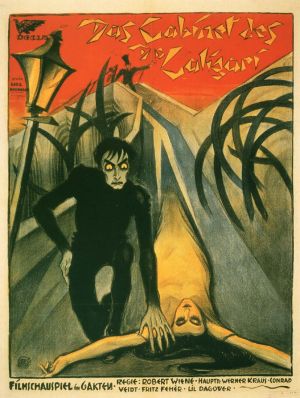
Cabinet of Dr. Caligari

Kino has released a 4-DVD box set titled German Expressionism Collection, which includes four silent classics from the period of German expressionism, which some film scholars consider is the genesis of the dark shadowy look of film noir.

The four titles are:

The Cabinet of Dr. Caligari (1920) Directed by Robert Wiene
Warning Shadows (1923) Directed by Arthur Robison
The Hands of Orlac (1924) Directed by Robert Wiene
Secrets of a Soul (1926) Directed by G.W. Pabst

The Hands of OrlacSecrets of the Soul

The release is reviewed here by Justin DeFreitas of The Berkely Daily Planet

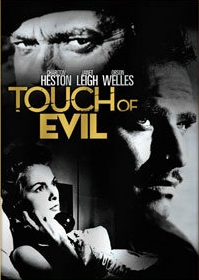
Touch Of Evil Restoration

Touch of Evil (1958)

Glenn Erickson has posted on Film.com a review on the 50th Anniversary DVD Edition of Orson Welles’ Touch Of Evil (1958).

Erickson provides some fascinating background on the film’s production and its restoration 40 year later.

Jean Gabin Retrospective

La bête humaine (1938)

Thanks to the mysterious Dark City Dame for a heads up on these screenings.

The American Cinematheque will this weekend (Sept 6-7) at The Egyptian Theatre, 6712 Hollywood Boulevard in Hollywood, screen four films starring French screen legend, Jean Gabin, under the banner Jean Gabin: The World’s Coolest Movie Star:

The Sicilian Clan (Le Clan Des Siciliens), 1969, 20th Century Fox, 118 Min
Moontide¸ 1942, 20th Century Fox, 94 Min
House On The Waterfront (Port Du Désir), 1955, 94 Min. Dir. Edmund T. Gréville
Grisbi (Touchez Pas Au Grisbi), 1954, Rialto Pictures, 88 Min. Dir. Jacques Becker

The full schedule and trailers are available here.

Apropos Jean Gabin – my favorite French tough guy – he starred in most of the poetic-realist French movies of the 30s, which were really the pre-cursors of Hollywood noir.  As Geoff Mayer and Brian McDonnell say in their book, Encyclopedia of Film Noir (Greenwood Press 2007): “in these movies an ironical poetry was found in the everyday: hence the term poetic realism. The iconography of the cycle included the shiny cobblestones of nighttime Parisian streets (the faubourgs), the shadowy interiors of neon-lit nightclubs, and the moody, haunted, doom-laden faces of actors such as Jean Gabin. As well as inspiring Hollywood film-makers, who viewed them admiringly, some of these French films were actually remade as American noirs, for example, Le Chienne (1931) was remade as Scarlet Street (1945), La bête humaine (1938) as Human Desire (1954), Pépé Le Moko (1937) as Algiers (1938), Le Jour se lève as The Long Night (1947), and Le Corbeau (1943) as The Thirteenth Letter (1951).”

I saw La bête humaine a few years back and it is everything we would expect in a film noir of the 40s with a really downbeat ending.