The Harder They Fall (1956): For a few lousy bucks

The Harder They Fall (1956)

In his last role, Humphrey Bogart, as an aging down-on-his-luck sportswriter, is drafted into fronting for a mob-controlled boxer. ( Dir. Mark Robson 109 mins)

After a stunning opening which tracks a series of cars heading to a New York boxing studio, The Harder They Fall, lapses into a visually mediocre boxing movie.  Strong performances from a haggard Bogart, who died not long after completing the picture,  and Rod Steiger as the mobster, keep the interest up, but overall the picture is flat and unmoving.

Bogart’s redemption comes too late and reluctantly, and seems shallow after the avoidable death of a punch-drunk boxer in which he is complicit.

What is interesting is the inclusion of fight fans in the denunciation of the “sport”. Bogart tells the boxer Toro when trying to persuade him to throw his championship fight to avoid getting hurt:

What do you care what a bunch of bloodthirsty, screaming people think of you?  Did you ever get a look at their faces? They pay a few lousy bucks hoping to see a man get killed. To hell with them! Think of yourself. Get your money and get out of this rotten business.

Another cynical touch is the scene where the mob “accountant” insists on itemising the “deductibles” from the million dollar take on the fight leaving the hapless boxer with $49.07 after “overheads”.

Factual Note: The interview on skid-row of real-life ex-boxer, Joe Greb, was not scripted or rehearsed.

The Harder They Fall (1956)

The Dark Cinema of David Goodis Series

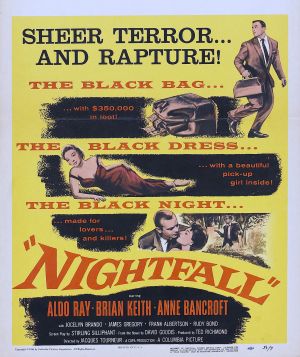
Nightfall (1957)

Streets of No Return: The Dark Cinema of David Goodis will run from August 1 – 23 at the Pacific Film Archive. Kelly Vance in a feature in today’s East Bay Express, previews the program and gives a short biography of Goodis.

The films to be shown:

And Hope to Die
The Burglar
The Burglars
Dark Passage
Descent into Hell
Nightfall
The Professional Man x Two
Shoot the Piano Player

The Unfaithful

There is a full program at the Archive’s web site.

Body and Soul (1947): “Everybody dies”

Body and Soul (1947)

“A knockout on all levels. In what’s probably the greatest performance of his career, John Garfield portrays Charlie Davis, a Jewish prizefighter who quickly rises to the top of the heap, only to fall hard and fast. Robert Rossen‘s direction is superb, and the marvelous photography of James Wong Howe and the Oscar-winning editing by Robert Parrish set a whole new standard for fight pictures.”

TV Guide

“With its mean streets and gritty performances, its ringside corruption and low-life integrity, Body and Soul looks like a formula ’40s boxing movie: the story of a (Jewish) East Side kid who makes good in the ring, forsakes his love for a nightclub floozie, and comes up against the Mob and his own conscience when he has to take a dive. But the single word which dominates the script is ‘money’, and it soon emerges that this is a socialist morality on Capital and the Little Man – not surprising, given the collaboration of Rossen, Polonsky (script) and Garfield, all of whom tangled with the HUAC anti-Communist hearings (Polonsky was blacklisted as a result). A curious mixture: European intelligence in an American frame, social criticism disguised as noir anxiety (the whole film is cast as one long pre-fight flashback).”

– Time Out

“It is Canada Lee, however, who brings to focus the horrible pathos of the cruelly exploited prizefighter. As a Negro ex-champ who is meanly shoved aside, until one night he finally goes berserk and dies slugging in a deserted ring, he shows through great dignity and reticence the full measure of his inarticulate scorn for the greed of shrewder men who have enslaved him, sapped his strength and then tossed him out to die. The inclusion of this portrait is one of the finer things about this film.”

– Bosley Crowther, The New York Times, November 10, 1947

Body and Soul is one of the great movies of the 40’s.  The powerful screenplay by Abraham Polonsky is brought to the screen with an authority and beauty that is still breathtaking. From the editing to the photography and direction, the film is a work of art.  Throughout the picture, from the opening scene of the empty boxing ring and the fluid use of flashback and dreaming to the sensational fight climax, there is an assured elegance and, most profoundly, a freedom of expression that is rarely matched.  (The film was made by Garfield’s independent Enterprise Pictures.  Sadly, after one more great noir film, Force of Evil (1948), where the numbers racket came under the spotlight, and starring John Garfield with  the screenplay and direction by Polonksy, the company folded.)

The essential quality of Body and Soul is integrity: a masterwork by craftsmen committed not only to their craft but to film as social critique.  On one level the picture is a brilliant melodrama and exposé of the fight game, and on another level a savage indictment of money capitalism where the individual has only commodity value, and the artisan and worker is owned body and soul by the capitalist. The boss and the laborer, even the crooked fight promoter and the boxer, are in antagonistic relations of production dictated by the market. When Charlie Davis in an heroic act of rebellion, in finally refusing to throw his last fight, breaks the chains of greed that bound him to a venal, shallow and alienated existence, his action is a subversive challenge not only to the crooked capitalist but to the false imperative that dictates he should act only in his material self-interest. By rejecting this false consciousness he not only exposes himself to retribution but to penury.  In the final words in the movie, spoken by Garfield to the promoter, he throws down the revolutionary gauntlet in an ironic play on the words “everybody dies” used by the promoter in an earlier scene when he writes off the life of the black boxer Ben:

Charlie: Get yourself a new boy. I retire.
Roberts: What makes you think you can get away with this?
Davis: What are you gonna do? Kill me? Everybody dies.

The final sad irony is the destruction of the careers of Polonsky and Garfield, and Canada Lee, who plays the black boxer Ben, by the HUAC which-hunt only a few years later.  Garfield died prematurely in 1952 at the age of 39 as the HUAC blacklist finally took its toll on his ailing health.


Body and Soul (1947)

New Book on Edgar G. Ulmer

Edgar G Ulmer

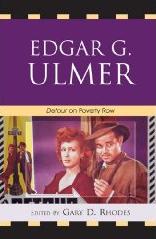
A new book on the work of Poverty-Row director, Edgar G. Ulmer, who made the cult b-noir, Detour (1945), was released in May.

The book, Edgar G. Ulmer: Detour on Poverty Row, was reviewed today by Michael H. Price in the Fort Worth Business Press:

[In] Edgar G. Ulmer: Detour on Poverty Row … Editor [Gary D.] Rhodes and a well-chosen crew of contributing writers consider Ulmer in light of not only his breakthrough film, 1934’s The Black Cat at big-time Universal Pictures, or such finery-on-a-budget exercises as Bluebeard (1944) and Detour (1945), but also Ulmer’s tangled path through such arenas as exploitation films (1933’s Damaged Lives), Yiddish-language pieces (1937’s Green Fields), well-financed symphonic soap opera (1947’s Carnegie Hall), and ostensible schlock for the drive-in theaters (1957’s Daughter of Dr. Jekyll)… A perceptive chapter from Christopher Justice wonders aloud whether the writer-director might be considered “the godfather of sexploitation,” in view of the “new aesthetic terrain and … core prototypes” that can be observed in such films as Damaged Lives and Girls in Chains (1943) and The Naked Venus (1958)… Tony Williams regards Ulmer as an advancer, rather than a follower, of the “psychobiography” approach that Orson Wells had defined with Citizen Kane in 1941 — on the evidence of an often-maligned, oftener-ignored Ulmer picture called Ruthless (1948). (Ruthless stars Zachary Scott as an industrialist who might make Welles’ Charles Foster Kane look like Rebecca of Sunnybrook Farm by comparison.)

The Naked City: Weegee’s NY Noir Nightscape

Weegee

This weekend’s New York Times New York Explorer feature, Crime Was Weegee’s Oyster, spotlights the life, times, and photography of 30s and 40s freelance crime and street photographer, Arthur Fellig, better known as “Weegee”, and one of the city’s most famous photographers:

Weegee’s peak period… was a whirl of perpetual motion running from the mid-1930s into the postwar years. Ceaselessly prowling the streets during the graveyard shift, he took thousands of photographs that defined Manhattan as a film noir nightscape of hoodlums and gangsters, Bowery bums and slumming swells, tenement dwellers and victims of domestic brawls, fires and car crashes. He gave it its enduring nickname, the Naked City.

The on-line article features a slide-show of Weegee’s photographs and a video exploration of the New York locales where the photos were taken.

Update 20 June 2008: Today the NY Times published a Weegee Primer with a source list books, movies, NY locales, and a link to the INTERNATIONAL CENTER OF PHOTOGRAPHY‘s Weegee Web site, which features other photos and audio clips.

Woody Haut’s Blog: Noir Fiction and Film

I Wake Up Screaming

For those of you interested in the writers of noir fiction and the Hollywood screen-writers who penned the movies of the classic noir period, a visit to Woody Haut’s Blog is strongly recommended. Woody Haught is a journalist and the author of Pulp Culture: Hardboiled Fiction and the Cold War, Neon Noir: Contemporary American Crime Fiction, and Heartbreak and Vine: The Fate of Hardboiled Writers in Hollywood.

His essays are well-written and provide some fascinating insights. These sample posts should be of direct interest to readers of FilmsNoir.Net:

filmsnoir.net: AMC TV Site of the Week

AMCTV.COM

I was recently interviewed by Christine Fall of AMCTV.com about FilmsNoir.Net and her write-up of our discussion has today been posted under the AMC Site of the Week banner.

Check out the article for some background on me and why I started FilmsNoir.Net.

Metropolis Now: Dystopia and Sci-fi Noir

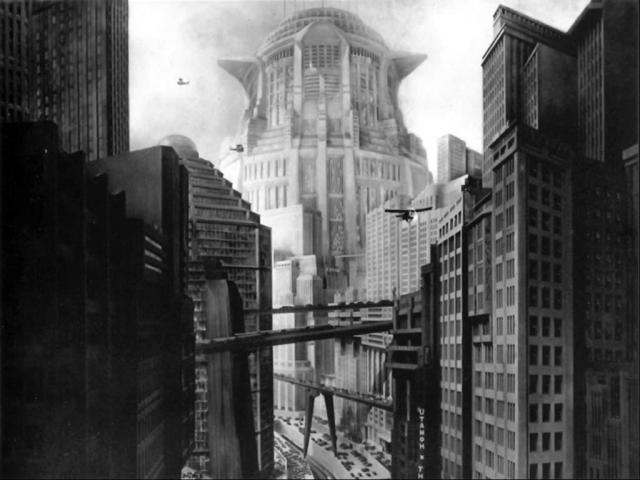
Metropolis (1927) Tower Of Babel

Metropolis (1927) Tower Of Babel

New York Times film critic, A.O. Scott has written a great article in this weekend’s NYT magazine: The Way We Live Now: Metropolis Now, in which he discusses the cinematic prophecies concerning the city as urban space in science fiction and the influence of film noir on the genre:

Architects and planners are by professional inclination both practical-minded and utopian. Their job is to solve problems, to ground their projects in collective hopes for a grander, cleaner, more rational organization of human space. The long-term results of their efforts, however, are typically ambiguous, yielding new problems on top of solutions. For much of the past century, the job of imagining the worst possible outcomes of their good intentions — of assessing the radically dystopian implications of urban progress — has fallen to film directors and production designers. They invent the city of the future not as a model but as a cautionary tale; and their future is the only future we know firsthand…

Scott goes on to discuss Fritz Lang’s Metropolis (1927), the science fiction noir Alphaville (Jean-Luc Godard 1965), and the more recent Blade Runner, Minority Report, and Code 46.

The Big Sleep (1946): Love’s Vengeance Lost

The Big Sleep 1946

Howard Hawks’ The Big Sleep is one of the truly great Hollywood pictures: the Raymond Chandler novel is brought to the screen with panache and authority, and the chemistry between Bogart and Bacall is unsurpassed.

While the protagonist lovers are good guys and there is no femme-fatale, the movie has a strong noir aura. The darkly lit atmosphere and strong sexual tension shape our response to a grim and dissolute nether world where PI Philip Marlowe doggedly solves an enigma within a mystery, in a plot so convoluted not even the film-makers fully understood it.

The picture is essentially a love story where the lovers must overcome mutual distrust and risk all to escape a brutal nightmare of betrayal and death. The Big Sleep is a lot darker than the earlier Murder, My Sweet (aka Farwell, My Lovely – 1944). The Marlowe of The Big Sleep is tougher, more driven, and morally suspect.

I find the actions of Marlowe in the final reel disturbing. He is almost a proto-Dirty Harry. Clearly shaken by the death by poisoning while he stood by of the small-time hood who leads Marlowe to the final showdown, Marlowe responds with vengeful brutality in the shootout with the goon, Canino, and then in the final scene when he confronts the crooked casino-operater, Eddie Mars.

While the killing of Canino at a stretch can be put down to self-defense, there is no moral justification apart from vengeance in the way Marlowe engineers the death of Eddie Mars – the killing is gratuitous and was not the only way out for Marlowe and Vivian. It is this final scene that marks The Big Sleep as a film noir. Marlowe has survived and got the girl – but at what cost?

Dalton Trumbo: Blast from the Past

A documentary, Trumbo (2007),  on HUAC-blacklisted screenwiter, Dalton Trumbo, who penned the noirs, The Prowler (1951) and The Brothers Rico (1957), opens in NY and LA on June 27. Scripted by Trumbo’s son, and based on letters from his father, this movie is said to be a highly emotive account of the years Trumbo spent in exile:

A number of celebrities take turns narrating from the script, including [Nathan] Lane, Paul Giamatti, Brian Dennehy, Donald Sutherland and others. As a visual accompaniment, the film intercuts home movie footage from the Trumbos’ lives, incisive interview material with Trumbo, his family, friends and collaborators; and haunting glimpses of the HUAC trial hearings with the Hollywood Ten, led by Senator Joseph McCarthy; as well as extracts from The Sandpiper, Johnny Got His Gun, Spartacus and other productions authored by Trumbo. Peter Askin, who helmed the stage play, directs.

– Nathan Southern, All Movie Guide

Update 27 June 2008: In today’s NY Times Stephen Holder reviews Trumbo in an interesting article that looks basck at the dark days of the HUAC in the early 50’s:

Trumbo emerges as a fervently resolute, highly literate man of principle who, along with the other members of the Hollywood Ten, cited the First Amendment, protecting free speech, and not the Fifth, protecting self-incrimination, as his defense…If only the movers and shakers of Hollywood…  had stood together like the slaves in “Spartacus” and all claimed to have been Communists, the blacklist might have been averted. But they didn’t. Fear can make people instant cowards and informers. Resisting it may be the ultimate test of character. Today few would dispute Trumbo’s assessment of that very dark period: “The blacklist was a time of evil, and no one who survived it on either side came through untouched by evil.”