I just discovered this wonderful NY movie poster house.
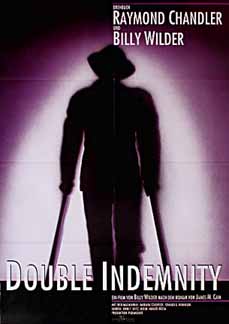
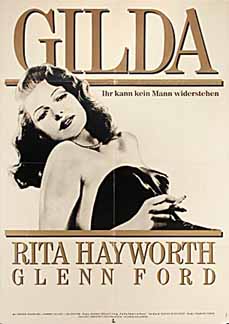
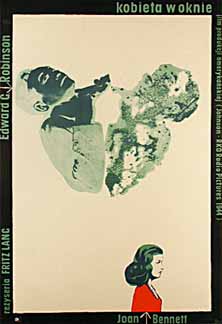
Their collection of original noir posters is truly magnificent, and includes many foreign posters. Prices are very reasonable. Check out these samples:



FilmsNoir.Net – all about film noir
the art of #filmnoir @filmsnoir.net | Copyright © Anthony D'Ambra 2007-2025
I just discovered this wonderful NY movie poster house.
Their collection of original noir posters is truly magnificent, and includes many foreign posters. Prices are very reasonable. Check out these samples:

In this week’s post mardecortesbaja.com explores a maze with no center, featuring references to Nightmare Alley (1947) and The House On 92nd Street (1945).
Source: Don Renfroe, News Editor, Albuquerque Tribune, Friday, June 15, 2007
Don Renfore’s all-time top 10 noirs:
Any debate among film noir fans will ultimately include the phrase, “That’s not a film noir!”
The genre’s definition is broad, but almost any aficionado would agree on these 10 must-sees.
For novices, seeing all or most of this list will provide a basic education in the dark, wonderful dread that is film noir. Here they are, in no particular order.
Out of the Past (1947). A stellar cast featuring Kirk Douglas, Robert Mitchum and Jane Greer take viewers down a very dark dream of gangster murder and double-dealings. Directed by Jacques Tourneur. The dialogue is poetic; the cinematography is lush.
Detour (1945). Some call this B-picture the beginnings of true American noir. Hitchhiking leads to no good in this cheapie directed by Edgar G. Ulmer. Tom Neal (you’ve never heard of him) is the pawn of a femme fatale played by Ann Savage (and you’ve never heard of her, either). An overwhelming sense of fate and powerlessness permeates the film.
The Killers (1946). Burt Lancaster, in his film debut, plays a boxer who waits in his dingy room to be assassinated by thugs. How he got there is told in flashback. Look for great performances by the ravishing Ava Gardner in one of her early roles.
Kiss Me Deadly (1955). An early adaptation of Mickey Spillane’s Mike Hammer series. Robert Aldrich directs Ralph Meeker as Hammer. Violent, fast-paced and with a wacky plot involving a nuclear device and an atomic dame or two. Watch early in the film for Cloris Lechman in a minor part. And the cars are great.
Double Indemnity (1944). I can’t add much to all that has been written about Billy Wilder’s masterpiece except that, if you haven’t seen it, hop the nearest train and get to a video store. The script is sterling, and so are all the principals: Fred McMurray, Barbara Stanwyck and Edward G. Robinson. My favorite is Stanwyck’s lout of a husband, who deserves what he gets.
Gun Crazy (1949). Bang! Bang! The lady loves to shoot! Peggy Cummins steals the show in this Bonnie and Clyde-ish tale of two bank robbers on the run. In shooting the first heist, director Joseph H. Lewis placed the camera in the back seat of the getaway convertible so that it feels like we’re escaping with them. John Dahl plays a man who worships guns and his girl. From the outset, you know how this one is going to end, but it doesn’t matter.
Brute Force (1947). Nasty prison breakout flick stars Burt Lancaster and a host of first-rate character actors. Hume Cronyn, later of “Cocoon” fame, is the warden, a real jerk you love to hate…
Rififi (1954). One of the first caper movies. This French masterpiece, directed by Jules Dassin, has all the components we’ve come to expect: the selection of the gang, all of whom have special talents; the heist explained for their benefit and ours; and the actual robbery, which in this case takes place in total silence.
Laura (1944). Otto Preminger directs Dana Andrews as a detective trying to uncover the mystery of who killed the woman in the painting. Clifford Webb is excellent as the newspaper columnist/foil…
Touch of Evil (1958). Arguably the best of the lot, this movie had everything going against it before the first scene was shot. A bloated Orson Welles wanted it to be his comeback as a director; Charlton Heston was taking a big chance in the lead (as a Mexican!); the script was full of borderline super-sleaziness. But Welles, who also stars as a corrupt American cop investigating a homicide literally on the border, makes it all work. Fun, nasty, with not a spare frame in the whole picture. Pay attention to the opening scene, one of the longest long shots in movie history.
Ten minutes into Out of the Past, when Jeff picks-up Ann for the trip to Lake Tahoe to meet with Whit, and during which Jeff begins to tell Ann about his mysterious past in flashback, Jeff opens the car door for Ann, and while he moves to the driver side and takes the wheel, the director, Jacques Tourneur, frames Ann alone inside the divided windscreen of the car for a full 10 seconds.

It is early morning and the scene is dark with foreboding, as Jeff’s past races to catch up with him. By framing Ann alone in the car, with the dividing upright of the car windscreen closing the frame and excluding Jeff from the scene, Tourneur precisely conveys the relationship as doomed.
This is a master craftsman at work.
Tourneur’s other Hollywood noirs include:
Experiment Perilous (1944)
Berlin Express (1948)
Nightfall (1957)
Download these original radio broadcasts featuring the original cast and director’s commentary from mystery.otr.net:
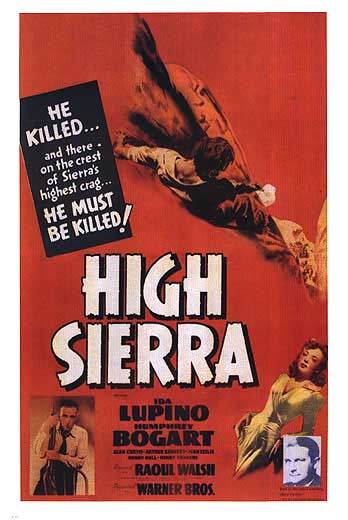
Humphrey Bogart and Ida Lupino in the Screen Guild Theater’s production of High Sierra, April 17, 1947.
Radio Film Noir Episode 12
Orson Welles, reprises his role as Harry Lime, in The Adventures of Harry Lime, The Golden Fleece Oct 12, 1951.
Radio Film Noir Episode 11
The Lux Radio Theater production of The Third Man, starring Joseph Cotten, Apr 09, 1951.
Radio Film Noir Episode 10
The Screen Director’s Playhouse production of Life Boat, Nov 16, 1950.
Radio Film Noir Episode 9
The Maltese Falcon Jul 03, 1946 starring Humphrey Bogart and Sidney Greenstreet.
Radio Film Noir episode 8, presents Lux Radio Theater production of Gaslight
Radio Film Noir Episode 7
Lux Radio Theater Manhattan Melodrama Sep, 09, 1946.
Radio Film Noir Episode 6
The Screen Director’s Playhouse version of The Big Clock, starring Ray Milland.
Radio Film Noir Episode 5
Screen Director’s Playhouse Spellbound Mar 08 1948 starring Joseph Cotton.
Radio Film Noir Episode 4
Burt Lancaster in the Screen Directors production of Criss Cross Oct 10, 1949.
Radio Film Noir Episode 3
The Lux Radio Theater production of The Woman In The Window Jun 25, 1945 starring Edward G Robinson.
Radio Film Noir Episode 2
Shadow of A Doubt starring Joseph Cotton from the Academy Award series Sep 11, 1946.
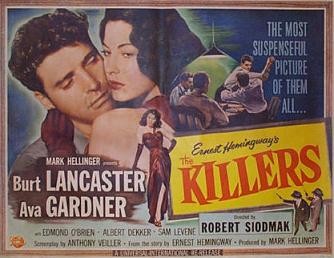
Screen Director’s Playhouse, The Killers
Radio Detective Story Hour Episode 83 – Screen Director’s Playhouse
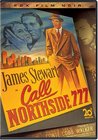
Newspaperman as detective as Jimmy Stewart (right) turns detective as he tries to solve a miscarriage of justice. A radio play based on Call Northside 777.

I am responsible for everything … except for my very responsibility, for I am not the foundation of my being. Therefore everything takes place as if I were compelled to be responsible. I am abandoned in the world … in the sense that I find myself suddenly alone and without help, engaged in a world for which I bear the whole responsibility without being able, whatever I do, to tear myself away from this responsibility for an instant.
– Jean Paul Sartre, ‘Being and Nothingness’ (1943) [my emphases]

Debbie Marsh is an existential hero, as are the other major femmes in Fritz Lang’s brooding noir, The Big Heat (1953), the murdered barfly and the caryard clerk, who each take responsbility and act.


Distribute This! Blast of Silence (Allen Baron, 1961, U.S.A.) This missing noir masterpiece enters the canon in first place.
Nightmare Alley Set in a cheesy carnival, the film presents an unforgettable galleryof grotesques whose lives intertwine romantically, criminally, and, ultimately, fatally.
On Commies, Stoolies,and Assorted Lowlife: Pickup on South Street on DVD While Widmark and Peters turn up the heat, Thelma Ritter steals the show in this seminal noir, now on DVD.
“I Like His Face”: Nicholas Ray’s Noir Classic [In A Lonely Place] Restored on DVD Do you like his face?
TheNot-So-Straight Story: David Lynch’s Mulholland Drive It’s just Lynch being Lynch. And that’s a good thing.
Edgar G. Ulmer’s Detour Detour (1945) has one of the more convoluted plots in noir, packing a flashback structure, an extended voiceover, a cross-country trek, a mysteriousdeath, an “accidental” murder, an identity exchange, an unforgettable femme fatale, and one of the most pathetic, masochistic antiheroes ever into its 67-minute running time.
Fritz Lang’s M The roots of noir go back to German Expressionism, and there’s no movie that’s more German, Expressionist, or noir than Fritz Lang’s masterful M (1931).
High Gallows: Out of the Past Jacques Tourneur’s riveting 1947 film noir, usually rankedas one of the best of the genre.
Percolating Paranoia: Fritz Lang’s The Big Heat Fritz Lang brings the terrors of noir into the bright kitchens of America.
Detours and Lost Highways: A Map of Neo-Noir A review of Foster Hirsch’s book on neo-noir.
L.A. Confidential The only things not taken from Chinatown are a post-plastic-surgery makeup job from The Long Goodbye and that gag from “The Lucy Show” where Lucy meets Orson Welles but doesn’t believe it’s really him: “Why, these fake whiskers wouldn’t fool a child!”
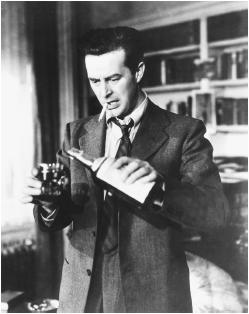
In The Lost Weekend
Not so trivial Trivia: The liquor industry offered Paramount a cool US$5 million to bury the movie before its release…

Another interesting post from the mardecortesbaja.com blog:
Nicholas Ray’s On Dangerous Ground is a problematic film noir on many grounds but in an odd way it helps define the genre. More precisely, it helps us realize that film noir isn’t really a genre at all but a way of identifying a particular strain of post-WWII dread as it came to infect many different kinds of film…

From a review by Jamie S. Rich of DVD Talkof the just released Katharine Hepburn 100th Anniversary Collection DVD Box Set (Warner Bros. US$59.95)
Undercurrent has started to pick up a bit of a reputation as a film noir. I first heard of the film last year when it played as part of a noir festival at the Northwest Film Center. I’m not really sure it qualifies, however, unless we can establish a subgenre of women’s noir. The plot has more in common with Victorian melodramas like Wuthering Heights and the work of Daphne Du Maurier (and her frequent adapter Alfred Hitchcock) than it does the moody expressionism of Fritz Lang or Jules Dassin. Genre hair-splitting aside, however, I found Undercurrent to be absolutely riveting. [Director Vincent] Minnelli creates a palpable sense of foreboding that lingers over the picture, ratcheting up the suspense each time Anne finds something new to cause her to doubt her husband’s story only to be placated by his wily explanations. You just know that eventually one of these things is going to be too large for him to erase, and then Anne is going to be in real trouble.”
Robert Mitchum has a supporting role.



 FilmsNoir.Net - all about film noir