Decoy (1946): B- Psuedo-Noir

Decoy (1946)

A B- crime movie with noir pretensions. An overblown plot, average acting, and pedestrian direction add up to another camp oddity like Detour (1945), despite a fair effort by Jean Gillie as the maniacal femme-criminale.

Beats me why it has cult status for some.

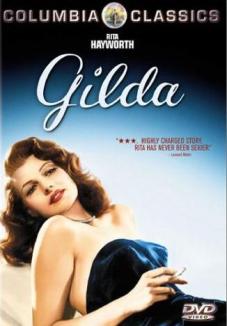
Gilda (1946): Lovely Rita…

Gilda (1946)

“if i had been a ranch, they woud have named me ‘Bar Nothing’ …”

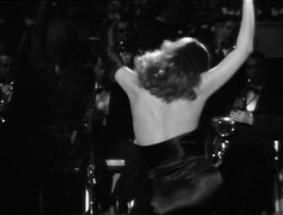
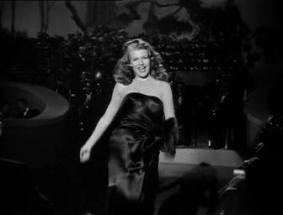
Aptly titled, this film is all about Rita Hyaworth’s Gilda: forget the weak story and the plot holes, just marvel at the beauty and charisma of this woman. She dances, she struts, she pouts, and she acts with passion and flair!

Gilda (1946)Gilda (1946)

And forget it if you are looking for a film noir: it is not. As a film it ranks with flawed gems like Beat The Devil – it just doesn’t add up but you have a helluva time anyway.

The Cabinet of Dr Caligari (Germany 1919)

Caligari

This bizarre and hysterical silent film, an early entry in the horror genre from director, Robert Weine, is seen by many as the genesis of expressionist cinema, which flourished in Germany in the 1920’s, and in turn influenced the stark lighting associated with Hollywood film noir. Fritz Lang had some early involvement with the film, but this was in the planning stages.

The Cabinet of Dr Caligari (Germany 1919)The Cabinet of Dr Caligari (Germany 1919)

But I support the heretical view that the expressionist connection is tenuous. The sets are staged distortions with shadows painted on, and the action filmed using flat internal lighting and a static camera center-stage. The film has little if any relevance to film noir in theme or filmic technique, apart from the use of flashback within a flashback.

Stray Dog (Japan 1949): Kurosawa 5-star Noir

Stray Dog (Japan 1949): Kurosawa 5-star Noir

After a rookie cop loses his gun to a pickpocket in a crowded bus on a steamy Summer day, he begins an obsessive search for the weapon.

Akira Kurosawa’s 10th film, Stray Dog(aka Nora inu), directly inspired by Jules Dassin’s The Naked City (1948), explores the nether world of post-WW2 Japan in a story that parallels the American noir theme of the returning soldier’s re-integration into civilian society. Top-line acting, innovative editing, and Kurosawa’s deft direction bring the real streets of Japan into deep focus. A western soundtrack reinforces, for a western audience, the familiarity of the urban milieu depicted on the screen, where hotel signs and night club neon are in English.

Kurosawa uses the weather brilliantly to build an atmosphere charged with frustration, and most impressively in an erotic night club scene where exhausted chorus girls slump to the floor backstage breathing heavily their skin glistening with sweat.

Stray Dog (Japan 1949)Stray Dog (Japan 1949)

Contrary to received expectations, the female protagonists are drawn deeply and sympathetically.

The ying and the yang of the oriental take on reality informs the theme: two men’s different responses to a chance event underlie the story of pursuit tempered by empathy, and the realisation that the pursuer could as easily have been the pursued.

Stray Dog (Japan 1949)

Not to be missed.

The Glass Web (1953) :(

The Glass Web (1953)

Not even Edward G. Robinson can redeem this old chestnut. Two thumbs down.

711 Ocean Drive (1950)

711 Ocean Drive (1950)

Edmond O’Brien is solid as a LA telephone repairman who goes crooked.

711 Ocean Drive was made to cash in on a then-current national newspaper expose of bookmaking operations. It is a predictable B gangster movie that sits more comfortably with its 1930’s forebears. Definitely not a film noir – the guy goes bad without remorse or regret. You have to wait till the end to get an adrenalin fix, with a slam-bam chase and shoot-out at Boulder (aka Hoover) Dam.

For Edmond O’Brien fans.

71 711 Ocean Drive (1950)

The Dark Corner (1946)

The Dark Corner (1946)

“Save your lipstick, girls, he plays for keeps.” Secretary tries to help her PI boss, who is framed for a murder.

A solid B thriller melodrama, with Clifton Webb reprising his role as the obsessive older lover from the superior Laura (1944). Lucille Ball is entertaining as the wise-cracking secretary with smarts. Mark Stevens is ok as the gumshoe, and William Bendix is great as a hoodlum heavy.

But night scenes and expressionist lighting alone do not give you a film noir. Fun to watch and the soundtrack deepens the ‘night-life’ milieu of the after-dark scenes. Ms Ball looks good smoothing her size-9 nylons over those long legs while making snappy innuendo.

The Dark Corner (1946) The Dark Corner (1946)

Touch of Evil (1958) – Some Kind of a Movie

Touch Of Evil (1958)

From the breathtaking three minute opening tracking shot, which is featured below , you know you are in the realm of a master film-maker. Yet, there is a hiatus to follow and the portent of this amazing opening is not realised until the last 20 minutes of the film. Welles’ last masterwork is a disconnected emotionally remote study of moral dissipation. The crisp black and white photography of Russell Metty is forensic and can only be truly appreciated in a theatre or from a HD DVD.

The camera angles and lighting that Wells pioneered are abundant but this movie has no soul. Welles delivers an excellent performance as the dissolute sheriff, as does Joseph Calleia as his loyal deputy. Charlton Heston is miscast: a moustaclhe and dark make-up do not a Mexican make. His fractured Spanish is jarring. Marlene Dietrich is nicely enigmatic as the aging whore with soul, and Janet Leigh as the ingenue wife is engaging.

The film works best in the sleazy urban settings, where the contemporary music score adds depth.

This is not a film noir. Wells reprises his Citizen Kane mise-en-scene, but there is nothing in the story that even reaches the proximity of moral ambivalence or an existential dilemma, and it is certainly not populist cinema. It is ultimately a brilliant but flawed work of cinematic ‘art’.

Touch Of Evil (1958)

D.O.A (1950)

DOA (1950)

Mild-mannered accountant, Frank Bigelow, is poisoned and with only days to live starts a frantic search for HIS killer!

DOA is a taut thriller with a bravura performance from Edmond O’Brien as Frank Bigelow. From the Cardinal Pictures factory and directed by Rudolph Maté, this movie packs so much in 83 minutes. It starts off slow, but once the action shifts from a sleepy rural burg to San Francisco and LA, the pace is frenetic. The streets of these cities are filmed in deep focus, and there is a sense of immediacy in every scene.

Expressionist lighting accents the hysteria and panic as Bigelow desperately races against time to track down his killer. With a pot-boiler plot and a terrific hard-edged portrayal from O’Brien, this is not only a gritty on-the-streets in-your-face melodrama, but a nuanced film noir where a random innocent act is a decent man’s un-doing.

DOA (1950) DOA (1950)

The camera is used with abandon to visualise the traumatic whirlwind that Bigelow has been thrown into.

DOA (1950) DOA (1950)

An early scene in a bar just before Bigelow is poisoned, has the hottest period live jive music that I have seen on film. The music and the editing meld the drama of the story with the out-of-this world music from the black players for a total immersion into the wild soul of jazz. You need Jack Kerouac to even come close to describing the feelings evoked. A classic must-see adrenalin-fuelled film noir!

DOA (1950)

The saxophanist in this clip from DOA  is James E. Streeter, a native of Wichita Kansas, who got his start playing tenor sax in Lloyd Hunter’s territory band. Bandleader Johnny Otis took Streeter to Los Angeles in 1944. Enamored of director-actor Erich von Stroheim, Streeter billed himself as Von Streeter or James Von Streeter. In the late 1940s and early ’50s, he recorded for several labels, including Coral, as Von Streeter & His Wig Poppers, playing wild, honking R&B, and several members of this group accompanied him when he appeared as a wild, sweaty sax maniac in a key nightclub scene of the original D.O.A. (1950). However, for the soundtrack the producer overdubbed another band altogether, led by saxophonist Maxwell Davis, who would later be influential as a Los Angeles A&R man during the early rock ‘n’ roll era. Streeter’s career was derailed by heroin addiction, which eventually killed him in 1960. Source for bio of James E. Streeter: IMDB

This Gun For Hire (1942)

This Gun For Hire (1942)

One of the early “visual” noirs, This Gun For Hire, based on the novel by Graham Greene, weaves a war-spy story into a taught and moody thriller, with breakthrough performances by Alan Ladd and the luminous Veronica Lake. Director Frank Tuttle, who made the first The Glass Key(1935), uses expressionist-influenced lighting to excellent effect.

This Gun For Hire (1942) This Gun For Hire (1942)

This pre-noir clearly influenced French director, Jean-Pierre Melville, in his 1967 homage to film noir, Le Samourai, with Alain Delon, who shares not only Alan Ladd’s first name but an uncanny resemblance, in a similar story of a hit-man on the run. Le Samourai has a pet canary, while Ladd’s Raven has a pet cat. Even a dramatic rail bridge chase is copied by Mellville.

This Gun For Hire (1942)

This Gun For Hire, is an interesting melodrama, which tries to explain the origins of Raven’s pychosis in a scene where he opens up after responding to the gentle concern of the Veronica Lake character. While to a degree dated and despite a weak supporting cast, this picture leaves you with serious questions to ponder.

Highly recommended.