Noir Beat: Johnny O’Clock and more

 Johnny O'Clock (1947)

Lately I have been watching some old b’s that echo film critic Pauline Kael’s view that a “movie doesn’t have to be great… you can still have the joy of a good performance, or the joy in just a good line”.

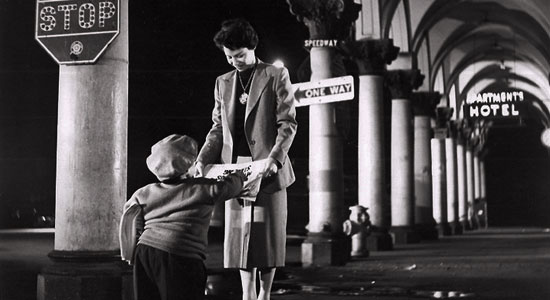
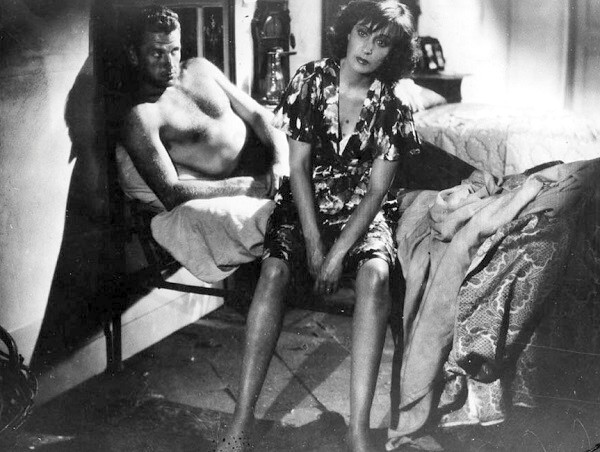
Robert Rossen’s first directing effort Johnny O’Clock (1947) – and he wrote the script – is a strange bird. The movie has a weird disconnected ambience that harkens back to Von Sternberg’s The Shanghai Gesture (1941). It is almost surreal in its distance from what happens inside the frame. Dick Powell leads as the junior partner in a gambling joint, reprising the hard-boiled persona he adopted in Cornered (1945) and Murder, My Sweet (1944). Add a murder, a conniving business partner, two dames, a crooked cop, and an honest cop, and you have a fairly solid mystery thriller that keeps you guessing. Rossen’s camera is nervous as you would expect in a novice effort, and keeps making jumpy moves and self-conscious pans, but he keeps the scenario taught. The dialog is both street-wise and poetic, and delivered with Powell’s signature take-it-or-leave-it. But the “joy” as Kael put it is in the performances, which are full-on engaging. Powell’s partner in racket is a paranoid Thomas Gomez, whose wife has the hots for Powell, and who is not interested. The wife is brassy and beautifully played by Ellen Drew. We have a delightfully world-weary wise-cracking cigar-chewing Lee J. Cobb as a cop. The icing on the cake is the wonderful Evelyn Keyes as the love interest. She is totally beguiling, as only she knows how.

Quicksand (1950)

Mickey Rooney’s first noir entry Quicksand (1950) is an ok programmer that moves quickly but predictably to a hackneyed redemption ending. Rooney is a mechanic who gets mixed up with a dangerous floozy and as the title implies gets ever deeper into a spiralling mess after “borrowing” 20 bucks from his boss’s cash register. Rooney does fairly well but his voiceovers have an unfortunate ‘duh’ quality that border on the risible. The hidden treasures here are Peter Lorre’s cameo as a shady penny arcade operator and Jeanne Cagney as the floozy. The veteran and the bit-player deliver in equal measure.
Time Table (1956)

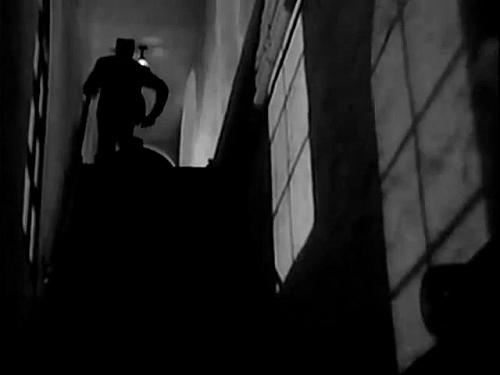
In Time Table (1956) Mark Stevens, who was so good in The Dark Corner (1956), is an insurance dick assigned to investigate a train heist. There are sufficient twists and turns to keep you interested, and one twist totally out of left field just about knocks your socks off. Stevens also helmed in this his second director job after Cry Vengeance (1954). While the picture never goes beyond its b agenda, Stevens and his veteran DP Charles Van Enger deliver at the end with a gripping shadowy South of the border shoot-out on the streets of Tijuana.


Drive a Crooked Road (1954): Dreams on Malibu

Drive A Crooked Road (1934)

And everybody knows that you’re in trouble
Everybody knows what you’ve been through
From the bloody cross on top of Calvary
To the beach of Malibu
Everybody knows it’s coming apart
Take one last look at this Sacred Heart
Before it blows
And everybody knows

– Leonard Cohen, Everybody Knows

Mickey Rooney is a withdrawn car mechanic and amateur racing driver who is seduced, and then conned into driving the souped-up getaway car in a bank robbery. Drive a Crooked Road takes its time in getting to the business, about as long as the femme-fatale takes to bring the shy loner out of his shell. He falls for her – and big time.

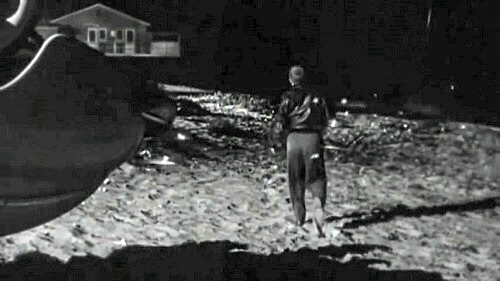
The actual heist is an anti-climax and really only sets the scene for the anti-hero’s destruction. The dame gets a conscience and so the carefully laid plans of the villains fall apart. When Rooney reaches the closing scene, two hoods are dead, and he is standing over the prostate femme by moonlight on the sands of Malibu, a smoking revolver in one hand, and the other stroking her hair.

A bleak scenario that has a hard and cynical edge, is rendered competently by a Columbia Pictures team. Not surprisingly Blake Edwards had a hand in the script with the assistance of director Richard Quine. Rooney is low key and carefully resists melodrama in a sympathetic portrayal. Minor 50s actress Dianne Foster is leggy, sultry, sweet, and repentant, by turn. A final descent into histrionics weakens the portrayal though.

The dénouement plays out in the shadow of a beach house on Malibu and harkens forward to the nuclear apocalypse that ended Robert Aldrich’s Kiss Me Deadly the following year. Here the devastation is totally personal. The crushing of a less than average joe is brutal and undeserved. Fate and good ol’ American greed in cahoots take a man’s dreams and loneliness and twist them into a lose-lose no exit dilemma.

The hoods are distinctly middle-class. Dinner parties at the beach house and the conniving host cooking up a storm in the kitchen. It’s only a business proposition you see. Forget that a wise-cracking loathsome henchman mans the bar.


The Oscars, Jean Renoir, Raymond Chandler, Auteurism, and Budd Boetticher’s The Killer is Loose (1956)

The Killer Is Loose (1956)

In a 1954­ interview Jean Renoir said of Hollywood: “Don’t go thinking that I despise “B” pictures; in general I like them better than big, pretentious psychological films they’re much more fun. When I happen to go to the movies in America, I go see ‘B’ pictures. First of all, they are an expression of the great technical quality of Hollywood. Because, to make a good western in a week, the way they do at Monogram, starting Monday and finishing Saturday, believe me, that requires extraordinary technical ability; and detective stories are done with the same speed. I also think that “B” pictures are often better than important films because they are made so fast that the filmmaker obviously has total freedom; they don’t have time to watch over him.”

Raymond Chandler in 1948 in an acid essay on the Oscars, and 20 years before Pauline Kael wrote ‘Trash, Art, and the Movies’, framed his critique by saying of the motion picture “that its transitions can be more eloquent than its high-lit scenes, and that its dissolves and camera movements, which cannot be censored, are often far more emotionally effective than its plots, which can.”  Though he didn’t spell it out it, Chandler was clearly highlighting the artistic choices made by the director of a film. Not until the 1950s did the enfants terribles of Le Cahiers du Cinema develop the insights broached by Chandler.

American film academic and writer Justus Nieland in a piece foreshadowing tonight’s Oscars titled ‘Auteurism and the Genius of the Market’ and published last week in The New York Times, writes:

“This logic of aesthetic judgment, in which films and their directors mutually ratify each other’s greatness has, of course, auteurist roots. The word persists today because a group of film critics in the 1950s hashed out a “politique des auteurs” that discerned, among the industrial products of American mass culture, signatures of a presiding, singular artist like Alfred Hitchcock, Howard Hawks, Fritz Lang or Nicholas Ray, among others. This Romantic view of expression, with its abiding myths of freedom, style and personality, sought to solve the problem of how industrially produced and distributed mass entertainment might also be art. But auteurism was also a category of reception, allowing cinephiles to sift and sort, and value and hierarchize, the films and directors to which they had access. In France and elsewhere in the 1950s, that meant seeing Hollywood cinema as a cultural sign of the economic and political power of the U.S… If the Oscars are important, then the best director award is the most important not just because it rewards the work of gifted nominees (and this year’s are an estimable bunch), but because the name of the director remains, for better and worse, contemporary film culture’s way of organizing knowledge about film artistry and its relation to markets and consumers. This says as much about what persists in our fantasies of aesthetic agency as it does about the strategies of the corporate present that shape, and limit, our power to discern the best.”

Hollywood ‘B’ movies of the 40s and 50s were production line ‘filler’. But for the reasons identified by Renoir and Chandler, and despite being made quickly and on the cheap, they sometimes transcended their humble aims and by virtue of the craft and artistry (of mostly journeymen film-makers) made a claim to being considered as art.

One such ‘B’ movie is The Killer is Loose made in 1956 by United Artists and directed by Budd Boetticher, who after completing this film went on to make six cult Westerns that established his auteur status. The Killer is Loose is not a great movie nor is it even particularly good. The plot is by this late stage of the classic noir cycle more of the same police procedural that noir largely devolved into as the War years receded.  A gormless war veteran working as a bank teller provides inside information for a heist, and when cornered by police in his apartment and his innocent wife is accidently shot dead by a police detective in the shootout that ensues, he swears vengeance on the wife of the cop. After a couple of years he escapes from detention and heads onto a bloody path to the cop’s wife.  The climax is a stakeout at night in suburbia. Strong performances from Wendell Corey as the disturbed killer and Joseph Cotton as the cop, and Rhonda Fleming as the hapless wife, don’t quite overcome the inertia of the scenario and plot-holes that most likely derive from keeping the running time to 73 minutes. The score is dramatic in the wrong places, better dialog is not hard to find, and the ending is predictable. What unshackles the movie is the consummate direction and editing. Deep focus outside and long fluid takes inside.  The climax is a master-class in editing for suspense. Even daylight scenes have a tension that subverts otherwise normal life in the suburbs. A journey on a crowded brightly lit bus at night holds a palpable existential terror.

In November last year The New Yorker film critic Richard Brody named the recent archive release of the The Killer is Loose his DVD of the Week, writing that “Boetticher… saw violence everywhere and was sensitive to its ambient horrors, even when unleashed with principle. This movie, with its focus on crime and punishment—and on the private lives of police officers and criminals alike—redefines the very idea of the war at home.” Brody’s video review of The Killer is Loose is featured below.

Links:


Alan Fassioms on Dementia (1955): Beatnik Noir?

Dementia (Daughter of Horror) 1955

Dementia (1955 aka Daughter of Horror 57min)
Director/Writer – John Parker
Cinematography – William C. Thompson
Music – George Antheil

I’m sure the 50’s hep-cats and ‘seasoned’ film-noir enthusiasts among you will already know of this film. Nevertheless for a greenhorn like myself, I find it damn near impossible to simply watch something like Dementia and not say a few words about it; even if it is just to confirm, through the reader’s feedback, whether or not I’m clueless as to what defines art, missing the point all together, or that I’m simply a weirdo!

Dementia (or as it was later changed to: Daughter of Horror) is a very stylish and strange short film (ca. 57 mins) from deep within the archives of the 50’s avant-garde b-movies. In fact, most movie-buffs may know it more as the film being watched in the cinema, during that famous scene in the 50’s cult-classic, The Blob, rather than a movie of any cinematic significance. It is believed that it was Jack H. Harris, producer of The Blob, who eventually bought the film from Parker and added the narration, renaming the movie Daughter Of Horror. This would make complete sense as Harris could then feature it in The Blob without hindrance. And the added narration, which can be heard in the background during The Blob’s famous cinema scene, serves well to intensify the suspense as The Blob approaches the screaming kids. Even the name ‘Daughter of Horror’ seems like it was added with The Blob in mind, as a poster for ‘Daughter of Horror’, and not ‘Dementia’, can also be seen for a split second during that scene.

Dementia (Daughter of Horror) 1955

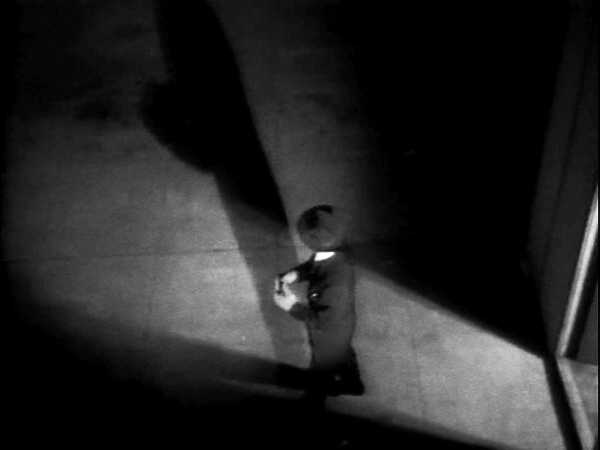
This mostly ‘silent’, black and white film opens with a high-angle, night-time shot of a neon-lit street, when, after being invited by the narrator to come with him, ”into the tormented, haunted, half-lit night of the insane”, we are drawn slowly through an open window into a young lady’s bedroom, á la Orson Welles. On the bed lies the sleeping beauty squirming and clutching her bed-sheet tightly. Is she having a nightmare… or an erotic dream? Of this the audience is kept guessing, and from here on in, the tone is set for a private view into the young lady’s twisted and perverse psyche. After wakening from her dream-state, she takes a flick-knife from the drawer and ventures out onto the streets, where she encounters all forms of low-lives, debauchery and sexual depravity, all tied together by hallucination sequences that even have the viewer questioning ‘what is reality/ what is fantasy?’.

Although the film has strong ‘noirish’ elements (lighting, street scenes, atmosphere etc), it’s intrinsically expressionist in nature. Very reminiscent of works by German expressionist film-maker, Robert Wiene (The Cabinet of Dr Caligari). Though I’m sure French Impressionist aficionados will argue with this. And they would have every right to, as the film (whether intentional or not) also pays homage to the early, experimental works of the great Luis Buñuel. Either way, this will put into context for you, that this isn’t your average Sunday-afternoon matinee, but rather a performance art concept masqueraded as a film-noir. It also fits into the horror bracket. Although as a horror it struggles to hit its mark. Throw in some very jazzy underground scenes featuring the legendary West Coast jazz ensemble, Shorty Rogers and His Giants, (which along with the narrators voice and a some sound effects are the only sounds you hear, as the film has no spoken dialogue from the actors whatsoever) and you have yourselves a compelling and ambitious ‘Art-Noir’ film (eventually favouring this term over ‘Beatnik-Noir’!) that needs to be seen to be appreciated.

For those brave enough to give Dementia a chance, and once you get over the initial feeling that your watching an Ed Wood movie, you’ll be pleasantly surprised as to how skilfully director John Parker manages to pull off a project which, on paper, you’d swear was doomed from the start. Personally, I loved Dementia. But like I said at the beginning of this review, maybe I’m just a weirdo!

Alan Fassioms writes on film noir, expressionist cinema, and obscure silent films at his blog Stranger on the 3rd Floor.

Cry Terror! (1958)

Cry-Terror-Poster

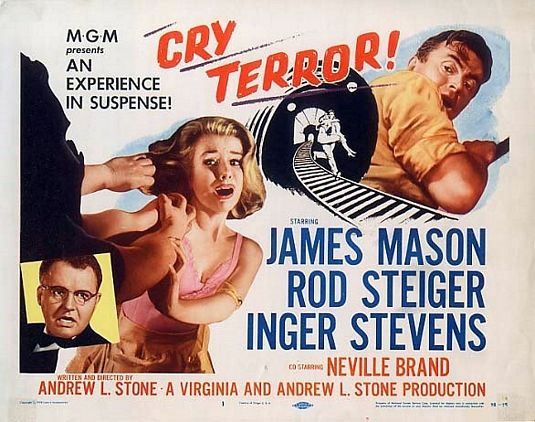
James Mason, Rod Steiger, and Inger Stevens got the star credits for Cry Terror, but Neville Brand, Angie Dickinson, and Jack Klugman also deserve acting kudos in this tautly directed b-noir thriller which boasts not one but three climaxes.

An innocuous middle-class family: mum, dad, and young daughter from the suburbs are kidnapped as part of an airline extortion caper. A bomb has been planted on a passenger plane and the would-be terrorists are demanding a cool half million to disable the device. The bomb’s triggering circuit was innocently built by TV technician Dad, and Mum will be used to collect the ransom if she wants to keep hubby and the kid from harm. The scenario is sufficiently novel and the tension wound tightly enough to sustain interest throughout. Never mind the plot has holes big enough to fly a jet-liner through, and that some almost absurd derring-do in an elevator shaft staggers belief.

For a movie that runs 96 minutes there are surprisingly vivid characterizations of the major players. This comes from nuanced performances, some good dialog and, unusually for a 50s police procedural, only sketch portraits of the cops involved.

Mason is the duped father, a rather cardigan-like hand-wringer who finds unforeseen (and incredible) fortitude later on. Stevens is in melodrama-overdrive as the hysterical yet (again incredibly) when-it-counts cool under pressure mother. Steiger dominates as the patently wacko yet methodical mastermind. His menace is that more scary as you couldn’t tell him from a bespectacled bow-tie wearing 50s bean-counter. Dickinson does very well as Steiger’s girlfriend and but-is-she-really-that-ruthless? accomplice.  Brand is particularly effective as the muscle of the gang with a convincing turn as a pill-popping sexual psychopath. When Stevens is held hostage by Brand in a suburban hide-out, a perverse sexual tension is played out with a lurid simmering violence that would have made 50s audiences very uncomfortable. The studio marketing suits played this angle up with promotion stills that exposed more of Stevens’ ample bosom than in the actual movie. Klugman is good as a pseudo-nasty but nervous henchman.

The three climaxes are more than competently filmed on real locations, and edited and directed with a palpable tension by a journeymen crew, who deserve recognition: Andrew L. Stone, wrote and directed (Confidence Girl (1952), Highway 301 (1950)), Walter Strenge lensed, and Virginia L. Stone (Confidence Girl) edited. The Stones were a husband and wife team who independently produced a clutch of the thrillers in the 50s and 60s.

While the movie has the flat TV look of the period, the final dénouement in a subway station has an expressionist tone.

Definitely worth a look.

The Raging Tide (1951): More to film noir than shadows, wet asphalt, and dangerous femmes

The Raging Tide (1951)

Saying a film is overly sentimental is a pejorative pretty well entrenched in film criticism. To me what matters is sincerity, something that is in pretty short supply these days. There should be more respect for genuine emotion.

The Raging Tide starts off as decidedly noir with a violent crime at night followed by shadowy visuals as the perp – Richard Conte in an expensive suit and tie topped by a fedora – hightails it on foot across the streets of San Francisco tagged by a pounding musical accompaniment and his anxious voice-over. There are only three ways out of Frisco, and the cops have wasted no time in jamming those exits shut – because Conte has incredulously tipped the police off by a phone-call from the crime-scene as part of a weird plan to establish an alibi. The alibi is soaking wet and falls apart in quick time. This is the first of more than a few plot holes. By circumstance he ends up on the waterfront and stows away on a fishing trawler heading out of Frisco Bay.  The melodrama engine is now chugging along at a nice clip.

Back in Frisco Conte has left a girl behind. Shelley Winters is pure magic in this role with her winsome charm and simple unaffected beauty. Add a decent cop, an aging fisherman and his rebellious son on the cusp of criminality, each played with considerable skill respectively by Stephen McNally, Charles Bickford, and Alex Nicol, and you have the stuff of a misty-eyed Hollywood redemption story.  Conte as the protagonist delivers in a nuanced portrayal that grapples with emotions and regrets, matters not always explored in b-pictures, and if you read the reviews of The Raging Tide on other noir blogs, matters considered unwelcome by some noir aficionados. I say there is more to film noir than shadows, wet asphalt, and dangerous femmes.

Director George Sherman, a journeyman who had made a string b-Westerns over a long Hollywood career and a b-noir, The Sleeping City, the year before, maintains visual interest with solid direction. Aided by his DP, the great Russell Metty, Sherman fashions two truly inspired scenes. The opening noir sequence and the climax aboard the fishing trawler in a savage storm out on the Pacific.

As we are in noir territory, redemption costs, and while there are melodramatic trappings to the scenario, the sincerity of the venture elevates the movie to something greater than the sum of its parts.  Credit here should also go to Ernest K. Gann who adapted his own novel, Fiddler’s Green.

There are faults to be sure. Plot holes and longuers which focus on peripheral characters, and some corny humor, but they all go with the territory, and underscore the languor of Conte’s new life as his character evolves with the slow rhythm of the fisherman’s lot. Honest work without shame or grandeur. A decency which has been suppressed starts to emerge, and in its own fractured stuttering way changes the lives of others for the better.

So I am sucker for sentiment. Perhaps sentiment is about hope. About believing in hope. Hope that evil can be overcome, that with punishment also comes the possibility of redemption.  That though life in its patent absurdity does not bare too much thinking about, faith in something beyond the expedient, beyond selfishness, and in a spirit of humility, can imbue existence with a kind of meaning.


Trouble Is My Business: New Film Noir

Trouble Is My Business

I have just received the heads up on a new indie film noir, Trouble is My Business, that harkens back to the 1940s, with a thriller-mystery scenario about a gumshoe on the skids who gets mixed up with two seductively dangerous sisters. The film’s 8 minute trailer certainly gets you interested, and the production values are impressive. Nice noir visuals and characterisations with a flavor of the irony reminiscent of that great 1948 film noir I Love Trouble starring Franchot Tone, promise a fascinating ride.

The film’s maker Thomas Konkle is taking the film to the American Film Market in Santa Monica November 9 -12 and can be reached at www.lumenactus.com, or by visiting the movie’s web site.

Check out the Vimeo trailer below.

Ossessione (Italy 1942): A dance of “death and sperm”

Ossessione (1942)

Luchino Visconti’s first feature film Ossessione (Obsession) opens with a darkly melodramatic musical motif as a truck rumbles through a bleak sun-bleached landscape along a slowly curving stretch of road hugging the river Po. The frame is confined within the cabin and we look down and out the windscreen to the unfolding road. We do not see the occupants of the cabin. A relentless fate seems to be driving the truck on its unwavering path as the opening credits roll. The truck eventually does stop with a jump cut to the driver and his off-sider climbing out of the cabin at a rest stop in front of a local trattoria. A hitchhiker is found sleeping in the back of the open tray. He is shaken awake and admonished by the driver and the trattoria’s owner.

The camera in almost a gesture of abandonment swoops up and looks down at the tramp as he heads into the trattoria. The tramp enters the trattoria and hears a woman singing a love song. He follows the voice to the kitchen. The man, Gino, and the woman, Giovanna, the young wife of the trattoria-owner, stare fixedly at each other, as we see their faces for the first time. Gino is young and virile, Giovanna older but molto simpatica, while the trattoria owner is on the cusp of old age and corpulent. This confrontation ignites an obsessive desire the flames of which will ineluctably engulf and destroy them. Thus commences a dance of “death and sperm” as Visconti’s co-scenarist Giuseppe De Santis put it.

Film noir aficionados will recognise this scenario from the opening sequence of the Hollywood adaptation of James M. Cain’s novel The Postman Always Rings Twice. Visconti was given a type-written translation of the novel by mentor Jean Renoir, and made his film without crediting Cain, four years before the Hollywood version. The frank treatment of sex and a homoerotic subtext did not find favour with Italy’s fascist authorities and the film was savagely cut, and the negative eventually destroyed. The film survives because Visconti had secreted a second negative. (The film did not screen in the US until the 1970s because of the breach of screen rights.)

Ossessione is credited as the film that heralded Italian neo-realism, reflecting its concerns with the unadorned lives of the common man, while taking the camera out onto the streets. Although Visconti cast established actors in the main roles, he follows the protagonists as they move in society, with the camera lingering within the mise-en-scène on ordinary people and the rhythm of life in a small semi-rural town. There is also an eddy of melodrama which at critical moments floods the senses as emotions are telegraphed with operatic musical flourishes. Underpinning the film’s aesthetics though is a subversive preoccupation with the anguish of the two protagonists, as they confront the reality and the consequences of their actions. When finally at the end fate closes the books, their destinies assume tragic proportions. That we are being to a degree manipulated though has to be recognised. The husband in keeping with book’s characterisation is oafish, and as his actual demise is not shown, his fate is easily left behind.

What makes Ossessione particularly compelling is an homoerotic strand interwoven with a critique of ‘petit-bourgeois’ values. Visconti was gay and a Marxist. His scenario here has a depth and complexity you will not find in Cain’s hard-boiled prose nor in Tay Garnett’s workmanlike Hollywood adaptation. Visconti confounds the amour-fou of the two protagonists with an interlude that has Gino befriended by a roaming entertainer, ‘Il Spagnolo’, after they share a bed in a flop-house. The dialectic is only thinly veiled. Il Spagnolo represents freedom and a kind of self-sufficient integrity with his itinerant life and rejection of bourgeois values. Giovanna seeks stasis and wants to build up the trattoria as she and Gino take over the dead man’s business – yet there is a dialectic here too. Giovanna accepted marriage to an older man to end her life of poverty and degradation. She makes it clear that hunger had forced her into prostitution. Towards the end of the film, when Gino mistakenly thinks Giovanna has betrayed him to the police, he has an encounter with a young girl who “cannot go home”. This short reprieve tragically harkens to what might have been.

Ossessione demands and rewards multiple viewings. A master film-maker has taken a hard-boiled story and imbued it with intelligence, polemic, a humanist outrage, and above all, a deep compassion for the human predicament.

Once a Thief (1965): Late noir à la européenne

Once a Thief (1965)

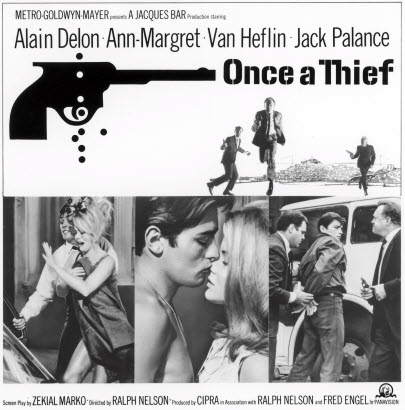
Once A Thief from director Ralph Nelson (Requiem for a Heavyweight) and DP Robert Burks (Vertigo), and starring Alain Delon (Purple Noon, Le Samouraï) in his first Hollywood feature, is a derivative late noir with a hip Lalo Schifrin score and atmospheric on the streets of San Francisco visuals tinged with a European neo-realist aura.

Zekial Marko’s script has all the noir tropes but the picture never gets beyond the promise of the brilliant opening credits which feature Frisco freaks getting off at a jazz club.

Delon, as a young immigrant from Trieste with a wife and daughter, both played with considerable effect by Ann Margret as the wife and 6yo Tammy Locke as the child, is trying to go straight after doing time for a robbery and shooting a cop. After a frame-up his estranged older brother and mobster Jack Palance (Panic in the Streets, Sudden Fear, The Big Knife) turns up and wants him for one last big heist. It all moves predictably to a violent denouement on the Frisco waterfront. Delon strangely, when you consider his persona in Jean-Pierre Melville’s Le Samouraï, is less than effective, while Palance brings a certain realist cred to his portrayal of a hood who wants to keep things in the family. Margret delivers some justified histrionics at the climax while managing to steer clear of melodrama. An aging and visibly weary Van Heflin (Johnny Eager, The Strange Love of Martha Ivers, The Prowler ) as a cop tries hard but his heart is not in it. Particularly effective and chilling is John Davis Chandler as a violent psychopath in a signature henchman role.

The violence while stylised is brutal enough to evoke both shock and empathy. A lengthy heist sequence and a kidnapping borrow a lot from Jules Dassin’s Rififi and John Huston’s The Asphalt Jungle, both immeasurably superior films.

The Long Wait (1954): Tie Me Up And Kiss Me Deadly

The Long Wait (1954)

Anthony Quinn as an amnesiac who is wanted for murder? You got him in The Long Wait, and not one but four femmes noir. Three blondes and a brunette. All leggy and not backward in coming forward.
This violent and brutal flick has Mickey Spillane all over it. The second Spillane novel to be filmed in Hollywood – after I, The Jury (1953) – The Long Wait takes pulp fiction down to a new level. A preposterous plot with more holes than a pair of fishnet nylons itches a perversely compelling pastiche of noir tropes: amnesia, corruption in high places, crooked cops, frame-ups, violence, duplicitous dames, and sex. But no Mike Hammer. Our protagonist is strictly an amateur. But that doesn’t make him any less able to dizzy the dames nor prove his innocence – even if the key to the frame is patently absurd.

Quinn is a hunk and knows it. His kisses and clinches are not for the faint-hearted. He beds the first girl to show an interest. In fact, she picks him up. A frank come-on and cut to her apartment, where after a shower she is ready for the bout naked under her wrap. You get the picture.

Despite a strange incoherence and lackadaisical direction from Brit Victor Saville, the talented lensing of Franz Planer sustains visual interest, with suitably dark lighting and expressionist flourishes.

This brings us to the climax which melds sex and violent entrapment into an amazing expressionist sequence involving a spot-light and deft crane shots. Quinn is tied-up in a chair and a girl called Venus trussed on the floor is being goaded by the bad guy to crawl to Quinn for one last kiss. The resolution is neat and unexpected. One of those rare moments when you are left open-mouthed before the craft and audacity of what you have just seen. Totally weird.