Thirty years ago in my late 20s on many lonely cold winter nights I walked the desolate streets of the city fringe… down narrow sparsely-lit alleys
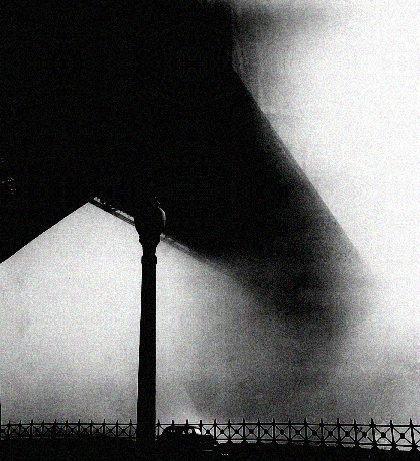
Noir City: Sydney Harbour 1950s - Original photo by Max Dupane
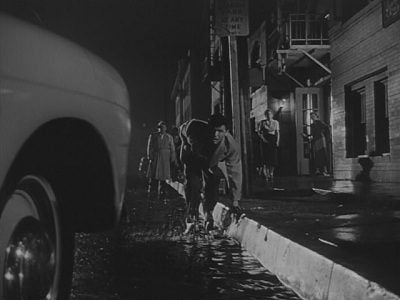
Thirty years ago in my late 20s on many lonely cold winter nights I walked the desolate streets of the city fringe. Down narrow sparsely-lit alleys with dark dirty store-fronts, ominous warehouses, and desperate characters. A salty dampness and the silhouettes of sea-faring hulks on Sydney harbor drawing me into an enveloping angst. There was mystery, an aching feeling of some unfathomable loss, of poetry.
Today those streets are bright, lined with trendy restaurants, exclusive warehouse conversions, soul-less showrooms for funky furniture, and expensive cars. No mystery, no angst, and no poetry.
The people behind the Noir Nation project have produced two excellent promotional videos which augur well for the quality of the publication…
I came across the Noir Nation project on KicketStarter.com this evening. The people behind the project are seeking pledges for a new eJournal of crime fiction offering high quality prose fiction, non-fiction, graphic novels, and visual arts.
The people behind the project have produced two excellent promotional videos which augur well for the quality of the publication. But their funding deadline of July 6 looms and pledges are nowhere near the target of US$10,000. Any venture capitalists with big bucks should check out the site.
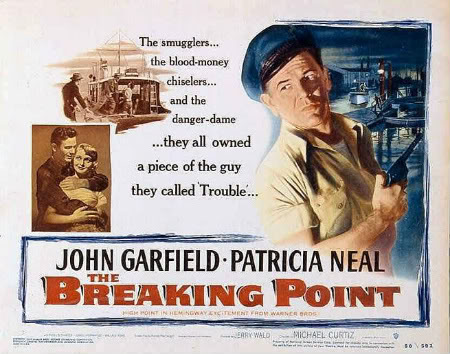
The Warner Archive has released on DVD for the first time a film adaptation of the Ernest Hemingway novel, The Breaking Point (1950)
The Warner Archive has released on DVD for the first time a film adaptation of the Ernest Hemingway novel, The Breaking Point(1950), a great John Garfield noir directed by Michael Curtiz, and to my mind infinitely superior to Howard Kawk’s over-rated adaptation To Have and Have Not (1944).
Most film noir protagonists are driven by anger. Anger grown of frustration and resentment at a society that excludes them from comfort and a decent life…
Caged (1950)
Most film noir protagonists are driven by anger. Anger grown of frustration and resentment at a society that excludes them from comfort and a decent life. Some are simply lazy and greedy and see crime as a fast lane to riches, many are driven by poverty and degradation to crime, also as a kind of revenge against ‘those’ who have taken everything and left nothing, and all share the widely held delusion that money buys happiness.
In the female prison noir, Caged (1950), a powerful critique of a society that breeds such anger, a young woman is jailed after she is an unwitting accomplice in a gas-station robbery with her husband, who is killed during the heist. The sheltered girl on admittance to a women’s prison discovers she is pregnant, but her condition does not protect her from the humiliation and brutalisation of prison life. Melodramatic but with a strong social conscience that targets corrupt authorities, the movie is downbeat and pessimistic. By the end of the film, the girl is hard-bitten beyond her years and ready to hit the streets as a prostitute, after her recruitment by a glamorous older inmate, who manages to run her racket from inside the prison. The prison warden tries hard to help such girls but money is in short supply and the politicians aren’t interested. The girl’s decision to go bad is triggered by the resentment that erupts when from her cell she is confronted with the site of a gaggle of socialites dressed to the nines in a philanthropic tour of the prison. We appreciate her anger and resentment as an understandable response to her treatment by ‘the system’.
Hollywood doesn’t make movies likes that anymore thanks to the HUAC purges of the 1950s and the comfortable cowardice of contemporary film-makers.
I get angry at injustice and inequality, very angry. What intrigues me is why Americans don’t get angry at the injustice and inequality in their midst. For the record I am not American nor do I live in America, and for many Americans that disqualifies me from having a view, but I don’t care. If you personally have a problem with this, write to your member of Congress.
A sobering article was published today by my local newspaper.
A taxation system emaciated by political opportunism has left the US with tax rates so low as to undermine the work of government, strangling revenue and magnifying inequality. Each year, the IRS constructs figures for the top 400 income earners in the country. In 2008, when the great recession was biting hardest, the top 400 earned on average $US270.5 million each – 20 times what they made in 1955 (which was $US13.3 million, in 2008 dollars). The mind-blowing reality beyond that growth is that the 400 highest-earning Americans in 1955, after exploiting all possible deductions, paid 51.2 per cent of their total earnings in federal income tax. Fifty years later, in 2008, the top 400 paid just 18.1 per cent in tax. So pronounced is the disparity that the top 1 per cent of American taxpayers now takes almost a quarter of all income – double their share of 25 years ago. And they control about 40 per cent of America’s wealth, compared to 33 per cent then.
In the days of the postwar president Dwight Eisenhower, America’s top income tax bracket hovered around 90 per cent. It was eased to 70 per cent in the mid-1960s and remained there until the advent of ”Reaganomics” when the top marginal tax rate was slashed to 50 per cent, then to 28 per cent. Reagan’s successors – George Bush snr and Bill Clinton – pushed the rates back up, citing fiscal necessity, but George W. Bush cut again, lowering the top marginal rate to 35 per cent, while reducing the tax on capital gains to 15 per cent for assets held for more than a year, accelerating the accumulation of wealth at the summit, because the rich, increasingly, were deriving their income from capital gains – by trading shares, bonds and other assets.
Office memorandum, Walter Neff to Barton Keyes, Claims Manager. Los Angeles, July 16th, 1938. Dear Keyes: I suppose you’ll call this a confession when you hear it. I don’t like the word confession…
Double Indemnity (1944)
Office memorandum, Walter Neff to Barton Keyes, Claims Manager. Los Angeles, July 16th, 1938. Dear Keyes: I suppose you’ll call this a confession when you hear it. I don’t like the word confession… When it came to picking the killer, you picked the wrong guy, if you know what I mean. Want to know who killed Dietrichson? Hold tight to that cheap cigar of yours, Keyes. I killed Dietrichson. Me, Walter Neff, insurance agent, 35 years old, unmarried, no visible scars – until a little while ago, that is. Yes, I killed him. I killed him for money – and a woman – and I didn’t get the money and I didn’t get the woman. Pretty, isn’t it?
I am currently reading a book on French cinema by American academic T. Jefferson Kline titled Unravelling French Cinema (John Wiley & Sons 2010). As the title indicates, Kline by examining French films from the early 1930s to the present day explores the nature of French cinema. His guiding thesis is that French films are more concerned with the nature of cinema than with narrative for its own sake. It is a complex analysis and the author’s scholarly approach makes the book daunting reading.
Kline initiates an intriguing discussion of cinema as a process of mourning, which goes not only to the examination of certain films but to the very nature of cinema. He focuses on art-house films and strangely mentions French poetic realism only as an aside. The great poetic realist films of the 1930s are not discussed, nor the French noirs of the 1940s and 1950s. The fatalism of these films to me seems germane to any discussion of cinema as mourning, and to an understanding of film noir.
Let us take these word’s from Kline’s book: “We can think of many films that move us precisely because the main character must die, and so we mourn… we must realize that cinema in its most essential form is an image of something that is no longer there. Like a cherished photograph, we can look at it over and over again, but we can never make its subjects return to the physical form they enjoyed when the film was made.” (p. 334)
This is the very nature of the fatalism inherent in poetic realism and in film noir: a doomed protagonist battling the fates. The very use of flashback in many noirs reinforces this fatalism – the fate of the protagonist is known from the outset. Billy Wilder’s Double Indemnity (1944) and Robert Siodmak’s The Killers (1946) are the definitive flashback noirs.
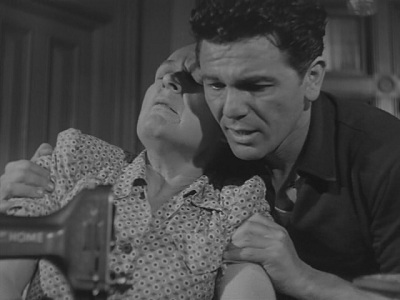
He Ran All the Way, John Garfield’s last picture, was made under the oppressive shadow of HUAC. Soon after its release Garfield was dead from heart failure.
He Ran All the Way, John Garfield’s last picture, was made under the oppressive shadow of HUAC. Soon after its release Garfield was dead from heart failure. Dalton Trumbo wrote the script (under an alias), John Berry directed, James Wong Howe lensed, and Franz Waxman penned a dramatic score. This team, along with a strong supporting cast deliver a solid picture. It has flaws – a tendency to melodrama and plot contrivances – but it delivers a strong noir punch.
Garfield is a nervous small-time loser who kills a cop during a payroll heist and holes up an innocent family in their apartment as he desperately seeks to evade capture. The guy is screwed-up big-time but underneath it all has some desire for connectedness. He is brutal but gentle, ruthless yet hesitant, hateful while desperate for love. Garfield’s portrayal is pitch-perfect and a worthy epitaph. Shelley Winters in an early role as a young innocent does really well in a difficult role.
Strange that I have yet to read a serious review of the film. NoirofTheWeek.com provides a signature belabored outline of the plot and little else. Bosley Crowther in the NY Times on the movie’s release couldn’t see the forest for the trees in a petulant dismissal resting on alleged weak characterisations. Glen Kenny on TheAutuers.com treats the film as an opportunity for self-satisfied satire.
Those bloodhounds at HUAC would have had you believe this scene from the picture is ‘commie’ propaganda:
Sunday morning in the hostage family’s kitchen. Garfield is drinking coffee while the father (Wallace Ford) works on a model boat. Garfield has just turned off the radio after a church sermon is announced.
JG: What that church stuff do for ya anyway, what’s it get ya?
WF: Well… for one thing it makes a man understand the nature of love.
JG : Yeah?
WF: Yeah… The faith that there’s someone more important than yourself, that your family’s more important than both of you, and that every other human’s a member of your family…
JG: What’s a holy joe like you get outta life? What ya want outta life?
WF: To be left alone, to work, to be left alone.
To be left alone. But life won’t leave us alone. This is what noir is all about.
They stopped making noir movies over 60 years ago, but the books on film noir keep on coming… and capsule reviews of four classic noirs
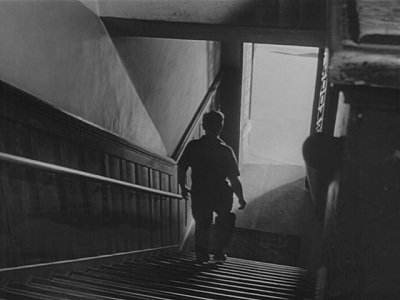
Budd Bottiecher's Behind Locked Doors (1948)
Books
They stopped making noir movies over 60 years ago, but the books on film noir keep on coming. A slew of new titles will be published before year’s end:
Gloria Grahame, Bad Girl of Film Noir: The Complete Career
Robert J. Lentz
Binding: Paperback
Release Date: July 5th, 2011
In Lonely Places: Film Noir Beyond the City
Imogen Sara Smith
Binding: Paperback
Release Date: July 5th, 2011
The Maltese Touch of Evil: Film Noir and Potential Criticism (Interfaces: Studies in Visual Culture)
Richard L. Edwards & Shannon Clute
Binding: Paperback
Release Date: December 13th, 2011
What Is Film Noir?
William Park
Binding: Hardcover
Release Date: September 16th, 2011
Movies
Noirs I have recently watched – those marked with an * be added to my list of essential noirs (!):
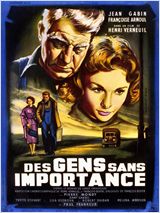
Des gens sans importance (People of No Importance – France 1956)
French fatalism meets neo-realism in a tragic story of working-class life. A long-haul trucker falls for an aimless young waitress from a road-side café. Great acting from Jean Gabin and the earthy Françoise Arnoul. 4½ stars
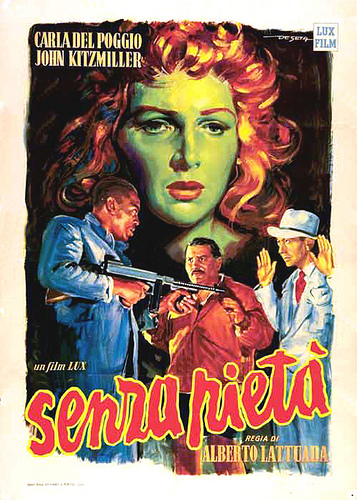
Senza pietà (Without Pity – Italy 1948) *
Black GI and a local girl on the skids in a doomed love triangle cannot escape tragic entrapment. Compelling neo-realist melodrama with a decidedly noir denouement. 4½ stars
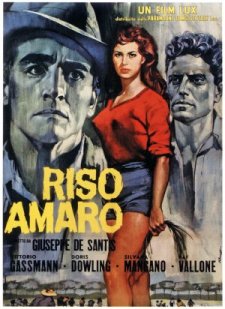
Riso Amaro (Bitter Rice – Italy 1949)
Classic neo-realist socialist melodrama. Homme-fatale destroys a passionate innocent. A bad girl is redeemed and homme-fatale meets a gruesome noir end in an abattoir. 5 stars
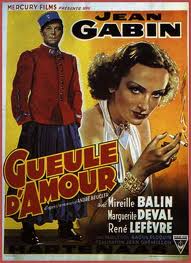
Guele d’Amour (Ladykiller – France 1937) *
A fatalistic tale of amour-fou fuelled by a callous femme-fatale. Hunk Jean Gabin and the luminous Mireille Balin star. Looks decades ahead its time. 4½ stars
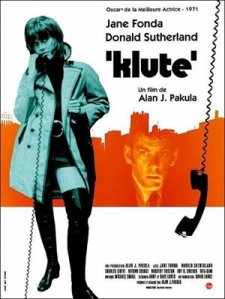
Klute (1971) *
Alan J. Pakula’s signature reworking of classic noir motifs in a masterly study of urban paranoia and alienation. Jane Fonda earned an Oscar for her brilliant portrayal of articulate b-girl the target of mystery psychopath. 5 stars
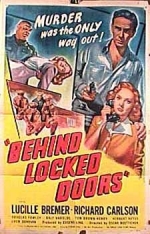
Behind Locked Doors (1948)
An entertaining Bud Bottiecher b-movie. PI Richard Carlson enters a sanatorium undercover to flush out a crook. A feast of metaphors for Bottiecher aficionados and good entertainment for the rest of us. Moody lensing from Guy Roe (Railroaded!, Trapped Armored Car Robbery, The Sound of Fury). 3½ stars
These are the runners-up to my listing of the best (5-star) films noirs. The combined list appears here as Essential Films Noir. The ‘almosts’ are 147 noir movies I rate as 4 or 4.5 stars…
These are the runners-up to my listing of the best (5-star) films noirs. The combined list appears here as Essential Films Noir.
The ‘almosts’ are 147 noir movies I rate as 4 or 4.5 stars. As with the all-time best noirs list, the films are listed by year of production and are not ranked.
4/4.5 star Noirs
Titles with an * are reviewed on FilmsNoir.Net – list of reviews here. All movies have a snap review.
*La Chienne
1931
France
*Fury
1936
US
*Guele d’Amour (aka Ladykiller)
1937
France
*Pépé le Moko
1937
France
*La Bête Humaine
1938
France
La Jour se Lève
1939
France
*Macao,L’enfer Du Jeu (aka ‘Gambling Hell’)
1939
France
*Stranger on the 3rd Floor
1940
US
*Blues in the Night
1941
US
*High Sierra
1941
US
*The Face Behind the Mask
1941
US
*Ossessione
1942
Italy
*This Gun For Hire
1942
US
*The Fallen Sparrow
1943
US
*The Ghost Ship
1943
US
*Betrayed (aka ‘When Strangers Marry’)
1944
US
*Moontide
1944
US
*Phantom Lady
1944
US
*The Mask of Dimitrios
1944
US
*The Woman in the Window
1944
US
*Cornered
1945
US
*Detour
1945
US
*Fallen Angel
1945
US
*Leave Her to Heaven
1945
US
*My Name Is Julia Ross
1945
US
*Black Angel
1946
US
*Deadline at Dawn
1946
US
*Decoy
1946
US
*Gilda
1946
US
*High Wall
1946
US
*Night Editor
1946
US
*Panique
1946
France
Suspense
1946
US
*The Blue Dahlia
1946
US
*The Chase
1946
US
*The Dark Corner
1946
US
*The Dark Mirror
1946
US
*The Locket
1946
US
*The Strange Love of Martha Ivers
1946
US
*The Stranger
1946
US
*Born to Kill
1947
US
Brute Force
1947
US
*Crossfire
1947
US
*Dead Reckoning
1947
US
*Desperate
1947
US
*Kiss of Death
1947
US
*Odd Man Out
1947
UJ
*Railroaded
1947
US
*The Devil Thumbs A Ride
1947
US
*The Long Night
1947
US
*The Unsuspected
1947
US
*The Woman On the Beach
1947
US
*They Made Me a Fugitive
1947
UK
*They Won’t Believe Me
1947
US
*lood on the Moon
1948
US
*Call Northside 777
1948
US
Cry of the City
1948
US
*I Love Trouble
1948
US
*I Walk Alone
1948
US
*Key Largo
1948
US
*Kiss the Blood Off My Hands
1948
US
*Moonrise
1948
US
*Night Has a Thousand Eyes
1948
US
*Pitfall
1948
US
*Road House
1948
US
*Ruthless
1948
US
*Secret Beyond the Door
1948
US
*Senza pietà (Aka Without Pity)
1948
Italy
*The Amazing Mr. X
1948
US
*The Big Clock
1948
US
*The Iron Curtain
1948
US
*The Naked City
1948
US
*A Woman’s Secret
1949
US
*Alias Nick Beal
1949
US
*Caught
1949
US
*Follow Me Quietly
1949
US
*I Married a Communist
1949
US
*The Big Steal
1949
US
*The Bribe
1949
US
*The Clay Pigeon
1949
US
*The Man Who Cheated Himself
1949
US
*The Window
1949
US
*Whirlpool
1949
US
*Armored Car Robbery
1950
US
*Gambling House
1950
US
*Gun Crazy
1950
US
*Manèges
1950
France
*No Way Out
1950
US
*Panic In the Streets
1950
US
*Side Street
1950
US
*Tension
1950
US
*The File On Thelma Jordan
1950
US
*The Killer That Stalked New York
1950
US
*The Second Woman
1950
US
*The Tattooed Stranger
1950
US
*Union Station
1950
US
*Walk Softly, Stranger
1950
US
*Where Danger Lives
1950
US
*Where the Sidewalk Ends
1950
US
*Woman on the Run
1950
US
*Young Man with a Horn
1950
US
*Detective Story
1951
US
*His Kind of Woman
1951
US
*I Can Get It for You Wholesale
1951
US
*I was a Communist for the FBI
1951
US
*Roadblock
1951
US
*The Big Night
1951
US
*The Well
1951
US
*Tomorrow Is Another Day
1951
US
*Angel Face
1952
US
*Kansas City Confidential
1952
US
*Scandal Sheet
1952
US
*The Narrow Margin
1952
US
*The Sniper
1952
US
*99 River Street
1953
US
*Pickup On South Street
1953
US
Split Second
1953
US
*The Blue Gardenia
1953
US
*The Glass Wall
1953
US
*The Hitch-Hiker
1953
US
*Human Desire
1954
US
*Pushover
1954
US
*The Good Die Young
1954
UK
Touchez pas au Grisbi
1954
France
*Witness to Murder
1954
US
*World For Ransom
1954
US
*Bob le Flambeur
1955
France
*The Phenix City Story
1955
US
*Patterns
1956
US
*People of No Importance (aka ‘Gens san Importance’)
1956
France
The Wrong Man
1956
US
*The Killing
1956
US
*Voici le temps des assassin (aka ‘Deadlier Than the Male’)
1956
France
*While the City Sleeps
1956
US
*Elevator to the Gallows
1958
France
*Endless Desire
1958
Japan
*Tread Softly Stranger
1958
UK
Underworld Beauty (aka ‘Ankokugai no bijo’)
1958
Japan
*Odds Against Tomorrow
1959
US
*The Crimson Kimono
1959
US
*The Bad Sleep Well (aka ‘Warui yatsu hodo yoku nemuru’)




 FilmsNoir.Net - all about film noir
