From Raymond Chandler’s novel, The Big Sleep (1939):

FilmsNoir.Net – all about film noir
the art of #filmnoir @filmsnoir.net | Copyright © Anthony D'Ambra 2007-2025
From Raymond Chandler’s novel, The Big Sleep (1939):

A new book on the work of Poverty-Row director, Edgar G. Ulmer, who made the cult b-noir, Detour (1945), was released in May.
The book, Edgar G. Ulmer: Detour on Poverty Row, was reviewed today by Michael H. Price in the Fort Worth Business Press:
[In] Edgar G. Ulmer: Detour on Poverty Row … Editor [Gary D.] Rhodes and a well-chosen crew of contributing writers consider Ulmer in light of not only his breakthrough film, 1934’s The Black Cat at big-time Universal Pictures, or such finery-on-a-budget exercises as Bluebeard (1944) and Detour (1945), but also Ulmer’s tangled path through such arenas as exploitation films (1933’s Damaged Lives), Yiddish-language pieces (1937’s Green Fields), well-financed symphonic soap opera (1947’s Carnegie Hall), and ostensible schlock for the drive-in theaters (1957’s Daughter of Dr. Jekyll)… A perceptive chapter from Christopher Justice wonders aloud whether the writer-director might be considered “the godfather of sexploitation,” in view of the “new aesthetic terrain and … core prototypes” that can be observed in such films as Damaged Lives and Girls in Chains (1943) and The Naked Venus (1958)… Tony Williams regards Ulmer as an advancer, rather than a follower, of the “psychobiography” approach that Orson Wells had defined with Citizen Kane in 1941 — on the evidence of an often-maligned, oftener-ignored Ulmer picture called Ruthless (1948). (Ruthless stars Zachary Scott as an industrialist who might make Welles’ Charles Foster Kane look like Rebecca of Sunnybrook Farm by comparison.)
For those of you interested in the writers of noir fiction and the Hollywood screen-writers who penned the movies of the classic noir period, a visit to Woody Haut’s Blog is strongly recommended. Woody Haught is a journalist and the author of Pulp Culture: Hardboiled Fiction and the Cold War, Neon Noir: Contemporary American Crime Fiction, and Heartbreak and Vine: The Fate of Hardboiled Writers in Hollywood.
His essays are well-written and provide some fascinating insights. These sample posts should be of direct interest to readers of FilmsNoir.Net:
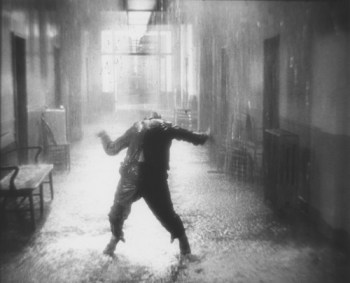
Shock Corridor (1963)
Professor of film studies Wesleyan University, Lisa Dombrowski has just published The Films of Samuel Fuller: If You Die, I’ll Kill You!.
In a press release Dombrowski said of Fuller:
His films are inherently fascinating. They’re designed to reach out and grab you. They’re provocative; they want you to respond emotionally and intellectually and sometimes even physically in an instinctual manner, as if someone has punched you in the face. He accomplished his goals in different ways. In the content, he discussed controversial issues of the time, race, gender, violence, critiques of America. Also, through their narrative structure, they emphasize conflict and contradictions, with dramatic tonal shifts that are jarring.
A book-signing and discussion of Fuller by Dombrowski will be held Thursday 24 April 2008 at 7:30 p.m. at the Goldsmith Family Cinema, 301 Washington Terrace, on the campus of Wesleyan University in Middletown, Connecticut. The signing will be held in conjunction with a screening of the 1955 Fuller thriller House of Bamboo.
Reviews of Samuel Fuller noirs on filmsnoir.net:
Pickup On South Street (1953)
The Crimson Kimono (1959): Little Tokyo Rift
The Naked Kiss (1964): Pulp Noir

The final draft of the screenplay of Double Indemnity (1944) by Billy Wilder and Raymond Chandler in the Motion Picture Academy Library in Los Angeles – download from here – includes a final prison execution chamber scene and a line of dialog that was spoken by Walter Neff, just after he said “I love you.” to Barton Keyes. With sirens wailing in the background, Neff says: “At the end of that trolley line, just as I get off, you be there to say good bye. Will you, Keyes?” The story then shifts to the execution.
This sequence was filmed but cut (by the studio?) from the production release.

James Naremore in his 1998 book on film noir, More than Night: Film Noir in Its Contexts, offers this penetrating analysis and critique:
… the execution described in the longest version of the script greatly increases our sympathy for Walter, all the while raising questions about the criminality of the state. It also provides a tragic recognition scene for Keyes, who is shaken out of his moral complacency. This last point is especially important, because Keyes functions as a representative of the insurance company. Although he approaches his work with the intuitive flair of an artist and the intellectual intensity of a scientist, he remains a loyal agent of industrial rationality—a talented bureaucrat who, in effect, has helped to create the office building, the drive-in restaurant, the supermarket, and all the other landmarks of modern Los Angeles that the film relentlessly criticizes… One of the many virtues of Wilder’s original ending is that this complex, brilliantly acted character would have been made to confront his inner demon and to experience poetic justice. Keyes would have been brought face-to-face with the culminating instance of instrumental reason, the “end of the line” for industrial culture: the California gas chamber… For the original version of Double Indemnity, Paramount built an exact replica of the [San Quentin] gas chamber, depicting it as a modern, sanitized apparatus for administering official death sentences. At considerable expense, Wilder photographed the step-by-step procedure of execution, emphasizing its coldly mechanical efficiency. There was no blood, no agonized screaming, and, for once in the movie, almost no dialogue. Much of the sequence was shot from Walter’s point of view, looking through glass windows at the spectators outside the chamber—an angle creating a subtle parallel between the chamber and the “dark room” of a movie theater. When the fatal pellets dropped, clouds of gas obscured the windows, and we could barely make out Keyes standing amid the witnesses, turning his head away. Soon afterward, a doctor entered the chamber to pronounce Walter dead. According to the script, the original film ended as follows:
… All the witnesses have now left except Keyes, who stares, shocked and tragic, beyond the door. The guard goes to him and touches his arm, indicating to him that he must leave. Keyes glances for the last time towards the gas chamber and slowly moves to go out. CORRIDOR OUTSIDE THE DEATH CHAMBER CAMERA SHOOTING IN THROUGH THE OPEN DOOR AT KEYES , who is just turning to leave. Keyes comes slowly out into the dark, narrow corridor. His hat is on his head now, his overcoat is pulled around him loosely. He walks like an old man. He takes eight or ten steps, then mechanically reaches a cigar out of his vest pocket and puts it in his mouth. His hands, in the now familiar gesture, begin to pat his pockets for matches. Suddenly he stops, with a look of horror on his face. He stands rigid, pressing hand against his heart. He takes the cigar out of his mouth and goes slowly on toward the door, CAMERA PANNING with him. When he has almost reached the door, the guard stationed there throws it wide, and a blaze of sunlight comes in from the open prison yard outside. Keyes slowly walks out into the sunshine, a forlorn and lonely man.
Until someone rescues this scene from the Paramount vaults, we will never know if it is superior to the current version, and even then there may be room for debate. One thing, however, is clear: Keyes’s lonely walk out of the prison would have thrown a shadow over everything that preceded it. It was not until Sunset Boulevard and Ace in the Hole that Wilder would produce such a savage critique of modernity. Although the released version of his famous thriller remains an iconoclastic satire that challenges the censors, it is a lighter entertainment than the original and a much easier product for Hollywood to market. (According to the Paramount press book, photographs of Barbara Stanwyck in her wig and tight sweater were circulated to American soldiers overseas, and Edward G. Robinson’s performance enabled the studio to obtain a tie-in from the Cigar Institute of America.) No matter how much we admire the film that was exhibited in 1944, the form of cinema that the French described as noir is probably better exemplified by another Double Indemnity, which we have yet to see.
The rare (Spanish?) poster featured at the top of this post features a rendering of Neff from the gas chamber scene. Note also the nightmarish imagery which has a definite surrealist quality, making this perhaps one of the most intriguing film noir posters ever. I am unsure of its origin or the artist. Perhaps a reader of filmsnoir.net can help in tracing its origin? The signature seems to be “Lopez Riem”?

Force of Evil (1948)
With the passing of Jules Dassin, it is worth noting that social criticism in early film noir is largely ignored by most contemporary noir pundits and populists.
James Naremore in his 1998 book on film noir, More than Night: Film Noir in Its Contexts, mounts a strong argument for the leftist origins of film noir (my emphasis):
…most of the 1940s noir directors — including Orson Welles, John Huston, Edward Dmytryk, Jules Dassin, Joseph Losey, Robert Rossen, Abraham Polonsky, and Nicholas Ray—were members of Hollywood’s committed left-wing community. Among the major crime writers who provided source material for dark thrillers, Dashiell Hammett, Graham Greene, and Eric Ambler were Marxists to one degree or another, and Raymond Chandler and James M. Cain were widely regarded as social realists. Among what Robert Sklar has described as the major “city boy” actors of the period, Bogart and John Garfield, who played veterans of the Lincoln Brigade in Casablanca and The Fallen Sparrow (1943), were icons respectively of liberalism and leftist radicalism. Meanwhile, the credits for noir screenplays usually included such names as Albert Maltz, Howard Kotch, Waldo Salt, and Dalton Trumbo, all of whom were eventually blacklisted, and these screenplays were often based on literature by such politically engaged figures as Kenneth Fearing, Vera Caspary, Daniel Fuchs, and Ira Wolfert.
There is good reason to conclude that the first decade of American film noir was largely the product of a socially committed fraction or artistic movement in Hollywood, composed of “Browderite” communists (after Earl Browder, head of the American Communist Party) and “Wallace” Democrats (after Henry Wallace, the radical vice president and potential successor to Franklin Delano Roosevelt). This movement is somewhat downplayed by Borde and Chaumeton, who emphasize the anarchic, antisocial qualities of noir and who initially argued that the form died off with the rise of neorealist policiers in the late 1940s. The Cahiers critics and subsequent American commentators tended to depoliticize noir even further, thereby obscuring the fact that many of the best thrillers of the 1940s and early 1950s were expressions of the Popular Front and the radical elements of the New Deal. A more accurate account would show that although the noir category viewed as a whole has no essential politics, it has formative roots in the left culture of the Roosevelt years—a culture that was repressed, marginalized, and virtually extinguished during the postwar decade, when noir took on increasingly cynical and even right-wing implications. During the 1950s, the congressional hunts for communists in Hollywood were themselves based on a kind of noir scenario and were crucially important to the history of American crime movies, affecting not only their politics and their doom-laden atmosphere, but also their reception by later generations. (pp 104-105)

Regular readers of FilmsNoir.Net will know of my focus on the redemptive element of film noir, and my recent concern with the nihilism in most contemporary post-noir Hollywood films.
In my recent post In the Valley of Elah (2007): Responsibility and Chaos I talk about my conception of the noir sensibility, which “must have a redemptive focus for me to value a film, whether redemption is achieved or not. This is what the great films noir have in common: a profoundly and deeply human response to the chaos and random contingency at the edge of existence”, and in the post Post-Noir: The New Hollow Men, I express the view that “too many film pundits today are happy to spout the received wisdom that film noir was a response to some pervasive (but in reality non-existent) post-WW2 trauma-cum-malaise, and then uncritically enlist this (thoroughly) conventional wisdom as some contrived justification for the plunge of contemporary American cinema into an abyss of banal fascist violence: most recently American Gangster, Death Proof, Gone Baby Gone, Before the Devil Knows You’re Dead, and No Country for Old Men“.
This is by way of introduction to a most unlikely new book on film noir: Arts of Darkness: American Noir and the Quest for Redemption
I have not read the book, and I certainly don’t share the politics of the author, his reading of history, or his religious affiliations, but from what I have read about the work, it offers a novel perspective on film noir, which resonates with ideas I have previously put forward about redemption versus nihilism, though my conception of redemption has a humanist if not spiritual stamp.
In a post today on the book, Light In the Shadows, Chuck Colson from Breakpoint, a US Christian community concerned with prisoner outreach, outlines Hibbs’ thesis:
Hibbs borrows Pascal’s concept of a “hidden God” to help show the motive that drives many of the characters in film noir. Films like Double Indemnity and Maltese Falcon, Hibbs explains, show a reaction against the kind of shallow, facile optimism born out of the Enlightenment period—a mentality that taught that all things were possible through rational thinking and scientific observation. Film noir, by contrast, is all about the restraints on humans in a sinful world. It tells us that we cannot just do anything we feel like doing with impunity.
As Hibbs writes, “In its assumption that a double”—that is, “a dark self”—“lurks just beneath the surface of the most ordinary individuals, noir punctures naïve, conventional assumptions about human behavior. But the dark side is [not] liberating. . . . The characters who try to exercise a Nietzschean ‘will to power,’ to exist beyond good and evil, destroy themselves instead of triumphing.”
Before proceeding further, I must repudiate the dismissal of the Enlightenment: this is just plain wrong. No-one can accuse the father of the Enlightenment, Voltaire, of “facile optimism”. Having said this, Hibbs’ has something very interesting to say.
An excerpt from a review in National Review February 25 2008:
Hibbs writes that, although noir seems bleak and cynical on the surface, the meaning behind the phenomenon is a good deal more complex and significantly more positive: What is significant about these films is not just that they present a dark and dismal world but that they display their main characters as on a quest for love, truth, justice, and even redemption. What interests Hibbs is the convergence of noir with the religious quest : Noir arises from the same impulses that prompted Pascal to write of the hiddenness of God, and of the faithful believer who seeks with groans.
Hibbs sees noir as engaging and critiquing the two major philosophical dangers of modernity: nihilism and Gnosticism. He writes: Enlightenment theorists promise liberation from various types of external authority: familial, religious, and political. But an unintended consequence of the implementation of Enlightenment theories is the elimination of freedom. The film noir vividly expresses this truth, as the protagonists find themselves ever more deeply enmeshed in the complex, bureaucratized, soulless modern cities and webs of uncaring institutions that are the consequence of the Enlightenment passion for controlling the world through science. In portraying the tragic limitations of the Enlightenment project, Hibbs argues, noir shows liberal modernity as a potential source of nihilism, a human existence devoid of any ultimate purpose or fundamental meaning, where the great tasks of inquiry and the animating quests that inspired humanity in previous ages cease to register in the human soul, a place where the very notion of a soul is suspect.
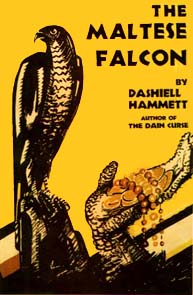
In the 40s and 50s, The Adventures of Sam Spade, was a popular US radio show based on stories written by Dashiell Hammett, featuring Howard Duff in the lead. But the story Blue Moon features the the chemistry of Bogie and Bacall!
The Free Information Society has five of the original broadcasts available for free download:
The Thrilling Detective site has more information on the shows on it’s excellent Sam Spade page.

Thanks to a pointer to the Mercury Theater on the Air site from Lloydville of mardecortesbaja.com.
Amongst many broadcasts from this famous Orson Welles radio-play project, is a 1939 radio adaptation of Dashiell Hammett’s novel, The Glass Key, which was adapted for the screen in 1935 and again in 1942.
You can download an MP3 of the original broadcast from the Mercury Theater on the Air site.
I am currently reading, the first ever book about film noir, A Panorama of American Film Noir, 1941-1953, published in France in 1955, and only translated into English in 2000.
It is a revelation. Authors Borde and Chaumeton, in seeking to explain why films noir appeared, see a major influence as the emergence of a wider awareness of psychoanalysis and its motifs in America at the time. Their analyses of their canon of the first big three post-war noirs are centered on the films’ dream-like qualities and the emergence of protagonists with pronounced psychoses: The Big Sleep (1945), Gilda (1946), and The Lady From Shanghai (1947).
Within the noir series Gilda was a film apart, an almost unclassifiable movie in which eroticism triumphed over violence and strangeness. Howard Hawke’s The Big Sleep is, on the other hand, a veritable classic of the genre, the essential laws of which it encapsulates… The Lady From Shanghai is a film noir in the full sense of the term… the director’s [Orson Welles] personality bursts out at every step, extends beyond the bounds of the series, and streams forth in a whole series of marvelous images.
The authors’ views on each of these movies are deeply eloquent. Very brief excerpts follow.
Gilda: [the] apparently disconcerting plot is often… studied in the extreme… [tracing] … in the umpteen wrangles of Johnny Farrell, torn between Gilda and her husband, who’s clearly a father substitute father for him.
The Big Sleep: The sordid settings and their bizarre details, the brief but merciless fistfights, the furtive murders, the sudden reversal of roles, the “objects” in the Surreal sense of the word… the eroticism of blood and pain (Vivian kissing Marlowe’s bruised lips) … the wild dancing of the women… Never will film noir further the the description of a cynical, sensual, and ferocious world.
The Lady From Shanghai: The main characteristic of this confused story is an atmosphere of malaise. But [the film] is mainly impressive for its extraordinary technical mastery… when the drama begins to take shape, the virtuosity of the direction becomes perceptible: a motley assortment of mobile shots, tilted frames, unexpected framings, long circular panning or tracing shots.
It is interesting that Borde and Chaumeto see virtuosity where the accepted wisdom is that these elements are weaknesses arising from post-production studio ‘butchering’ of Welles’ original vision. The authors indicate they were aware of this intervention.
[piclens-lite-link]


 FilmsNoir.Net - all about film noir