Blog Feed

Sunset Boulevard (1950): “I’m ready for my closeup”

Sunset Blvd (1950)

Director: Billy Wilder
Screenplay: Charles Brackett, Billy Wilder and D.M. Marshman Jr
Cinematography: John F. Seitz
Editing: Arthur Schmidt
Art Direction: Hans Dreier and John Meehan
Music: Franz Waxman
Cast: William Holden (Joe Gillis), Gloria Swanson (Norma Desmond),
Erich von Stroheim (Max von Mayerling), Nancy Olson (Betty Schaefer)
Paramount 1950 (110 min)

“Wilder grasped that Hollywood itself could be a scene of Gothic isolation and solipsistic emotion. He showed the grandeur that could emerge from the parasitical relations between actors and writers, performers and directors, stars and star-gazers – cannibals all. Like most noir films, with their dark motives and circular structures, Sunset Boulevard makes corruption and betrayal seem inescapable. Yet Wilder pays tribute to what can emerge from this hothouse world, just as he does honor to the film formulas he lightly parodies. As Hollywood keeps reinventing itself, as Wilder’s own films become relics of a distant age, his barbed tribute stings and sings with even more authority.”
– Morris Dickstein, The A List (Da Capo Press).

“… a tale of humiliation, exploitation, and dashed dreams… The performances are suitably sordid, the direction precise, the camerawork appropriately noir, and the memorably sour script sounds bitter-sweet echoes of the Golden Age of Tinseltown… It’s all deliriously dark and nightmarish, its only shortcoming being its cynical lack of faith in humanity: only von Stroheim, superb as Swanson’s devotedly watchful butler Max, manages to make us feel the tragedy on view.” – Time Out

Sunset Blvd (1950)

Sunset Boulevard is a masterpiece. Billy Wilder’s assured direction and the elegant and fluid camera of veteran cinematographer John F. Seitz enthrall from the first frame to the last.  A literate script, great performances from the lead actors, an expressionistic score from Franz Waxman, and the bravado art direction of Hans Dreier and John Meehan define a deeply focused journey into dissolution and madness. There is also a wit and wry humor that lightens the mood before the noir universe begins to exact its vengeance on the poor souls who stumble in their struggle to simply live and love.

Sunset Blvd (1950)

The last major Hollywood film shot on a nitrate negative, the restored DVD version of 2002 reproduces the “lustrous black and white images” cinema audiences experienced on the film’s release nearly 60 years, and gives the drama an immediacy that belies the many years that have passed.

Sunset Blvd (1950)

Applauded as the quintessential movie about Hollywood, for the writer the theme of the film is deeper and more universal.  Aging silent actress Norma Desmond, who hasn’t worked for 20 years, lives out the autumn of her life in a decaying 1920s palace on Sunset Blvd. with her intensely loyal factotum, Max, in gothic delusional grandeur, dreaming of the day she returns to the studio where Cecil B. DeMille will direct her abominable screenplay of Salome, in which of course she will play the lead.  Into this scenario stumbles a younger man, Joe Gillis, a screenwriter on the skids and on the lam from his creditors. She wants her script edited and he is desperate for money and lodgings – a bargain is made in perdition.

He becomes her kept lover and she falls madly in love with him. He tries to rebel, she slashes her wrists, and he runs back to the mansion-cum-prison where only the front cell-like gate has a lock.  His thwarted ambition, lassitude, weakness, and a kind of reciprocated love for the aging siren, hold him to her, until he starts sneaking out at night to work on a script with Betty, a young studio reader, who falls in love with him. Norma finds out, and one whispered surreptitious phone call has thunderous consequences for all.

In the quote at the head of this review, the Time Out writer says the movie’s “only shortcoming… [is] its cynical lack of faith in humanity: only von Stroheim, superb as Swanson’s devotedly watchful butler Max, manages to make us feel the tragedy on view.”  I can’t agree with this assessment.  Gloria Swanson, William Holden, and Erich von Stroheim inhabit their roles with an intense humanity, and Nancy Olson as Betty is totally engaging as a young woman with heart and a vivacious intelligence.  Norma’s femininity and vulnerability are on display in every scene. Her tragedy is that of the successful woman whose career is side-lined into a banal existence of domestic isolation: her angst is palpable and exquisite.  Max, the loyal friend, ex-husband, and faithful retainer, idolises Norma, and his noble intentions in perpetuating Norma’s delusions tragically precipitate her destruction.  Joe is desperate when he enters his Faustian-pact with Norma, and his actions are all too human. His first attempt at freedom is thwarted by his ‘love’ for Norma, and his capitulation is not totally abject. His second and final renunciation is as noble and self-less as it is tragic.

Wilder has fashioned a deeply sympathetic story of four fundamentally decent people, each tortured in their own way, and each sadly complicit in the inevitable doom that will engulf them.

The Postman Always Rings Twice (1946)

The Postman Alays Rings Twice (1946)

Sex and death. Greed and selfishness. Crime and punishment. The film adaptation of James M. Cain’s novel, The Postman Always Rings Twice, is a dark allegory of amorality and its consequences.  As a relentless cosmic avenger, fate ensures that the adulterous lovers who murder the woman’s husband, suffer definite and final retribution for their sins.

Lana Turner and John Garfield are great in the lead roles. Turner’s platinum beauty, and the smouldering animal sexuality of both Turner and Garfield dominate the mise-en-scene.

The Postman Always Rings Twice (1946) The Postman Always Rings Twice (1946)

A theme of entrapment is played out in a roadside diner.  Cora the beautiful and ambitious young wife is caged in a barren loveless marriage to a much older man, while Frank the drifter who works for them is ensnared in a demonic love for Cora.  This scenario and the doomed fate of the protagonists is established deftly in the first few scenes with the help of an otherwise prosaic ‘Man Wanted’ sign. Director Tay Garnett and cinematographer Sidney Wagner use close-framed shots to express the suffocation of the two lovers, and panoramic elevated ocean beach scenes at dusk to portray the blooming of love and as the backdrop to idyllic respites from their doomed trajectory towards destruction. Their final visit to the beach has a dark foreboding.

The Postman Always Rings Twice (1946)

As Mark T. Conrad wrote of the movie: “It has the feeling of disorientation, pessimism, and the rejection of traditional ideas about morality, what’s right and what’s wrong.” And there is no pity or remorse. A classic film noir.

The Sniper (1952): Off Target

The Sniper (1952)

A sharp-shooting psychopath who hates woman goes on a killing
spree in San Francisco and is pursued by the police.

Director Edward Dmytryk started work on The Sniper just after he finished serving a 12 month jail sentence for refusing to co-operate with the infamous HUAC. Upon his release Dmytryk recanted and squealed to the HUAC naming names. Producer Stanley Kramer then offered him this Columbia production. Ironically, the veteran right-wing actor and HUAC collaborator, Adolphe Menjou, was signed to play an un-sartorial cop sans moustache.  The NY-based Daily Worker was not impressed: “Movie director Edward Dmytryk, ex-member of the Hollywood Ten who turned informer for the FBI, is now palsy-walsy with his erstwhile foe – the rabid witch-hunter and haberdasher’s gentleman – Adolphe Menjou. Now Dmytryk and Menjou are together again – this time as friends. Menjou has a leading role in The Sniper, which Dmytryk, gone over to warmongering and restored to favor of the Big Money, is now directing for Stanley Kramer productions.”.

A solid b-production, The Sniper is a taut thriller, which does not quite come off as a film noir, although there are strong moments in this gritty story of a young loner battling a deep and violent pathological hatred of young woman. Shot on location on the streets of San Francisco, angle shots and off-kilter staging sustain the visual interest throughout, with those scenes in the seconds before the sniper shoots three of his victims being particularly suspenseful.

The Sniper (1952)

The acting is rather stolid and this weakens the drama. While the script attempts to explain the sniper’s pathology and sermonises on how the law should handle such offenders, there is little real depth to the portrayal. Filler scenes used to establish his immediate motivation are too obviously contrived, with the younger women he encounters socially being unnecessarily mean-spirited. But in a sequence in an amusement park, the pathology and the anger of the sniper are deftly explored without artifice and with chilling accuracy.

The police investigation has just too many convenient coincidences, and the meetings with the cops and the good burghers of ‘Frisco demanding action on the pursuit are too stagey by half. A fair b-thriller of considerable historical interest.

The Sniper (1952)

Underworld USA (1961): “We got a right to climb out of the sewer and live like other people”

Underworld USA (1961)

Samuel Fuller amazingly does not receive significant attention from most film writers, even though the substance of the passing tangential references to his oeuvre that are made, belie the lack of interest. Andrew Spicer says of Fuller in his book, Film Noir, when reviewing the course of noir post-Touch of Evil (and I dispute the b-film-maker appellation):

“…there was an ‘underground’ culture that retained film noir as a critical cultural form. This underground tradition included… b-film-maker Samuel Fuller with Underworld USA (1961), Shock Corridor (1963) and the Naked Kiss (1964) [that]… attacked the beneficence of American capitalism and the sanctity of the suburban family, keeping alive a habit of irony, scepticism, absurdity and dark existentialism.”

Mark Cousins refers to Fuller only once in his The Story of Film, and then only when introducing 1920s cinema:

The primitive film-making of the early 1910s with its simple shots, raw frontal acting and rapid action, un-moderated by the expectations of the middle classes, was disappearing. Like a humpback whale it went deep underwater. There would be rumours of sightings in 1950s America in melodramas such as Johnny Guitar (1953), and in the films of Samuel Fuller.

Fuller’s pulp melodramas are akin to guerrilla attacks on established certainties.  In Underworld USA, where the rackets are under the spotlight, we have a fast and furious battle where the alienated existential anti-hero Tolly Devlin, driven initially by revenge finds a kind of redemption in a squalid death in the same back alley where the genesis of his dark vengeance is rooted.  The women in his life find a new meaning and purpose in their lives: “We’ve got to finish the job for Tolly – or he died for nothing!”.  Fear is overcome by courage.  In  Fuller’s noirs, it is the influence of strong women that hold the ethical and moral center. Tolly finds what he never knew existed in the b-girl Cuddles – love and giving of one’s self without reservation or guile to another.  In each of the other Fuller noirs reviewed on FilmsNoir.Net, The Crimson Kimono (1959), The Naked Kiss (1964), and Pickup On South Street (1953), women hold the key to redemption.

The cast is superb, with Cliff Robertson’s performance as Tolly as nuanced as it could be, and Dolores Dorn as Cuddles steals the picture, with a simplicity and integrity that is matched by few more successful actresses.  The roller-coaster score by George Duning is a brilliant accompaniment seamlessly flowing from a dramatic crescendo underscoring the adrenalin-fuelled action on the screen to a plaintive but subdued  jazz motif that echoes the pathos that ensues.

Underworld USA (1961)

Elevator to the Gallows (Ascenseur pour l’échafaud – France 1958)

Elevator to the Gallows (1958)

Louis Malle’s Elevator to the Gallows while visually interesting is an ugly tale. Great title though.

The scenario is deftly established in the first few scenes. Two middle-class lovers, Florence and Julien, on the verge of middle-age, whisper sweet nothings over the phone in the late afternoon and when she hangs up, he commences to put into action their pact to murder her older husband, Simon Carala, who is also Julien’s boss. It is established before the crime that the boss is a jerk in a scene with a telephonist who places a call through to Carala, and where an electric pencil-sharpener serves to intimate the banality of office work.

Julien is ex-army and has no difficulty scaling a rope secured by a grappling hook outside the office building in broad daylight (!) to Carala’s office on the floor above.  Just before Julien shoots Carala dead with Carala’s own gun making it look like suicide, we learn that Carala is an arms dealer when Julien lectures him on the infamy of his trade!  There disturbingly is no irony here or in the rest of the film after we learn that Julien is well-rewarded for his work, and that Florence enjoys the life-style of a Parisian bourgeois. In Hitchcock fashion, Julien slips up when he leaves the rope hanging from the balcony-rail outside the dead guy’s office. This feau pax is the trigger for what ensues: down-hill all the way.  We get to see two more senseless murders, the attempted double-suicide of teenage lovers, and the use of a reverse McGuffin – a miniature ‘spy’ camera. All is elegantly woven with a tres-cool Jazz score composed and performed by Miles Davis.

Between the opening crime and the denouement we endure interminable scenes of a rather frumpish Florence (played a la minimalist by Jeanne Moreau) walking the streets of Paris from one dive to another looking for her lost lover.  The amour fou is established on her side only. For most of the ‘action’ Julien is way-laid in a conveyance.  A second story of two juveniles on a joy-ride in a stolen-car which spirals into hell is skillfully merged with the main arc.

Ultimately though the whole affair is no more than chic nihilism packaged as a noir take on romantic obsession and teenage angst.

Elevator to the Gallows (1958)

“The B List” in Paperback

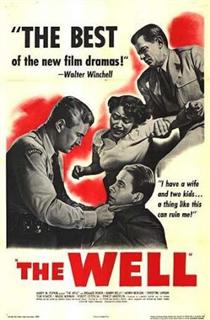
The Well (1951)

The B List: The low-budget beauties, genre-bending mavericks, and cult classics we love (Da Capo Press. $15.95. 288 pages), edited by David Sterritt and John Anderson, has been released as a paperback. The book is organised by genre – film noir, road movies, horror movies etc. Contributors include the Village Voice’s J. Hoberman, Newsweek magazine’s David Ansen, Salon’s Stephanie Zacharek, Roger Ebert and others.

The Noir section is fairly predictable, though The Well (1951) is a new one for me.  I see King Greole (1958) is included under a rock movies section, though it could also be seen as having noir elements, and for me is  Elvis Presley’s best movie (I am a closet Elvis fan).

You can check out the contents in full at Amazon.

Wierd Science…

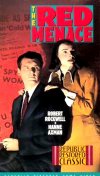
The Red Menace (1948)

Tomorrow evening the University of Maryland will host a debate headlined The Un-Americaness of Film Noir. The background provided by the University is certainly interesting:

Jonathan Auerbach’s book in progress Dark Borders offers a political reading of American film noir as a Cold War genre centrally concerned with redefining citizenship. It begins with questions of affect and aesthetics–the strange tone of disenfranchisement or non-belonging that haunts so many of these mid-century crime movies. Freud’s notion of the unheimliche links the uncanny mood of these important films with fears that “Un-Americans” and un-American values might overtake or undermine the homeland. These anxieties surface during a series of wartime and post war emergency measures, beginning with the anti-sedition Smith Act (1940), the Mexican migrant worker Bracero Program (1942), the domestic internment of Americans of Japanese ancestry (1942), and the HUAC hearings in 1947 that sought to criminalize native-born communists (the CPUSA). This talk will be discussing one key scene in the anti-communist film The Red Scare (1949) in conjunction with a little-known but very striking movie (arguably the first film noir) Stranger on The Third Floor (1940), starring Peter Lorre, that imagines the rule of fascist law in the USA and that conceives of madness as a foreign country.

Wild stuff!  More info here.

Vertigo (1958): Red for Noir

Vertigo (1958)

“The old master, now a slave to television, has turned out another Hitchcock-and-bull story in which the mystery is not so much who done it as who cares.”
Time (16 June 1958)

“Brilliant but despicably cynical view of human obsession… The bleakness is perhaps a little hard to swallow, but there’s no denying that this is the director at the very peak of his powers, while Novak is a revelation. Slow but totally compelling.” – Time Out

I will win no friends with this review.

Vertigo is technically brilliant. Hitchcock has consummate command of his mise-en-scene and knows how to fill a wide screen, with San Francisco artfully rendered using a fresh and elegant palette. Bernard Herrmann’s score is brilliantly moody and asynchronous.

But the contrived and far-fetched plot, heavy-handed symbolism, and Hitchcock’s signature detachment-cum-contempt for his protagonists, make the whole affair rather bleak and alienating. The first half is so slow it undermines the mystery of the strange woman portrayed by Kim Novak. This shot of James Stewart after having followed her car around the same city block more than once, expresses my impatience precisely.

Vertigo (1958)

Hitchcock wallpapers the inside of a restaurant so garishly red in Stewart’s first encounter with the young woman he has been asked to tail, that it comes across as ham-fisted: danger danger alarm alarm sex sex. Then there is the atrocious portrait of a dead woman that inexplicably has pride of place in a public art gallery.

The cartoon nightmare sequence that is the immediate prelude to Stewart’s descent into catatonia feels imposed and artificial, as does the inexplicable flashing of a blue light over him as he slips into his disturbed dream.  We then move to a scene in an institution where his mental breakdown is confirmed, and then a fast-forward in a jump cut to a released and supposedly ‘recovered’ Stewart wandering the streets manically obsessed with the specter of a dead woman. Towards the end the proceedings start to fall apart. An unbelievably chance encounter on the streets of San Francisco between Stewart and a young sales assistant stretches credulity past a reasonable limit.

The movie has a gothic noir look and feel, so it is no surprise that some writers see Vertigo as a film noir. I suppose you could say that there is a femme-fatale and the themes of obsession, betrayal, and criminality support this view. Andrew Spicer in his book Film Noir (2002) sees Vertigo as “the most profound of noir’s exploration of psycho-sexual dislocation”. Personally, I think Joseph H. Lewis’s The Big Combo (1955) is a better picture where these motifs are rendered with more economy, elegance, wit, and empathy.

Man Hunt (1941): The Thriller As Propaganda

Man Hunt (1941)

An entertaining thriller set in London on the eve of WW2 from Fritz Lang filmed a la noir, with inspired photography from Arthur Miller.  A suave English gentleman adventurer is pursued by Nazis through dark fog-laden streets.

Man Hunt (1941)

Walter Pidgeon is charming as a toff game-hunter turned animal liberationist, who takes a pot-shot at Hitler at his rustic German residence, is caught, then escapes, and makes it back to London as a stow-away, into a trap that he eludes with the help of a young cockney lass, played by Joan Bennett, who is as cute as a button.  The dastardly Nazi villain is played with relish and aplomb by George Sanders.

The dark and earnest mood is lightened by a wryly humorous and witty script.

They don’t make movies like this anymore. A must-see.

Bright Lights Shine on Film Noir

Bright Lights

Check out this page for links to all the articles on film noir published by the Bright Lights Film Journal, and these articles from their latest issue: a profile on noir regular Dana Andrews, and a review of Louis Malle’s 1958 noir  Elevator to the Gallows (Ascenseur pour le Chafaud).