Odd Man Out (1947): Dark Yet Glistening

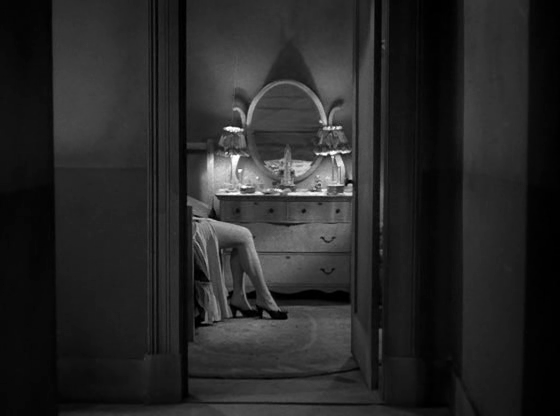
In 1949 British director Carol Reed and Australian born cinematographer Robert Krasker made The Third Man. One of the great films of the 1940s and a signal film noir. Two years earlier the pair worked together on Odd Man Out.  While Odd Man Out is less widely known, the film is of sufficient stature to rank as an essential film noir.

In Odd Man Out Reed and Krasker reveal the nocturnal soul of the regional city of Belfast, a port and industrial town in Northern Ireland, as they did to greater acclaim the more urbane environs of post-war Vienna in The Third Man. A dark fatalism imbues both films, which are concerned with a police hunt for a criminal. Each protagonist is drawn with a certain ambivalence, and both men are loved by a woman who sees past their crimes. These scenarios have an engaging cavalcade of characters as in a true human comedy, yet it is the antagonism of love and friendship on the one hand, and the imperatives of conscience on the other, that matter. In The Third Man, the dilemma is whether loyalty out of passion is stronger and more genuine than the loyalty of friendship, where the object of affection is without scruples and commits despicable acts.  Harry Lime is an engaging rogue but his crimes are immoral and motivated by greed. Odd Man Out however presents us with a protagonist whose morality is more problematic.

In the opening scenes of Odd Man Out the leader of an IRA cell played by James Mason is shot and wounded during a heist to raise cash, and in the struggle to escape, he shoots and kills a cashier.  The rest of the story follows his desperate attempts to reach a safe house where the young woman who loves him is waiting. He engages in not only this physical struggle but also with an agonising remorse at having taken a life. Here the film meanders a bit while a clutch of humanity is caught up in the pursuit.  Betrayal, avarice, and spirituality are all given a place, but it is altogether too much like preaching, and some odd humour jars even though it is a barbed portrayal of greed and artistic pretensions.  The poetry here is in the dark yet glistening visuals as we follow Mason on his path through the city at night and in the rain.

The inevitable dénouement has a tragic pathos that echoes not so much film noir but more the fatalism of French poetic realism.  If we are charitable the ending is a homage to Julien Duvivier’s Pépé le Moko (1937), and if we are not so inclined it harkens unmistakably to the motifs and mise-en-scène of that film.

Mason beautifully inhabits his role in a strong physical sense where his words are few and often soliloquies.  As the girl who loves him, Kathleen Ryan is a commanding presence – her quiet stoicism masks a deep passion and devotion. A woman straight from a novel by Simone de Beauvoir. Her actions sharply mark her as an existential hero, so much so that the closing scenes achieve a different resonance than in Pépé le Moko.

One of the great films noir and, to quote Peter Bradshaw from the UK Guardian, “an eccentric masterpiece”.
The Thief (1952): Silence is golden

The Thief (1952)

The independently made cold-war thriller The Thief covers familiar terrain in a novel way. Sight and sound are heightened by a central conceit that I won’t reveal. Composer Herschel Burke Gilbert’s dramatic and insistent score – which garnered an Oscar nomination – is more than up to a big task.

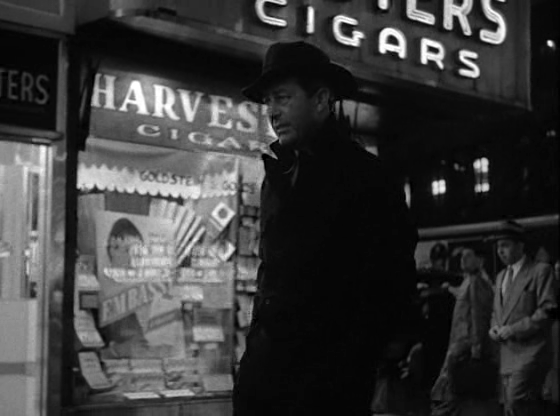
A nuclear scientist in Washington is leaking secrets to the enemy. When the story opens he is clearly having second thoughts. Whether his entrapment is motivated by money or ideology is not central to the film’s concerns, which early on focuses on the mechanics of the treachery. After a mishap blows the breach wide-open the hapless spy is on the run. Here the film goes out on the streets of  Washington and – in the final scenes – New York City.

A middle-aged greying Ray Milland delivers in a demanding role where demeanour must convey the mood. He is as strong as in The Lost Weekend (1945) and then some. Milland’s performance, and the brilliant noir photography of Sam Leavitt and taut direction of Clarence Greene (who had a hand in the script and produced) elevate the film despite a threadbare plot to a certain greatness. The tension is held throughout and your adrenalin levels are continually pushed to the max. The redemptive resolution is weak but countered by the sheer visual poetry of the closing scenes.

The Thief (1952)

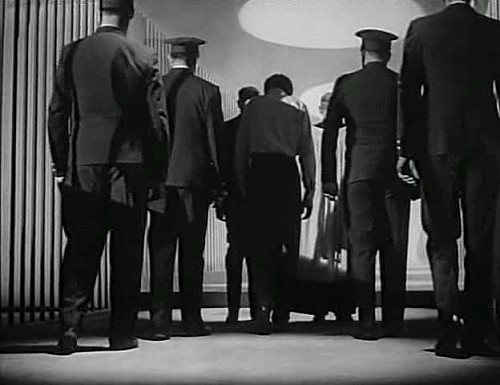
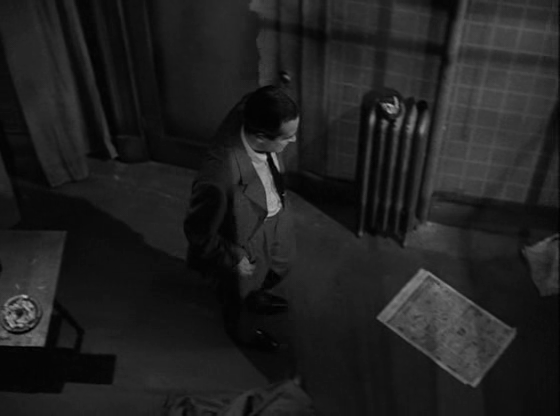
The film noir motif  of entrapment is the dramatic core and delivers one of the movie’s strongest scenes. Milland is holed-up in a decrepit NY tenement with the FBI closing-in while he waits for the next signal from his handlers of his escape plan.  The camera looks down from the ceiling of the tenement room at Milland pacing frantically from wall to wall like a rat in a trap. The only window faces a brick wall. This solitary desolation harkens back to earlier in the story when Milland is shown walking the prison-like corridors of  his place of work.

This is a film noir so sex lays its claim to attention. Milland’s scientist is a loner who has lived and worked in isolation, and his sexual repression is revealed through a tease that is both brutal and unnerving. As he desperately waits for a telephone call in the corridor of the tenement ever on the edge of hysteria, he encounters the occupant of the room opposite, a young woman that makes “alligators look tame”.  Then TV actress Rita Gam plays this girl with consummate sleaze, delivering perhaps the hottest come-on of the classic noir cycle.

A must-see study of entrapment on steroids.

The Thief (1952)

Cinematic Cities: New York 1952

The Thief (1952)

The Thief (1952): Direction –  Russell Rouse  |  Cinematography – Sam Leavitt


The Burglar (1957): The last b-movie?

The Burglar (1957)

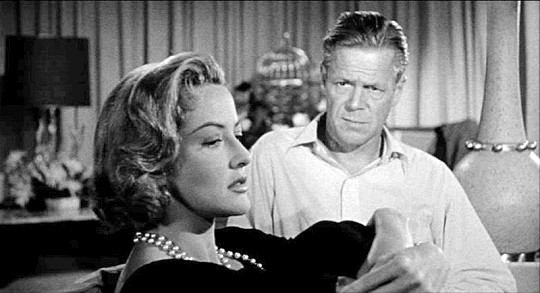
One of the few films where David Goodis adapted his own novel for the screen, The Burglar is a brooding story where decency is a ‘dark passage’ to destruction.

A flashback provides the back story of an abandoned boy brought up by a kindly thief who adopts him, and apprentices him to the ‘trade’.  The adoptive father is killed in an abortive heist when the boy’s first mistake on the job triggers an alarm. The dead man has previously extracted from the boy the promise that if something happens to the father, he will look after his young daughter. The story pivots on this obligation and the complications that ensue when the burglar the boy has grown up to be steals a valuable necklace – aided by the girl and a motley crew of accomplices.

Dan Duryea is the thief and Jayne Mansfield is the child-woman under his wing, who is otherwise employed in the kitchen or casing heists. Duryea delivers in a role where what is not expressed is where the action is. The limitations of Mansfield in an early role render her believable as a simple girl struggling to make sense of the life she has fallen into, and her ambivalent relationship with Duryea, who is tormented by his warring paternal obligations and the underlying attraction they have for each other.  In the noir universe such dilemmas are always resolved at a cost.

A crooked cop is involved in that denouement, which is telegraphed after an interlude where Duryea hooks up with a women in a bar, played at first as a tough dame but then with real pathos by Martha Vickers.  There is a rare for noir tenderness in the scenes that follow when these two damaged souls open up to each other. This night of refuge is followed by a brutal betrayal the next day, and here a jarring plot hole almost pushes the scenario off-course, but it quickly swerves back onto the road to nowhere.

The film’s budget was only US$90,000 and perhaps was one of the last b-movies delivered of the signature gritty realism of Columbia Pictures.  But the picture has a patina that belies it’s budget, with truly accomplished cinematography from DP Don Malkames, and taut editing and elegant direction from first-time director Paul Wendkos. All carrying a stunning wide-screen realist austerity from a deep focus on-the-streets ambience.

A worthy valedictory to the b-movie.


Noir Poet: Sinclair Lewis

Stranger on the Third Floor (1940)

“When a man straggles on the short death-walk from his cell through the little green door, into the room where stands the supreme throne, does he, along with his incredulous apprehension, along with trying to believe that this so-living and eternal-seeming center and purpose of the universe, himself — this solid body with its hard biceps, its curiously throbbing heart that ever since his mother’s first worry has in its agonies been so absorbing, this red-brown skin that has glowed after the salt sea at Coney Island and has turned a sullen brick after wild drinking — the astonishment that this image of God and Eternity will in five minutes be still and stiff and muck — is he at that long slow moment nonetheless conscious of a mosquito bite, of a toothache, of the smugness of the messages from Almighty God which the chaplain gives him, of the dampness of the slimy stone corridor and the echo of their solemn march? Is he more conscious of these little abrasions than of the great mystery?”

Sinclair Lewis, ‘Dodsworth’ (1929)

The Big Bluff (1955): The bitter flavour of festering reality

The Big Bluff (1955)

The lurid original posters for The Big Bluff are those rare cinematic documents, where the movie promoted is actually sleazier than the posters would have you believe.

A suave grifter latches on to a dying woman with dough, only he is impatient to see her gone.  His evil machinations are his undoing.  The sheer perversity of the scenario and its relentless immorality leave you stunned.  Don’t go figuring this is a cinematic experience. It has the bitter flavour of festering reality, and is played out in a fetid LA where evil ambition and a conniving race to the bottom suck you down into a putrid swamp.  The homme-fatale is tripped-up in a quintessential noir dénouement, twisted and out of left field.

A b-movie par-excellence that is so compelling it feels much longer than the economical 70 minutes it takes to go from melodrama to perdition.

Director W. Lee Wilder, Billy Wilder’s estranged brother, and DP Gordon Avil, keep the action up, with some crazy antics like what-the-heck low angle and point-of-view shots that keep you unsettled in flash noir style, not to mention some tawdry kissing that literally mists up the screen.

Check out the cheap cabaret act featuring a floozy so vulgar you are in no doubt of where you are headed.


The Story of Temple Drake (1933): The good bad-girl

storyoftempledrake-hopkins

Pre-code Hollywood was frank about sex, and women were more than appendages to male heroics.  Though the male gaze ensured these dames were hot and not just adventurous.

While the Paramount adaptation of William Faulkner’s trash novel ‘Sanctuary’ took a while to get made, when it hit the screen the studio didn’t cut corners nor dolly things up. The Story of Temple Drake is all of 71 minutes and not surprisingly coherent story-telling is a casualty, yet the lurid plot is handled with a compelling economy and frankness, strongly abetted by the suitably dark lensing of Karl Struss, whose expressionist lighting of horrendous close-ups insinuates a decadent menace into the melodrama.

Temple Drake is a cheap little rich-girl from the South, who likes slumming with drunken lechers driving fast cars. One night she comes a cropper when her latest partner in sleaze crashes his roadster. After seeking help at a decrepit mansion they are abducted by a sinister gang of bootleggers.  The drunken beau is dumped, the girl raped, and then shanghaied to a bordello.  Is she a willing accomplice to her degradation? The scenario is ambivalent and you have to live with your doubts.

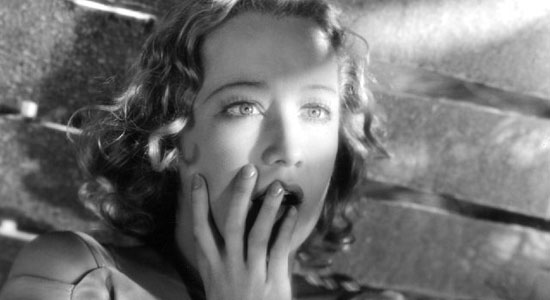
Wide-eyed and gorgeous, a not so young Miriam Hopkins brings a simmering sexuality to her portrayal of a woman whose lurid appetites are kept in check by a veneer of respectability – and a genuine awareness of her tendency to self-destruct.  For all her baseness, she has a moral centre that only needs to be coerced into action. Trouble is on both occasions she aids her own demise. First by killing, and then into making an admission of guilt that has severe consequences.

While Temple Drake is no femme-fatale and her actions are reactive, she cannily prefigures those hard dames that were let loose less than a decade later.

This notorious pre-coder is essential viewing.


The PI as Anarchist

sam-spade

PI’s Sam Spade and Philip Marlowe are outsiders, loners, whose chivalry is not esteemed let alone recognised, and it is sure as hell doesn’t pay well. Men who eke out their existence on the periphery, up against the rank underbelly of that rapacious beast, the modern metropolis. For the purveyors of the American Dream they are losers. Yet they are mythic.

In a recently published essay on the myth of the cowboy, the late British historian and Marxist, Eric Hobsbawm, draws a parallel between “Gary Cooper at high noon” and Sam Spade.  A worthy comparison.

“Individualist anarchism had two faces. For the rich and powerful it represents the superiority of profit over law and state. Not just because law and the state can be bought, but because even when they can’t, they have no moral legitimacy compared to selfishness and profit. For those who have neither wealth nor power, it represents independence, and the little man’s right to make himself respected and show what he can do. I don’t think it was an accident that the ideal-typical cowboy hero of the classic invented west was a loner, not beholden to anyone; nor, I think, that money was not important for him… In a way the loner lent himself to imaginary self-identification just because he was a loner. To be Gary Cooper at high noon or Sam Spade, you just have to imagine you are one man.”

– Source: An extract from Eric Hobsbawm’s final book Fractured Times published by The Guardian as ‘The Myth of the Cowboy

“All you need to make a movie is a girl and a gun”

The famous pensée of Jean-Luc Godard about girls, guns, and movies is perhaps too glib, and in film noir, not really the case. While in classic noir, we certainly had women and guns, femme-fatales were more likely to be closer to 30 than 20 in years, and rarely held a gun let alone shoot one. A femme-fatale was usually adept at having a love-struck sap do the shooting for her.

Though there were occasions when a dame pulled a gun and used it.

Mildred Pierce (1945)
Murder My Sweet (1944)
Blues in the Night (1941)
The Lady from Shanghai (1947)
Too Late for Tears (1949)
Out of the Past (1947)
Repeat Performance (1947)
Gun Crazy (1950)
Gun Crazy (1950)
Deception (1946)
Deception (1946)


The French have a name for it: noir

Farewell My Lovely aka Murder My Sweet

PI Philip Marlowe has the poet’s eye for the softer edges of existence while enmeshed in the hard reality of greed, corruption, and criminal passions.  The smell of places, dirt and dust, smog, rain, the sun on baking asphalt, the twilight that has no sunlight lit by dull incandescent bulbs that throw shadows in bars where angst is held at bay for as long as a shot of  booze does its job. A respite from the desperate loneliness of men and women in big cities where ethical conduct and loyalty are not rewarded but ridiculed, and get you into trouble, and deep.  You give up on true relationships and, well, love, it just doesn’t bare thinking about.

 “I watched the cab out of sight. I went back up the steps and into the bedroom and pulled the bed to pieces and remade it. There was a long dark hair on one of the pillows. There was a lump of lead at the pit of my stomach. The French have a phrase for it. The bastards have a phrase a for everything and they are always right.  To say good-bye is to die a little.”

– [Raymond Chandler, ‘The Long Goodbye’]