
1948 was a signal year in the film noir cycle, which saw the move towards on-the-streets filming and a shifting focus on police operations, heralding the police procedurals that became dominant in the 1950s.
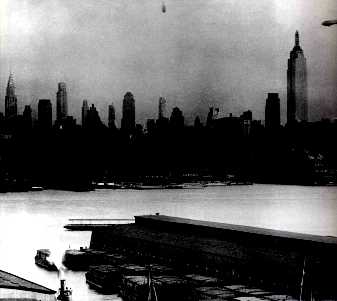
Jules Dassin’s The Naked City for Mark Hellinger carries the banner for this nascence of a cinema-verite style of filming. Dassin’s picture is set in New York and tells the story of a murder investigation by homicide cops with a gritty realism. But thematically, there is little to distinguish The Naked City as a film noir. It is the city of New York and its people that hold your attention, and the several bit-portrayals of people going about their lives are truly engaging. The final scene where a street-sweeper in profile scoops up yesterday’s papers from the gutter and moves on into the New York night gives an arresting hard-bitten closure.
In the same year Fox released Call Northside 777, a ‘newspaper’ noir set in Chicago directed by Henry Hathaway (The House on 92nd Street (1945), The Dark Corner (1946), Kiss of Death (1947), and Niagara (1953)). The film is an adaptation based on true events in Chicago during prohibition and recounts a newspaper reporter’s 1944 investigation into the conviction in 1932 of two young polish immigrants for the killing a policeman. A solid script by Jerome Cady and Jay Dratler, and the exceptional cinematography of DP Joseph MacDonald (Shock (1946), The Dark Corner (1946), The Street with No Name (1948), Panic in the Streets (1950), Niagara (1953), Pickup on South Street (1953), and House of Bamboo (1955)), mark this picture has having at least equal standing with The Naked City. The streets of Chicago are explored as never before.
A top-line male cast attracted an a-budget: James Stewart plays the reporter, Richard Conte is one of the convicted, and Lee J. Cobb is Stewart’s editor. Stewart is cast against type, and it doesn’t quite work. He is not hard-boiled. Rather he is too sober, happily married and middle-class, and while his reluctance to pursue the story of a ‘cop-killer’ marks out a certain prejudice, his persona jars. Conte has a relatively small role as the convict but is convincing, and Cobb is in his element.
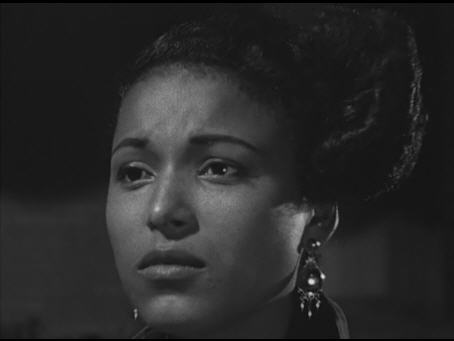
But these guys are out-classed by the dames in this picture. They are all bit-players that shine in their characterizations. Helen Walker (Nightmare Alley (1947), Impact (1949), The Big Combo (1955)) is charming and intelligent as Stewart’s knowing wife. Betty Garde (Cry of the City (1948) and Caged (1950)) is convincing as an aging hard-bitten low-life whose hostile testimony convicted Conte. Kashia Orzazewski (Thieves’ Highway (1949), I Was a Communist for the FBI (1951), and Deadline – U.S.A. (1952)) as Conte’s mother is a revelation – she IS the guy’s mother– scrubbing floors and saving nickels & dimes for 11 years to save $5,000 to offer as a reward for whoever can get her son released. Joanne De Bergh (in the first of only two film apperances) as Conte’s ex-wife steals the scene where she is interviewed by a cynical and aggressive Stewart. Her unflinching integrity shines from her unwavering eyes – she has total control of the situation – in the living room of her home where she has built a new life for herself and Conte’s son.

The picture is compelling even though the pace is slow and melodrama is kept at bay. The dramatic development of the reporter from a reluctant investigator to an impassioned crusader for justice impels the first half, and the second half is carried forward by the need to get credible evidence before a deadline agreed with the authorities. Stewart at one point castigates the blindfolded statue of justice for having a two-edged sword: the enforcement edge is sharp, but the other edge that deals with over-turning injustice is blunt. There is a duality too in the portrayal of the newspaper business in the movie, where the pursuit of sensational headlines and circulation compromises the search for truth. Early in the film, after Conte has read Stewart’s early tabloid stories, one of which splashes a photo of his wife and son on the front page, he tells Stewart to drop the story:
I sent for you
to tell you that…
I don’t want you
to write anymore…
about me or my family.
I’ve read what you’ve written.
I’ve seen the pictures
of my mother…
my wife and my boy.
We’ve poured our hearts
out to you…
(Well, you wanted help, didn’t ya?
That’s the only way you can get people
interested in the case
Nobody’s gonna read a little two-line ad
like your mother ran in the paper.
A half a million people
have been followin’ this story.
Now somebody might know
the killers and get in touch with us.)
I don’t want that kind of help.
I’ll stay here a thousand years.
But you must not
write anymore…
about my wife
and my mother and my boy.
My mother is doing this for me,
not to sell your papers.
(Oh, now, wait a minute. Wiecek.)
I made my wife divorce me…
so my boy has a new name.
Now you put his picture in the paper,
spoiled everything for him.
(I don’t know.
I thought I was doin’ a good job.)
No! This is writing
without heart…
without truth.
Before, I thought maybe
some crook lawyer…
would try to get the dollars
from my mother.
But this, I never figured.
Yes, I say it.
I’ll stay here. I’ll stay here
a thousand years.
But never write anymore
about my family.
Leave them alone.
Leave alone my wife and my boy.

Like in The Naked City, the use of new technology in police operations is significant, but here it is used to gather evidence to quash a conviction. Conte undergoes a lie-detector test, and a good amount of screen-time is spent on a useful description of how the machine works. The evidence that exonerates Conte relies on blowing up a newspaper photo to reveal the date it was taken, and the transmission of the blow-up is over telephone lines using the then ‘wire photo system’. Also, unlike in The Naked City, the cops are portrayed as obstructionist and not above illegally withholding public records in an attempt to stymie Stewart’s efforts on behalf of a ‘cop-killer’.
Call Northside 777, like The Naked City, has noir elements but is thematically less concerned than traditional noir with the fate of the criminal protagonist. Conte is free at the end, but he has lost 11 years of his life, his former wife and his son are no longer his, and his future is uncertain. While there is a definite irony in the last words spoken in the film (apart from those of the narrator) when Conte says, “It’s a good world… outside. Yes it’s a good world outside.”, these words are spoken without irony – but not without a trace of regret.









 FilmsNoir.Net - all about film noir