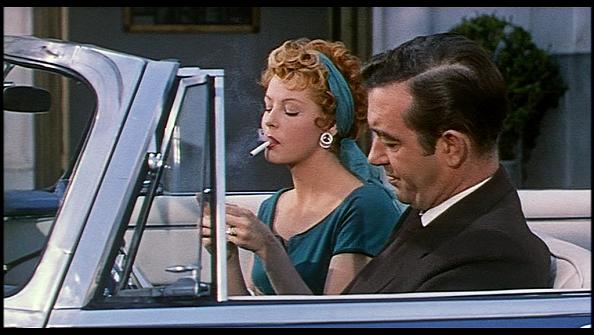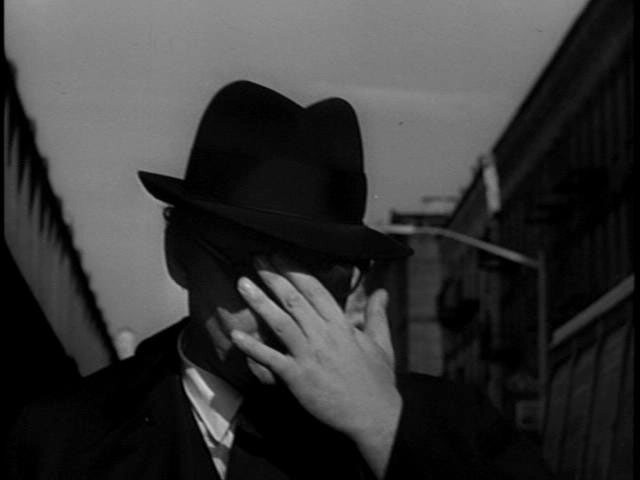
The Pawnbroker (1964)

The Pawnbroker (1964)

Some films  challenge you. Engage you. At the end the screen goes blank and you have to pull yourself back to who and where you are. You question all the facile assumptions you use to order your life and give it some meaning – reasons to get up each and every morning. Sidney Lumet’s The Pawnbroker is such a film.

Then you start reading what the “critics” have said.  Andrew Sarris called it “drivel” and Pauline Kael said it was “terrible”.  Film scholar David Bordwell in a feint valedictory for Lumet largely agrees with these pronouncements from – his term – “the critical intelligentsia”.  I give not two figs for this intelligentsia and their pretensions.

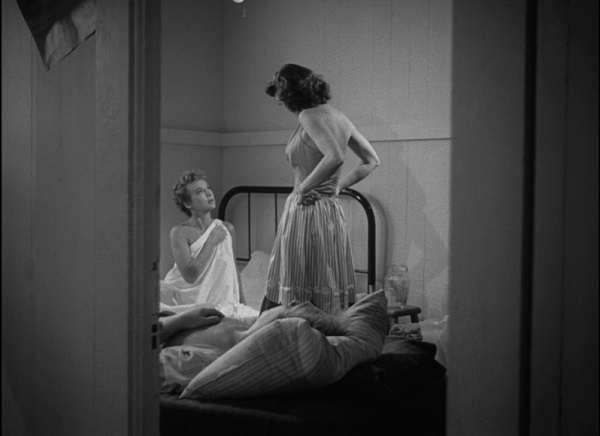
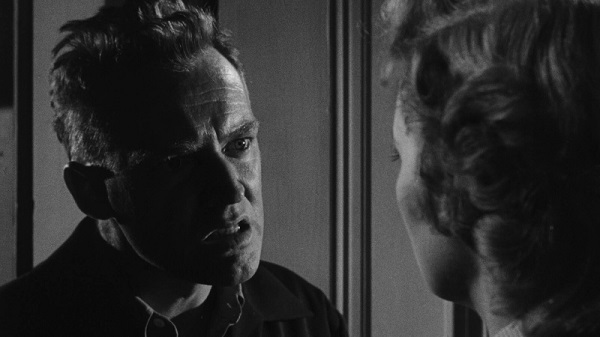
The Pawnbroker is a great film. An attempt to comprehend how a person can survive the unspeakable horror of the Holocaust and live. Pawnbroker Sol Nazerman exists. It is hard to say he does anything more. His living is to deny life has meaning beyond the sordid need to make money. He is not a brutal man just indifferent to others and consumed with his own pain. A pain bearable only to the extent that he denies it. The broken lives that confront his caged counter every day are simply triggers for stamping a pawn ticket and handing over a few dollars from the till. That these others suffer does not enter his comprehension.  He is not above fooling himself though. He launders money for a black racketeer with indifference – until he discovers that prostitution is one the rackets.

The Pawnbroker the film has large ambitions. It succeeds manifestly by drawing out the lives of small people. The people who go to a movie for relief, an escape from an existence that denies their worth, a world not interested in their suffering, and a fate standing ready to smack them down by whim alone. Not the kind of people who read the Village Voice.  A mother alone trying to bring up a boy who lives on the streets,  loves a girl, tries to build a decent life, goes wrong, then does right, only to pay the ultimate price alone amid squalor and indifference.  The man who feels no pain for a moment gets out beyond himself – but it is too late.

All the elements of this film deliver. The screenplay weaves the past and the present by juxtaposition, with what is not said, and is economic when words are needed. Each player  has a convincing sincerity. Rod Steiger’s portrayal of Nazerman is a tour-de-force and his nominations for an Oscar and other accolades are richly deserved.  The other players are as real – even if for a few short scenes.  The direction reviled by the “intelligentsia” as being heavy-handed and overwrought to my eyes is a revelation. Stillness is respected, movement followed not led, and the camera ready to be unanchored by what is happening on the screen. The score is savagely alliterative, so much so that you take it as your own heart-beat, arcing from aching to pounding. The editing is fluid and manages the shift from the past to the present almost seamlessly.  Apart from an opening scene in a suburban backyard indistinguishable from the other backyards around it, a scene which has a meaning of its own, the streets of a proletarian New York form a backdrop and a chorus to the intersecting lives that ebb and flow on their pavements, and sometimes collide. People looking out from tenement windows attuned to the spectacle of existence played out below. While they are desensitised to the trauma and tragedy that breaks out onto those streets, it happens not often enough to deny a spectacle yet is sufficiently familiar to hold their interest for only a short time.

All you need to let this film move you and pull the world from under you is compassion. Leave your self-importance in a jar by the door. Suffering is universal and suffered by each soul alone.

Guest In The House (1944): Sex in the strangest places

Guest in the House (1944)

Directed by John Brahm, Guest In The House, is about a psychopath who sets out to destroy a marriage.  A lesser film noir, but Anne Baxter is suitably creepy as a nut-job with a pathological and eventually fatal fear of birds. Ralph Bellamy a happily married man is in her sights.

What is interesting is firstly that Bellamy is essentially the same straight-up guy from His Girl Friday – a Howard Hawks’ film I loathe for raising calculation and wisecracks above honesty and decency – who is happily married to a charming woman, and secondly that Brahm makes it obvious they have a great sex life. In an early scene they are in their bedroom dancing and fooling around, and there is no doubt they would have happily consummated the frolick in bed, but for a piercing scream from the psycho down the hall. Decent guys don’t come last.  Breen was out to lunch or asleep when this pitch crossed his desk in the early 1940s.

An interesting curio.


Requiem For A Heavyweight (1962): A love greater than greatness

Requiem For A Heavyweight (1962)

Most of us reach a point in our lives when we come to the realisation that we are also-rans. Life has not delivered fame nor glory. If we are lucky we can settle into a relatively safe obscurity with family and friends, holding down a job that keeps the wolf from the door, and hope death takes us quietly and not too soon. For some though as Eric Burdon put it, all the good things have been taken, and even a safe obscurity cannot be wrangled.

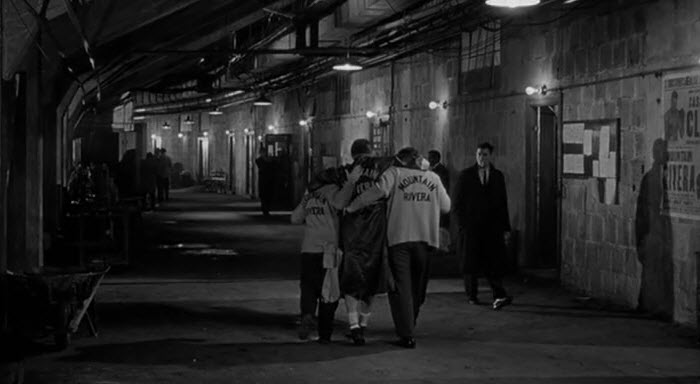
Mountain Rivera (Anthony Quinn) fights his last boxing match against Cassius Clay and is out for the count after seven rounds. Rivera is washed up – risking blindness if he fights again. Trouble is Rivera’s manager Maish (Jackie Gleason) has taken a big bet Rivera would be down no later than the fourth round. Maish has to pay big money owed to a heavy for that bet, and is desperate to get something more from that battered body, even if it means Rivera has to sell his soul in the humiliating charade of wrestling. River and Maish, and cut man Army (Micky Rooney), have been together 17 years, and all they have to their name is what each can pack into a suitcase.

There is no easy way out, not even through the concerned efforts of an employment agency worker (Julie Harris), but deep down despite bitter betrayal there is a kind of love. A love greater than greatness. Redemption? No way. Great men of no importance. Was it ever thus.

Requiem for a Heavyweight is a great film not only for its humanity but also for the craft with which it was made. Rod Serling’s screenplay is lucid and deeply compassionate, economical, and never melodramatic.  The production team takes this scenario and in just under 82 minutes tautly builds a closely realised character study, supported by a cast that delivers soulfully and with a leanness that is rarely matched.  Director Ralph Nelson and DP Arthur J. Ornitz have your attention from the first frame, with a brilliant POV opening scene as Rivera is battered across the ring by Clay, with blurred vision, massive close-ups, and after the knockout, a demented retreat to the dressing room through an ugly hostile crowd.  Low angles, graceful pans and dollies, and long deep focus shots on New York streets make for a truly cinematic experience. You can’t imagine the picture other than in the crisp and evocative monochrome that fills the screen. Editor Carl Lerner stitches it altogether seamlessly, and a hard bluesy jazz score by Laurence Rosenthal adds a true pathos.

A movie that you will never forget. A salute to what Hollywood can achieve with an intelligent screenplay and committed film-making talent. It doesn’t get better than this.

Rod Serling’s teleplay of Requiem for a Heavyweight was first broadcast on television as a Playhouse 90 feature in 1957 and won an Emmy. Jack Palance played Mountain Rivera, after Anthony Quinn had knocked back the role. Director of the movie Ralph Nelson wrote to LIFE magazine in 1963 saying he thought Palance would have been better in the movie than Quinn!

Hell’s Half Acre (1954): Noir Hawaiian-Style

Hell's Half Acre (1954)

The exotic twang of Hawaiian guitars over touristy scenes of Hawaii in the opening credits of Hell’s Half Acre evoke a monochrome vision of  Blue Hawaii. You half expect Elvis to appear and soothe you into the lyrical Hawaiian Wedding Song. The vision continues as the camera cuts to Wendell Corey and a pretty young islander bedecked with lais in a tiki bar listening to the debut of a love song composed by the said Corey.  But things get serious before the song ends with a killing stage left, and Corey, who we now know has a shady past as a crooked impresario in cahoots with a couple of local heavies, hatching a plan to take the rap for reasons best left for the viewer to discover.

As the story develops it is hard to take it too seriously.  The plot, which centres around revenge and a man-hunt with an overlay of melodrama, is a trifle contrived, and the scenario often has a levity or earnestness that has you smiling  – and sometimes laughing out loud.  The bizarre casting of Elsa Lanchester as a savvy cabbie is just too weird, but having the wonderful Evelyn Keyes as a woman from Corey’s past is a stroke of genius. She dominates the picture and oozes charm with every swish of her skirts and raised eyebrows, subverting the melodrama by the sheer power of her charm. There is the added bonus of Marie Windsor as a cheap harlot. Dark deeds in nocturnal haunts and in bright daylight keep things moving. Sex is dealt with honestly and with some clever innuendo.  In one scene we see Keyes in bed and obviously naked under the sheets; we are left to wonder about the circumstances a bit before we get the angle.

Like the curate’s egg, Hell’s Half Acre, is good in parts, and when it is good it is spectacular. Filmed in the real Hell’s Half Acre, where the denizens of Oahu’s Chinatown mix it with taxi-dancers and b-girls, amongst claustrophobic wooden tenements in narrow alleys joined by criss-crossing stairs and clotheslines.  Scenes filmed at night in these warrens are beautifully staged by a team of Republic Pictures stringers. The highlights are a police raid at night and a later stakeout.  The violent and drawn out shoot-to-kill pursuit of a minor hood by local cops is unusually drawn out and violent.  On the other side is a lovely comic scene with Evelyn Keyes impersonating a taxi-dancer. She carries it beautifully including faking chewing gum – a nice echo of Ella Raines in the jazz-jam scene from Robert Siodmak’s Phantom Lady.

Olive Films have done a great job transferring a remastered print to DVD and Blu-Ray. Definitely a keeper on the artistry of Evelyn Keyes alone.

Again I have to thank Cigar Joe for bringing this new release to my attention.

Crashout (1955)

Crashout (1955)

Prison break movies during the classic film noir cycle tended to pessimism and summary justice, futile battles with rough terrain and bloodhounds, gunshot wounds, and road-blocks, with few if any of the escapees left standing. Usually a motley crew of lifers with nothing left to lose, led by a brutally efficient con who has some serious loot hidden away.  Crashout fits the bill with interesting twists. Directed with muscle by stringer Lewis R. Foster, who had a hand in the screenplay, and lensed by noir veteran Russell Metty, the scenario plays out in brutally violent chapters, as a man falls never to get up again, with only one left alive when the story ends during a blizzard atop a mountain.

Featuring an ensemble cast of players who give strong performances, the picture has a resonance beyond what you would expect from a programmer. The script has a lot to offer with deep characterisations from solid actors including William Bendix, Arthur Kennedy, and William Talman. Bendix dominates as the ruthless leader, but plenty of room is left for each of the other cons to break loose.

What makes the scenario interesting are two interludes featuring two of the six men, each involving a chance encounter with a woman, and offering bitter-sweet glimpses of what might have been if life had played out differently. These two men – unlike the others – are not murderers and so in conventional fashion are sympathetically drawn. One man is an embezzler and the other killed a man accidently. (Some may with justice see this as a sop to the remaining vestiges of influence of Breen & co.) The two woman are played by minor actresses who deliver mightily in the short time they are on the screen, and their loss is felt as profoundly as that of the men they encounter, after relentless reality smashes their illusions of another kind of escape.

The film ends with a rare ambiguity about the fate of the last man standing, giving the viewer a reason to at least ponder the chances of an unlikely redemption.

Recommended and just released on DVD and Blu-Ray.

The Mask of Dimitrios (1944): A journey of dark oriental intrigue

The Mask of Dimitrios (1944)

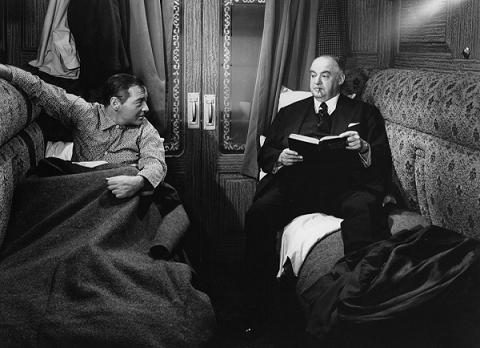
In the early thriller novels of Englishman, Eric Ambler, the typical Ambler hero is a timid everyman who becomes unwittingly embroiled in a nefarious and dangerous caper where he discovers guile and courage he never thought he had. In this Hollywood adaptation of Ambler’s The Mask of Dimitrios (aka A Coffin for Dimitrios), Peter Lorre is that everyman. A writer of murder mysteries who has never seen a dead body. His efforts to deal with this lapse embroil him in an adventure across the Levant in search of the story of a dead man.

His at first unwelcome accomplice is for all appearances a genteel Englishman who laments the lack of kindness in the world. No prizes for guessing there is more to this gentility when you learn the gentlemen is Mr Sydney Greenstreet. There is serious magic in this pairing as these two men enter into a pact. The story is secondary here. You are are along for the ride. Faye Emerson pops up as a world-weary cabaret-owner who may know something, but again the thrill is in her languor and Dietrich-like visage. Add to this heady mix a Turkish dancer in exotic garb and a cigarette hanging from her lips as she gyrates centre-stage.

The Mask of Dimitrios exemplifies the golden years of Hollywood. Great acting talent, high production values, and dialog that celebrates language and intelligent repartee. Zachary Scott as a suave villain, and the wonderful Steven Geray as a hapless dupe, add immense value.

Director Jean Negulesco and DP Arthur Edeson create an ambience of dark oriental intrigue aided beautifully by an evocative score from Adolf Deutsch, with impressive art direction from Ted Smith and voluptuous set decoration courtesy of Walter Tilford.

You must join this intrepid pair on their journey of intrigue.

A Warner Archive DVD Release


Mister Buddwing (1966): A neo-realist astringency

Mister Buddwing (1966)

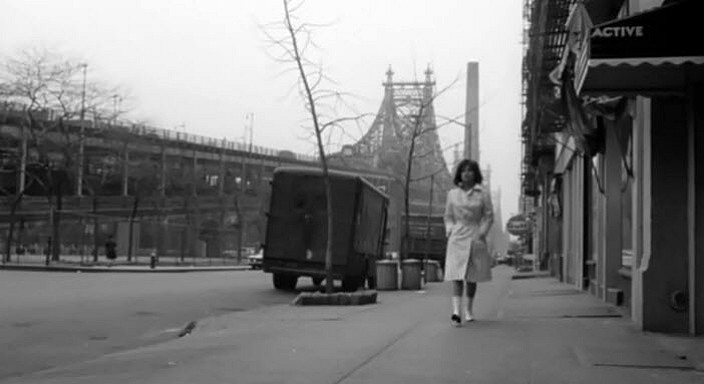
Mister Buddwing is a late monochrome portrait of amnesia played out in almost surreal fashion on New York City streets.  There is only a tenuous connection with noir, and this relates more to the loss of identity trope than a broader concern with alienation in the modern metropolis.

James Garner wakes up in Central Park with amnesia. The only clues to his identity are a couple of pills, a phone number scrawled on a slip of paper, a train timetable, and an engraved cygnet ring. He is well-dressed in a suit and tie, and well-polished brogues. The opening scenes are from the protagonist’s POV, as in Dark Passage and The Lady in the Lake, until Garner sees himself reflected in a glass door. Embarking on a search for his identity he rings the telephone number and begins a day and night spent traversing the city and encountering a series of women he strangely mistakes for a woman called Grace. Meantime he gives himself the moniker of  “Sam Buddwing”. The encounters and the city’s streetscapes grab your attention.  Overall the script is uneven with the overarching story weaker and less convincing than the episodic vignettes that propel the action.  It is these episodes that entertain, with some rally sharp absurdist humor, and great cameos from the actresses who variously portray the women Sam pursues.

The film is best described as a crazy dream disturbed by waking moments of  lucidity and lapses into banality.  Garner as Sam has a certain charm but his less than stellar performance means the heavy load is carried by the other players.  The first encounter is with the scruffy dame who answers Sam’s phone-call, played nicely by an ageing Angela Lansbury, who “puts out” offering the guy coffee, a hug, and some lucre; and sends him on his way.  A hungry Sam then has an hilarious breakfast with the Jewish owner of a hash-house.  Followed by a taxi-ride – a deftly written and sharp New York cabbie vignette – with Sam pursuing a female college student (Katharine Ross), who he thinks is his wife Grace. This interlude is the weakest with an overly long and overwrought fantasy sequence, but is redeemed by a coda that brings together a menagerie of Greenwich Village types; a hapless cop, nascent hipsters and beats, a gay guy, and a vagrant who thinks he is God – “really Kooksville”. Sam then hooks up with a quirky young off-broadway actress payed beautifully by Suzanne Pleshette.  She breathes real life into the picture at this point with her beauty, her charm, and her street-smarts.  While the fantasy episode this woman provokes tends to melodrama, Pleshette invests the sequence with a real pathos. Finally, Sam encounters a wealthy lush who likes to slum it in taxis, played with relish and boozy charm by a blonde Jean Simmons.  The best scene in the picture then follows when Garner and the blonde crash a high-stakes crap game  in a low-rent gambling den. This is a darkly-lit bravura sequence where the camera of DP Ellesworth Fredericks goes into contortions. The bit-players do a sterling job in creating the emotion and rising delirium of being on a roll.

The movie has received a bad rap from critics, including a withering review in the New York Times on its release.  There are deep flaws, yes. The direction could have been tauter and the screenplay less melodramatic – the final scene is overly cliched and a let-down. But what director Delbert Mann and cameraman Fredericks have done is created a memorable portrait of a great city with both its grandeur and its desolation, together with a cavalcade of worthy denizens that give a real flavour of the zeitgeist.  There is certainly also a high degree of elegance and craft in the intelligent use of close-ups, tracking, aerial, and low-angle shots that command and sustain visual interest. The outside deep-focus scenes have a neo-realist astringency and sad beauty, and many compositions linger in the memory.  An edgy minimalist jazz score by Kenyon Hopkins adds a nice contemporary feel.

A must-see portrait of New York on the cusp of the Swinging Sixties, which follows in the tradition of films like The Naked City, Odds Against Tomorrow, and Sweet Smell of Success.

Thanks to Cigar Joe for the heads up on this recent Warner Archive DVD release.

Slightly Scarlet (1956): No surprises

slightly-scarlet-1956

The Museum of Modern Art in New York over the last month has held a retrospective of films by Hollywood producer, director, and writer Allan  Dwan.  His career spanned over 40 years beginning with silent movies in the 1920s and ending with his last film in 1961.  It is only since the early 70s that Dwan has attracted the interest of film scholars.  It is debatable whether he has auteur status, though he seems to have had certain mannerisms in his late output.  Signature stylistics include the use of bright primary colors in his technicolor work, the placement and tracking of actors within the frame to delineate attachments, jealousies, and conflicts, and the use of phallic motifs and the like.

You can see all these elements in the 1956 film, Slightly Scarlet, an overwrought gangster movie, based on a novel by James M. Cain. The ambitious lieutenant of a  gambling racketeer contrives his elevation to boss of the outfit, while setting up a favour bank with a pliant cop and a crusading mayor.  Add two gorgeous redheads to the mix and you have the makings of a pot-boiler.  Some critics give the picture film noir status. I don’t buy it. There is an homme-fatale, crime, sex, corruption, and greed. Yet these elements don’t gel into a recognisable noir.  It is more a revenge chronicle filmed in lurid color not in shadows.  DP John Alton is given little to work with as the scenes tend to be stagey, though he manages to create a malevolent atmosphere through shadow artifice and areas of black from under-exposing some internal scenes. Dwan’s use of gaudy colors is visually tiring but rendered to good effect in filming the racketeer’s opulant bungalow and the interior of a beach house, where Dwan theatrically stages the violent scenes that end the picture. Indeed, he places the protagonists in the living area and on a staircase, mapping out the dynamics of the final resolution of the conflicts that have propelled them to the inevitable bloody confrontation.

A plodding pace and no surprises however make for a dull 100 minutes. Only Rhonda Fleming in short shorts, tight skirts, and pointy brassiere is (very) distracting. John Payne is ok only as the ambitious hood, and Arlene Dahl as Fleming’s slutty kleptomaniac sister completes the triangle.


The Way You Wanted Me (Finland 1944): Pretty little angel eyes

The Way You Wanted Me (1944)

“Sellaisena kuin sinä minut halusit” (original title)


A dark frenzied tale of a fallen woman, The Way You Wanted Me careens across roads of melodrama at the speed of light. From an idyllic first love on a rural island to the hell of Helsinki bars and bordellos. From youthful abandon in the sun to a night of decrepit darkness, a young woman’s journey to perdition is one of relentless betrayal by men and by fate.

We know Maija’s destiny from the first. An ageing peroxide hooker ravaged by booze and by hurt treads the rotten wharves of Helsinki for tricks. Layering rouge on her lips she drops lipstick and compact, and peers down into the fetid hole of her existence. Cut to a young girl picking petals off a daisy – the game of young love. Her seaman lover returns to ecstatic gambols in the fields and sweet love-making in her bed.  A family feud intervenes and the boy betrays her love.  Her sin in the village cannot be borne. Now a maid in a wealthy household in the city. Seduced and abandoned in the next frame. On the streets with no money and a baby to feed. Crying on a park bench a gentle procurer takes her in. Cheap booze, cigarettes, and lecherous old men her new domain. A gentle customer saves her, takes her in, loves and cares for mother and child. This redemptive ménage is soon destroyed also. Back to the booze and cigarettes.  And the terrible twists continue. All telegraphed by a grotesquely emotional score of sweeping highs and dramatic lows.  The girl’s own mother a dark angel in village garb who by her appearances and admonitions heralds more darkness to come.  The heroine cries a lonely lament in a resplendent church in awe of the fenestred gaze of Jesus. His compassion is for others and she collapses  at the alter of her own sinfulness. The final scene. The flashback is over. She leans down to retrieve her tools of trade, and completes her make-up. One last attempt at deliverance when she admonishes a beginner to quit the trade. Kicking away horse droppings on the ground she wearily trudges up a gang-plank for another sordid assignation below deck.

A film noir? Decidedly. Hyper-expressionism and a tragedy played out in dark nights of the soul.  Flashback and a down-beat ending. But not just these elements, more the parasitic fatalism that feeds on each new betrayal and degradation.

High melodrama from one of the masters. Director and writer Teuvo Tulio produced a string of melodramas in the 30s and 40s. Former Village Voice film writer J.Doberman beautifully encapsulates the Tulio ethos of movie-making in this extract from a piece on a retrospective of four Tulio films in New York in 2009 – this excellent article should be read in its entirety:

“At once arty and artless, stark and fulsome, Cine Tulio is characterized by an exaggerated emotional intensity and an equally primal lack of self-consciousness. Here is a filmmaker indifferent to mismatches, shamelessly dependent on musical cues, and hopelessly addicted to blunt metaphors. Robust open-air photography alternates with morbid studio expressionism. Healthy eroticism merges with punitive Puritanism—both are equally natural in Tulio’s stormy universe. His movies are desperate and insistent, sometimes clumsy but never less than forceful. Tulio’s strenuous lyricism allows the objective correlative to run wild: Verdant fields in super-abundant close-up segue to shots of raging rivers or low-angle figures framed against buttermilk skies.”

So it is in the gestalt that Tulio captures your attention. In an almost hallucinatory jump universe akin to wild dreams. What the surrealists were doing 20 years before in fashioning narratives by stringing disparate scenes into dreams of oneiric fantasy.

Yet, what makes The Way You Wanted Me so compelling is the depth and sincerity of the central performance by Marie-Louise Fock as Maija. She is in almost every scene and all other scenes are about her. An actress who, from what I have been able to garner, only ever appeared in this film.  She inhabits the role with a veracity and intensity that overcomes the scenario’s tendency to bathos. Her eyes are deeply expressive of all her inner turmoil and the angst of her struggle for survival. Survival and no more.


Memento (2000): The Days of Future Past

Memento (2000)

A brain injury leaves a young man with no short term memory. He can’t make new memories remembering the present for only a limited time, and then his memory reverts to the self that knows only past memories at the time of the trauma, an horrific event that consumes every waking moment in his eternal present.  He uses tattoos on his body and Polaroid snapshots with captions as aides-memoires to his reason for being: to track down and avenge the rape and murder of his wife. Mementos that he recalls not in time but as memories of an indeterminate past. Each day he awakens to the baleful necessity of reconstructing the present.

Christopher Nolan’s clever and gripping noir thriller Memento takes the noir convention of the flashback and builds the film’s narrative as one long extended backward exposition that deconstructs what has gone before – yet deepens the mystery of the how and the why.

Some critics quibble that this central conceit is clumsy, that the chopping up of events and segues between scenes are too contrived and lack narrative cohesion.  This is to miss the forest for the trees.  As viewers we are active in the construction of the narrative and are privileged voyeurs who – unlike the protagonist – can inform the present from the future past. We think the hapless protagonist is stuck in the present and must re-learn where he is at each lapse of memory. But is he?

The revelation is that beyond memory, life for sanity’s sake cannot be borne without a narrative. Life without a purpose or end is not living. So the protagonist of Memento must destroy memories as well as preserve them. He is trapped in a vortex that has the same purpose but a different trajectory each time that purpose is achieved. A creative destruction that can end only in death, real or virtual. Virtual in that if he can longer act, through incarceration or incapacity, he can no longer reinvent the past to give the present meaning.

Nirvana is hell not liberation.