Jules Dassin (1911-2008): Rebel With a Cause

Night And the City 1950
Richard Widmark in Night and The City (1950)

Jules Dassin, one of the great noir directors, died in Athens overnight.

Born in Middletown, Connecticut in 1911, Dassin’s ground-breaking noirs of the late 1940’s rank among the great films noir:

Brute Force (1947)
The Naked City (1948)
Thieves’ Highway (1949)

A committed leftist, Dassin was blacklisted by the HUAC and left the US before the final cut of Thieves Highway was made. In London he made in 1950 Night and the City, another classic noir starring Richard Widmark, in perhaps his best dramatic role.

In Europe, Dassins’ attempts to work as a director were vengefully thwarted by Hollywood mogules until 1955, when penniless and in despair he was offered Du rififi chez les hommes (1955) [“Rififi”], which he crafted into the greatest french noir of the 50’s. Dassin also played the Italian safe-cracker in the picture. The movie, which featured the legendary 32 minute heist scene filmed in almost total silence, desevedly won him the best director prize at the Cannes Film Festival, where he met his second wife, the Greek actress Melina Mercouri, who died in 1994.

An interesting Salo.com interview with the 89-yo Dassin in August 2000 by Michael Sragow offers some background on Dassin’s attitudes to his early noir work.

Check out my reviews of Thieves’ Highway, Rififi and Night And the City.

His major noir releases are available as Criterion DVDs, and these essays on the Criterion web-site are elegant dissertations on Dassins’ artistry:

Brute Force: Screws and Proles by Michael Atkinson Here we are in the dark territories again, the republic of bitternesses and bile known as noir, squaring our jaws against an amoral universe and roaming the rain-wet, lightless American City as if it were a circle of the inferno where backstabbers, goldbricks, and unfortunates march in closed patterns and puzzle >>>

The Naked City: New York Plays Itself by Luc Sante In 1945 Arthur Fellig, known as Weegee, a canny and gifted tabloid newspaper photographer, did something unprecedented: he assembled some of his best shots, of corpses and fires and arrests and crowds and spectacles, and made them into a book, published in hardcover—this at a time when photography books were still >>>

Night and the City: In the Labyrinth by Paul Arthur Within film noir’s unparalleled roster of resonant titles—Kiss of Death, Out of the Past, Where Danger Lives, to name three—none is more emblematic or iconographically cogent than Night and the City. Juxtaposing two of noir’s essential, virtually ontological qualities, the title of Jules Dassin’s underrated elegy for a self-annihilating hustler reminds >>>

Rififi: Love Made Invisible by Jamie Hook In 1955, Jules Dassin, an American director in exile in Paris, made this flat-out perfect piece of cinema. The film came as a redemption for Dassin: a one-time promising young director cranking out B-movies under an MGM contract (“They were awful. It was just plain unhappiness and embarrassment,” he later said >>>

Thieves Highway: Dangerous Fruit by Michael Sragow Like the movie’s rattletrap trucks lurching down the highway as they carry way-too-heavy loads, the characters in Jules Dassin’s brilliantly volatile Thieves’ Highway struggle under psychological and moral baggage until they can lay their burdens down. Working from a novel and script by A.I. Bezzerides, Dassin made this swift, fluid melodrama >>>
Blast Of Silence (1961): Hidden Noir

Blast Of Silence (1961): Hidden Noir

Criterion Confessions blog has an interesting review of a recent DVD release of Blast of Silence, a little known low-budget independent production from Allen Baron made in 1961:
There are films with more polish than Blast of Silence, but that’s okay. In some ways, the unsanded corners of this film put the boot into old film noir and how the bad guys were prettied up. Inside Frank Bono’s head, we hear about hate and pain and the things a man can’t escape, film noir concepts that weren’t always given those blunt terms. Shot as it was, Allen Baron’s movie brings the struggle to life, illustrating the need to get ahead and to get the filthy jobs done. The fact that Baron and Merrill and the rest got theirs done, putting together a one-two punch of a film, is illustration enough of what that means.

Criterion Noir Essays

Night and the CityThis link will take you to a page listing the current catalog of Criterion Noir DVDs.

Of interest also is a link to an essay on each film in the catalog, including a lengthy article on Jules Dassins’ Night an the City (1950) by film essayist Paul Arthur, who passed away last week. Coincidentally, Night and the City stars Richard Widmark, who also died last week, and an article in this Weekend’s New York Times by Dave Kehr rates this as Widmark’s best picture.

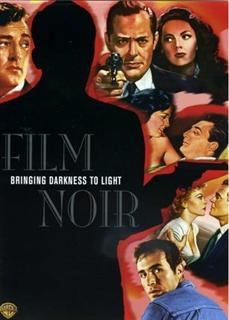
Film Noir: Bringing Darkness to Light (2006)

Film Noir Bringing Drakness To Light (2006)

A recent production from Leva FilmWorks on film noir, with a lot of talking heads and movie clips. A fair effort with well selected clips, but too focused on a limited selection of movies: no mention of Robert Siodmak or his pictures, and way too much attention paid to the inferior b-noir Decoy (1946).

The talking heads reprise established commentary and are settled in their views, but the contributions of James Ellory, who opens the film, are refreshing and challenging. He speaks with intense respect for the genre and careful precision: [film noir] exposited one great theme, and that great theme is “your fucked”.

Warner Home Video presents Film Noir: Bringing Darkness to Light as a bonus disc in their Film Noir Classic Collection: Vol. 3 box-set, with five 20-min. programs from the MGM series “Crime Does Not Pay” — “Women In Hiding” (1940), “You, the People” (1940), Fred Zinneman’s “Forbidden Passage” (1941), Joseph Losey’s “A Gun in his Hand” (1945), and “The Luckiest Guy in the World” (1947).

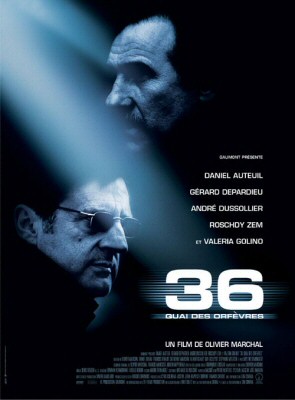
36 Quai des Orfèvres (France 2004): Brilliant Neo-Noir

36 Quai des Orfèvres (France 2004): Brilliant Neo-Noir

This neo-noir cum policier is a must see thriller with stunning noir cinematography. Olivier Marchal’s direction is relentless, with great performances from a stellar cast. This is Paris hip, dark, and mean.

This slideshow requires JavaScript.

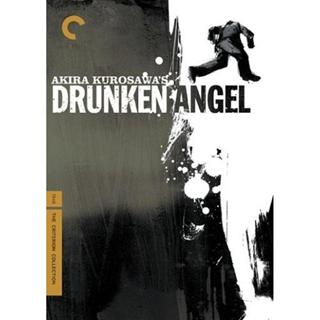
New Criterion DVD: Drunken Angel (aka Yoidore tenshi – Japan 1948)

Drunken Angel (Japan - 1948)

Drunken Angel is the first Kurosawa film starring Toshiro Mifune, and has a strong noir mood.

From the New York Times review of the new Criterion release 27 November:

The liner notes for this Criterion Collection release identify Drunken Angel as a film noir, and visually the movie often suggests the dark, dangerously askew world that Hollywood directors like Anthony Mann and Robert Siodmak were developing during the same period in their urban thrillers. But thematically “Drunken Angel” hails back to an earlier genre, the tenement dramas of the 1920s and ’30s… with their principled heroes and calls for social reform. For every virtuoso sequence – like the Mifune character’s climactic knife fight with his former gang boss, which ends with the two squirming in a pool of white paint – there is a bluntly didactic scene in which the doctor rails against feudal traditions and demands better hygiene.

Shimura and Mifune went on to play symbolic father-and-son-type pairs in several Kurosawa films, including the dazzling and more truly noir-flavored Stray Dog of 1949; their pairing seems to represent the fundamental division in Kurosawa’s work between high-minded sentiment and down-and-dirty action. (Criterion Collection, $39.95, not rated.)

New DVD Set: Film Noir: Five Classics from the Studio Vaults

They Made Me a FugitiveScarlet Street

A new DVD set has just been released by KINO with some interesting and obscure titles, including a pristine HD transfer of the Fritz Lang classic, Scarlet Street:
Film Noir: Five Classics from the Studio Vaults – Scarlet Street/Contraband/Strange Impersonation/They Made Me A Fugitive/The Hitch-Hiker

The Hitch-Hiker

Each movie in the Set was reviewed today by Grady Hendrix in the The New York Sun: Ladies Of the Dark

Details courtesy of Amazon.com:

SCARLET STREET (1945) – A FILM BY FRITZ LANG – WITH EDWARD G. ROBINSON, JOAN BENNETT & DAN DURYEA – A box-office hit in its day (despite being banned in three US states), Scarlet Street is perhaps legendary director Fritz Lang’s finest American film. But for decades, Scarlet Street has languished on poor quality VHS tape and in colorized versions. Kino’s immaculate new HD transfer, from a 35mm Library of Congress vault negative, restores Lang’s extravagantly fatalistic vision to its original B&W glory. When middle-aged milquetoast Chris Cross (Edward G. Robinson) rescues street-walking bad girl Kitty (Joan Bennett) from the rain slicked gutters of an eerily artificial backlot Greenwich Village, he plunges headlong into a whirlpool of lust, larceny and revenge.

CONTRABAND (AKA Blackout) (1940) – A FILM BY MICHAEL POWELL – WRITTEN BY EMERIC PRESSBURGER – WITH CONRAD VEIDT & VALERIE HOBSON – Contraband is a comedy thriller in the vein of Hitchcock’s The Thirty-Nine Steps and The Lady Vanishes. The film is an early treasure from the writer-director team of Emeric Pressburger and Michael Powell (The Red Shoes), who have been hailed by critics as jewels in the crown of British cinema. Set in England during the early days of WW II, Contraband stars Conrad Veidt and Valerie Hobson as a Danish sea captain and his enigmatic passenger who are kidnapped by a cell of Nazi spies operating from a basement in London’s Soho. In evocatively Hitchcockian fashion, the plot progresses as a chase that puts the characters in one peculiar set of surroundings after another.

STRANGE IMPERSONATION (1947) – A FILM BY ANTHONY MANN – WITH BRENDA MARSHALL & LYLE TALBOT – Hard-boiled film noir masquerading as a women’s melodrama, Strange Impersonation is a twisted tale of jealousy, murder, revenge and facial disfigurement from director Anthony Mann (T-Men, Raw Deal).

THEY MADE ME A FUGITIVE (AKA I Became A Criminal) (1947) – A FILM BY CAVALCANTI – STARRING TREVOR HOWARD & SALLY GRAY – Alberto Cavalcanti (Dead of Night), one of the key figures in French and British cinema for several decades, turns his sights on the London underworld in the engrossing Brit Noir gangland drama They Made Me a Fugitive. Set in unsettled postwar England where crime is on the upsurge, Fugitive is a suspenseful genre film which uses the picturesque Soho district as background to brilliant effect. The brooding and atmospheric cinematography of cameraman Otto Heller (Funeral in Berlin) is in the noir visual tradition, while the film’s authenticity is due to the director’s command of documentary technique. The London pubs, alleys, and back bedrooms turn into the poetry of urban realism.

THE HITCH-HIKER (1953) – A FILM BY IDA LUPINO – STARRING EDMOND O BRIEN, FRANK LOVEJOY & WILLIAM TALMAN – The only true film noir ever directed by a woman, this tour-de-force thriller (considered by many, including Lupino herself, to be her best film) is a classic, tension-packed, three-way dance of death about two middle-class American homebodies (Edmond O’Brien and Frank Lovejoy) on vacation in Mexico on a long-awaited fishing trip. Suddenly their car and their very lives are commandeered by psychopathic serial killer Emmett Myers (William Talman). The striking light/dark contrasts, the stunning compositions (such as the two kidnap victims separated by a narrow stream from a gun-cradling madman with a lazy eye) and the spatial integrity of a determining sense of locale (the pitiless topography of a rockbound, horizonless Mexico over which hovers an ever-present doom) all contribute mightily to this fascinating character study.

Breathless (A Bout De Souffle) – France 1959: New Wave Noir

Breathless (A Bout De Souffle) - France 1959: New Wave Noir

This iconoclastic debut by the French New Wave pioneer, Jean Luc Godard, has been re-released on a 2 disc DVD set with a new HD digital transfer from Criterion. The transfer has been supervised by the original director of photography of Breathless, Raoul Coutard. In the words of Amazon contributor, Jonathan E. Haynes “jehaynes” (Berkeley, CA): “With Coutard involved in Criterion’s issue, the film has undoubtedly been restored to some of its original, shocking, ragged beauty”.

The second disc includes archival interviews with the director and Jean-Paul Belmondo, who plays the young punk with noir affectations. Jean Seberg is perfect as the young American student in Paris ‘living dangerously’.

Breathless (A Bout De Souffle) - France 1959: New Wave Noir

Australian critic, Adrian Martin in 2004: “there is a semblance of a thriller plot complete with a betrayal, tailing cops, and a final shootout… but the subtle, formal pleasures of Breathless have yet to be fully appreciated. Whether through accident or design, Godard’s low-budget on-the-fly shooting style produced remarkable innovations.”

Forget about Tarantino, Godard is the genuine originator of (Martin again) “the mixture of loose gangster-crime plot, a smart attitude, and a hip array of high and low culture citations… and there is an insolent mildly outrageous rap pouring from Belmondo’s punk motormouth, but even that scarcely contradicts the Chandler-Hammett-Spillane tradition of hard-boiled talk.” (1001 Movies)

The original film noir jazz score by Martial Solal is available on CD:

They Live By Night (1948)

They Live By Night (1948)

Clydefro on his filmjournal.net blog has posted an interesting review of They Live By Night (1948) the first feature of director Nicholas Ray, in which Clydefro firmly establishes Ray’s auteur credentials.

While Clydefro’s exploration of They Live By Night is original and penetrating, I don’t quite agree with his take on the noir Outsider:

“Watching They Live by Night, I was reminded of the music of Bruce Springsteen and, specifically, the song “Atlantic City” off his Nebraska album. Both artists were able to locate the pulse of the outsider, someone not particularly special in any way but undeniably American in spirit and attitude. The idea of bettering one’s self and family, even if it means turning to crime or working outside the margins, is a recurring theme in both men’s work. Of course, Ray put his finger on this pursuit some twenty and thirty years before Springsteen.”

To me the persona of the outsider is more complex, and a universal (not parochial) archetype. The outsider is outside bourgeois society and does not share its aspirations, and in the noir genre this is manifested generally but not always in criminality. Ray and Springsteen both share this wider vision: consider Ray’s In A Lonely Place (1950) and Springsteen’s Streets Of Philadelphia.

They Live By Night is one of the 10 films noir released on July 31 by Warner Home Video in the Film Noir Classic Collection, Vol. 4 DVD box set.

MIA Films Noir

The Glass Web

The jackal’s film corner blog has posted the jackal’s favorite films noir yet to be released on DVD. The list is not meant to be exhaustive, but “the tip of the iceberg”. The jackal also notes that Ministry of Fear (1944) is due for release in September, while Dangerous Crossing (1953) has been flagged by Fox for future release. Read the jackal’s post for the fully annotated list.

99 River Street (1953)
Conflict (1945)
Cornered (1945)
Cry Danger (1951)
Human Desire (1954)
Johnny Angel (1945)
Johnny O-Clock (1947)
My Name is Julia Ross (1945)
Nocturne (1946)
Phantom Lady (1944)
Pitfall (1948)
Ride the Pink Horse (1947)
Saigon (1948)
Stranger on the 3rFloor (1940)
The Brasher Doubloon (1947)
The Breaking Point (1950)
The Bribe (1949)
The Fallen Sparrow (1943)
The Glass Web (1953)
The Sleeping City (1950)
The Web (1947)
The Window (1949)
They Won’t Believe Me (1947)
To the Ends of the Earth (1948)

The Web