Alias Nick Beal (1949): The Devil wears Armani

“I don’t do much business with preachers”

Alias Nick Beal (1949)

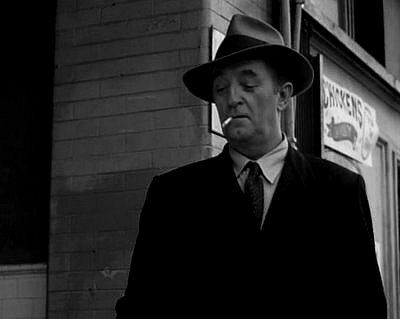
Ray Milland is Lucifer, alias Nick Beal ‘Agent’, who, with the help of b-girl Audrey Totter goes shopping for the soul of honest DA and aspiring governer Thomas Mitchell.  Add to the mix smart direction from John Farrow, a killer script from Jonathon Latimer, superb noir lensing by Lionel Lindon, and a haunting score from Franz Waxman. Garnish with a bespectacled George Macready cast against type as a reverend running a boy’s club, and you have a thoroughly entertaining melodrama. Milland dominates as Beelzebub in a sharp suit and rakish fedora. He slaps, ices, insinuates, and connives a swathe through the earnest life of Joseph Foster DA, after with his help Foster naively cuts a legal corner in nailing a hood.  The mis-en-scene is canny, and particularly inspired is the use of a seedy wharf-side bar as Nick’s ‘office.’ The only weakness is the bible-saves ending, though Nick is left free to disappear into a harbor fog to corrupt other souls.

The story offers an intriguing twist to the noir punishment and redemption motifs.  Nick has a written contract for the DA’s soul – vetted  as enforceable by his global legal team – which will only be triggered if when-push-comes-to-shove Foster does the right thing by a public mea-culpa and renouncing of his ill-gotten gains.  A wily trap indeed.   The jaws snap shut at the instant of redemption. But a noir ending would have had the hapless DA disappearing into the fog en-route to the Island of Almas Perdidas.
Noir Poets: Raymond Chandler

Farewell My Lovely (1975)

It got darker. I thought; and thought in my mind moved with a kind of sluggish stealthiness, as if it was being watched by bitter and sadistic eyes. I thought of dead eyes looking at a moonless sky, with black blood at the corners of the mouths beneath them. I thought of nasty old women beaten to death against the posts of their dirty beds. I thought of a man with bright blond hair who was afraid and didn’t quite know what he was afraid of, who was sensitive enough to know that something was wrong, and too vain or too dull to guess what it was that was wrong. I thought of beautiful rich women who could be had. I thought of nice slim curious girls who lived alone and could be had too, in a different way. I thought of cops, tough cops that could be greased and yet were not by any means all bad, like Hemingway. Fat prosperous cops with Chamber of Commerce voices, like Chief Wax. Slim, smart and deadly cops like Randall, who for all their smartness and deadliness were not free to do a clean job in a clean way. I thought of sour old goats like Nulty who had given up trying. I though of Indians and psychics and dope doctors.

Raymond Chandler, Farewell, My Lovely, 1940, ch.34 par.3

When Strangers Marry (1944): Into the seething labyrinth

When Strangers Marry (aka Betrayed 1944)

The noir city in all its desperate foreboding: a dancing sign flashes in an angel’s face.  An angel innocent and afraid yet ventures into the seething labyrinth with a stranger, her husband, running from capture into the city of entrapment.

You trust no-one, fear the worst, and blunder from one dead-end into another.  Dark faces and sharp dressers in sinister doorways.  Share a cab with a bawling waif, a dying woman on borrowed time, and a suspicious driver.  Stop! Get out!  Onto dark streets, smoke-filled dives, cafés on the edge of purgatory, and hellish rooms for rent.  A young girl in pig-tails as likely to betray you as the mother with arms folded in menace then her cold hand out for payment in advance.  Nowhere left to run.  The rented room a cell you can’t leave.

“I didn’t do it.” You believe him, why did he run?

They find you anyway, and take him away.

Where to now? The loyal ex, the nice guy you rejected with his pipe and his dog. He’ll know. Back to the hotel.  A letter sent too early, an echo of another to be sent, waiting for you.  What does it mean? Turn around fast. The street is a long way down. Run.  The beau doesn’t, it’s all cool. Packs his bag, stuffs an envelope, and mails it at the lift-well while the inquisitive cop isn’t looking.  He can’t sweat it though, he panics, it all falls down, and the new letter bursts open with the truth.

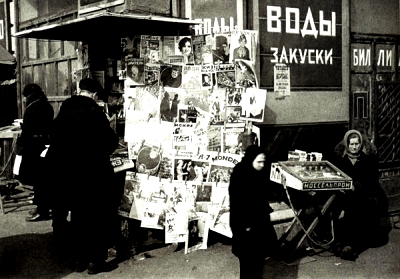
Noir Poets: M. Ageyev

Moscow 1929

And there were boulevards that seemed boring at first, but were not, boulevards where the sunflower shells were so thoroughly mixed with the dust-grey sand that they could not be swept away; where the pissoir, in the form of a slightly raised, partially open scroll, gave off such a smell that it made one’s eyes smart from a distance; where the evenings brought out painted old women in rags hawking twenty-kopeck love in lifeless, scratchy gramophone-record voices, while the days saw people scurrying past the circus poster of a beauty in tights leaping through a torn hoop, her peach-coloured thigh pierced by the nail holding the poster in place; and if anyone did chance to perch on a dusty, empty bench, it was merely to rest his load or else, having gobbled up enough sulphur matches or taken a sufficient swig of acid from the apothecary’s phial, to fall on his back and, writhing in pain, have one last look at the watery Moscow sky above him.

M. Ageyev, Novel With Cocaine, 1929 (?)
translated from the Russian by Michael Henry Hein (Picador 1985)

Noir Poets: Jim Morrison

Jim Morrison - The Lords and The New Creatures.jpg

The City. Hive, Web, or severed
insect mound. All citizens heirs
of the same royal parent.

The caged beast, the holy center,
a garden in the midst of the city.

“See Naples & die.”
Jump ship. Rats, sailors
& death.

So many wild pigeons. Animals
ripe w/ new diseases.
“There is only one disease
and I am its catalyst,”
cried doomed pride of the carrier.

Fighting, dancing, gambling,
bars, cinemas thrive
in the avid summer.

From The New Creatures (1970)

Noir: Compassion in the Shadows

When Strangers Marry (aka Betrayed 1944)

the ‘meaning’ of the noir city is not to be found in the narrative’s surface
details but in its shadows, in the intangibles of tone and mood

– Frank Krutnik, ‘Something More Than Night’, The Cinematic City (ed David B. Clarke), p 98-99

The more I read about noir, the more I am convinced that few pundits, critics, academics, or film bloggers really know noir. Sure, there are many who write lyrically and compellingly, there are those who can mimic to perfection the hard-boiled lingo, and there are those who have a thorough knowledge of the history and the arcane, but most don’t understand noir.

Noir is a semiotic aesthetic. It is not about the surface, it is about the shadows. The noir narrative is only a framework for holding together a dark but deeply moral vision of life. Noir is not morally ambivalent: it is unforgiving and the transgressor pays for his transgressions. While the punishment of destiny is inescapable, there is the chance of redemption, and redemption comes from a deep compassion. A compassion that comes from the knowledge of the chaos and the utterly random contingency at the core of existence. Noir goes beyond the despair of the existentialists, it finds in the desperate and often violent failings of humanity, the soul. The soul that is not corporeal yet pervades physical reality by manifesting our sins and desires in the dark shadows of night, when the alienating mantel of awareness dissolves into those places where lost souls wander: the dives, the dark city streets, lonely desolate beaches, dust country roads, squalid tenements, and dank stairwells.

Forget all you have read about noir and look at noir with your own eyes and ears. Welcome to the shadows.

Noir Poets: Jack Kerouac

Jack Kerouac

I stayed in San Francisco a week and had the beatest time of my life… I stopped, frozen with ecstasy on the sidewalk. I looked down Market Street. I didn’t know whether it was that or Canal Street in New Orleans: it led to water, ambiguous, universal water, just as 42nd Street, New York, leads to water, and you never know where you are… And for just a moment I had reached the point of ecstasy that I always wanted to reach, which was the complete step across chronological time into timeless shadows, and wonderment in the bleakness of the mortal realm, and the sensation of death kicking at my heels to move on, with a phantom dogging its own heels, and myself hurrying to a plank where all the angels dove off and flew into the holy void of uncreated emptiness, the potent and inconceivable radiancies shining in bright Mind Essence, innumerable lotuslands falling open in the magic mothswarm of heaven. I could hear an indescribable seething roar which wasn’t in my ear but everywhere and had nothing to do with sounds. I realized that I had died and been reborn numberless times but just didn’t remember especially because the transitions from life to death and back to life are so ghostly easy, a magical action for naught, like falling asleep and waking up again a million times, the utter casualness and deep ignorance of it. I realized it was only because of the stability of the intrinsic Mind that these ripples of birth and death took place, like the action of wind on a sheet of pure, serene, mirror-like water. I felt sweet, swinging bliss, like a big shot of heroin in the mainline vein; like a gulp of wine late in the afternoon and it makes you shudder; my feet tingled. I thought I was going to die the very next moment. But I didn’t die, and walked four miles and picked up ten long butts and took them back to Marylou’s hotel room and poured their tobacco in my old pipe and lit up. I was too young to know what had happened.

On The Road, 1957

Cry Danger (1951): About as noir as white coffee

Cry Danger (1951)

Cry Danger, a Dick Powell vehicle from RKO, is a flaccid affair with no tension and labored humor. Powell plays ‘Rocky’ Malloy, a guy with a past just released from a life stretch after 5 years in the can, thanks to the better-late-than-never testimony of a vet with a wooden leg and a drink problem. Back in LA he shacks up in a trailer park to shake down the hood that framed him. A novel twist at the end can’t save the show.

Rookie director Robert Parrish is to blame: the pacing is sluggish and you keep waiting for something to happen. There is no atmosphere and it all plays out like a too long second-rate 50s TV police drama. A sorry example of how not to make a noir. Powell and Rhonda Fleming, as the love interest, are wasted, as is DP Joe Biroc, who never really gets a chance to insinuate some LA darkness into the mix. The promise of the opening scene when we see Powell arriving by train is never realised after being immediately negated by the absurd use of rear-screen projection shots for scenes outside the railway station. There is a noirish shot of Powell entering a bar at night, but it is all technique and no soul.

Overrated and dull.

Noir Poets: Bob Dylan

Young Man With a Horn (1950)

Not Dark Yet

Shadows are falling and I’ve been here all day
It’s too hot to sleep, time is running away
Feel like my soul has turned into steel
I’ve still got the scars that the sun didn’t heal
There’s not even room enough to be anywhere
It’s not dark yet, but it’s getting there

Well, my sense of humanity has gone down the drain
Behind every beautiful thing there’s been some kind of pain
She wrote me a letter and she wrote it so kind
She put down in writing what was in her mind
I just don’t see why I should even care
It’s not dark yet, but it’s getting there

Well, I’ve been to London and I’ve been to gay Paree
I’ve followed the river and I got to the sea
I’ve been down on the bottom of a world full of lies
I ain’t looking for nothing in anyone’s eyes
Sometimes my burden seems more than I can bear
It’s not dark yet, but it’s getting there

I was born here and I’ll die here against my will
I know it looks like I’m moving, but I’m standing still
Every nerve in my body is so vacant and numb
I can’t even remember what it was I came here to get away from
Don’t even hear a murmur of a prayer
It’s not dark yet, but it’s getting there

Copyright © 1997 by Special Rider Music